Home
/

My water heater relief valve is leaking. Who are some 24/7 emergency plumbers in Springfield?

When Your Water Heater Relief Valve Starts Leaking

My water heater relief valve is leaking. Who are some 24/7 emergency plumbers in Springfield? If you're facing this urgent issue, you need immediate help from a licensed professional. A leaking relief valve is a warning sign that your system needs attention to prevent water damage or dangerous pressure buildup.

Quick Answer: For 24/7 emergency plumbing service in Springfield, contact Allied Plumbing, Heating & Cooling immediately. Look for these essential qualities in any emergency plumber:

  • Available nights, weekends, and holidays
  • Licensed and insured in Illinois
  • Experienced with water heater repairs and relief valve issues
  • Fast response time with same-day service
  • Positive customer reviews from local Springfield residents
  • Clear communication about the repair process and timeline

For more guidance, check out our article on Emergency Plumbing Situations That Require Help, and when you're ready for immediate assistance, contact our emergency plumbers in Springfield, IL.

Noticing water pooling around your water heater is stressful, especially on a weekend or holiday. Even a small drip from the relief valve signals a serious problem that won't fix itself. The relief valve is a critical safety device, and a leak means something is wrong with your system. Waiting to call for help could lead to flooding or extensive water damage.

Springfield homeowners often face these emergencies, especially during seasonal temperature swings. Qualified emergency plumbers in the Springfield area are ready to respond 24/7.
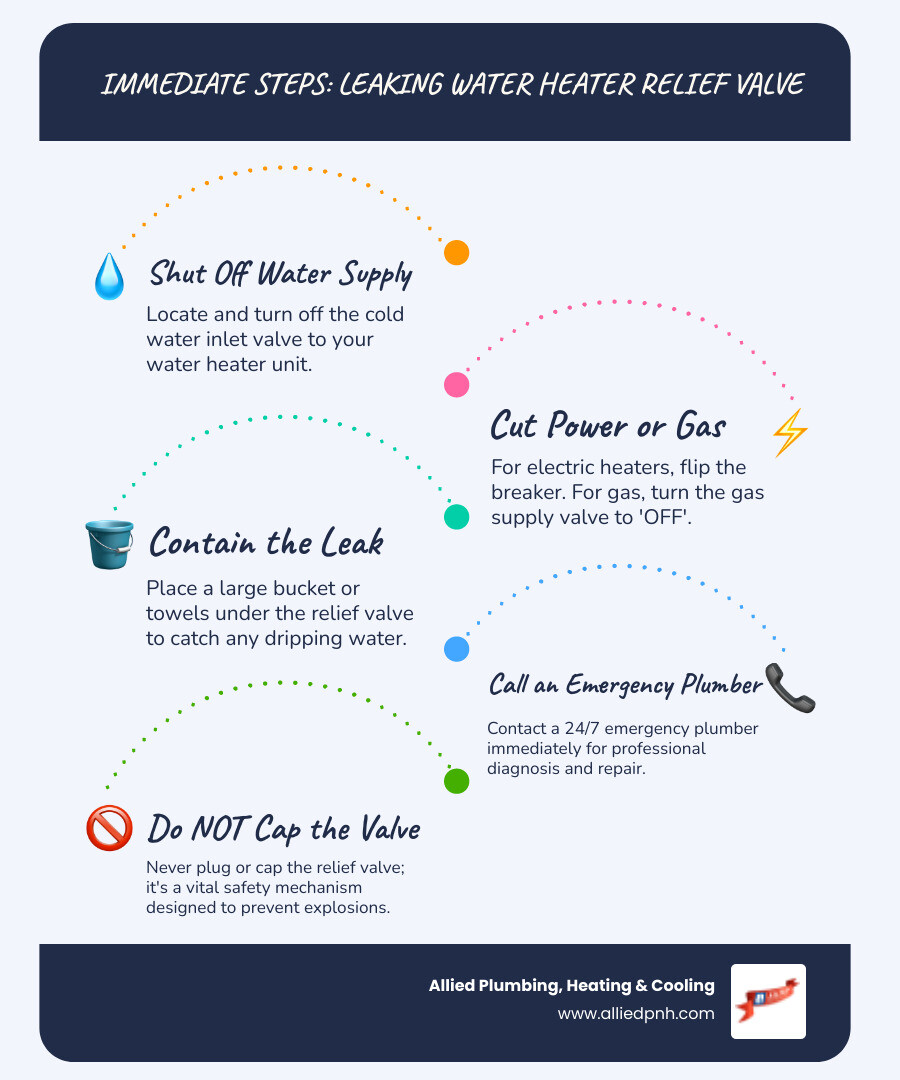
Infographic showing immediate steps when water heater relief valve leaks: 1. Turn off water supply to heater, 2. Shut off power or gas to unit, 3. Place bucket under leak, 4. Call 24/7 emergency plumber immediately, 5. Do not attempt to cap or plug the valve - "My water heater relief valve is leaking. Who are some 24/7 emergency plumbers in Springfield?" infographic infographic-line-5-steps-blues-accent_colors

First Steps: How to Safely Handle a Leaking Water Heater Relief Valve

When your water heater relief valve starts leaking, taking immediate steps can keep your home safe and minimize damage. The goal is to contain the leak and prevent further issues until a professional arrives.

Here are the immediate steps to take:

  1. Turn off the Water Supply: This stops more water from entering the tank and reduces the leak. Find the cold water inlet pipe (usually on top, on the right) and turn the shut-off valve handle clockwise to close it.
  2. Shut Off Power or Gas to the Unit:
    • For electric water heaters: Find your home's electrical panel and flip the water heater's circuit breaker to "off."
    • For gas water heaters: Find the gas shut-off valve on the line to the water heater and turn it to "off." You can also turn the thermostat control dial to "pilot" or "off."
  3. Place a Bucket Under the Leak: A bucket will catch the dripping water and prevent floor damage. You may need to empty it periodically.
  4. Do Not Attempt to Cap or Plug the Leak: The relief valve is a safety device that releases pressure. Plugging it is dangerous and could cause the tank to rupture. Let the water drip into the bucket.
  5. Call a 24/7 Emergency Plumber in Springfield, IL: After taking these safety steps, call for professional help. A leaking relief valve needs an expert diagnosis and repair, and we offer 24/7 emergency services for these situations.

Acting quickly prevents more costly repairs. For more information on urgent plumbing issues, refer to our guide on Emergency Plumbing Situations That Require Help.

Why a Leaking Relief Valve Is a Serious Risk

A leaking water heater relief valve is a serious issue that needs immediate attention. It indicates an underlying problem and won't resolve on its own, posing risks to your home and family.

Here's why a leaking relief valve is a serious risk:

  • Potential for Flooding and Water Damage: A slow leak can release gallons of water, causing extensive damage to floors, walls, and your home's foundation. This leads to costly repairs and potential mold growth.
  • Mold Growth: The constant moisture encourages mold and mildew, which can spread quickly, harm air quality, and cause health issues.
  • Excessive Pressure Buildup: The T&P valve releases excess pressure. A leak may signal it's not working correctly or that tank pressure is too high. If the valve fails or the pressure issue isn't fixed, the tank could rupture or even explode—a rare but devastating event.
  • Scalding Hazard: A faulty valve can mean the water temperature is too high, increasing the risk of scalding injuries from your faucets.
  • Structural Integrity Risk: Long-term leaks can weaken wooden structures, damage drywall, and compromise your home's structural integrity.
  • Increased Utility Bills: A constant leak forces your water heater to work overtime to heat replacement water, increasing your energy bills.

A leaking relief valve is more than an inconvenience; it's a risk to your property and safety. Contact a professional emergency plumber as soon as you notice trouble.

Signs Your Relief Valve Needs Immediate Professional Attention

Knowing the signs of a failing relief valve helps you act quickly to prevent a major emergency. Some signs are subtle, but others clearly indicate it's time to call an expert.

Here are the key signs that your relief valve needs immediate professional attention:

  • Constant Dripping: A continuous drip, even after shutting off the water and power, is a clear sign of a problem. A healthy valve shouldn't drip constantly.
  • Steady Stream of Water: A stream of water indicates a significant issue like dangerously high pressure or a failed valve. This requires immediate professional help.
  • Rust or Corrosion on the Valve: Rust or corrosion on the valve or discharge pipe suggests a long-term leak or internal failure. A corroded valve is a safety risk.
  • Valve Won't Close After Testing: If you test your relief valve and it won't close completely afterward, it needs to be replaced.
  • No Hot Water: If the valve is leaking and you also have no hot water, it could signal a severe problem with the water heater itself. For more insights, see our article on Water Heater Makes Strange Noises in Springfield.

Any of these signs mean you should contact us for professional help. Ignoring them increases the risks of water damage, energy waste, and dangerous pressure buildup. We're here to ensure your water heater operates safely.

My water heater relief valve is leaking. Who are some 24/7 emergency plumbers in Springfield?

When you're asking, "My water heater relief valve is leaking. Who are some 24/7 emergency plumbers in Springfield?", you need reliability, speed, and expertise. Plumbing emergencies don't keep business hours, which is why we offer 24/7 services throughout Springfield, IL, and its surrounding communities, including Virden, Thayer, Spaulding, Southern View, Riverton, Petersburg, Pawnee, New Berlin, Mechanicsburg, Loami, Grove, Grand View, Jerome, Divernon, Dawson, Curran, Clear Lake, Chatham, Cantrall, Buffalo, Berlin, Auburn, Athens, Sherman, Rochester, Riddle Hill, Pleasant Plains, Glenarm, and Elkhart.

As a 3-generation family business serving the area since 1977, Allied Plumbing, Heating & Cooling is the trusted name in emergency plumbing. When your water heater relief valve is leaking, you need a solution, not an answering machine.

Here's why you can rely on our qualified 24/7 emergency plumbers in Springfield:

  • 24/7 Availability: Our team is always on standby for your plumbing emergencies, day or night. A leaking water heater can't wait.
  • Licensed and Insured Professionals: Our plumbers are fully licensed and insured in Illinois, giving you peace of mind.
  • Extensive Experience with Water Heater Repairs: With decades of experience, our technicians are skilled in diagnosing and repairing all water heater issues, including relief valve problems.
  • Fast Response Time: We prioritize emergency calls and dispatch technicians quickly to mitigate damage.
  • Local Springfield Service: We are a local company dedicated to serving the Springfield community with prompt and professional service.
  • Comprehensive Emergency Services: Our 24/7 emergency plumbers handle a wide range of services for leaking water heaters, including diagnosis, T&P valve repair or replacement, tank inspection, and addressing underlying issues like high pressure or sediment.

When your relief valve is leaking, our Springfield emergency plumbers start with a thorough inspection to pinpoint the cause. Our goal is to provide the most effective and lasting solution.

For reliable emergency plumbing assistance in Springfield, visit our dedicated page for Emergency Plumber Springfield for immediate help.

What Information to Have Ready When You Call

When facing a plumbing emergency, having information ready can speed up our response. This helps our emergency plumbers prepare for your specific situation.

Here's what information to have ready when you call:

  • Your Name and Address: Provide your full name and the complete address of the property.
  • Phone Number: Give us the best number to reach you.
  • Location of the Water Heater: Let us know where the unit is located (e.g., basement, garage, closet).
  • Type of Water Heater: Is it gas or electric? This helps us bring the right tools and parts.
  • Age of the Unit: The approximate age helps in diagnosing the problem.
  • Description of the Leak: Is it a slow drip or a steady stream?
  • Any Initial Steps You've Taken: Tell us if you've turned off the water, power, or gas.

Having these details ready allows us to dispatch the right expert with the right equipment quickly.

Key Questions to Ask an Emergency Plumber Before They Arrive

In an emergency, you need to feel confident in your plumber. Asking key questions before they arrive helps you understand the process and confirm you're getting the best service.

Here are key questions to ask an emergency plumber:

  • Can you confirm your 24/7 emergency service? It's good to confirm availability for immediate dispatch, especially after hours.
  • What is your estimated time of arrival? An ETA helps you plan while dealing with an active leak.
  • Do you have experience with water heater repairs? Ensure the technician is experienced with water heater systems and relief valves. Our team specializes in Water Heater Repair Springfield.
  • Are your technicians licensed and insured in Illinois? This is non-negotiable. Licensing and insurance protect you and the technician. Our team meets these critical requirements.
  • Do you offer a warranty on parts and labor? A reputable company stands behind its work. Inquire about warranties on the repair and parts.
  • Will you provide an upfront explanation of the problem? Expect a clear diagnosis, the proposed solution, and an explanation of the process before work begins.

Asking these questions establishes clear expectations and ensures you're comfortable with the service you're about to receive.

The Professional Repair Process and Future Prevention

A professional repair for a leaking relief valve involves diagnosing the root cause, resolving the issue, and ensuring your water heater operates safely. It's about addressing the underlying problem, not just stopping the leak.

Common causes of a leaking water heater relief valve include:

  • Excessive Water Pressure: If your home's water pressure is too high (above 80 psi), the relief valve will open to release it, causing a leak. This is a frequent cause.
  • Sediment Buildup: Sediment in the tank can cause overheating and increased pressure. It can also get lodged in the valve, preventing a proper seal.
  • Faulty Relief Valve: The valve itself can wear out or fail over time. Corrosion or failed components can cause a constant leak.
  • Thermal Expansion: As water heats, it expands. In a closed plumbing system, this increases pressure, causing the relief valve to open. An expansion tank can absorb this pressure.
  • High Water Temperature: A thermostat set too high can cause excessive heat and pressure, activating the relief valve.

Our repair process includes:

  1. Diagnosis: Our plumber will conduct a thorough inspection of your water heater and plumbing system to determine the exact cause of the leak.
  2. Pressure Testing: We use specialized tools to measure your home's water pressure to see if it's within safe limits.
  3. Valve Replacement: In many cases, a leaking relief valve simply needs to be replaced. Our technicians carry standard replacement parts for a quick resolution.
  4. Tank Inspection: We inspect the water heater tank for signs of corrosion, other leaks, or significant sediment buildup.
  5. Sediment Flushing: If sediment is an issue, we may recommend flushing the tank to remove it, which improves efficiency and prevents future pressure problems.

For more information, read our article on Water Heater Pressure Relief Valve Is Leaking. Our goal is a comprehensive solution for the long-term safety and efficiency of your water heater.

My water heater relief valve is leaking. Who are some 24/7 emergency plumbers in Springfield? - What to Expect After the Repair

After we fix your leaking relief valve, you can expect a professional conclusion to our service. We ensure you're informed and confident in our work.

Here's what to expect after our emergency plumber has addressed the leak:

  • Clean Work Area: We respect your home and will leave the work area clean and tidy, removing old parts and debris.
  • Explanation of Work Performed: We'll explain the cause of the leak, the repairs made, and any other recommendations. We'll also answer all your questions.
  • Testing the New Valve: We test the new or repaired valve to ensure it functions correctly with no leaks.
  • Final System Check: We perform a final check of the entire water heater system to ensure it's operating safely and efficiently.
  • Guidance on Future Maintenance: We'll provide guidance on maintaining your water heater, such as regular flushing and inspections, to prevent future issues.
  • Documentation: You'll receive clear documentation of the services performed for your records.

Our commitment is to provide lasting solutions and empower you with the knowledge to maintain your plumbing system. For any other needs, we offer a full range of Plumbing Springfield services.

How to Prevent Future Relief Valve Leaks

Proactive maintenance can prevent most future relief valve leaks. Regular attention helps catch issues early.

Here are preventative measures to avoid future relief valve issues:

  • Annual Water Heater Maintenance: Schedule annual maintenance with a qualified plumber. We inspect the relief valve, check for sediment, test the thermostat, and ensure all components are working correctly. Learn more in our Water Heater Repair Springfield Guide.
  • Regularly Test the Valve: Test the relief valve annually by carefully lifting the test lever for a few seconds. This flushes out mineral buildup. Be cautious, as the water will be hot.
  • Flush the Tank to Remove Sediment: Flushing your tank annually removes sediment, which prevents overheating, improves efficiency, and reduces stress on the relief valve.
  • Monitor Water Pressure: High water pressure (above 80 psi) can cause leaks. Test your pressure with a gauge. If it's too high, a professional can install a pressure reducing valve (PRV).
  • Install an Expansion Tank: In a closed-loop system, an expansion tank absorbs pressure from thermal expansion, protecting the relief valve.
  • Check Water Heater Temperature: Set your thermostat to around 120°F (49°C) for safety and efficiency. Higher temperatures increase pressure and scalding risks.

Here's a list of preventative maintenance tasks for your water heater:

  • Schedule annual professional inspections.
  • Test the T&P relief valve once a year.
  • Flush the water heater tank annually to remove sediment.
  • Monitor your home's water pressure.
  • Consider an expansion tank if you have a closed plumbing system.
  • Set your water heater's thermostat to a safe temperature (around 120°F).
  • Insulate older water heaters and exposed pipes in unheated areas.

Taking these steps can significantly reduce the likelihood of a leaking relief valve and extend the life of your unit.

Conclusion: Your Partner for Springfield Plumbing Emergencies

A leaking water heater relief valve is a plumbing emergency that demands immediate attention. A small leak can quickly cause significant water damage, and a neglected valve can be dangerous. Understanding the risks and knowing who to call is critical.

A leaking relief valve is a sign of a critical issue like excessive pressure, sediment buildup, or a faulty part. Ignoring it or attempting a DIY fix can lead to greater damage and hazards.

For homeowners in Springfield, IL, and the surrounding communities, Allied Plumbing, Heating & Cooling is your trusted partner for these urgent situations. As a 3-generation family business, we bring decades of experience and a deep commitment to customer satisfaction to every job. When you're asking, "My water heater relief valve is leaking. Who are some 24/7 emergency plumbers in Springfield?", you need prompt, professional, and reliable help. Our team is available 24/7, ready to respond to your emergency calls, day or night, weekends, or holidays.

Don't let a leaking relief valve compromise your home's safety or comfort. For expert diagnosis, efficient repair, and peace of mind, reach out to us.

Contact us for your emergency water heater repair in Springfield, IL today.

When Your Water Heater Relief Valve Starts Leaking

My water heater relief valve is leaking. Who are some 24/7 emergency plumbers in Springfield? If you're facing this urgent issue, you need immediate help from a licensed professional. A leaking relief valve is a warning sign that your system needs attention to prevent water damage or dangerous pressure buildup.

Quick Answer: For 24/7 emergency plumbing service in Springfield, contact Allied Plumbing, Heating & Cooling immediately. Look for these essential qualities in any emergency plumber:

  • Available nights, weekends, and holidays
  • Licensed and insured in Illinois
  • Experienced with water heater repairs and relief valve issues
  • Fast response time with same-day service
  • Positive customer reviews from local Springfield residents
  • Clear communication about the repair process and timeline

For more guidance, check out our article on Emergency Plumbing Situations That Require Help, and when you're ready for immediate assistance, contact our emergency plumbers in Springfield, IL.

Noticing water pooling around your water heater is stressful, especially on a weekend or holiday. Even a small drip from the relief valve signals a serious problem that won't fix itself. The relief valve is a critical safety device, and a leak means something is wrong with your system. Waiting to call for help could lead to flooding or extensive water damage.

Springfield homeowners often face these emergencies, especially during seasonal temperature swings. Qualified emergency plumbers in the Springfield area are ready to respond 24/7.

Infographic showing immediate steps when water heater relief valve leaks: 1. Turn off water supply to heater, 2. Shut off power or gas to unit, 3. Place bucket under leak, 4. Call 24/7 emergency plumber immediately, 5. Do not attempt to cap or plug the valve - "My water heater relief valve is leaking. Who are some 24/7 emergency plumbers in Springfield?" infographic infographic-line-5-steps-blues-accent_colors

First Steps: How to Safely Handle a Leaking Water Heater Relief Valve

When your water heater relief valve starts leaking, taking immediate steps can keep your home safe and minimize damage. The goal is to contain the leak and prevent further issues until a professional arrives.

Here are the immediate steps to take:

  1. Turn off the Water Supply: This stops more water from entering the tank and reduces the leak. Find the cold water inlet pipe (usually on top, on the right) and turn the shut-off valve handle clockwise to close it.
  2. Shut Off Power or Gas to the Unit:
    • For electric water heaters: Find your home's electrical panel and flip the water heater's circuit breaker to "off."
    • For gas water heaters: Find the gas shut-off valve on the line to the water heater and turn it to "off." You can also turn the thermostat control dial to "pilot" or "off."
  3. Place a Bucket Under the Leak: A bucket will catch the dripping water and prevent floor damage. You may need to empty it periodically.
  4. Do Not Attempt to Cap or Plug the Leak: The relief valve is a safety device that releases pressure. Plugging it is dangerous and could cause the tank to rupture. Let the water drip into the bucket.
  5. Call a 24/7 Emergency Plumber in Springfield, IL: After taking these safety steps, call for professional help. A leaking relief valve needs an expert diagnosis and repair, and we offer 24/7 emergency services for these situations.

Acting quickly prevents more costly repairs. For more information on urgent plumbing issues, refer to our guide on Emergency Plumbing Situations That Require Help.

Why a Leaking Relief Valve Is a Serious Risk

A leaking water heater relief valve is a serious issue that needs immediate attention. It indicates an underlying problem and won't resolve on its own, posing risks to your home and family.

Here's why a leaking relief valve is a serious risk:

  • Potential for Flooding and Water Damage: A slow leak can release gallons of water, causing extensive damage to floors, walls, and your home's foundation. This leads to costly repairs and potential mold growth.
  • Mold Growth: The constant moisture encourages mold and mildew, which can spread quickly, harm air quality, and cause health issues.
  • Excessive Pressure Buildup: The T&P valve releases excess pressure. A leak may signal it's not working correctly or that tank pressure is too high. If the valve fails or the pressure issue isn't fixed, the tank could rupture or even explode—a rare but devastating event.
  • Scalding Hazard: A faulty valve can mean the water temperature is too high, increasing the risk of scalding injuries from your faucets.
  • Structural Integrity Risk: Long-term leaks can weaken wooden structures, damage drywall, and compromise your home's structural integrity.
  • Increased Utility Bills: A constant leak forces your water heater to work overtime to heat replacement water, increasing your energy bills.

A leaking relief valve is more than an inconvenience; it's a risk to your property and safety. Contact a professional emergency plumber as soon as you notice trouble.

Signs Your Relief Valve Needs Immediate Professional Attention

Knowing the signs of a failing relief valve helps you act quickly to prevent a major emergency. Some signs are subtle, but others clearly indicate it's time to call an expert.

Here are the key signs that your relief valve needs immediate professional attention:

  • Constant Dripping: A continuous drip, even after shutting off the water and power, is a clear sign of a problem. A healthy valve shouldn't drip constantly.
  • Steady Stream of Water: A stream of water indicates a significant issue like dangerously high pressure or a failed valve. This requires immediate professional help.
  • Rust or Corrosion on the Valve: Rust or corrosion on the valve or discharge pipe suggests a long-term leak or internal failure. A corroded valve is a safety risk.
  • Valve Won't Close After Testing: If you test your relief valve and it won't close completely afterward, it needs to be replaced.
  • No Hot Water: If the valve is leaking and you also have no hot water, it could signal a severe problem with the water heater itself. For more insights, see our article on Water Heater Makes Strange Noises in Springfield.

Any of these signs mean you should contact us for professional help. Ignoring them increases the risks of water damage, energy waste, and dangerous pressure buildup. We're here to ensure your water heater operates safely.

My water heater relief valve is leaking. Who are some 24/7 emergency plumbers in Springfield?

When you're asking, "My water heater relief valve is leaking. Who are some 24/7 emergency plumbers in Springfield?", you need reliability, speed, and expertise. Plumbing emergencies don't keep business hours, which is why we offer 24/7 services throughout Springfield, IL, and its surrounding communities, including Virden, Thayer, Spaulding, Southern View, Riverton, Petersburg, Pawnee, New Berlin, Mechanicsburg, Loami, Grove, Grand View, Jerome, Divernon, Dawson, Curran, Clear Lake, Chatham, Cantrall, Buffalo, Berlin, Auburn, Athens, Sherman, Rochester, Riddle Hill, Pleasant Plains, Glenarm, and Elkhart.

As a 3-generation family business serving the area since 1977, Allied Plumbing, Heating & Cooling is the trusted name in emergency plumbing. When your water heater relief valve is leaking, you need a solution, not an answering machine.

Here's why you can rely on our qualified 24/7 emergency plumbers in Springfield:

  • 24/7 Availability: Our team is always on standby for your plumbing emergencies, day or night. A leaking water heater can't wait.
  • Licensed and Insured Professionals: Our plumbers are fully licensed and insured in Illinois, giving you peace of mind.
  • Extensive Experience with Water Heater Repairs: With decades of experience, our technicians are skilled in diagnosing and repairing all water heater issues, including relief valve problems.
  • Fast Response Time: We prioritize emergency calls and dispatch technicians quickly to mitigate damage.
  • Local Springfield Service: We are a local company dedicated to serving the Springfield community with prompt and professional service.
  • Comprehensive Emergency Services: Our 24/7 emergency plumbers handle a wide range of services for leaking water heaters, including diagnosis, T&P valve repair or replacement, tank inspection, and addressing underlying issues like high pressure or sediment.

When your relief valve is leaking, our Springfield emergency plumbers start with a thorough inspection to pinpoint the cause. Our goal is to provide the most effective and lasting solution.

For reliable emergency plumbing assistance in Springfield, visit our dedicated page for Emergency Plumber Springfield for immediate help.

What Information to Have Ready When You Call

When facing a plumbing emergency, having information ready can speed up our response. This helps our emergency plumbers prepare for your specific situation.

Here's what information to have ready when you call:

  • Your Name and Address: Provide your full name and the complete address of the property.
  • Phone Number: Give us the best number to reach you.
  • Location of the Water Heater: Let us know where the unit is located (e.g., basement, garage, closet).
  • Type of Water Heater: Is it gas or electric? This helps us bring the right tools and parts.
  • Age of the Unit: The approximate age helps in diagnosing the problem.
  • Description of the Leak: Is it a slow drip or a steady stream?
  • Any Initial Steps You've Taken: Tell us if you've turned off the water, power, or gas.

Having these details ready allows us to dispatch the right expert with the right equipment quickly.

Key Questions to Ask an Emergency Plumber Before They Arrive

In an emergency, you need to feel confident in your plumber. Asking key questions before they arrive helps you understand the process and confirm you're getting the best service.

Here are key questions to ask an emergency plumber:

  • Can you confirm your 24/7 emergency service? It's good to confirm availability for immediate dispatch, especially after hours.
  • What is your estimated time of arrival? An ETA helps you plan while dealing with an active leak.
  • Do you have experience with water heater repairs? Ensure the technician is experienced with water heater systems and relief valves. Our team specializes in Water Heater Repair Springfield.
  • Are your technicians licensed and insured in Illinois? This is non-negotiable. Licensing and insurance protect you and the technician. Our team meets these critical requirements.
  • Do you offer a warranty on parts and labor? A reputable company stands behind its work. Inquire about warranties on the repair and parts.
  • Will you provide an upfront explanation of the problem? Expect a clear diagnosis, the proposed solution, and an explanation of the process before work begins.

Asking these questions establishes clear expectations and ensures you're comfortable with the service you're about to receive.

The Professional Repair Process and Future Prevention

A professional repair for a leaking relief valve involves diagnosing the root cause, resolving the issue, and ensuring your water heater operates safely. It's about addressing the underlying problem, not just stopping the leak.

Common causes of a leaking water heater relief valve include:

  • Excessive Water Pressure: If your home's water pressure is too high (above 80 psi), the relief valve will open to release it, causing a leak. This is a frequent cause.
  • Sediment Buildup: Sediment in the tank can cause overheating and increased pressure. It can also get lodged in the valve, preventing a proper seal.
  • Faulty Relief Valve: The valve itself can wear out or fail over time. Corrosion or failed components can cause a constant leak.
  • Thermal Expansion: As water heats, it expands. In a closed plumbing system, this increases pressure, causing the relief valve to open. An expansion tank can absorb this pressure.
  • High Water Temperature: A thermostat set too high can cause excessive heat and pressure, activating the relief valve.

Our repair process includes:

  1. Diagnosis: Our plumber will conduct a thorough inspection of your water heater and plumbing system to determine the exact cause of the leak.
  2. Pressure Testing: We use specialized tools to measure your home's water pressure to see if it's within safe limits.
  3. Valve Replacement: In many cases, a leaking relief valve simply needs to be replaced. Our technicians carry standard replacement parts for a quick resolution.
  4. Tank Inspection: We inspect the water heater tank for signs of corrosion, other leaks, or significant sediment buildup.
  5. Sediment Flushing: If sediment is an issue, we may recommend flushing the tank to remove it, which improves efficiency and prevents future pressure problems.

For more information, read our article on Water Heater Pressure Relief Valve Is Leaking. Our goal is a comprehensive solution for the long-term safety and efficiency of your water heater.

My water heater relief valve is leaking. Who are some 24/7 emergency plumbers in Springfield? - What to Expect After the Repair

After we fix your leaking relief valve, you can expect a professional conclusion to our service. We ensure you're informed and confident in our work.

Here's what to expect after our emergency plumber has addressed the leak:

  • Clean Work Area: We respect your home and will leave the work area clean and tidy, removing old parts and debris.
  • Explanation of Work Performed: We'll explain the cause of the leak, the repairs made, and any other recommendations. We'll also answer all your questions.
  • Testing the New Valve: We test the new or repaired valve to ensure it functions correctly with no leaks.
  • Final System Check: We perform a final check of the entire water heater system to ensure it's operating safely and efficiently.
  • Guidance on Future Maintenance: We'll provide guidance on maintaining your water heater, such as regular flushing and inspections, to prevent future issues.
  • Documentation: You'll receive clear documentation of the services performed for your records.

Our commitment is to provide lasting solutions and empower you with the knowledge to maintain your plumbing system. For any other needs, we offer a full range of Plumbing Springfield services.

How to Prevent Future Relief Valve Leaks

Proactive maintenance can prevent most future relief valve leaks. Regular attention helps catch issues early.

Here are preventative measures to avoid future relief valve issues:

  • Annual Water Heater Maintenance: Schedule annual maintenance with a qualified plumber. We inspect the relief valve, check for sediment, test the thermostat, and ensure all components are working correctly. Learn more in our Water Heater Repair Springfield Guide.
  • Regularly Test the Valve: Test the relief valve annually by carefully lifting the test lever for a few seconds. This flushes out mineral buildup. Be cautious, as the water will be hot.
  • Flush the Tank to Remove Sediment: Flushing your tank annually removes sediment, which prevents overheating, improves efficiency, and reduces stress on the relief valve.
  • Monitor Water Pressure: High water pressure (above 80 psi) can cause leaks. Test your pressure with a gauge. If it's too high, a professional can install a pressure reducing valve (PRV).
  • Install an Expansion Tank: In a closed-loop system, an expansion tank absorbs pressure from thermal expansion, protecting the relief valve.
  • Check Water Heater Temperature: Set your thermostat to around 120°F (49°C) for safety and efficiency. Higher temperatures increase pressure and scalding risks.

Here's a list of preventative maintenance tasks for your water heater:

  • Schedule annual professional inspections.
  • Test the T&P relief valve once a year.
  • Flush the water heater tank annually to remove sediment.
  • Monitor your home's water pressure.
  • Consider an expansion tank if you have a closed plumbing system.
  • Set your water heater's thermostat to a safe temperature (around 120°F).
  • Insulate older water heaters and exposed pipes in unheated areas.

Taking these steps can significantly reduce the likelihood of a leaking relief valve and extend the life of your unit.

Conclusion: Your Partner for Springfield Plumbing Emergencies

A leaking water heater relief valve is a plumbing emergency that demands immediate attention. A small leak can quickly cause significant water damage, and a neglected valve can be dangerous. Understanding the risks and knowing who to call is critical.

A leaking relief valve is a sign of a critical issue like excessive pressure, sediment buildup, or a faulty part. Ignoring it or attempting a DIY fix can lead to greater damage and hazards.

For homeowners in Springfield, IL, and the surrounding communities, Allied Plumbing, Heating & Cooling is your trusted partner for these urgent situations. As a 3-generation family business, we bring decades of experience and a deep commitment to customer satisfaction to every job. When you're asking, "My water heater relief valve is leaking. Who are some 24/7 emergency plumbers in Springfield?", you need prompt, professional, and reliable help. Our team is available 24/7, ready to respond to your emergency calls, day or night, weekends, or holidays.

Don't let a leaking relief valve compromise your home's safety or comfort. For expert diagnosis, efficient repair, and peace of mind, reach out to us.

Contact us for your emergency water heater repair in Springfield, IL today.

When Your Water Heater Relief Valve Starts Leaking

My water heater relief valve is leaking. Who are some 24/7 emergency plumbers in Springfield? If you're facing this urgent issue, you need immediate help from a licensed professional. A leaking relief valve is a warning sign that your system needs attention to prevent water damage or dangerous pressure buildup.

Quick Answer: For 24/7 emergency plumbing service in Springfield, contact Allied Plumbing, Heating & Cooling immediately. Look for these essential qualities in any emergency plumber:

  • Available nights, weekends, and holidays
  • Licensed and insured in Illinois
  • Experienced with water heater repairs and relief valve issues
  • Fast response time with same-day service
  • Positive customer reviews from local Springfield residents
  • Clear communication about the repair process and timeline

For more guidance, check out our article on Emergency Plumbing Situations That Require Help, and when you're ready for immediate assistance, contact our emergency plumbers in Springfield, IL.

Noticing water pooling around your water heater is stressful, especially on a weekend or holiday. Even a small drip from the relief valve signals a serious problem that won't fix itself. The relief valve is a critical safety device, and a leak means something is wrong with your system. Waiting to call for help could lead to flooding or extensive water damage.

Springfield homeowners often face these emergencies, especially during seasonal temperature swings. Qualified emergency plumbers in the Springfield area are ready to respond 24/7.

Infographic showing immediate steps when water heater relief valve leaks: 1. Turn off water supply to heater, 2. Shut off power or gas to unit, 3. Place bucket under leak, 4. Call 24/7 emergency plumber immediately, 5. Do not attempt to cap or plug the valve - "My water heater relief valve is leaking. Who are some 24/7 emergency plumbers in Springfield?" infographic infographic-line-5-steps-blues-accent_colors

First Steps: How to Safely Handle a Leaking Water Heater Relief Valve

When your water heater relief valve starts leaking, taking immediate steps can keep your home safe and minimize damage. The goal is to contain the leak and prevent further issues until a professional arrives.

Here are the immediate steps to take:

  1. Turn off the Water Supply: This stops more water from entering the tank and reduces the leak. Find the cold water inlet pipe (usually on top, on the right) and turn the shut-off valve handle clockwise to close it.
  2. Shut Off Power or Gas to the Unit:
    • For electric water heaters: Find your home's electrical panel and flip the water heater's circuit breaker to "off."
    • For gas water heaters: Find the gas shut-off valve on the line to the water heater and turn it to "off." You can also turn the thermostat control dial to "pilot" or "off."
  3. Place a Bucket Under the Leak: A bucket will catch the dripping water and prevent floor damage. You may need to empty it periodically.
  4. Do Not Attempt to Cap or Plug the Leak: The relief valve is a safety device that releases pressure. Plugging it is dangerous and could cause the tank to rupture. Let the water drip into the bucket.
  5. Call a 24/7 Emergency Plumber in Springfield, IL: After taking these safety steps, call for professional help. A leaking relief valve needs an expert diagnosis and repair, and we offer 24/7 emergency services for these situations.

Acting quickly prevents more costly repairs. For more information on urgent plumbing issues, refer to our guide on Emergency Plumbing Situations That Require Help.

Why a Leaking Relief Valve Is a Serious Risk

A leaking water heater relief valve is a serious issue that needs immediate attention. It indicates an underlying problem and won't resolve on its own, posing risks to your home and family.

Here's why a leaking relief valve is a serious risk:

  • Potential for Flooding and Water Damage: A slow leak can release gallons of water, causing extensive damage to floors, walls, and your home's foundation. This leads to costly repairs and potential mold growth.
  • Mold Growth: The constant moisture encourages mold and mildew, which can spread quickly, harm air quality, and cause health issues.
  • Excessive Pressure Buildup: The T&P valve releases excess pressure. A leak may signal it's not working correctly or that tank pressure is too high. If the valve fails or the pressure issue isn't fixed, the tank could rupture or even explode—a rare but devastating event.
  • Scalding Hazard: A faulty valve can mean the water temperature is too high, increasing the risk of scalding injuries from your faucets.
  • Structural Integrity Risk: Long-term leaks can weaken wooden structures, damage drywall, and compromise your home's structural integrity.
  • Increased Utility Bills: A constant leak forces your water heater to work overtime to heat replacement water, increasing your energy bills.

A leaking relief valve is more than an inconvenience; it's a risk to your property and safety. Contact a professional emergency plumber as soon as you notice trouble.

Signs Your Relief Valve Needs Immediate Professional Attention

Knowing the signs of a failing relief valve helps you act quickly to prevent a major emergency. Some signs are subtle, but others clearly indicate it's time to call an expert.

Here are the key signs that your relief valve needs immediate professional attention:

  • Constant Dripping: A continuous drip, even after shutting off the water and power, is a clear sign of a problem. A healthy valve shouldn't drip constantly.
  • Steady Stream of Water: A stream of water indicates a significant issue like dangerously high pressure or a failed valve. This requires immediate professional help.
  • Rust or Corrosion on the Valve: Rust or corrosion on the valve or discharge pipe suggests a long-term leak or internal failure. A corroded valve is a safety risk.
  • Valve Won't Close After Testing: If you test your relief valve and it won't close completely afterward, it needs to be replaced.
  • No Hot Water: If the valve is leaking and you also have no hot water, it could signal a severe problem with the water heater itself. For more insights, see our article on Water Heater Makes Strange Noises in Springfield.

Any of these signs mean you should contact us for professional help. Ignoring them increases the risks of water damage, energy waste, and dangerous pressure buildup. We're here to ensure your water heater operates safely.

My water heater relief valve is leaking. Who are some 24/7 emergency plumbers in Springfield?

When you're asking, "My water heater relief valve is leaking. Who are some 24/7 emergency plumbers in Springfield?", you need reliability, speed, and expertise. Plumbing emergencies don't keep business hours, which is why we offer 24/7 services throughout Springfield, IL, and its surrounding communities, including Virden, Thayer, Spaulding, Southern View, Riverton, Petersburg, Pawnee, New Berlin, Mechanicsburg, Loami, Grove, Grand View, Jerome, Divernon, Dawson, Curran, Clear Lake, Chatham, Cantrall, Buffalo, Berlin, Auburn, Athens, Sherman, Rochester, Riddle Hill, Pleasant Plains, Glenarm, and Elkhart.

As a 3-generation family business serving the area since 1977, Allied Plumbing, Heating & Cooling is the trusted name in emergency plumbing. When your water heater relief valve is leaking, you need a solution, not an answering machine.

Here's why you can rely on our qualified 24/7 emergency plumbers in Springfield:

  • 24/7 Availability: Our team is always on standby for your plumbing emergencies, day or night. A leaking water heater can't wait.
  • Licensed and Insured Professionals: Our plumbers are fully licensed and insured in Illinois, giving you peace of mind.
  • Extensive Experience with Water Heater Repairs: With decades of experience, our technicians are skilled in diagnosing and repairing all water heater issues, including relief valve problems.
  • Fast Response Time: We prioritize emergency calls and dispatch technicians quickly to mitigate damage.
  • Local Springfield Service: We are a local company dedicated to serving the Springfield community with prompt and professional service.
  • Comprehensive Emergency Services: Our 24/7 emergency plumbers handle a wide range of services for leaking water heaters, including diagnosis, T&P valve repair or replacement, tank inspection, and addressing underlying issues like high pressure or sediment.

When your relief valve is leaking, our Springfield emergency plumbers start with a thorough inspection to pinpoint the cause. Our goal is to provide the most effective and lasting solution.

For reliable emergency plumbing assistance in Springfield, visit our dedicated page for Emergency Plumber Springfield for immediate help.

What Information to Have Ready When You Call

When facing a plumbing emergency, having information ready can speed up our response. This helps our emergency plumbers prepare for your specific situation.

Here's what information to have ready when you call:

  • Your Name and Address: Provide your full name and the complete address of the property.
  • Phone Number: Give us the best number to reach you.
  • Location of the Water Heater: Let us know where the unit is located (e.g., basement, garage, closet).
  • Type of Water Heater: Is it gas or electric? This helps us bring the right tools and parts.
  • Age of the Unit: The approximate age helps in diagnosing the problem.
  • Description of the Leak: Is it a slow drip or a steady stream?
  • Any Initial Steps You've Taken: Tell us if you've turned off the water, power, or gas.

Having these details ready allows us to dispatch the right expert with the right equipment quickly.

Key Questions to Ask an Emergency Plumber Before They Arrive

In an emergency, you need to feel confident in your plumber. Asking key questions before they arrive helps you understand the process and confirm you're getting the best service.

Here are key questions to ask an emergency plumber:

  • Can you confirm your 24/7 emergency service? It's good to confirm availability for immediate dispatch, especially after hours.
  • What is your estimated time of arrival? An ETA helps you plan while dealing with an active leak.
  • Do you have experience with water heater repairs? Ensure the technician is experienced with water heater systems and relief valves. Our team specializes in Water Heater Repair Springfield.
  • Are your technicians licensed and insured in Illinois? This is non-negotiable. Licensing and insurance protect you and the technician. Our team meets these critical requirements.
  • Do you offer a warranty on parts and labor? A reputable company stands behind its work. Inquire about warranties on the repair and parts.
  • Will you provide an upfront explanation of the problem? Expect a clear diagnosis, the proposed solution, and an explanation of the process before work begins.

Asking these questions establishes clear expectations and ensures you're comfortable with the service you're about to receive.

The Professional Repair Process and Future Prevention

A professional repair for a leaking relief valve involves diagnosing the root cause, resolving the issue, and ensuring your water heater operates safely. It's about addressing the underlying problem, not just stopping the leak.

Common causes of a leaking water heater relief valve include:

  • Excessive Water Pressure: If your home's water pressure is too high (above 80 psi), the relief valve will open to release it, causing a leak. This is a frequent cause.
  • Sediment Buildup: Sediment in the tank can cause overheating and increased pressure. It can also get lodged in the valve, preventing a proper seal.
  • Faulty Relief Valve: The valve itself can wear out or fail over time. Corrosion or failed components can cause a constant leak.
  • Thermal Expansion: As water heats, it expands. In a closed plumbing system, this increases pressure, causing the relief valve to open. An expansion tank can absorb this pressure.
  • High Water Temperature: A thermostat set too high can cause excessive heat and pressure, activating the relief valve.

Our repair process includes:

  1. Diagnosis: Our plumber will conduct a thorough inspection of your water heater and plumbing system to determine the exact cause of the leak.
  2. Pressure Testing: We use specialized tools to measure your home's water pressure to see if it's within safe limits.
  3. Valve Replacement: In many cases, a leaking relief valve simply needs to be replaced. Our technicians carry standard replacement parts for a quick resolution.
  4. Tank Inspection: We inspect the water heater tank for signs of corrosion, other leaks, or significant sediment buildup.
  5. Sediment Flushing: If sediment is an issue, we may recommend flushing the tank to remove it, which improves efficiency and prevents future pressure problems.

For more information, read our article on Water Heater Pressure Relief Valve Is Leaking. Our goal is a comprehensive solution for the long-term safety and efficiency of your water heater.

My water heater relief valve is leaking. Who are some 24/7 emergency plumbers in Springfield? - What to Expect After the Repair

After we fix your leaking relief valve, you can expect a professional conclusion to our service. We ensure you're informed and confident in our work.

Here's what to expect after our emergency plumber has addressed the leak:

  • Clean Work Area: We respect your home and will leave the work area clean and tidy, removing old parts and debris.
  • Explanation of Work Performed: We'll explain the cause of the leak, the repairs made, and any other recommendations. We'll also answer all your questions.
  • Testing the New Valve: We test the new or repaired valve to ensure it functions correctly with no leaks.
  • Final System Check: We perform a final check of the entire water heater system to ensure it's operating safely and efficiently.
  • Guidance on Future Maintenance: We'll provide guidance on maintaining your water heater, such as regular flushing and inspections, to prevent future issues.
  • Documentation: You'll receive clear documentation of the services performed for your records.

Our commitment is to provide lasting solutions and empower you with the knowledge to maintain your plumbing system. For any other needs, we offer a full range of Plumbing Springfield services.

How to Prevent Future Relief Valve Leaks

Proactive maintenance can prevent most future relief valve leaks. Regular attention helps catch issues early.

Here are preventative measures to avoid future relief valve issues:

  • Annual Water Heater Maintenance: Schedule annual maintenance with a qualified plumber. We inspect the relief valve, check for sediment, test the thermostat, and ensure all components are working correctly. Learn more in our Water Heater Repair Springfield Guide.
  • Regularly Test the Valve: Test the relief valve annually by carefully lifting the test lever for a few seconds. This flushes out mineral buildup. Be cautious, as the water will be hot.
  • Flush the Tank to Remove Sediment: Flushing your tank annually removes sediment, which prevents overheating, improves efficiency, and reduces stress on the relief valve.
  • Monitor Water Pressure: High water pressure (above 80 psi) can cause leaks. Test your pressure with a gauge. If it's too high, a professional can install a pressure reducing valve (PRV).
  • Install an Expansion Tank: In a closed-loop system, an expansion tank absorbs pressure from thermal expansion, protecting the relief valve.
  • Check Water Heater Temperature: Set your thermostat to around 120°F (49°C) for safety and efficiency. Higher temperatures increase pressure and scalding risks.

Here's a list of preventative maintenance tasks for your water heater:

  • Schedule annual professional inspections.
  • Test the T&P relief valve once a year.
  • Flush the water heater tank annually to remove sediment.
  • Monitor your home's water pressure.
  • Consider an expansion tank if you have a closed plumbing system.
  • Set your water heater's thermostat to a safe temperature (around 120°F).
  • Insulate older water heaters and exposed pipes in unheated areas.

Taking these steps can significantly reduce the likelihood of a leaking relief valve and extend the life of your unit.

Conclusion: Your Partner for Springfield Plumbing Emergencies

A leaking water heater relief valve is a plumbing emergency that demands immediate attention. A small leak can quickly cause significant water damage, and a neglected valve can be dangerous. Understanding the risks and knowing who to call is critical.

A leaking relief valve is a sign of a critical issue like excessive pressure, sediment buildup, or a faulty part. Ignoring it or attempting a DIY fix can lead to greater damage and hazards.

For homeowners in Springfield, IL, and the surrounding communities, Allied Plumbing, Heating & Cooling is your trusted partner for these urgent situations. As a 3-generation family business, we bring decades of experience and a deep commitment to customer satisfaction to every job. When you're asking, "My water heater relief valve is leaking. Who are some 24/7 emergency plumbers in Springfield?", you need prompt, professional, and reliable help. Our team is available 24/7, ready to respond to your emergency calls, day or night, weekends, or holidays.

Don't let a leaking relief valve compromise your home's safety or comfort. For expert diagnosis, efficient repair, and peace of mind, reach out to us.

Contact us for your emergency water heater repair in Springfield, IL today.

When Your Water Heater Relief Valve Starts Leaking

My water heater relief valve is leaking. Who are some 24/7 emergency plumbers in Springfield? If you're facing this urgent issue, you need immediate help from a licensed professional. A leaking relief valve is a warning sign that your system needs attention to prevent water damage or dangerous pressure buildup.

Quick Answer: For 24/7 emergency plumbing service in Springfield, contact Allied Plumbing, Heating & Cooling immediately. Look for these essential qualities in any emergency plumber:

  • Available nights, weekends, and holidays
  • Licensed and insured in Illinois
  • Experienced with water heater repairs and relief valve issues
  • Fast response time with same-day service
  • Positive customer reviews from local Springfield residents
  • Clear communication about the repair process and timeline

For more guidance, check out our article on Emergency Plumbing Situations That Require Help, and when you're ready for immediate assistance, contact our emergency plumbers in Springfield, IL.

Noticing water pooling around your water heater is stressful, especially on a weekend or holiday. Even a small drip from the relief valve signals a serious problem that won't fix itself. The relief valve is a critical safety device, and a leak means something is wrong with your system. Waiting to call for help could lead to flooding or extensive water damage.

Springfield homeowners often face these emergencies, especially during seasonal temperature swings. Qualified emergency plumbers in the Springfield area are ready to respond 24/7.

Infographic showing immediate steps when water heater relief valve leaks: 1. Turn off water supply to heater, 2. Shut off power or gas to unit, 3. Place bucket under leak, 4. Call 24/7 emergency plumber immediately, 5. Do not attempt to cap or plug the valve - "My water heater relief valve is leaking. Who are some 24/7 emergency plumbers in Springfield?" infographic infographic-line-5-steps-blues-accent_colors

First Steps: How to Safely Handle a Leaking Water Heater Relief Valve

When your water heater relief valve starts leaking, taking immediate steps can keep your home safe and minimize damage. The goal is to contain the leak and prevent further issues until a professional arrives.

Here are the immediate steps to take:

  1. Turn off the Water Supply: This stops more water from entering the tank and reduces the leak. Find the cold water inlet pipe (usually on top, on the right) and turn the shut-off valve handle clockwise to close it.
  2. Shut Off Power or Gas to the Unit:
    • For electric water heaters: Find your home's electrical panel and flip the water heater's circuit breaker to "off."
    • For gas water heaters: Find the gas shut-off valve on the line to the water heater and turn it to "off." You can also turn the thermostat control dial to "pilot" or "off."
  3. Place a Bucket Under the Leak: A bucket will catch the dripping water and prevent floor damage. You may need to empty it periodically.
  4. Do Not Attempt to Cap or Plug the Leak: The relief valve is a safety device that releases pressure. Plugging it is dangerous and could cause the tank to rupture. Let the water drip into the bucket.
  5. Call a 24/7 Emergency Plumber in Springfield, IL: After taking these safety steps, call for professional help. A leaking relief valve needs an expert diagnosis and repair, and we offer 24/7 emergency services for these situations.

Acting quickly prevents more costly repairs. For more information on urgent plumbing issues, refer to our guide on Emergency Plumbing Situations That Require Help.

Why a Leaking Relief Valve Is a Serious Risk

A leaking water heater relief valve is a serious issue that needs immediate attention. It indicates an underlying problem and won't resolve on its own, posing risks to your home and family.

Here's why a leaking relief valve is a serious risk:

  • Potential for Flooding and Water Damage: A slow leak can release gallons of water, causing extensive damage to floors, walls, and your home's foundation. This leads to costly repairs and potential mold growth.
  • Mold Growth: The constant moisture encourages mold and mildew, which can spread quickly, harm air quality, and cause health issues.
  • Excessive Pressure Buildup: The T&P valve releases excess pressure. A leak may signal it's not working correctly or that tank pressure is too high. If the valve fails or the pressure issue isn't fixed, the tank could rupture or even explode—a rare but devastating event.
  • Scalding Hazard: A faulty valve can mean the water temperature is too high, increasing the risk of scalding injuries from your faucets.
  • Structural Integrity Risk: Long-term leaks can weaken wooden structures, damage drywall, and compromise your home's structural integrity.
  • Increased Utility Bills: A constant leak forces your water heater to work overtime to heat replacement water, increasing your energy bills.

A leaking relief valve is more than an inconvenience; it's a risk to your property and safety. Contact a professional emergency plumber as soon as you notice trouble.

Signs Your Relief Valve Needs Immediate Professional Attention

Knowing the signs of a failing relief valve helps you act quickly to prevent a major emergency. Some signs are subtle, but others clearly indicate it's time to call an expert.

Here are the key signs that your relief valve needs immediate professional attention:

  • Constant Dripping: A continuous drip, even after shutting off the water and power, is a clear sign of a problem. A healthy valve shouldn't drip constantly.
  • Steady Stream of Water: A stream of water indicates a significant issue like dangerously high pressure or a failed valve. This requires immediate professional help.
  • Rust or Corrosion on the Valve: Rust or corrosion on the valve or discharge pipe suggests a long-term leak or internal failure. A corroded valve is a safety risk.
  • Valve Won't Close After Testing: If you test your relief valve and it won't close completely afterward, it needs to be replaced.
  • No Hot Water: If the valve is leaking and you also have no hot water, it could signal a severe problem with the water heater itself. For more insights, see our article on Water Heater Makes Strange Noises in Springfield.

Any of these signs mean you should contact us for professional help. Ignoring them increases the risks of water damage, energy waste, and dangerous pressure buildup. We're here to ensure your water heater operates safely.

My water heater relief valve is leaking. Who are some 24/7 emergency plumbers in Springfield?

When you're asking, "My water heater relief valve is leaking. Who are some 24/7 emergency plumbers in Springfield?", you need reliability, speed, and expertise. Plumbing emergencies don't keep business hours, which is why we offer 24/7 services throughout Springfield, IL, and its surrounding communities, including Virden, Thayer, Spaulding, Southern View, Riverton, Petersburg, Pawnee, New Berlin, Mechanicsburg, Loami, Grove, Grand View, Jerome, Divernon, Dawson, Curran, Clear Lake, Chatham, Cantrall, Buffalo, Berlin, Auburn, Athens, Sherman, Rochester, Riddle Hill, Pleasant Plains, Glenarm, and Elkhart.

As a 3-generation family business serving the area since 1977, Allied Plumbing, Heating & Cooling is the trusted name in emergency plumbing. When your water heater relief valve is leaking, you need a solution, not an answering machine.

Here's why you can rely on our qualified 24/7 emergency plumbers in Springfield:

  • 24/7 Availability: Our team is always on standby for your plumbing emergencies, day or night. A leaking water heater can't wait.
  • Licensed and Insured Professionals: Our plumbers are fully licensed and insured in Illinois, giving you peace of mind.
  • Extensive Experience with Water Heater Repairs: With decades of experience, our technicians are skilled in diagnosing and repairing all water heater issues, including relief valve problems.
  • Fast Response Time: We prioritize emergency calls and dispatch technicians quickly to mitigate damage.
  • Local Springfield Service: We are a local company dedicated to serving the Springfield community with prompt and professional service.
  • Comprehensive Emergency Services: Our 24/7 emergency plumbers handle a wide range of services for leaking water heaters, including diagnosis, T&P valve repair or replacement, tank inspection, and addressing underlying issues like high pressure or sediment.

When your relief valve is leaking, our Springfield emergency plumbers start with a thorough inspection to pinpoint the cause. Our goal is to provide the most effective and lasting solution.

For reliable emergency plumbing assistance in Springfield, visit our dedicated page for Emergency Plumber Springfield for immediate help.

What Information to Have Ready When You Call

When facing a plumbing emergency, having information ready can speed up our response. This helps our emergency plumbers prepare for your specific situation.

Here's what information to have ready when you call:

  • Your Name and Address: Provide your full name and the complete address of the property.
  • Phone Number: Give us the best number to reach you.
  • Location of the Water Heater: Let us know where the unit is located (e.g., basement, garage, closet).
  • Type of Water Heater: Is it gas or electric? This helps us bring the right tools and parts.
  • Age of the Unit: The approximate age helps in diagnosing the problem.
  • Description of the Leak: Is it a slow drip or a steady stream?
  • Any Initial Steps You've Taken: Tell us if you've turned off the water, power, or gas.

Having these details ready allows us to dispatch the right expert with the right equipment quickly.

Key Questions to Ask an Emergency Plumber Before They Arrive

In an emergency, you need to feel confident in your plumber. Asking key questions before they arrive helps you understand the process and confirm you're getting the best service.

Here are key questions to ask an emergency plumber:

  • Can you confirm your 24/7 emergency service? It's good to confirm availability for immediate dispatch, especially after hours.
  • What is your estimated time of arrival? An ETA helps you plan while dealing with an active leak.
  • Do you have experience with water heater repairs? Ensure the technician is experienced with water heater systems and relief valves. Our team specializes in Water Heater Repair Springfield.
  • Are your technicians licensed and insured in Illinois? This is non-negotiable. Licensing and insurance protect you and the technician. Our team meets these critical requirements.
  • Do you offer a warranty on parts and labor? A reputable company stands behind its work. Inquire about warranties on the repair and parts.
  • Will you provide an upfront explanation of the problem? Expect a clear diagnosis, the proposed solution, and an explanation of the process before work begins.

Asking these questions establishes clear expectations and ensures you're comfortable with the service you're about to receive.

The Professional Repair Process and Future Prevention

A professional repair for a leaking relief valve involves diagnosing the root cause, resolving the issue, and ensuring your water heater operates safely. It's about addressing the underlying problem, not just stopping the leak.

Common causes of a leaking water heater relief valve include:

  • Excessive Water Pressure: If your home's water pressure is too high (above 80 psi), the relief valve will open to release it, causing a leak. This is a frequent cause.
  • Sediment Buildup: Sediment in the tank can cause overheating and increased pressure. It can also get lodged in the valve, preventing a proper seal.
  • Faulty Relief Valve: The valve itself can wear out or fail over time. Corrosion or failed components can cause a constant leak.
  • Thermal Expansion: As water heats, it expands. In a closed plumbing system, this increases pressure, causing the relief valve to open. An expansion tank can absorb this pressure.
  • High Water Temperature: A thermostat set too high can cause excessive heat and pressure, activating the relief valve.

Our repair process includes:

  1. Diagnosis: Our plumber will conduct a thorough inspection of your water heater and plumbing system to determine the exact cause of the leak.
  2. Pressure Testing: We use specialized tools to measure your home's water pressure to see if it's within safe limits.
  3. Valve Replacement: In many cases, a leaking relief valve simply needs to be replaced. Our technicians carry standard replacement parts for a quick resolution.
  4. Tank Inspection: We inspect the water heater tank for signs of corrosion, other leaks, or significant sediment buildup.
  5. Sediment Flushing: If sediment is an issue, we may recommend flushing the tank to remove it, which improves efficiency and prevents future pressure problems.

For more information, read our article on Water Heater Pressure Relief Valve Is Leaking. Our goal is a comprehensive solution for the long-term safety and efficiency of your water heater.

My water heater relief valve is leaking. Who are some 24/7 emergency plumbers in Springfield? - What to Expect After the Repair

After we fix your leaking relief valve, you can expect a professional conclusion to our service. We ensure you're informed and confident in our work.

Here's what to expect after our emergency plumber has addressed the leak:

  • Clean Work Area: We respect your home and will leave the work area clean and tidy, removing old parts and debris.
  • Explanation of Work Performed: We'll explain the cause of the leak, the repairs made, and any other recommendations. We'll also answer all your questions.
  • Testing the New Valve: We test the new or repaired valve to ensure it functions correctly with no leaks.
  • Final System Check: We perform a final check of the entire water heater system to ensure it's operating safely and efficiently.
  • Guidance on Future Maintenance: We'll provide guidance on maintaining your water heater, such as regular flushing and inspections, to prevent future issues.
  • Documentation: You'll receive clear documentation of the services performed for your records.

Our commitment is to provide lasting solutions and empower you with the knowledge to maintain your plumbing system. For any other needs, we offer a full range of Plumbing Springfield services.

How to Prevent Future Relief Valve Leaks

Proactive maintenance can prevent most future relief valve leaks. Regular attention helps catch issues early.

Here are preventative measures to avoid future relief valve issues:

  • Annual Water Heater Maintenance: Schedule annual maintenance with a qualified plumber. We inspect the relief valve, check for sediment, test the thermostat, and ensure all components are working correctly. Learn more in our Water Heater Repair Springfield Guide.
  • Regularly Test the Valve: Test the relief valve annually by carefully lifting the test lever for a few seconds. This flushes out mineral buildup. Be cautious, as the water will be hot.
  • Flush the Tank to Remove Sediment: Flushing your tank annually removes sediment, which prevents overheating, improves efficiency, and reduces stress on the relief valve.
  • Monitor Water Pressure: High water pressure (above 80 psi) can cause leaks. Test your pressure with a gauge. If it's too high, a professional can install a pressure reducing valve (PRV).
  • Install an Expansion Tank: In a closed-loop system, an expansion tank absorbs pressure from thermal expansion, protecting the relief valve.
  • Check Water Heater Temperature: Set your thermostat to around 120°F (49°C) for safety and efficiency. Higher temperatures increase pressure and scalding risks.

Here's a list of preventative maintenance tasks for your water heater:

  • Schedule annual professional inspections.
  • Test the T&P relief valve once a year.
  • Flush the water heater tank annually to remove sediment.
  • Monitor your home's water pressure.
  • Consider an expansion tank if you have a closed plumbing system.
  • Set your water heater's thermostat to a safe temperature (around 120°F).
  • Insulate older water heaters and exposed pipes in unheated areas.

Taking these steps can significantly reduce the likelihood of a leaking relief valve and extend the life of your unit.

Conclusion: Your Partner for Springfield Plumbing Emergencies

A leaking water heater relief valve is a plumbing emergency that demands immediate attention. A small leak can quickly cause significant water damage, and a neglected valve can be dangerous. Understanding the risks and knowing who to call is critical.

A leaking relief valve is a sign of a critical issue like excessive pressure, sediment buildup, or a faulty part. Ignoring it or attempting a DIY fix can lead to greater damage and hazards.

For homeowners in Springfield, IL, and the surrounding communities, Allied Plumbing, Heating & Cooling is your trusted partner for these urgent situations. As a 3-generation family business, we bring decades of experience and a deep commitment to customer satisfaction to every job. When you're asking, "My water heater relief valve is leaking. Who are some 24/7 emergency plumbers in Springfield?", you need prompt, professional, and reliable help. Our team is available 24/7, ready to respond to your emergency calls, day or night, weekends, or holidays.

Don't let a leaking relief valve compromise your home's safety or comfort. For expert diagnosis, efficient repair, and peace of mind, reach out to us.

Contact us for your emergency water heater repair in Springfield, IL today.

When Your Water Heater Relief Valve Starts Leaking

My water heater relief valve is leaking. Who are some 24/7 emergency plumbers in Springfield? If you're facing this urgent issue, you need immediate help from a licensed professional. A leaking relief valve is a warning sign that your system needs attention to prevent water damage or dangerous pressure buildup.

Quick Answer: For 24/7 emergency plumbing service in Springfield, contact Allied Plumbing, Heating & Cooling immediately. Look for these essential qualities in any emergency plumber:

  • Available nights, weekends, and holidays
  • Licensed and insured in Illinois
  • Experienced with water heater repairs and relief valve issues
  • Fast response time with same-day service
  • Positive customer reviews from local Springfield residents
  • Clear communication about the repair process and timeline

For more guidance, check out our article on Emergency Plumbing Situations That Require Help, and when you're ready for immediate assistance, contact our emergency plumbers in Springfield, IL.

Noticing water pooling around your water heater is stressful, especially on a weekend or holiday. Even a small drip from the relief valve signals a serious problem that won't fix itself. The relief valve is a critical safety device, and a leak means something is wrong with your system. Waiting to call for help could lead to flooding or extensive water damage.

Springfield homeowners often face these emergencies, especially during seasonal temperature swings. Qualified emergency plumbers in the Springfield area are ready to respond 24/7.

Infographic showing immediate steps when water heater relief valve leaks: 1. Turn off water supply to heater, 2. Shut off power or gas to unit, 3. Place bucket under leak, 4. Call 24/7 emergency plumber immediately, 5. Do not attempt to cap or plug the valve - "My water heater relief valve is leaking. Who are some 24/7 emergency plumbers in Springfield?" infographic infographic-line-5-steps-blues-accent_colors

First Steps: How to Safely Handle a Leaking Water Heater Relief Valve

When your water heater relief valve starts leaking, taking immediate steps can keep your home safe and minimize damage. The goal is to contain the leak and prevent further issues until a professional arrives.

Here are the immediate steps to take:

  1. Turn off the Water Supply: This stops more water from entering the tank and reduces the leak. Find the cold water inlet pipe (usually on top, on the right) and turn the shut-off valve handle clockwise to close it.
  2. Shut Off Power or Gas to the Unit:
    • For electric water heaters: Find your home's electrical panel and flip the water heater's circuit breaker to "off."
    • For gas water heaters: Find the gas shut-off valve on the line to the water heater and turn it to "off." You can also turn the thermostat control dial to "pilot" or "off."
  3. Place a Bucket Under the Leak: A bucket will catch the dripping water and prevent floor damage. You may need to empty it periodically.
  4. Do Not Attempt to Cap or Plug the Leak: The relief valve is a safety device that releases pressure. Plugging it is dangerous and could cause the tank to rupture. Let the water drip into the bucket.
  5. Call a 24/7 Emergency Plumber in Springfield, IL: After taking these safety steps, call for professional help. A leaking relief valve needs an expert diagnosis and repair, and we offer 24/7 emergency services for these situations.

Acting quickly prevents more costly repairs. For more information on urgent plumbing issues, refer to our guide on Emergency Plumbing Situations That Require Help.

Why a Leaking Relief Valve Is a Serious Risk

A leaking water heater relief valve is a serious issue that needs immediate attention. It indicates an underlying problem and won't resolve on its own, posing risks to your home and family.

Here's why a leaking relief valve is a serious risk:

  • Potential for Flooding and Water Damage: A slow leak can release gallons of water, causing extensive damage to floors, walls, and your home's foundation. This leads to costly repairs and potential mold growth.
  • Mold Growth: The constant moisture encourages mold and mildew, which can spread quickly, harm air quality, and cause health issues.
  • Excessive Pressure Buildup: The T&P valve releases excess pressure. A leak may signal it's not working correctly or that tank pressure is too high. If the valve fails or the pressure issue isn't fixed, the tank could rupture or even explode—a rare but devastating event.
  • Scalding Hazard: A faulty valve can mean the water temperature is too high, increasing the risk of scalding injuries from your faucets.
  • Structural Integrity Risk: Long-term leaks can weaken wooden structures, damage drywall, and compromise your home's structural integrity.
  • Increased Utility Bills: A constant leak forces your water heater to work overtime to heat replacement water, increasing your energy bills.

A leaking relief valve is more than an inconvenience; it's a risk to your property and safety. Contact a professional emergency plumber as soon as you notice trouble.

Signs Your Relief Valve Needs Immediate Professional Attention

Knowing the signs of a failing relief valve helps you act quickly to prevent a major emergency. Some signs are subtle, but others clearly indicate it's time to call an expert.

Here are the key signs that your relief valve needs immediate professional attention:

  • Constant Dripping: A continuous drip, even after shutting off the water and power, is a clear sign of a problem. A healthy valve shouldn't drip constantly.
  • Steady Stream of Water: A stream of water indicates a significant issue like dangerously high pressure or a failed valve. This requires immediate professional help.
  • Rust or Corrosion on the Valve: Rust or corrosion on the valve or discharge pipe suggests a long-term leak or internal failure. A corroded valve is a safety risk.
  • Valve Won't Close After Testing: If you test your relief valve and it won't close completely afterward, it needs to be replaced.
  • No Hot Water: If the valve is leaking and you also have no hot water, it could signal a severe problem with the water heater itself. For more insights, see our article on Water Heater Makes Strange Noises in Springfield.

Any of these signs mean you should contact us for professional help. Ignoring them increases the risks of water damage, energy waste, and dangerous pressure buildup. We're here to ensure your water heater operates safely.

My water heater relief valve is leaking. Who are some 24/7 emergency plumbers in Springfield?

When you're asking, "My water heater relief valve is leaking. Who are some 24/7 emergency plumbers in Springfield?", you need reliability, speed, and expertise. Plumbing emergencies don't keep business hours, which is why we offer 24/7 services throughout Springfield, IL, and its surrounding communities, including Virden, Thayer, Spaulding, Southern View, Riverton, Petersburg, Pawnee, New Berlin, Mechanicsburg, Loami, Grove, Grand View, Jerome, Divernon, Dawson, Curran, Clear Lake, Chatham, Cantrall, Buffalo, Berlin, Auburn, Athens, Sherman, Rochester, Riddle Hill, Pleasant Plains, Glenarm, and Elkhart.

As a 3-generation family business serving the area since 1977, Allied Plumbing, Heating & Cooling is the trusted name in emergency plumbing. When your water heater relief valve is leaking, you need a solution, not an answering machine.

Here's why you can rely on our qualified 24/7 emergency plumbers in Springfield:

  • 24/7 Availability: Our team is always on standby for your plumbing emergencies, day or night. A leaking water heater can't wait.
  • Licensed and Insured Professionals: Our plumbers are fully licensed and insured in Illinois, giving you peace of mind.
  • Extensive Experience with Water Heater Repairs: With decades of experience, our technicians are skilled in diagnosing and repairing all water heater issues, including relief valve problems.
  • Fast Response Time: We prioritize emergency calls and dispatch technicians quickly to mitigate damage.
  • Local Springfield Service: We are a local company dedicated to serving the Springfield community with prompt and professional service.
  • Comprehensive Emergency Services: Our 24/7 emergency plumbers handle a wide range of services for leaking water heaters, including diagnosis, T&P valve repair or replacement, tank inspection, and addressing underlying issues like high pressure or sediment.

When your relief valve is leaking, our Springfield emergency plumbers start with a thorough inspection to pinpoint the cause. Our goal is to provide the most effective and lasting solution.

For reliable emergency plumbing assistance in Springfield, visit our dedicated page for Emergency Plumber Springfield for immediate help.

What Information to Have Ready When You Call

When facing a plumbing emergency, having information ready can speed up our response. This helps our emergency plumbers prepare for your specific situation.

Here's what information to have ready when you call:

  • Your Name and Address: Provide your full name and the complete address of the property.
  • Phone Number: Give us the best number to reach you.
  • Location of the Water Heater: Let us know where the unit is located (e.g., basement, garage, closet).
  • Type of Water Heater: Is it gas or electric? This helps us bring the right tools and parts.
  • Age of the Unit: The approximate age helps in diagnosing the problem.
  • Description of the Leak: Is it a slow drip or a steady stream?
  • Any Initial Steps You've Taken: Tell us if you've turned off the water, power, or gas.

Having these details ready allows us to dispatch the right expert with the right equipment quickly.

Key Questions to Ask an Emergency Plumber Before They Arrive

In an emergency, you need to feel confident in your plumber. Asking key questions before they arrive helps you understand the process and confirm you're getting the best service.

Here are key questions to ask an emergency plumber:

  • Can you confirm your 24/7 emergency service? It's good to confirm availability for immediate dispatch, especially after hours.
  • What is your estimated time of arrival? An ETA helps you plan while dealing with an active leak.
  • Do you have experience with water heater repairs? Ensure the technician is experienced with water heater systems and relief valves. Our team specializes in Water Heater Repair Springfield.
  • Are your technicians licensed and insured in Illinois? This is non-negotiable. Licensing and insurance protect you and the technician. Our team meets these critical requirements.
  • Do you offer a warranty on parts and labor? A reputable company stands behind its work. Inquire about warranties on the repair and parts.
  • Will you provide an upfront explanation of the problem? Expect a clear diagnosis, the proposed solution, and an explanation of the process before work begins.

Asking these questions establishes clear expectations and ensures you're comfortable with the service you're about to receive.

The Professional Repair Process and Future Prevention

A professional repair for a leaking relief valve involves diagnosing the root cause, resolving the issue, and ensuring your water heater operates safely. It's about addressing the underlying problem, not just stopping the leak.

Common causes of a leaking water heater relief valve include:

  • Excessive Water Pressure: If your home's water pressure is too high (above 80 psi), the relief valve will open to release it, causing a leak. This is a frequent cause.
  • Sediment Buildup: Sediment in the tank can cause overheating and increased pressure. It can also get lodged in the valve, preventing a proper seal.
  • Faulty Relief Valve: The valve itself can wear out or fail over time. Corrosion or failed components can cause a constant leak.
  • Thermal Expansion: As water heats, it expands. In a closed plumbing system, this increases pressure, causing the relief valve to open. An expansion tank can absorb this pressure.
  • High Water Temperature: A thermostat set too high can cause excessive heat and pressure, activating the relief valve.

Our repair process includes:

  1. Diagnosis: Our plumber will conduct a thorough inspection of your water heater and plumbing system to determine the exact cause of the leak.
  2. Pressure Testing: We use specialized tools to measure your home's water pressure to see if it's within safe limits.
  3. Valve Replacement: In many cases, a leaking relief valve simply needs to be replaced. Our technicians carry standard replacement parts for a quick resolution.
  4. Tank Inspection: We inspect the water heater tank for signs of corrosion, other leaks, or significant sediment buildup.
  5. Sediment Flushing: If sediment is an issue, we may recommend flushing the tank to remove it, which improves efficiency and prevents future pressure problems.

For more information, read our article on Water Heater Pressure Relief Valve Is Leaking. Our goal is a comprehensive solution for the long-term safety and efficiency of your water heater.

My water heater relief valve is leaking. Who are some 24/7 emergency plumbers in Springfield? - What to Expect After the Repair

After we fix your leaking relief valve, you can expect a professional conclusion to our service. We ensure you're informed and confident in our work.

Here's what to expect after our emergency plumber has addressed the leak:

  • Clean Work Area: We respect your home and will leave the work area clean and tidy, removing old parts and debris.
  • Explanation of Work Performed: We'll explain the cause of the leak, the repairs made, and any other recommendations. We'll also answer all your questions.
  • Testing the New Valve: We test the new or repaired valve to ensure it functions correctly with no leaks.
  • Final System Check: We perform a final check of the entire water heater system to ensure it's operating safely and efficiently.
  • Guidance on Future Maintenance: We'll provide guidance on maintaining your water heater, such as regular flushing and inspections, to prevent future issues.
  • Documentation: You'll receive clear documentation of the services performed for your records.

Our commitment is to provide lasting solutions and empower you with the knowledge to maintain your plumbing system. For any other needs, we offer a full range of Plumbing Springfield services.

How to Prevent Future Relief Valve Leaks

Proactive maintenance can prevent most future relief valve leaks. Regular attention helps catch issues early.

Here are preventative measures to avoid future relief valve issues:

  • Annual Water Heater Maintenance: Schedule annual maintenance with a qualified plumber. We inspect the relief valve, check for sediment, test the thermostat, and ensure all components are working correctly. Learn more in our Water Heater Repair Springfield Guide.
  • Regularly Test the Valve: Test the relief valve annually by carefully lifting the test lever for a few seconds. This flushes out mineral buildup. Be cautious, as the water will be hot.
  • Flush the Tank to Remove Sediment: Flushing your tank annually removes sediment, which prevents overheating, improves efficiency, and reduces stress on the relief valve.
  • Monitor Water Pressure: High water pressure (above 80 psi) can cause leaks. Test your pressure with a gauge. If it's too high, a professional can install a pressure reducing valve (PRV).
  • Install an Expansion Tank: In a closed-loop system, an expansion tank absorbs pressure from thermal expansion, protecting the relief valve.
  • Check Water Heater Temperature: Set your thermostat to around 120°F (49°C) for safety and efficiency. Higher temperatures increase pressure and scalding risks.

Here's a list of preventative maintenance tasks for your water heater:

  • Schedule annual professional inspections.
  • Test the T&P relief valve once a year.
  • Flush the water heater tank annually to remove sediment.
  • Monitor your home's water pressure.
  • Consider an expansion tank if you have a closed plumbing system.
  • Set your water heater's thermostat to a safe temperature (around 120°F).
  • Insulate older water heaters and exposed pipes in unheated areas.

Taking these steps can significantly reduce the likelihood of a leaking relief valve and extend the life of your unit.

Conclusion: Your Partner for Springfield Plumbing Emergencies

A leaking water heater relief valve is a plumbing emergency that demands immediate attention. A small leak can quickly cause significant water damage, and a neglected valve can be dangerous. Understanding the risks and knowing who to call is critical.

A leaking relief valve is a sign of a critical issue like excessive pressure, sediment buildup, or a faulty part. Ignoring it or attempting a DIY fix can lead to greater damage and hazards.

For homeowners in Springfield, IL, and the surrounding communities, Allied Plumbing, Heating & Cooling is your trusted partner for these urgent situations. As a 3-generation family business, we bring decades of experience and a deep commitment to customer satisfaction to every job. When you're asking, "My water heater relief valve is leaking. Who are some 24/7 emergency plumbers in Springfield?", you need prompt, professional, and reliable help. Our team is available 24/7, ready to respond to your emergency calls, day or night, weekends, or holidays.

Don't let a leaking relief valve compromise your home's safety or comfort. For expert diagnosis, efficient repair, and peace of mind, reach out to us.

Contact us for your emergency water heater repair in Springfield, IL today.

testimonials

Customer Testimonials

Financing Available

optimus

We offer some financing options with affordable monthly payments.

Short Heading Goes Here

Sed iaculis aenean sit sed risus arcu vitae integer elit.
Guide
5 min read
My boiler is short cycling. Find me heating service companies near Springfield that have been in business for a long time.
Home
5 min read
Don't Get Left in the Cold: Expert Tankless Water Heater Repair in Springfield, IL
Guide
5 min read
Springfield's Rapid Response: When Your Tankless Water Heater Needs Immediate Help