Springfield's Heating Heartbeat: A Guide to Boiler Installation
Your Guide to a Warmer Home
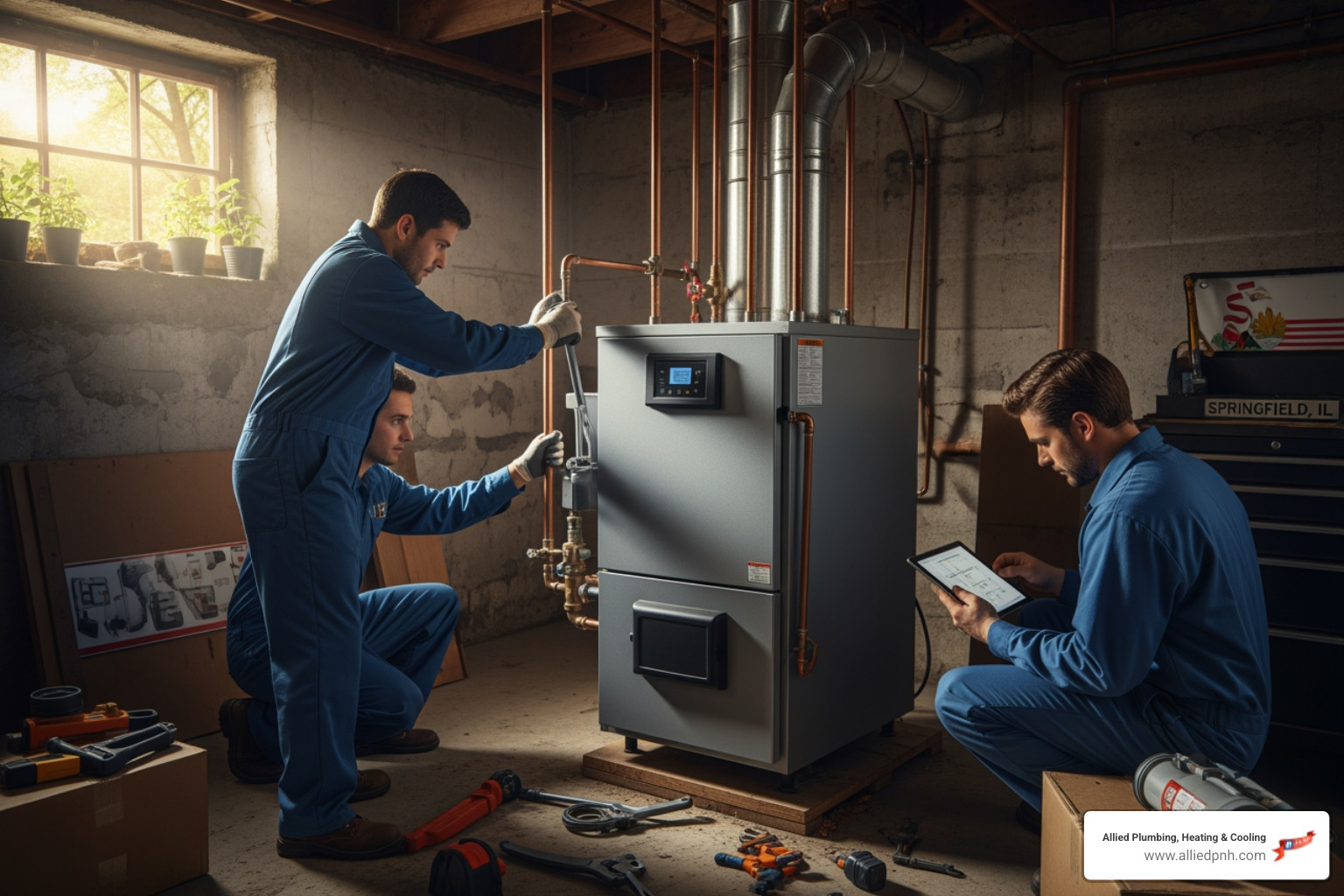
Boiler installation in Springfield, IL is a crucial decision for homeowners seeking reliable, efficient heating and a continuous supply of hot water during the region's cold winters. If you're considering upgrading or replacing your heating system, understanding the process, benefits, and options available will help you make an informed choice that keeps your home comfortable for decades to come.
Quick Overview: What You Need to Know About Boiler Installation
- System Types: Conventional, system, and combination (combi) boilers offer different benefits for hot water delivery and space requirements
- Efficiency Standards: New boilers must have an AFUE rating of at least 80%, with high-efficiency models reaching 90-98.5%
- Expected Lifespan: Most boilers provide reliable service for 15-30 years with proper maintenance
- Key Benefits: Radiant heat, improved air quality, quiet operation, and zoned heating capability
- Installation Timeline: Typical replacement takes 1-3 days depending on system complexity
- When to Replace: Consider upgrading if your system is 15-20+ years old, requires frequent repairs, or shows declining performance
For comprehensive heating solutions, explore our Indoor Air Quality Springfield services, and when you're ready to move forward, contact us for Heating Installation Springfield, IL.
Boilers create radiant heat that warms your home evenly without circulating dust and allergens like forced-air systems. This makes them an excellent choice for families with respiratory sensitivities. Modern boilers are exceptionally efficient and reliable, operating quietly while providing consistent comfort throughout your home. They can also integrate with zoned heating systems, allowing you to control temperatures in specific areas independently.
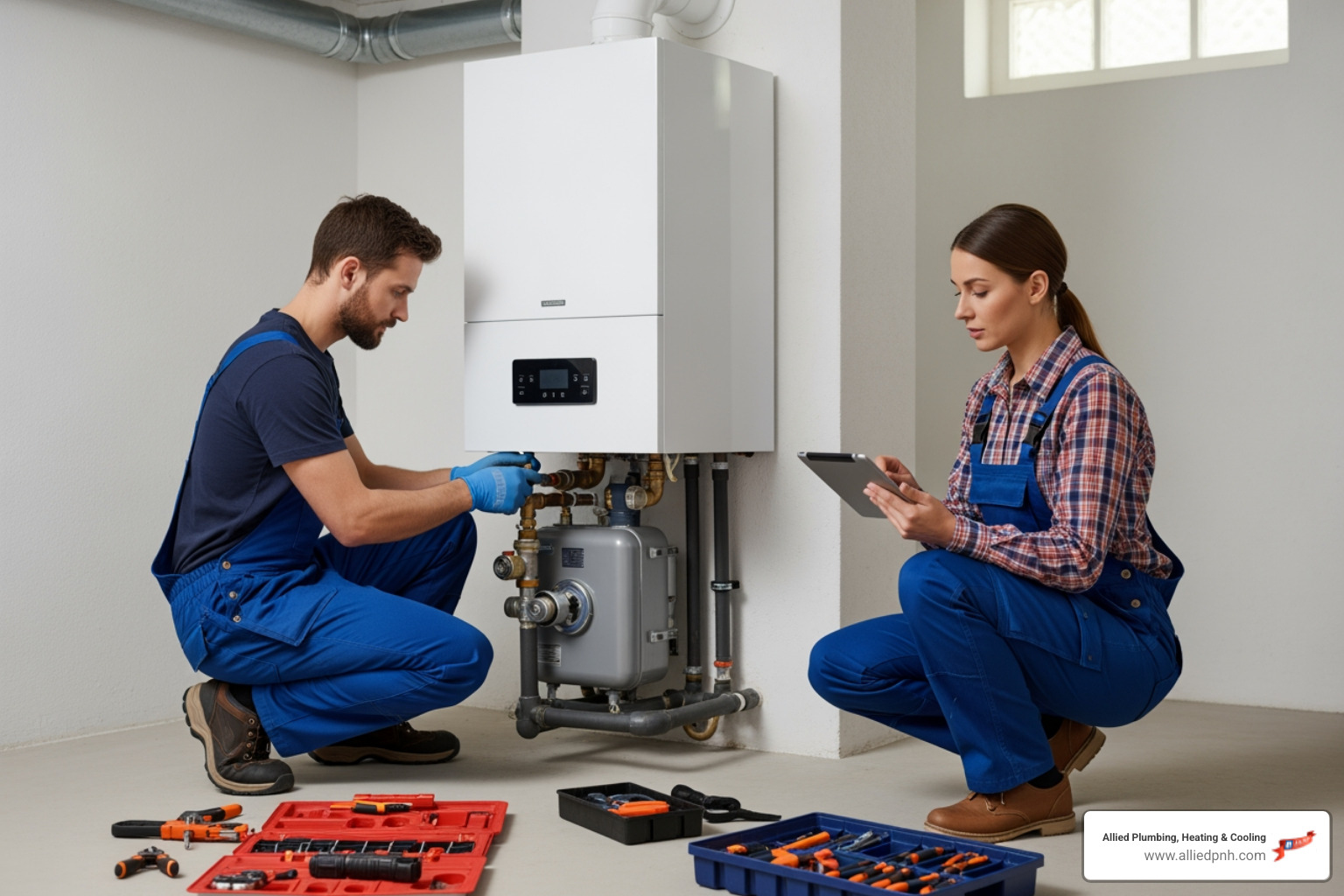
The Benefits of a Modern Boiler System
When it comes to keeping your home warm and cozy, especially during the chilly Illinois winters, a modern boiler system stands out. Boilers are powerful, efficient, and exceptionally reliable heating units. Upgrading to a new boiler system offers a wealth of advantages that go beyond just warmth, touching on comfort, air quality, and long-term savings.
Superior Comfort and Air Quality
Imagine a warmth that gently accepts every corner of your home, without the sudden blasts of hot air or the constant circulation of dust. That's the magic of radiant heat from a boiler. Unlike forced-air systems, boilers don't rely on blowing air through ducts. Instead, they heat water that circulates through radiators or underfloor piping, creating a consistent, even warmth that permeates your living spaces.
- Even Heat Distribution: Boiler systems provide a remarkably uniform heat, eliminating cold spots and ensuring every room feels comfortable. This is because heat radiates from the surfaces themselves, rather than being pushed through vents.
- No Forced Air Circulation: This is a game-changer for Indoor Air Quality Springfield. Since boilers don't blow air, they don't circulate allergens, dust, pet dander, or other airborne irritants throughout your home. This makes them an ideal choice for households with allergy sufferers or those with respiratory sensitivities.
- Reduced Dust and Allergens: Without air being constantly pushed through ducts, there's less disturbance of settled dust and fewer opportunities for new dust to accumulate within the heating system itself.
- Quiet Operation: Boilers operate quietly, minimizing disruptive noise in your home. You'll barely notice they're working, allowing for a peaceful and serene environment.
- Consistent Temperature Control: Modern boilers, especially when paired with Smart Thermostats Springfield, IL, offer precise temperature control, maintaining your desired warmth with minimal fluctuations.
Efficiency and Reliability
Boilers are renowned for their robust construction and impressive longevity. These systems are built to last, providing years of consistent, trouble-free heating.
- Long Lifespan: Most boilers provide reliable service for 15-30 years, though their performance may begin to decline after 20 years due to natural degradation of internal components, corrosion, and sediment buildup. This extended lifespan means less frequent replacement and a better return on your investment.
- Durable Components: Designed for heavy-duty performance, boiler components are built to withstand the rigors of constant heating, contributing to their exceptional reliability.
- Lower Fuel Consumption: High-efficiency boilers convert a significant percentage of their fuel into usable heat, leading to lower operating costs. We'll dig deeper into efficiency ratings shortly, but suffice it to say, a modern boiler can significantly reduce your monthly energy bills.
- Zoned Heating Springfield, IL Potential: Boilers integrate beautifully into zoned heating systems. This allows you to control specific areas' temperatures independently, ensuring you only heat the spaces you're using. Imagine setting your living room to a comfortable temperature while keeping bedrooms cooler at night, or vice versa. This can lead to substantial energy savings and personalized comfort.
- Fewer Repairs Over Time: With proper installation and regular maintenance, boilers are known for their dependable performance, often requiring fewer repairs compared to other heating systems.
Choosing the Right Boiler for Your Springfield Home
Selecting the perfect boiler for your home is a decision that impacts comfort, energy bills, and peace of mind for years to come. It's not a one-size-fits-all situation; factors like your home's size, layout, insulation, and hot water needs all play a crucial role.
Understanding Boiler Types
Boiler systems are fundamentally different from traditional heating systems and require specialized knowledge. There are several main types of boilers, each with unique characteristics:
- Conventional Boilers (Heat-Only): Also known as regular or traditional boilers, these systems work with a separate hot water cylinder and often a cold water storage tank in the loft. They are ideal for larger homes with multiple bathrooms where there's a high demand for hot water. They provide a continuous supply of hot water to multiple taps simultaneously.
- System Boilers: Similar to conventional boilers, system boilers also use a hot water storage cylinder, but most of the major components (like the pump and expansion vessel) are built into the boiler itself. This makes them more compact and easier to install. They don't require a cold water storage tank, freeing up loft space. They're also great for homes with multiple bathrooms.
- Combination (Combi) Boilers: These are the most popular choice for smaller to medium-sized homes. Combi boilers provide both heating and hot water directly from the unit, on demand, without the need for a separate hot water tank or cold water storage. This means endless hot water whenever you need it, and they save a significant amount of space. However, they may struggle to supply hot water to multiple taps at once without a drop in pressure.
- Condensing vs. Non-Condensing Technology: Modern boilers are almost exclusively condensing boilers. They are highly efficient because they capture heat from the exhaust gases that would otherwise be lost through the flue. Non-condensing boilers, found in older systems, don't have this technology and are much less efficient.
- Fuel Sources: In Springfield, IL, most residential boilers are powered by natural gas, which is a readily available and relatively economical fuel source. Oil-fired boilers are also an option, though less common for new installations in urban areas.
| Boiler Type | Hot Water Delivery | Space Requirements | System Complexity |
|---|---|---|---|
| Conventional | Stored (high volume) | High (tanks needed) | Moderate |
| System | Stored (high volume) | Moderate (no cold tank) | Moderate |
| Combi | On-demand (limited simultaneous) | Low (no tanks) | Low |
When choosing, we'll consider your home's square footage, layout, insulation levels, and your family's hot water usage patterns to recommend the perfect fit.
Decoding Efficiency: What is an AFUE Rating?
When we talk about boiler efficiency, the key term you'll encounter is Annual fuel-utilization-efficiency (AFUE). This score tells you how much energy your boiler converts into usable heat for your home, as opposed to how much is lost up the chimney or elsewhere.
- Minimum Efficiency Standards: New boilers must have an AFUE rating of at least 80 percent. This means that at least 80% of the fuel your boiler consumes is converted into heat for your home, with the remaining 20% being lost.
- High-Efficiency Models: For those looking to maximize savings and minimize environmental impact, high-efficiency models are available with AFUE ratings ranging from 90 to 98.5 percent. This means nearly all the fuel is converted into heat, making them incredibly cost-effective to operate.
- Long-Term Fuel Savings: A higher AFUE rating directly translates into a lower operating cost over the lifetime of the boiler. While high-efficiency models might have a higher upfront cost, the savings on your energy bills can quickly make up the difference, paying for themselves within just a few short years.
- Environmental Impact: Choosing a high-efficiency boiler also means reducing your carbon footprint. By consuming less fuel to produce the same amount of heat, you're contributing to a healthier environment.
- HVAC Products in Springfield: We offer a range of high-efficiency boilers and other HVAC products designed to meet the demands of Springfield's climate. Our team can guide you through the options, helping you select a boiler that balances performance, efficiency, and your budget.
The Process for Professional Boiler Installation in Springfield, IL
Installing a new boiler is a significant home improvement that requires precision, expertise, and adherence to safety standards. When you entrust us with your boiler installation in Springfield, IL, you're choosing a team that understands the nuances of these complex systems.
Key Signs It's Time for a New Boiler
Even the most reliable boilers eventually reach the end of their lifespan. Knowing when to replace your old unit can save you from unexpected breakdowns, discomfort, and escalating energy costs. Here are the key indicators that it might be time to consider a new boiler installation:
- Age (15-20+ years): Most boilers provide reliable service for 15-30 years. However, their performance typically declines after 20 years due to the natural degradation of internal components, corrosion, and sediment buildup. If your boiler is approaching or has exceeded this age, it's worth considering an upgrade.
- Frequent Breakdowns: Are you calling for Boiler Repair Springfield, IL more often than you'd like? Frequent repairs are a clear sign that your system is struggling and likely becoming more expensive to maintain than to replace.
- Rising Energy Bills: If your heating costs are steadily climbing without a significant change in usage, your boiler's efficiency might be plummeting. Older boilers simply aren't as efficient as modern models, and this inefficiency can hit your wallet hard.
- Leaks or Corrosion: Visible leaks or rust and corrosion on your boiler or its piping are serious warning signs. These can indicate internal damage and potential safety hazards.
- Strange Noises: Boilers should operate relatively quietly. Banging, clanging, whistling, gurgling, or rumbling sounds (often referred to as "kettling") can indicate issues like trapped air, lime scale buildup, or a failing pump. If you're hearing Why is Your Boiler Making Whistling Sounds? or other unusual noises, it's time for an inspection.
- Inconsistent Heating: If some rooms are too hot while others remain cold, or if your home isn't reaching your desired temperature, your boiler might be struggling to distribute heat effectively.
- Weak Water Pressure or Cold Radiators: These can point to circulation problems within the system, often due to blockages or a failing pump.
- Yellow Burner Flame: For gas boilers, the burner flame should be crisp blue. A yellow or orange flame indicates incomplete combustion, which can produce dangerous carbon monoxide. This is a critical safety issue and requires immediate attention.
- Signs It's Time for Home Furnace Replacement: While this link refers to furnaces, many of the underlying principles of declining performance and efficiency apply equally to boilers.
The Step-by-Step Guide to Your Boiler Installation in Springfield, IL
Our professional boiler installation in Springfield, IL follows a meticulous process to ensure efficiency, safety, and your complete satisfaction. A typical replacement usually takes 1-3 days, depending on the complexity of your system and existing pipework.
- Initial Consultation: We begin with a thorough assessment of your home's heating needs, considering its size, insulation, existing pipework, and your hot water demands. We'll discuss your preferences and answer any questions you have.
- System Sizing and Selection: Based on our assessment, we'll recommend the ideal boiler type and size for your home. Proper sizing is crucial; an undersized boiler won't heat effectively, while an oversized one will cycle inefficiently.
- Removal of Old Unit: Our certified technicians will carefully disconnect and remove your old boiler, ensuring all safety protocols are followed, and the old unit is disposed of responsibly.
- Site Preparation: We'll prepare the installation area, ensuring it's clean, level, and meets all code requirements for the new unit. This may involve minor adjustments to existing plumbing or electrical connections.
- New Boiler Placement and Connection: The new boiler is carefully positioned and securely connected to your home's heating and hot water systems. This includes precise pipe fitting for water lines and gas connections (if applicable).
- Venting and Pipework: We'll install or upgrade the necessary venting system to ensure safe and efficient expulsion of combustion gases. All pipework is expertly fitted and sealed to prevent leaks and optimize flow.
- System Testing and Calibration: Once installed, the boiler undergoes rigorous testing. We check for leaks, verify gas pressure and flow, test all safety devices, examine electrical connections, and perform flue gas analysis. The system is then calibrated for optimal performance and efficiency.
- Homeowner Walkthrough: Finally, we'll walk you through the new system's operation, explaining its features, controls, and basic maintenance requirements. We'll ensure you're comfortable and confident in using your new boiler.
Maintaining Your New Boiler for Lasting Performance
Just like a well-tuned car, your new boiler needs regular attention to perform at its best. Consistent maintenance not only extends the life of your system but also ensures it operates efficiently and safely, keeping your home warm and your energy bills in check.
Essential Post-Installation Maintenance
While your new boiler is robust, a little care goes a long way. Think of it as a partnership between you and your heating system.
- Annual Professional Servicing: This is the most crucial step. We recommend scheduling an annual check-up with a qualified technician. During this service, our team will perform a thorough inspection of the entire system, clean and adjust burners, verify gas pressure and flow, test all safety devices, examine electrical connections, perform flue gas analysis, and check the condensate system. This proactive approach helps prevent breakdowns, maintains efficiency, and ensures your warranty remains valid, as many manufacturers require proof of annual maintenance for warranty claims. This is part of Our Role in Reliable Heating Services and falls under our comprehensive Heating Service Springfield, IL offerings.
- Checking System Pressure: Your boiler's pressure gauge should typically be between 1 and 1.5 bar when the system is cold. If it consistently drops, it could indicate a leak or other issue. We can show you how to monitor this and advise on when to add pressure if needed.
- Bleeding Radiators: Over time, air can get trapped in your radiators, creating cold spots and reducing efficiency. Learning how to bleed your radiators can release this trapped air, allowing hot water to circulate freely.
- Keeping Vents Clear: Ensure that the area around your boiler and any external vents or flues are clear of obstructions like debris, snow, or foliage. This ensures proper airflow and safe operation.
Troubleshooting Common Boiler Issues
Even with a new boiler, occasional hiccups can occur. Knowing what to look for and when to call for professional help can prevent minor issues from becoming major problems.
- Why Your Boiler is Losing Pressure Constantly: A frequent drop in pressure often indicates a leak in the system or a faulty expansion vessel. While you can re-pressurize the system yourself, persistent drops warrant a professional inspection.
- No Heat or Hot Water: This is perhaps the most frustrating issue. First, check your thermostat settings and ensure your boiler is switched on. If these seem fine, it could be due to a pilot light issue (for older models), a faulty diverter valve (in combi boilers), or a pump problem.
- Troubleshooting a Boiler That's Short Cycling: If your boiler turns on and off too frequently, it's called short cycling. This can be caused by an oversized boiler, a faulty thermostat, or issues with water flow. It wastes energy and puts undue stress on components.
- Kettling or Why is Your Boiler Making Whistling Sounds?: These noises often indicate a buildup of lime scale or sludge within the heat exchanger. This restricts water flow, reduces efficiency, and can eventually damage the boiler. A professional power flush can often resolve this.
- When to Call for Boiler Repair Sherman, IL: If you notice any visible leaks, a yellow burner flame, persistent strange noises, a sudden drop in efficiency, or if you're simply unsure about an issue, it's always best to call our professional team. Never attempt complex repairs yourself, as this can be dangerous and void your warranty.
Frequently Asked Questions about Boiler Installation
We understand you have questions, and we're here to provide clear, helpful answers to ensure you feel confident about your boiler installation in Springfield, IL.
Are there local rebates or incentives for installing a new boiler in Springfield, IL?
Yes, there are often various programs available that can help offset the cost of a new boiler installation, especially for high-efficiency models.
- Energy Efficiency Programs: Local utility companies, like Ameren Illinois, occasionally offer rebates or incentives for homeowners who upgrade to energy-efficient heating systems. These programs are designed to encourage energy conservation and reduce utility costs for consumers.
- Utility Company Rebates: Keep an eye on your specific utility provider's website or contact them directly. They often have seasonal or ongoing rebate programs for installing new, high-efficiency boilers that meet certain criteria.
- Federal Tax Credits: The federal government sometimes offers tax credits for installing energy-efficient home improvements, including certain high-efficiency boilers. These can change, so it's wise to check the latest IRS guidelines or consult a tax professional.
- Manufacturer Promotions: Boiler manufacturers frequently run their own promotions or rebates on specific models. Your installer can inform you about any current offers that might apply to your chosen system.
We recommend checking with your local utility provider and our team for current offers and eligibility requirements for high-efficiency models. These incentives can make upgrading to a more efficient system even more appealing.
How do I choose a reputable boiler installation company in Springfield, IL?
Choosing the right company for your boiler installation in Springfield, IL is just as important as choosing the right boiler. You want a team you can trust to get the job done right, safely, and efficiently.
- Look for Licensed and Insured Technicians: Always ensure that the company you choose employs licensed and insured technicians. This protects you in case of any accidents or issues during the installation process.
- Check for Extensive Experience and a Long History of Service: A company with a long-standing presence in the Springfield, IL area demonstrates a commitment to the community and a wealth of experience. As a 3-generation business providing 24/7 plumbing, heating, and cooling services since 1977, we bring decades of expertise to every project.
- Read Customer Reviews: Online reviews on platforms like Google, Facebook, and Angi provide invaluable insights into a company's customer service, professionalism, and quality of work. Look for patterns of positive feedback regarding boiler installations specifically.
- Inquire About Warranties and Satisfaction Guarantees: A reputable company will stand behind its work. Ask about the warranties offered on both the equipment and the installation labor. Our commitment to customer satisfaction includes the Daikin Comfort Promise with 12-year warranties, ensuring reliability and peace of mind for our clients.
How long does a typical boiler installation take?
The timeline for a boiler installation in Springfield, IL can vary, but for a standard replacement process, you can generally expect it to take:
- Usually 1-3 days: Most residential boiler installations, especially replacements where existing pipework is largely compatible, can be completed within one to three days. This includes the removal of the old unit, preparation of the site, installation of the new boiler, and thorough testing.
- Varies by System Complexity: If your installation involves significant changes to your existing heating system, such as new pipework, radiator upgrades, or a conversion from a different heating type, the process could take longer.
- Depends on Existing Pipework Condition: The condition and compatibility of your current piping and venting systems also play a role. If extensive modifications are needed, this will add to the overall timeline.
Your installer will provide a specific timeline after the initial consultation and assessment of your home's unique requirements. We strive to complete installations efficiently while maintaining our high standards of quality and safety, minimizing disruption to your home.
Your Partner for Reliable Heating in Springfield
This guide provides the essential knowledge for your upcoming boiler project. A successful boiler installation in Springfield, IL hinges on choosing the right system and ensuring it's installed by experienced professionals. For over three generations, Allied Plumbing, Heating & Cooling has provided expert Heating Installation Springfield, IL, ensuring families stay warm and comfortable. If you're ready to upgrade your home's heating heartbeat, explore our comprehensive Boilers Springfield, IL services.
Your Guide to a Warmer Home

Boiler installation in Springfield, IL is a crucial decision for homeowners seeking reliable, efficient heating and a continuous supply of hot water during the region's cold winters. If you're considering upgrading or replacing your heating system, understanding the process, benefits, and options available will help you make an informed choice that keeps your home comfortable for decades to come.
Quick Overview: What You Need to Know About Boiler Installation
- System Types: Conventional, system, and combination (combi) boilers offer different benefits for hot water delivery and space requirements
- Efficiency Standards: New boilers must have an AFUE rating of at least 80%, with high-efficiency models reaching 90-98.5%
- Expected Lifespan: Most boilers provide reliable service for 15-30 years with proper maintenance
- Key Benefits: Radiant heat, improved air quality, quiet operation, and zoned heating capability
- Installation Timeline: Typical replacement takes 1-3 days depending on system complexity
- When to Replace: Consider upgrading if your system is 15-20+ years old, requires frequent repairs, or shows declining performance
For comprehensive heating solutions, explore our Indoor Air Quality Springfield services, and when you're ready to move forward, contact us for Heating Installation Springfield, IL.
Boilers create radiant heat that warms your home evenly without circulating dust and allergens like forced-air systems. This makes them an excellent choice for families with respiratory sensitivities. Modern boilers are exceptionally efficient and reliable, operating quietly while providing consistent comfort throughout your home. They can also integrate with zoned heating systems, allowing you to control temperatures in specific areas independently.

The Benefits of a Modern Boiler System
When it comes to keeping your home warm and cozy, especially during the chilly Illinois winters, a modern boiler system stands out. Boilers are powerful, efficient, and exceptionally reliable heating units. Upgrading to a new boiler system offers a wealth of advantages that go beyond just warmth, touching on comfort, air quality, and long-term savings.
Superior Comfort and Air Quality
Imagine a warmth that gently accepts every corner of your home, without the sudden blasts of hot air or the constant circulation of dust. That's the magic of radiant heat from a boiler. Unlike forced-air systems, boilers don't rely on blowing air through ducts. Instead, they heat water that circulates through radiators or underfloor piping, creating a consistent, even warmth that permeates your living spaces.
- Even Heat Distribution: Boiler systems provide a remarkably uniform heat, eliminating cold spots and ensuring every room feels comfortable. This is because heat radiates from the surfaces themselves, rather than being pushed through vents.
- No Forced Air Circulation: This is a game-changer for Indoor Air Quality Springfield. Since boilers don't blow air, they don't circulate allergens, dust, pet dander, or other airborne irritants throughout your home. This makes them an ideal choice for households with allergy sufferers or those with respiratory sensitivities.
- Reduced Dust and Allergens: Without air being constantly pushed through ducts, there's less disturbance of settled dust and fewer opportunities for new dust to accumulate within the heating system itself.
- Quiet Operation: Boilers operate quietly, minimizing disruptive noise in your home. You'll barely notice they're working, allowing for a peaceful and serene environment.
- Consistent Temperature Control: Modern boilers, especially when paired with Smart Thermostats Springfield, IL, offer precise temperature control, maintaining your desired warmth with minimal fluctuations.
Efficiency and Reliability
Boilers are renowned for their robust construction and impressive longevity. These systems are built to last, providing years of consistent, trouble-free heating.
- Long Lifespan: Most boilers provide reliable service for 15-30 years, though their performance may begin to decline after 20 years due to natural degradation of internal components, corrosion, and sediment buildup. This extended lifespan means less frequent replacement and a better return on your investment.
- Durable Components: Designed for heavy-duty performance, boiler components are built to withstand the rigors of constant heating, contributing to their exceptional reliability.
- Lower Fuel Consumption: High-efficiency boilers convert a significant percentage of their fuel into usable heat, leading to lower operating costs. We'll dig deeper into efficiency ratings shortly, but suffice it to say, a modern boiler can significantly reduce your monthly energy bills.
- Zoned Heating Springfield, IL Potential: Boilers integrate beautifully into zoned heating systems. This allows you to control specific areas' temperatures independently, ensuring you only heat the spaces you're using. Imagine setting your living room to a comfortable temperature while keeping bedrooms cooler at night, or vice versa. This can lead to substantial energy savings and personalized comfort.
- Fewer Repairs Over Time: With proper installation and regular maintenance, boilers are known for their dependable performance, often requiring fewer repairs compared to other heating systems.
Choosing the Right Boiler for Your Springfield Home
Selecting the perfect boiler for your home is a decision that impacts comfort, energy bills, and peace of mind for years to come. It's not a one-size-fits-all situation; factors like your home's size, layout, insulation, and hot water needs all play a crucial role.
Understanding Boiler Types
Boiler systems are fundamentally different from traditional heating systems and require specialized knowledge. There are several main types of boilers, each with unique characteristics:
- Conventional Boilers (Heat-Only): Also known as regular or traditional boilers, these systems work with a separate hot water cylinder and often a cold water storage tank in the loft. They are ideal for larger homes with multiple bathrooms where there's a high demand for hot water. They provide a continuous supply of hot water to multiple taps simultaneously.
- System Boilers: Similar to conventional boilers, system boilers also use a hot water storage cylinder, but most of the major components (like the pump and expansion vessel) are built into the boiler itself. This makes them more compact and easier to install. They don't require a cold water storage tank, freeing up loft space. They're also great for homes with multiple bathrooms.
- Combination (Combi) Boilers: These are the most popular choice for smaller to medium-sized homes. Combi boilers provide both heating and hot water directly from the unit, on demand, without the need for a separate hot water tank or cold water storage. This means endless hot water whenever you need it, and they save a significant amount of space. However, they may struggle to supply hot water to multiple taps at once without a drop in pressure.
- Condensing vs. Non-Condensing Technology: Modern boilers are almost exclusively condensing boilers. They are highly efficient because they capture heat from the exhaust gases that would otherwise be lost through the flue. Non-condensing boilers, found in older systems, don't have this technology and are much less efficient.
- Fuel Sources: In Springfield, IL, most residential boilers are powered by natural gas, which is a readily available and relatively economical fuel source. Oil-fired boilers are also an option, though less common for new installations in urban areas.
| Boiler Type | Hot Water Delivery | Space Requirements | System Complexity |
|---|---|---|---|
| Conventional | Stored (high volume) | High (tanks needed) | Moderate |
| System | Stored (high volume) | Moderate (no cold tank) | Moderate |
| Combi | On-demand (limited simultaneous) | Low (no tanks) | Low |
When choosing, we'll consider your home's square footage, layout, insulation levels, and your family's hot water usage patterns to recommend the perfect fit.
Decoding Efficiency: What is an AFUE Rating?
When we talk about boiler efficiency, the key term you'll encounter is Annual fuel-utilization-efficiency (AFUE). This score tells you how much energy your boiler converts into usable heat for your home, as opposed to how much is lost up the chimney or elsewhere.
- Minimum Efficiency Standards: New boilers must have an AFUE rating of at least 80 percent. This means that at least 80% of the fuel your boiler consumes is converted into heat for your home, with the remaining 20% being lost.
- High-Efficiency Models: For those looking to maximize savings and minimize environmental impact, high-efficiency models are available with AFUE ratings ranging from 90 to 98.5 percent. This means nearly all the fuel is converted into heat, making them incredibly cost-effective to operate.
- Long-Term Fuel Savings: A higher AFUE rating directly translates into a lower operating cost over the lifetime of the boiler. While high-efficiency models might have a higher upfront cost, the savings on your energy bills can quickly make up the difference, paying for themselves within just a few short years.
- Environmental Impact: Choosing a high-efficiency boiler also means reducing your carbon footprint. By consuming less fuel to produce the same amount of heat, you're contributing to a healthier environment.
- HVAC Products in Springfield: We offer a range of high-efficiency boilers and other HVAC products designed to meet the demands of Springfield's climate. Our team can guide you through the options, helping you select a boiler that balances performance, efficiency, and your budget.
The Process for Professional Boiler Installation in Springfield, IL
Installing a new boiler is a significant home improvement that requires precision, expertise, and adherence to safety standards. When you entrust us with your boiler installation in Springfield, IL, you're choosing a team that understands the nuances of these complex systems.
Key Signs It's Time for a New Boiler
Even the most reliable boilers eventually reach the end of their lifespan. Knowing when to replace your old unit can save you from unexpected breakdowns, discomfort, and escalating energy costs. Here are the key indicators that it might be time to consider a new boiler installation:
- Age (15-20+ years): Most boilers provide reliable service for 15-30 years. However, their performance typically declines after 20 years due to the natural degradation of internal components, corrosion, and sediment buildup. If your boiler is approaching or has exceeded this age, it's worth considering an upgrade.
- Frequent Breakdowns: Are you calling for Boiler Repair Springfield, IL more often than you'd like? Frequent repairs are a clear sign that your system is struggling and likely becoming more expensive to maintain than to replace.
- Rising Energy Bills: If your heating costs are steadily climbing without a significant change in usage, your boiler's efficiency might be plummeting. Older boilers simply aren't as efficient as modern models, and this inefficiency can hit your wallet hard.
- Leaks or Corrosion: Visible leaks or rust and corrosion on your boiler or its piping are serious warning signs. These can indicate internal damage and potential safety hazards.
- Strange Noises: Boilers should operate relatively quietly. Banging, clanging, whistling, gurgling, or rumbling sounds (often referred to as "kettling") can indicate issues like trapped air, lime scale buildup, or a failing pump. If you're hearing Why is Your Boiler Making Whistling Sounds? or other unusual noises, it's time for an inspection.
- Inconsistent Heating: If some rooms are too hot while others remain cold, or if your home isn't reaching your desired temperature, your boiler might be struggling to distribute heat effectively.
- Weak Water Pressure or Cold Radiators: These can point to circulation problems within the system, often due to blockages or a failing pump.
- Yellow Burner Flame: For gas boilers, the burner flame should be crisp blue. A yellow or orange flame indicates incomplete combustion, which can produce dangerous carbon monoxide. This is a critical safety issue and requires immediate attention.
- Signs It's Time for Home Furnace Replacement: While this link refers to furnaces, many of the underlying principles of declining performance and efficiency apply equally to boilers.
The Step-by-Step Guide to Your Boiler Installation in Springfield, IL
Our professional boiler installation in Springfield, IL follows a meticulous process to ensure efficiency, safety, and your complete satisfaction. A typical replacement usually takes 1-3 days, depending on the complexity of your system and existing pipework.
- Initial Consultation: We begin with a thorough assessment of your home's heating needs, considering its size, insulation, existing pipework, and your hot water demands. We'll discuss your preferences and answer any questions you have.
- System Sizing and Selection: Based on our assessment, we'll recommend the ideal boiler type and size for your home. Proper sizing is crucial; an undersized boiler won't heat effectively, while an oversized one will cycle inefficiently.
- Removal of Old Unit: Our certified technicians will carefully disconnect and remove your old boiler, ensuring all safety protocols are followed, and the old unit is disposed of responsibly.
- Site Preparation: We'll prepare the installation area, ensuring it's clean, level, and meets all code requirements for the new unit. This may involve minor adjustments to existing plumbing or electrical connections.
- New Boiler Placement and Connection: The new boiler is carefully positioned and securely connected to your home's heating and hot water systems. This includes precise pipe fitting for water lines and gas connections (if applicable).
- Venting and Pipework: We'll install or upgrade the necessary venting system to ensure safe and efficient expulsion of combustion gases. All pipework is expertly fitted and sealed to prevent leaks and optimize flow.
- System Testing and Calibration: Once installed, the boiler undergoes rigorous testing. We check for leaks, verify gas pressure and flow, test all safety devices, examine electrical connections, and perform flue gas analysis. The system is then calibrated for optimal performance and efficiency.
- Homeowner Walkthrough: Finally, we'll walk you through the new system's operation, explaining its features, controls, and basic maintenance requirements. We'll ensure you're comfortable and confident in using your new boiler.
Maintaining Your New Boiler for Lasting Performance
Just like a well-tuned car, your new boiler needs regular attention to perform at its best. Consistent maintenance not only extends the life of your system but also ensures it operates efficiently and safely, keeping your home warm and your energy bills in check.
Essential Post-Installation Maintenance
While your new boiler is robust, a little care goes a long way. Think of it as a partnership between you and your heating system.
- Annual Professional Servicing: This is the most crucial step. We recommend scheduling an annual check-up with a qualified technician. During this service, our team will perform a thorough inspection of the entire system, clean and adjust burners, verify gas pressure and flow, test all safety devices, examine electrical connections, perform flue gas analysis, and check the condensate system. This proactive approach helps prevent breakdowns, maintains efficiency, and ensures your warranty remains valid, as many manufacturers require proof of annual maintenance for warranty claims. This is part of Our Role in Reliable Heating Services and falls under our comprehensive Heating Service Springfield, IL offerings.
- Checking System Pressure: Your boiler's pressure gauge should typically be between 1 and 1.5 bar when the system is cold. If it consistently drops, it could indicate a leak or other issue. We can show you how to monitor this and advise on when to add pressure if needed.
- Bleeding Radiators: Over time, air can get trapped in your radiators, creating cold spots and reducing efficiency. Learning how to bleed your radiators can release this trapped air, allowing hot water to circulate freely.
- Keeping Vents Clear: Ensure that the area around your boiler and any external vents or flues are clear of obstructions like debris, snow, or foliage. This ensures proper airflow and safe operation.
Troubleshooting Common Boiler Issues
Even with a new boiler, occasional hiccups can occur. Knowing what to look for and when to call for professional help can prevent minor issues from becoming major problems.
- Why Your Boiler is Losing Pressure Constantly: A frequent drop in pressure often indicates a leak in the system or a faulty expansion vessel. While you can re-pressurize the system yourself, persistent drops warrant a professional inspection.
- No Heat or Hot Water: This is perhaps the most frustrating issue. First, check your thermostat settings and ensure your boiler is switched on. If these seem fine, it could be due to a pilot light issue (for older models), a faulty diverter valve (in combi boilers), or a pump problem.
- Troubleshooting a Boiler That's Short Cycling: If your boiler turns on and off too frequently, it's called short cycling. This can be caused by an oversized boiler, a faulty thermostat, or issues with water flow. It wastes energy and puts undue stress on components.
- Kettling or Why is Your Boiler Making Whistling Sounds?: These noises often indicate a buildup of lime scale or sludge within the heat exchanger. This restricts water flow, reduces efficiency, and can eventually damage the boiler. A professional power flush can often resolve this.
- When to Call for Boiler Repair Sherman, IL: If you notice any visible leaks, a yellow burner flame, persistent strange noises, a sudden drop in efficiency, or if you're simply unsure about an issue, it's always best to call our professional team. Never attempt complex repairs yourself, as this can be dangerous and void your warranty.
Frequently Asked Questions about Boiler Installation
We understand you have questions, and we're here to provide clear, helpful answers to ensure you feel confident about your boiler installation in Springfield, IL.
Are there local rebates or incentives for installing a new boiler in Springfield, IL?
Yes, there are often various programs available that can help offset the cost of a new boiler installation, especially for high-efficiency models.
- Energy Efficiency Programs: Local utility companies, like Ameren Illinois, occasionally offer rebates or incentives for homeowners who upgrade to energy-efficient heating systems. These programs are designed to encourage energy conservation and reduce utility costs for consumers.
- Utility Company Rebates: Keep an eye on your specific utility provider's website or contact them directly. They often have seasonal or ongoing rebate programs for installing new, high-efficiency boilers that meet certain criteria.
- Federal Tax Credits: The federal government sometimes offers tax credits for installing energy-efficient home improvements, including certain high-efficiency boilers. These can change, so it's wise to check the latest IRS guidelines or consult a tax professional.
- Manufacturer Promotions: Boiler manufacturers frequently run their own promotions or rebates on specific models. Your installer can inform you about any current offers that might apply to your chosen system.
We recommend checking with your local utility provider and our team for current offers and eligibility requirements for high-efficiency models. These incentives can make upgrading to a more efficient system even more appealing.
How do I choose a reputable boiler installation company in Springfield, IL?
Choosing the right company for your boiler installation in Springfield, IL is just as important as choosing the right boiler. You want a team you can trust to get the job done right, safely, and efficiently.
- Look for Licensed and Insured Technicians: Always ensure that the company you choose employs licensed and insured technicians. This protects you in case of any accidents or issues during the installation process.
- Check for Extensive Experience and a Long History of Service: A company with a long-standing presence in the Springfield, IL area demonstrates a commitment to the community and a wealth of experience. As a 3-generation business providing 24/7 plumbing, heating, and cooling services since 1977, we bring decades of expertise to every project.
- Read Customer Reviews: Online reviews on platforms like Google, Facebook, and Angi provide invaluable insights into a company's customer service, professionalism, and quality of work. Look for patterns of positive feedback regarding boiler installations specifically.
- Inquire About Warranties and Satisfaction Guarantees: A reputable company will stand behind its work. Ask about the warranties offered on both the equipment and the installation labor. Our commitment to customer satisfaction includes the Daikin Comfort Promise with 12-year warranties, ensuring reliability and peace of mind for our clients.
How long does a typical boiler installation take?
The timeline for a boiler installation in Springfield, IL can vary, but for a standard replacement process, you can generally expect it to take:
- Usually 1-3 days: Most residential boiler installations, especially replacements where existing pipework is largely compatible, can be completed within one to three days. This includes the removal of the old unit, preparation of the site, installation of the new boiler, and thorough testing.
- Varies by System Complexity: If your installation involves significant changes to your existing heating system, such as new pipework, radiator upgrades, or a conversion from a different heating type, the process could take longer.
- Depends on Existing Pipework Condition: The condition and compatibility of your current piping and venting systems also play a role. If extensive modifications are needed, this will add to the overall timeline.
Your installer will provide a specific timeline after the initial consultation and assessment of your home's unique requirements. We strive to complete installations efficiently while maintaining our high standards of quality and safety, minimizing disruption to your home.
Your Partner for Reliable Heating in Springfield
This guide provides the essential knowledge for your upcoming boiler project. A successful boiler installation in Springfield, IL hinges on choosing the right system and ensuring it's installed by experienced professionals. For over three generations, Allied Plumbing, Heating & Cooling has provided expert Heating Installation Springfield, IL, ensuring families stay warm and comfortable. If you're ready to upgrade your home's heating heartbeat, explore our comprehensive Boilers Springfield, IL services.

Your Guide to a Warmer Home

Boiler installation in Springfield, IL is a crucial decision for homeowners seeking reliable, efficient heating and a continuous supply of hot water during the region's cold winters. If you're considering upgrading or replacing your heating system, understanding the process, benefits, and options available will help you make an informed choice that keeps your home comfortable for decades to come.
Quick Overview: What You Need to Know About Boiler Installation
- System Types: Conventional, system, and combination (combi) boilers offer different benefits for hot water delivery and space requirements
- Efficiency Standards: New boilers must have an AFUE rating of at least 80%, with high-efficiency models reaching 90-98.5%
- Expected Lifespan: Most boilers provide reliable service for 15-30 years with proper maintenance
- Key Benefits: Radiant heat, improved air quality, quiet operation, and zoned heating capability
- Installation Timeline: Typical replacement takes 1-3 days depending on system complexity
- When to Replace: Consider upgrading if your system is 15-20+ years old, requires frequent repairs, or shows declining performance
For comprehensive heating solutions, explore our Indoor Air Quality Springfield services, and when you're ready to move forward, contact us for Heating Installation Springfield, IL.
Boilers create radiant heat that warms your home evenly without circulating dust and allergens like forced-air systems. This makes them an excellent choice for families with respiratory sensitivities. Modern boilers are exceptionally efficient and reliable, operating quietly while providing consistent comfort throughout your home. They can also integrate with zoned heating systems, allowing you to control temperatures in specific areas independently.

The Benefits of a Modern Boiler System
When it comes to keeping your home warm and cozy, especially during the chilly Illinois winters, a modern boiler system stands out. Boilers are powerful, efficient, and exceptionally reliable heating units. Upgrading to a new boiler system offers a wealth of advantages that go beyond just warmth, touching on comfort, air quality, and long-term savings.
Superior Comfort and Air Quality
Imagine a warmth that gently accepts every corner of your home, without the sudden blasts of hot air or the constant circulation of dust. That's the magic of radiant heat from a boiler. Unlike forced-air systems, boilers don't rely on blowing air through ducts. Instead, they heat water that circulates through radiators or underfloor piping, creating a consistent, even warmth that permeates your living spaces.
- Even Heat Distribution: Boiler systems provide a remarkably uniform heat, eliminating cold spots and ensuring every room feels comfortable. This is because heat radiates from the surfaces themselves, rather than being pushed through vents.
- No Forced Air Circulation: This is a game-changer for Indoor Air Quality Springfield. Since boilers don't blow air, they don't circulate allergens, dust, pet dander, or other airborne irritants throughout your home. This makes them an ideal choice for households with allergy sufferers or those with respiratory sensitivities.
- Reduced Dust and Allergens: Without air being constantly pushed through ducts, there's less disturbance of settled dust and fewer opportunities for new dust to accumulate within the heating system itself.
- Quiet Operation: Boilers operate quietly, minimizing disruptive noise in your home. You'll barely notice they're working, allowing for a peaceful and serene environment.
- Consistent Temperature Control: Modern boilers, especially when paired with Smart Thermostats Springfield, IL, offer precise temperature control, maintaining your desired warmth with minimal fluctuations.
Efficiency and Reliability
Boilers are renowned for their robust construction and impressive longevity. These systems are built to last, providing years of consistent, trouble-free heating.
- Long Lifespan: Most boilers provide reliable service for 15-30 years, though their performance may begin to decline after 20 years due to natural degradation of internal components, corrosion, and sediment buildup. This extended lifespan means less frequent replacement and a better return on your investment.
- Durable Components: Designed for heavy-duty performance, boiler components are built to withstand the rigors of constant heating, contributing to their exceptional reliability.
- Lower Fuel Consumption: High-efficiency boilers convert a significant percentage of their fuel into usable heat, leading to lower operating costs. We'll dig deeper into efficiency ratings shortly, but suffice it to say, a modern boiler can significantly reduce your monthly energy bills.
- Zoned Heating Springfield, IL Potential: Boilers integrate beautifully into zoned heating systems. This allows you to control specific areas' temperatures independently, ensuring you only heat the spaces you're using. Imagine setting your living room to a comfortable temperature while keeping bedrooms cooler at night, or vice versa. This can lead to substantial energy savings and personalized comfort.
- Fewer Repairs Over Time: With proper installation and regular maintenance, boilers are known for their dependable performance, often requiring fewer repairs compared to other heating systems.
Choosing the Right Boiler for Your Springfield Home
Selecting the perfect boiler for your home is a decision that impacts comfort, energy bills, and peace of mind for years to come. It's not a one-size-fits-all situation; factors like your home's size, layout, insulation, and hot water needs all play a crucial role.
Understanding Boiler Types
Boiler systems are fundamentally different from traditional heating systems and require specialized knowledge. There are several main types of boilers, each with unique characteristics:
- Conventional Boilers (Heat-Only): Also known as regular or traditional boilers, these systems work with a separate hot water cylinder and often a cold water storage tank in the loft. They are ideal for larger homes with multiple bathrooms where there's a high demand for hot water. They provide a continuous supply of hot water to multiple taps simultaneously.
- System Boilers: Similar to conventional boilers, system boilers also use a hot water storage cylinder, but most of the major components (like the pump and expansion vessel) are built into the boiler itself. This makes them more compact and easier to install. They don't require a cold water storage tank, freeing up loft space. They're also great for homes with multiple bathrooms.
- Combination (Combi) Boilers: These are the most popular choice for smaller to medium-sized homes. Combi boilers provide both heating and hot water directly from the unit, on demand, without the need for a separate hot water tank or cold water storage. This means endless hot water whenever you need it, and they save a significant amount of space. However, they may struggle to supply hot water to multiple taps at once without a drop in pressure.
- Condensing vs. Non-Condensing Technology: Modern boilers are almost exclusively condensing boilers. They are highly efficient because they capture heat from the exhaust gases that would otherwise be lost through the flue. Non-condensing boilers, found in older systems, don't have this technology and are much less efficient.
- Fuel Sources: In Springfield, IL, most residential boilers are powered by natural gas, which is a readily available and relatively economical fuel source. Oil-fired boilers are also an option, though less common for new installations in urban areas.
| Boiler Type | Hot Water Delivery | Space Requirements | System Complexity |
|---|---|---|---|
| Conventional | Stored (high volume) | High (tanks needed) | Moderate |
| System | Stored (high volume) | Moderate (no cold tank) | Moderate |
| Combi | On-demand (limited simultaneous) | Low (no tanks) | Low |
When choosing, we'll consider your home's square footage, layout, insulation levels, and your family's hot water usage patterns to recommend the perfect fit.
Decoding Efficiency: What is an AFUE Rating?
When we talk about boiler efficiency, the key term you'll encounter is Annual fuel-utilization-efficiency (AFUE). This score tells you how much energy your boiler converts into usable heat for your home, as opposed to how much is lost up the chimney or elsewhere.
- Minimum Efficiency Standards: New boilers must have an AFUE rating of at least 80 percent. This means that at least 80% of the fuel your boiler consumes is converted into heat for your home, with the remaining 20% being lost.
- High-Efficiency Models: For those looking to maximize savings and minimize environmental impact, high-efficiency models are available with AFUE ratings ranging from 90 to 98.5 percent. This means nearly all the fuel is converted into heat, making them incredibly cost-effective to operate.
- Long-Term Fuel Savings: A higher AFUE rating directly translates into a lower operating cost over the lifetime of the boiler. While high-efficiency models might have a higher upfront cost, the savings on your energy bills can quickly make up the difference, paying for themselves within just a few short years.
- Environmental Impact: Choosing a high-efficiency boiler also means reducing your carbon footprint. By consuming less fuel to produce the same amount of heat, you're contributing to a healthier environment.
- HVAC Products in Springfield: We offer a range of high-efficiency boilers and other HVAC products designed to meet the demands of Springfield's climate. Our team can guide you through the options, helping you select a boiler that balances performance, efficiency, and your budget.
The Process for Professional Boiler Installation in Springfield, IL
Installing a new boiler is a significant home improvement that requires precision, expertise, and adherence to safety standards. When you entrust us with your boiler installation in Springfield, IL, you're choosing a team that understands the nuances of these complex systems.
Key Signs It's Time for a New Boiler
Even the most reliable boilers eventually reach the end of their lifespan. Knowing when to replace your old unit can save you from unexpected breakdowns, discomfort, and escalating energy costs. Here are the key indicators that it might be time to consider a new boiler installation:
- Age (15-20+ years): Most boilers provide reliable service for 15-30 years. However, their performance typically declines after 20 years due to the natural degradation of internal components, corrosion, and sediment buildup. If your boiler is approaching or has exceeded this age, it's worth considering an upgrade.
- Frequent Breakdowns: Are you calling for Boiler Repair Springfield, IL more often than you'd like? Frequent repairs are a clear sign that your system is struggling and likely becoming more expensive to maintain than to replace.
- Rising Energy Bills: If your heating costs are steadily climbing without a significant change in usage, your boiler's efficiency might be plummeting. Older boilers simply aren't as efficient as modern models, and this inefficiency can hit your wallet hard.
- Leaks or Corrosion: Visible leaks or rust and corrosion on your boiler or its piping are serious warning signs. These can indicate internal damage and potential safety hazards.
- Strange Noises: Boilers should operate relatively quietly. Banging, clanging, whistling, gurgling, or rumbling sounds (often referred to as "kettling") can indicate issues like trapped air, lime scale buildup, or a failing pump. If you're hearing Why is Your Boiler Making Whistling Sounds? or other unusual noises, it's time for an inspection.
- Inconsistent Heating: If some rooms are too hot while others remain cold, or if your home isn't reaching your desired temperature, your boiler might be struggling to distribute heat effectively.
- Weak Water Pressure or Cold Radiators: These can point to circulation problems within the system, often due to blockages or a failing pump.
- Yellow Burner Flame: For gas boilers, the burner flame should be crisp blue. A yellow or orange flame indicates incomplete combustion, which can produce dangerous carbon monoxide. This is a critical safety issue and requires immediate attention.
- Signs It's Time for Home Furnace Replacement: While this link refers to furnaces, many of the underlying principles of declining performance and efficiency apply equally to boilers.
The Step-by-Step Guide to Your Boiler Installation in Springfield, IL
Our professional boiler installation in Springfield, IL follows a meticulous process to ensure efficiency, safety, and your complete satisfaction. A typical replacement usually takes 1-3 days, depending on the complexity of your system and existing pipework.
- Initial Consultation: We begin with a thorough assessment of your home's heating needs, considering its size, insulation, existing pipework, and your hot water demands. We'll discuss your preferences and answer any questions you have.
- System Sizing and Selection: Based on our assessment, we'll recommend the ideal boiler type and size for your home. Proper sizing is crucial; an undersized boiler won't heat effectively, while an oversized one will cycle inefficiently.
- Removal of Old Unit: Our certified technicians will carefully disconnect and remove your old boiler, ensuring all safety protocols are followed, and the old unit is disposed of responsibly.
- Site Preparation: We'll prepare the installation area, ensuring it's clean, level, and meets all code requirements for the new unit. This may involve minor adjustments to existing plumbing or electrical connections.
- New Boiler Placement and Connection: The new boiler is carefully positioned and securely connected to your home's heating and hot water systems. This includes precise pipe fitting for water lines and gas connections (if applicable).
- Venting and Pipework: We'll install or upgrade the necessary venting system to ensure safe and efficient expulsion of combustion gases. All pipework is expertly fitted and sealed to prevent leaks and optimize flow.
- System Testing and Calibration: Once installed, the boiler undergoes rigorous testing. We check for leaks, verify gas pressure and flow, test all safety devices, examine electrical connections, and perform flue gas analysis. The system is then calibrated for optimal performance and efficiency.
- Homeowner Walkthrough: Finally, we'll walk you through the new system's operation, explaining its features, controls, and basic maintenance requirements. We'll ensure you're comfortable and confident in using your new boiler.
Maintaining Your New Boiler for Lasting Performance
Just like a well-tuned car, your new boiler needs regular attention to perform at its best. Consistent maintenance not only extends the life of your system but also ensures it operates efficiently and safely, keeping your home warm and your energy bills in check.
Essential Post-Installation Maintenance
While your new boiler is robust, a little care goes a long way. Think of it as a partnership between you and your heating system.
- Annual Professional Servicing: This is the most crucial step. We recommend scheduling an annual check-up with a qualified technician. During this service, our team will perform a thorough inspection of the entire system, clean and adjust burners, verify gas pressure and flow, test all safety devices, examine electrical connections, perform flue gas analysis, and check the condensate system. This proactive approach helps prevent breakdowns, maintains efficiency, and ensures your warranty remains valid, as many manufacturers require proof of annual maintenance for warranty claims. This is part of Our Role in Reliable Heating Services and falls under our comprehensive Heating Service Springfield, IL offerings.
- Checking System Pressure: Your boiler's pressure gauge should typically be between 1 and 1.5 bar when the system is cold. If it consistently drops, it could indicate a leak or other issue. We can show you how to monitor this and advise on when to add pressure if needed.
- Bleeding Radiators: Over time, air can get trapped in your radiators, creating cold spots and reducing efficiency. Learning how to bleed your radiators can release this trapped air, allowing hot water to circulate freely.
- Keeping Vents Clear: Ensure that the area around your boiler and any external vents or flues are clear of obstructions like debris, snow, or foliage. This ensures proper airflow and safe operation.
Troubleshooting Common Boiler Issues
Even with a new boiler, occasional hiccups can occur. Knowing what to look for and when to call for professional help can prevent minor issues from becoming major problems.
- Why Your Boiler is Losing Pressure Constantly: A frequent drop in pressure often indicates a leak in the system or a faulty expansion vessel. While you can re-pressurize the system yourself, persistent drops warrant a professional inspection.
- No Heat or Hot Water: This is perhaps the most frustrating issue. First, check your thermostat settings and ensure your boiler is switched on. If these seem fine, it could be due to a pilot light issue (for older models), a faulty diverter valve (in combi boilers), or a pump problem.
- Troubleshooting a Boiler That's Short Cycling: If your boiler turns on and off too frequently, it's called short cycling. This can be caused by an oversized boiler, a faulty thermostat, or issues with water flow. It wastes energy and puts undue stress on components.
- Kettling or Why is Your Boiler Making Whistling Sounds?: These noises often indicate a buildup of lime scale or sludge within the heat exchanger. This restricts water flow, reduces efficiency, and can eventually damage the boiler. A professional power flush can often resolve this.
- When to Call for Boiler Repair Sherman, IL: If you notice any visible leaks, a yellow burner flame, persistent strange noises, a sudden drop in efficiency, or if you're simply unsure about an issue, it's always best to call our professional team. Never attempt complex repairs yourself, as this can be dangerous and void your warranty.
Frequently Asked Questions about Boiler Installation
We understand you have questions, and we're here to provide clear, helpful answers to ensure you feel confident about your boiler installation in Springfield, IL.
Are there local rebates or incentives for installing a new boiler in Springfield, IL?
Yes, there are often various programs available that can help offset the cost of a new boiler installation, especially for high-efficiency models.
- Energy Efficiency Programs: Local utility companies, like Ameren Illinois, occasionally offer rebates or incentives for homeowners who upgrade to energy-efficient heating systems. These programs are designed to encourage energy conservation and reduce utility costs for consumers.
- Utility Company Rebates: Keep an eye on your specific utility provider's website or contact them directly. They often have seasonal or ongoing rebate programs for installing new, high-efficiency boilers that meet certain criteria.
- Federal Tax Credits: The federal government sometimes offers tax credits for installing energy-efficient home improvements, including certain high-efficiency boilers. These can change, so it's wise to check the latest IRS guidelines or consult a tax professional.
- Manufacturer Promotions: Boiler manufacturers frequently run their own promotions or rebates on specific models. Your installer can inform you about any current offers that might apply to your chosen system.
We recommend checking with your local utility provider and our team for current offers and eligibility requirements for high-efficiency models. These incentives can make upgrading to a more efficient system even more appealing.
How do I choose a reputable boiler installation company in Springfield, IL?
Choosing the right company for your boiler installation in Springfield, IL is just as important as choosing the right boiler. You want a team you can trust to get the job done right, safely, and efficiently.
- Look for Licensed and Insured Technicians: Always ensure that the company you choose employs licensed and insured technicians. This protects you in case of any accidents or issues during the installation process.
- Check for Extensive Experience and a Long History of Service: A company with a long-standing presence in the Springfield, IL area demonstrates a commitment to the community and a wealth of experience. As a 3-generation business providing 24/7 plumbing, heating, and cooling services since 1977, we bring decades of expertise to every project.
- Read Customer Reviews: Online reviews on platforms like Google, Facebook, and Angi provide invaluable insights into a company's customer service, professionalism, and quality of work. Look for patterns of positive feedback regarding boiler installations specifically.
- Inquire About Warranties and Satisfaction Guarantees: A reputable company will stand behind its work. Ask about the warranties offered on both the equipment and the installation labor. Our commitment to customer satisfaction includes the Daikin Comfort Promise with 12-year warranties, ensuring reliability and peace of mind for our clients.
How long does a typical boiler installation take?
The timeline for a boiler installation in Springfield, IL can vary, but for a standard replacement process, you can generally expect it to take:
- Usually 1-3 days: Most residential boiler installations, especially replacements where existing pipework is largely compatible, can be completed within one to three days. This includes the removal of the old unit, preparation of the site, installation of the new boiler, and thorough testing.
- Varies by System Complexity: If your installation involves significant changes to your existing heating system, such as new pipework, radiator upgrades, or a conversion from a different heating type, the process could take longer.
- Depends on Existing Pipework Condition: The condition and compatibility of your current piping and venting systems also play a role. If extensive modifications are needed, this will add to the overall timeline.
Your installer will provide a specific timeline after the initial consultation and assessment of your home's unique requirements. We strive to complete installations efficiently while maintaining our high standards of quality and safety, minimizing disruption to your home.
Your Partner for Reliable Heating in Springfield
This guide provides the essential knowledge for your upcoming boiler project. A successful boiler installation in Springfield, IL hinges on choosing the right system and ensuring it's installed by experienced professionals. For over three generations, Allied Plumbing, Heating & Cooling has provided expert Heating Installation Springfield, IL, ensuring families stay warm and comfortable. If you're ready to upgrade your home's heating heartbeat, explore our comprehensive Boilers Springfield, IL services.

Your Guide to a Warmer Home

Boiler installation in Springfield, IL is a crucial decision for homeowners seeking reliable, efficient heating and a continuous supply of hot water during the region's cold winters. If you're considering upgrading or replacing your heating system, understanding the process, benefits, and options available will help you make an informed choice that keeps your home comfortable for decades to come.
Quick Overview: What You Need to Know About Boiler Installation
- System Types: Conventional, system, and combination (combi) boilers offer different benefits for hot water delivery and space requirements
- Efficiency Standards: New boilers must have an AFUE rating of at least 80%, with high-efficiency models reaching 90-98.5%
- Expected Lifespan: Most boilers provide reliable service for 15-30 years with proper maintenance
- Key Benefits: Radiant heat, improved air quality, quiet operation, and zoned heating capability
- Installation Timeline: Typical replacement takes 1-3 days depending on system complexity
- When to Replace: Consider upgrading if your system is 15-20+ years old, requires frequent repairs, or shows declining performance
For comprehensive heating solutions, explore our Indoor Air Quality Springfield services, and when you're ready to move forward, contact us for Heating Installation Springfield, IL.
Boilers create radiant heat that warms your home evenly without circulating dust and allergens like forced-air systems. This makes them an excellent choice for families with respiratory sensitivities. Modern boilers are exceptionally efficient and reliable, operating quietly while providing consistent comfort throughout your home. They can also integrate with zoned heating systems, allowing you to control temperatures in specific areas independently.

The Benefits of a Modern Boiler System
When it comes to keeping your home warm and cozy, especially during the chilly Illinois winters, a modern boiler system stands out. Boilers are powerful, efficient, and exceptionally reliable heating units. Upgrading to a new boiler system offers a wealth of advantages that go beyond just warmth, touching on comfort, air quality, and long-term savings.
Superior Comfort and Air Quality
Imagine a warmth that gently accepts every corner of your home, without the sudden blasts of hot air or the constant circulation of dust. That's the magic of radiant heat from a boiler. Unlike forced-air systems, boilers don't rely on blowing air through ducts. Instead, they heat water that circulates through radiators or underfloor piping, creating a consistent, even warmth that permeates your living spaces.
- Even Heat Distribution: Boiler systems provide a remarkably uniform heat, eliminating cold spots and ensuring every room feels comfortable. This is because heat radiates from the surfaces themselves, rather than being pushed through vents.
- No Forced Air Circulation: This is a game-changer for Indoor Air Quality Springfield. Since boilers don't blow air, they don't circulate allergens, dust, pet dander, or other airborne irritants throughout your home. This makes them an ideal choice for households with allergy sufferers or those with respiratory sensitivities.
- Reduced Dust and Allergens: Without air being constantly pushed through ducts, there's less disturbance of settled dust and fewer opportunities for new dust to accumulate within the heating system itself.
- Quiet Operation: Boilers operate quietly, minimizing disruptive noise in your home. You'll barely notice they're working, allowing for a peaceful and serene environment.
- Consistent Temperature Control: Modern boilers, especially when paired with Smart Thermostats Springfield, IL, offer precise temperature control, maintaining your desired warmth with minimal fluctuations.
Efficiency and Reliability
Boilers are renowned for their robust construction and impressive longevity. These systems are built to last, providing years of consistent, trouble-free heating.
- Long Lifespan: Most boilers provide reliable service for 15-30 years, though their performance may begin to decline after 20 years due to natural degradation of internal components, corrosion, and sediment buildup. This extended lifespan means less frequent replacement and a better return on your investment.
- Durable Components: Designed for heavy-duty performance, boiler components are built to withstand the rigors of constant heating, contributing to their exceptional reliability.
- Lower Fuel Consumption: High-efficiency boilers convert a significant percentage of their fuel into usable heat, leading to lower operating costs. We'll dig deeper into efficiency ratings shortly, but suffice it to say, a modern boiler can significantly reduce your monthly energy bills.
- Zoned Heating Springfield, IL Potential: Boilers integrate beautifully into zoned heating systems. This allows you to control specific areas' temperatures independently, ensuring you only heat the spaces you're using. Imagine setting your living room to a comfortable temperature while keeping bedrooms cooler at night, or vice versa. This can lead to substantial energy savings and personalized comfort.
- Fewer Repairs Over Time: With proper installation and regular maintenance, boilers are known for their dependable performance, often requiring fewer repairs compared to other heating systems.
Choosing the Right Boiler for Your Springfield Home
Selecting the perfect boiler for your home is a decision that impacts comfort, energy bills, and peace of mind for years to come. It's not a one-size-fits-all situation; factors like your home's size, layout, insulation, and hot water needs all play a crucial role.
Understanding Boiler Types
Boiler systems are fundamentally different from traditional heating systems and require specialized knowledge. There are several main types of boilers, each with unique characteristics:
- Conventional Boilers (Heat-Only): Also known as regular or traditional boilers, these systems work with a separate hot water cylinder and often a cold water storage tank in the loft. They are ideal for larger homes with multiple bathrooms where there's a high demand for hot water. They provide a continuous supply of hot water to multiple taps simultaneously.
- System Boilers: Similar to conventional boilers, system boilers also use a hot water storage cylinder, but most of the major components (like the pump and expansion vessel) are built into the boiler itself. This makes them more compact and easier to install. They don't require a cold water storage tank, freeing up loft space. They're also great for homes with multiple bathrooms.
- Combination (Combi) Boilers: These are the most popular choice for smaller to medium-sized homes. Combi boilers provide both heating and hot water directly from the unit, on demand, without the need for a separate hot water tank or cold water storage. This means endless hot water whenever you need it, and they save a significant amount of space. However, they may struggle to supply hot water to multiple taps at once without a drop in pressure.
- Condensing vs. Non-Condensing Technology: Modern boilers are almost exclusively condensing boilers. They are highly efficient because they capture heat from the exhaust gases that would otherwise be lost through the flue. Non-condensing boilers, found in older systems, don't have this technology and are much less efficient.
- Fuel Sources: In Springfield, IL, most residential boilers are powered by natural gas, which is a readily available and relatively economical fuel source. Oil-fired boilers are also an option, though less common for new installations in urban areas.
| Boiler Type | Hot Water Delivery | Space Requirements | System Complexity |
|---|---|---|---|
| Conventional | Stored (high volume) | High (tanks needed) | Moderate |
| System | Stored (high volume) | Moderate (no cold tank) | Moderate |
| Combi | On-demand (limited simultaneous) | Low (no tanks) | Low |
When choosing, we'll consider your home's square footage, layout, insulation levels, and your family's hot water usage patterns to recommend the perfect fit.
Decoding Efficiency: What is an AFUE Rating?
When we talk about boiler efficiency, the key term you'll encounter is Annual fuel-utilization-efficiency (AFUE). This score tells you how much energy your boiler converts into usable heat for your home, as opposed to how much is lost up the chimney or elsewhere.
- Minimum Efficiency Standards: New boilers must have an AFUE rating of at least 80 percent. This means that at least 80% of the fuel your boiler consumes is converted into heat for your home, with the remaining 20% being lost.
- High-Efficiency Models: For those looking to maximize savings and minimize environmental impact, high-efficiency models are available with AFUE ratings ranging from 90 to 98.5 percent. This means nearly all the fuel is converted into heat, making them incredibly cost-effective to operate.
- Long-Term Fuel Savings: A higher AFUE rating directly translates into a lower operating cost over the lifetime of the boiler. While high-efficiency models might have a higher upfront cost, the savings on your energy bills can quickly make up the difference, paying for themselves within just a few short years.
- Environmental Impact: Choosing a high-efficiency boiler also means reducing your carbon footprint. By consuming less fuel to produce the same amount of heat, you're contributing to a healthier environment.
- HVAC Products in Springfield: We offer a range of high-efficiency boilers and other HVAC products designed to meet the demands of Springfield's climate. Our team can guide you through the options, helping you select a boiler that balances performance, efficiency, and your budget.
The Process for Professional Boiler Installation in Springfield, IL
Installing a new boiler is a significant home improvement that requires precision, expertise, and adherence to safety standards. When you entrust us with your boiler installation in Springfield, IL, you're choosing a team that understands the nuances of these complex systems.
Key Signs It's Time for a New Boiler
Even the most reliable boilers eventually reach the end of their lifespan. Knowing when to replace your old unit can save you from unexpected breakdowns, discomfort, and escalating energy costs. Here are the key indicators that it might be time to consider a new boiler installation:
- Age (15-20+ years): Most boilers provide reliable service for 15-30 years. However, their performance typically declines after 20 years due to the natural degradation of internal components, corrosion, and sediment buildup. If your boiler is approaching or has exceeded this age, it's worth considering an upgrade.
- Frequent Breakdowns: Are you calling for Boiler Repair Springfield, IL more often than you'd like? Frequent repairs are a clear sign that your system is struggling and likely becoming more expensive to maintain than to replace.
- Rising Energy Bills: If your heating costs are steadily climbing without a significant change in usage, your boiler's efficiency might be plummeting. Older boilers simply aren't as efficient as modern models, and this inefficiency can hit your wallet hard.
- Leaks or Corrosion: Visible leaks or rust and corrosion on your boiler or its piping are serious warning signs. These can indicate internal damage and potential safety hazards.
- Strange Noises: Boilers should operate relatively quietly. Banging, clanging, whistling, gurgling, or rumbling sounds (often referred to as "kettling") can indicate issues like trapped air, lime scale buildup, or a failing pump. If you're hearing Why is Your Boiler Making Whistling Sounds? or other unusual noises, it's time for an inspection.
- Inconsistent Heating: If some rooms are too hot while others remain cold, or if your home isn't reaching your desired temperature, your boiler might be struggling to distribute heat effectively.
- Weak Water Pressure or Cold Radiators: These can point to circulation problems within the system, often due to blockages or a failing pump.
- Yellow Burner Flame: For gas boilers, the burner flame should be crisp blue. A yellow or orange flame indicates incomplete combustion, which can produce dangerous carbon monoxide. This is a critical safety issue and requires immediate attention.
- Signs It's Time for Home Furnace Replacement: While this link refers to furnaces, many of the underlying principles of declining performance and efficiency apply equally to boilers.
The Step-by-Step Guide to Your Boiler Installation in Springfield, IL
Our professional boiler installation in Springfield, IL follows a meticulous process to ensure efficiency, safety, and your complete satisfaction. A typical replacement usually takes 1-3 days, depending on the complexity of your system and existing pipework.
- Initial Consultation: We begin with a thorough assessment of your home's heating needs, considering its size, insulation, existing pipework, and your hot water demands. We'll discuss your preferences and answer any questions you have.
- System Sizing and Selection: Based on our assessment, we'll recommend the ideal boiler type and size for your home. Proper sizing is crucial; an undersized boiler won't heat effectively, while an oversized one will cycle inefficiently.
- Removal of Old Unit: Our certified technicians will carefully disconnect and remove your old boiler, ensuring all safety protocols are followed, and the old unit is disposed of responsibly.
- Site Preparation: We'll prepare the installation area, ensuring it's clean, level, and meets all code requirements for the new unit. This may involve minor adjustments to existing plumbing or electrical connections.
- New Boiler Placement and Connection: The new boiler is carefully positioned and securely connected to your home's heating and hot water systems. This includes precise pipe fitting for water lines and gas connections (if applicable).
- Venting and Pipework: We'll install or upgrade the necessary venting system to ensure safe and efficient expulsion of combustion gases. All pipework is expertly fitted and sealed to prevent leaks and optimize flow.
- System Testing and Calibration: Once installed, the boiler undergoes rigorous testing. We check for leaks, verify gas pressure and flow, test all safety devices, examine electrical connections, and perform flue gas analysis. The system is then calibrated for optimal performance and efficiency.
- Homeowner Walkthrough: Finally, we'll walk you through the new system's operation, explaining its features, controls, and basic maintenance requirements. We'll ensure you're comfortable and confident in using your new boiler.
Maintaining Your New Boiler for Lasting Performance
Just like a well-tuned car, your new boiler needs regular attention to perform at its best. Consistent maintenance not only extends the life of your system but also ensures it operates efficiently and safely, keeping your home warm and your energy bills in check.
Essential Post-Installation Maintenance
While your new boiler is robust, a little care goes a long way. Think of it as a partnership between you and your heating system.
- Annual Professional Servicing: This is the most crucial step. We recommend scheduling an annual check-up with a qualified technician. During this service, our team will perform a thorough inspection of the entire system, clean and adjust burners, verify gas pressure and flow, test all safety devices, examine electrical connections, perform flue gas analysis, and check the condensate system. This proactive approach helps prevent breakdowns, maintains efficiency, and ensures your warranty remains valid, as many manufacturers require proof of annual maintenance for warranty claims. This is part of Our Role in Reliable Heating Services and falls under our comprehensive Heating Service Springfield, IL offerings.
- Checking System Pressure: Your boiler's pressure gauge should typically be between 1 and 1.5 bar when the system is cold. If it consistently drops, it could indicate a leak or other issue. We can show you how to monitor this and advise on when to add pressure if needed.
- Bleeding Radiators: Over time, air can get trapped in your radiators, creating cold spots and reducing efficiency. Learning how to bleed your radiators can release this trapped air, allowing hot water to circulate freely.
- Keeping Vents Clear: Ensure that the area around your boiler and any external vents or flues are clear of obstructions like debris, snow, or foliage. This ensures proper airflow and safe operation.
Troubleshooting Common Boiler Issues
Even with a new boiler, occasional hiccups can occur. Knowing what to look for and when to call for professional help can prevent minor issues from becoming major problems.
- Why Your Boiler is Losing Pressure Constantly: A frequent drop in pressure often indicates a leak in the system or a faulty expansion vessel. While you can re-pressurize the system yourself, persistent drops warrant a professional inspection.
- No Heat or Hot Water: This is perhaps the most frustrating issue. First, check your thermostat settings and ensure your boiler is switched on. If these seem fine, it could be due to a pilot light issue (for older models), a faulty diverter valve (in combi boilers), or a pump problem.
- Troubleshooting a Boiler That's Short Cycling: If your boiler turns on and off too frequently, it's called short cycling. This can be caused by an oversized boiler, a faulty thermostat, or issues with water flow. It wastes energy and puts undue stress on components.
- Kettling or Why is Your Boiler Making Whistling Sounds?: These noises often indicate a buildup of lime scale or sludge within the heat exchanger. This restricts water flow, reduces efficiency, and can eventually damage the boiler. A professional power flush can often resolve this.
- When to Call for Boiler Repair Sherman, IL: If you notice any visible leaks, a yellow burner flame, persistent strange noises, a sudden drop in efficiency, or if you're simply unsure about an issue, it's always best to call our professional team. Never attempt complex repairs yourself, as this can be dangerous and void your warranty.
Frequently Asked Questions about Boiler Installation
We understand you have questions, and we're here to provide clear, helpful answers to ensure you feel confident about your boiler installation in Springfield, IL.
Are there local rebates or incentives for installing a new boiler in Springfield, IL?
Yes, there are often various programs available that can help offset the cost of a new boiler installation, especially for high-efficiency models.
- Energy Efficiency Programs: Local utility companies, like Ameren Illinois, occasionally offer rebates or incentives for homeowners who upgrade to energy-efficient heating systems. These programs are designed to encourage energy conservation and reduce utility costs for consumers.
- Utility Company Rebates: Keep an eye on your specific utility provider's website or contact them directly. They often have seasonal or ongoing rebate programs for installing new, high-efficiency boilers that meet certain criteria.
- Federal Tax Credits: The federal government sometimes offers tax credits for installing energy-efficient home improvements, including certain high-efficiency boilers. These can change, so it's wise to check the latest IRS guidelines or consult a tax professional.
- Manufacturer Promotions: Boiler manufacturers frequently run their own promotions or rebates on specific models. Your installer can inform you about any current offers that might apply to your chosen system.
We recommend checking with your local utility provider and our team for current offers and eligibility requirements for high-efficiency models. These incentives can make upgrading to a more efficient system even more appealing.
How do I choose a reputable boiler installation company in Springfield, IL?
Choosing the right company for your boiler installation in Springfield, IL is just as important as choosing the right boiler. You want a team you can trust to get the job done right, safely, and efficiently.
- Look for Licensed and Insured Technicians: Always ensure that the company you choose employs licensed and insured technicians. This protects you in case of any accidents or issues during the installation process.
- Check for Extensive Experience and a Long History of Service: A company with a long-standing presence in the Springfield, IL area demonstrates a commitment to the community and a wealth of experience. As a 3-generation business providing 24/7 plumbing, heating, and cooling services since 1977, we bring decades of expertise to every project.
- Read Customer Reviews: Online reviews on platforms like Google, Facebook, and Angi provide invaluable insights into a company's customer service, professionalism, and quality of work. Look for patterns of positive feedback regarding boiler installations specifically.
- Inquire About Warranties and Satisfaction Guarantees: A reputable company will stand behind its work. Ask about the warranties offered on both the equipment and the installation labor. Our commitment to customer satisfaction includes the Daikin Comfort Promise with 12-year warranties, ensuring reliability and peace of mind for our clients.
How long does a typical boiler installation take?
The timeline for a boiler installation in Springfield, IL can vary, but for a standard replacement process, you can generally expect it to take:
- Usually 1-3 days: Most residential boiler installations, especially replacements where existing pipework is largely compatible, can be completed within one to three days. This includes the removal of the old unit, preparation of the site, installation of the new boiler, and thorough testing.
- Varies by System Complexity: If your installation involves significant changes to your existing heating system, such as new pipework, radiator upgrades, or a conversion from a different heating type, the process could take longer.
- Depends on Existing Pipework Condition: The condition and compatibility of your current piping and venting systems also play a role. If extensive modifications are needed, this will add to the overall timeline.
Your installer will provide a specific timeline after the initial consultation and assessment of your home's unique requirements. We strive to complete installations efficiently while maintaining our high standards of quality and safety, minimizing disruption to your home.
Your Partner for Reliable Heating in Springfield
This guide provides the essential knowledge for your upcoming boiler project. A successful boiler installation in Springfield, IL hinges on choosing the right system and ensuring it's installed by experienced professionals. For over three generations, Allied Plumbing, Heating & Cooling has provided expert Heating Installation Springfield, IL, ensuring families stay warm and comfortable. If you're ready to upgrade your home's heating heartbeat, explore our comprehensive Boilers Springfield, IL services.
Your Guide to a Warmer Home

Boiler installation in Springfield, IL is a crucial decision for homeowners seeking reliable, efficient heating and a continuous supply of hot water during the region's cold winters. If you're considering upgrading or replacing your heating system, understanding the process, benefits, and options available will help you make an informed choice that keeps your home comfortable for decades to come.
Quick Overview: What You Need to Know About Boiler Installation
- System Types: Conventional, system, and combination (combi) boilers offer different benefits for hot water delivery and space requirements
- Efficiency Standards: New boilers must have an AFUE rating of at least 80%, with high-efficiency models reaching 90-98.5%
- Expected Lifespan: Most boilers provide reliable service for 15-30 years with proper maintenance
- Key Benefits: Radiant heat, improved air quality, quiet operation, and zoned heating capability
- Installation Timeline: Typical replacement takes 1-3 days depending on system complexity
- When to Replace: Consider upgrading if your system is 15-20+ years old, requires frequent repairs, or shows declining performance
For comprehensive heating solutions, explore our Indoor Air Quality Springfield services, and when you're ready to move forward, contact us for Heating Installation Springfield, IL.
Boilers create radiant heat that warms your home evenly without circulating dust and allergens like forced-air systems. This makes them an excellent choice for families with respiratory sensitivities. Modern boilers are exceptionally efficient and reliable, operating quietly while providing consistent comfort throughout your home. They can also integrate with zoned heating systems, allowing you to control temperatures in specific areas independently.

The Benefits of a Modern Boiler System
When it comes to keeping your home warm and cozy, especially during the chilly Illinois winters, a modern boiler system stands out. Boilers are powerful, efficient, and exceptionally reliable heating units. Upgrading to a new boiler system offers a wealth of advantages that go beyond just warmth, touching on comfort, air quality, and long-term savings.
Superior Comfort and Air Quality
Imagine a warmth that gently accepts every corner of your home, without the sudden blasts of hot air or the constant circulation of dust. That's the magic of radiant heat from a boiler. Unlike forced-air systems, boilers don't rely on blowing air through ducts. Instead, they heat water that circulates through radiators or underfloor piping, creating a consistent, even warmth that permeates your living spaces.
- Even Heat Distribution: Boiler systems provide a remarkably uniform heat, eliminating cold spots and ensuring every room feels comfortable. This is because heat radiates from the surfaces themselves, rather than being pushed through vents.
- No Forced Air Circulation: This is a game-changer for Indoor Air Quality Springfield. Since boilers don't blow air, they don't circulate allergens, dust, pet dander, or other airborne irritants throughout your home. This makes them an ideal choice for households with allergy sufferers or those with respiratory sensitivities.
- Reduced Dust and Allergens: Without air being constantly pushed through ducts, there's less disturbance of settled dust and fewer opportunities for new dust to accumulate within the heating system itself.
- Quiet Operation: Boilers operate quietly, minimizing disruptive noise in your home. You'll barely notice they're working, allowing for a peaceful and serene environment.
- Consistent Temperature Control: Modern boilers, especially when paired with Smart Thermostats Springfield, IL, offer precise temperature control, maintaining your desired warmth with minimal fluctuations.
Efficiency and Reliability
Boilers are renowned for their robust construction and impressive longevity. These systems are built to last, providing years of consistent, trouble-free heating.
- Long Lifespan: Most boilers provide reliable service for 15-30 years, though their performance may begin to decline after 20 years due to natural degradation of internal components, corrosion, and sediment buildup. This extended lifespan means less frequent replacement and a better return on your investment.
- Durable Components: Designed for heavy-duty performance, boiler components are built to withstand the rigors of constant heating, contributing to their exceptional reliability.
- Lower Fuel Consumption: High-efficiency boilers convert a significant percentage of their fuel into usable heat, leading to lower operating costs. We'll dig deeper into efficiency ratings shortly, but suffice it to say, a modern boiler can significantly reduce your monthly energy bills.
- Zoned Heating Springfield, IL Potential: Boilers integrate beautifully into zoned heating systems. This allows you to control specific areas' temperatures independently, ensuring you only heat the spaces you're using. Imagine setting your living room to a comfortable temperature while keeping bedrooms cooler at night, or vice versa. This can lead to substantial energy savings and personalized comfort.
- Fewer Repairs Over Time: With proper installation and regular maintenance, boilers are known for their dependable performance, often requiring fewer repairs compared to other heating systems.
Choosing the Right Boiler for Your Springfield Home
Selecting the perfect boiler for your home is a decision that impacts comfort, energy bills, and peace of mind for years to come. It's not a one-size-fits-all situation; factors like your home's size, layout, insulation, and hot water needs all play a crucial role.
Understanding Boiler Types
Boiler systems are fundamentally different from traditional heating systems and require specialized knowledge. There are several main types of boilers, each with unique characteristics:
- Conventional Boilers (Heat-Only): Also known as regular or traditional boilers, these systems work with a separate hot water cylinder and often a cold water storage tank in the loft. They are ideal for larger homes with multiple bathrooms where there's a high demand for hot water. They provide a continuous supply of hot water to multiple taps simultaneously.
- System Boilers: Similar to conventional boilers, system boilers also use a hot water storage cylinder, but most of the major components (like the pump and expansion vessel) are built into the boiler itself. This makes them more compact and easier to install. They don't require a cold water storage tank, freeing up loft space. They're also great for homes with multiple bathrooms.
- Combination (Combi) Boilers: These are the most popular choice for smaller to medium-sized homes. Combi boilers provide both heating and hot water directly from the unit, on demand, without the need for a separate hot water tank or cold water storage. This means endless hot water whenever you need it, and they save a significant amount of space. However, they may struggle to supply hot water to multiple taps at once without a drop in pressure.
- Condensing vs. Non-Condensing Technology: Modern boilers are almost exclusively condensing boilers. They are highly efficient because they capture heat from the exhaust gases that would otherwise be lost through the flue. Non-condensing boilers, found in older systems, don't have this technology and are much less efficient.
- Fuel Sources: In Springfield, IL, most residential boilers are powered by natural gas, which is a readily available and relatively economical fuel source. Oil-fired boilers are also an option, though less common for new installations in urban areas.
| Boiler Type | Hot Water Delivery | Space Requirements | System Complexity |
|---|---|---|---|
| Conventional | Stored (high volume) | High (tanks needed) | Moderate |
| System | Stored (high volume) | Moderate (no cold tank) | Moderate |
| Combi | On-demand (limited simultaneous) | Low (no tanks) | Low |
When choosing, we'll consider your home's square footage, layout, insulation levels, and your family's hot water usage patterns to recommend the perfect fit.
Decoding Efficiency: What is an AFUE Rating?
When we talk about boiler efficiency, the key term you'll encounter is Annual fuel-utilization-efficiency (AFUE). This score tells you how much energy your boiler converts into usable heat for your home, as opposed to how much is lost up the chimney or elsewhere.
- Minimum Efficiency Standards: New boilers must have an AFUE rating of at least 80 percent. This means that at least 80% of the fuel your boiler consumes is converted into heat for your home, with the remaining 20% being lost.
- High-Efficiency Models: For those looking to maximize savings and minimize environmental impact, high-efficiency models are available with AFUE ratings ranging from 90 to 98.5 percent. This means nearly all the fuel is converted into heat, making them incredibly cost-effective to operate.
- Long-Term Fuel Savings: A higher AFUE rating directly translates into a lower operating cost over the lifetime of the boiler. While high-efficiency models might have a higher upfront cost, the savings on your energy bills can quickly make up the difference, paying for themselves within just a few short years.
- Environmental Impact: Choosing a high-efficiency boiler also means reducing your carbon footprint. By consuming less fuel to produce the same amount of heat, you're contributing to a healthier environment.
- HVAC Products in Springfield: We offer a range of high-efficiency boilers and other HVAC products designed to meet the demands of Springfield's climate. Our team can guide you through the options, helping you select a boiler that balances performance, efficiency, and your budget.
The Process for Professional Boiler Installation in Springfield, IL
Installing a new boiler is a significant home improvement that requires precision, expertise, and adherence to safety standards. When you entrust us with your boiler installation in Springfield, IL, you're choosing a team that understands the nuances of these complex systems.
Key Signs It's Time for a New Boiler
Even the most reliable boilers eventually reach the end of their lifespan. Knowing when to replace your old unit can save you from unexpected breakdowns, discomfort, and escalating energy costs. Here are the key indicators that it might be time to consider a new boiler installation:
- Age (15-20+ years): Most boilers provide reliable service for 15-30 years. However, their performance typically declines after 20 years due to the natural degradation of internal components, corrosion, and sediment buildup. If your boiler is approaching or has exceeded this age, it's worth considering an upgrade.
- Frequent Breakdowns: Are you calling for Boiler Repair Springfield, IL more often than you'd like? Frequent repairs are a clear sign that your system is struggling and likely becoming more expensive to maintain than to replace.
- Rising Energy Bills: If your heating costs are steadily climbing without a significant change in usage, your boiler's efficiency might be plummeting. Older boilers simply aren't as efficient as modern models, and this inefficiency can hit your wallet hard.
- Leaks or Corrosion: Visible leaks or rust and corrosion on your boiler or its piping are serious warning signs. These can indicate internal damage and potential safety hazards.
- Strange Noises: Boilers should operate relatively quietly. Banging, clanging, whistling, gurgling, or rumbling sounds (often referred to as "kettling") can indicate issues like trapped air, lime scale buildup, or a failing pump. If you're hearing Why is Your Boiler Making Whistling Sounds? or other unusual noises, it's time for an inspection.
- Inconsistent Heating: If some rooms are too hot while others remain cold, or if your home isn't reaching your desired temperature, your boiler might be struggling to distribute heat effectively.
- Weak Water Pressure or Cold Radiators: These can point to circulation problems within the system, often due to blockages or a failing pump.
- Yellow Burner Flame: For gas boilers, the burner flame should be crisp blue. A yellow or orange flame indicates incomplete combustion, which can produce dangerous carbon monoxide. This is a critical safety issue and requires immediate attention.
- Signs It's Time for Home Furnace Replacement: While this link refers to furnaces, many of the underlying principles of declining performance and efficiency apply equally to boilers.
The Step-by-Step Guide to Your Boiler Installation in Springfield, IL
Our professional boiler installation in Springfield, IL follows a meticulous process to ensure efficiency, safety, and your complete satisfaction. A typical replacement usually takes 1-3 days, depending on the complexity of your system and existing pipework.
- Initial Consultation: We begin with a thorough assessment of your home's heating needs, considering its size, insulation, existing pipework, and your hot water demands. We'll discuss your preferences and answer any questions you have.
- System Sizing and Selection: Based on our assessment, we'll recommend the ideal boiler type and size for your home. Proper sizing is crucial; an undersized boiler won't heat effectively, while an oversized one will cycle inefficiently.
- Removal of Old Unit: Our certified technicians will carefully disconnect and remove your old boiler, ensuring all safety protocols are followed, and the old unit is disposed of responsibly.
- Site Preparation: We'll prepare the installation area, ensuring it's clean, level, and meets all code requirements for the new unit. This may involve minor adjustments to existing plumbing or electrical connections.
- New Boiler Placement and Connection: The new boiler is carefully positioned and securely connected to your home's heating and hot water systems. This includes precise pipe fitting for water lines and gas connections (if applicable).
- Venting and Pipework: We'll install or upgrade the necessary venting system to ensure safe and efficient expulsion of combustion gases. All pipework is expertly fitted and sealed to prevent leaks and optimize flow.
- System Testing and Calibration: Once installed, the boiler undergoes rigorous testing. We check for leaks, verify gas pressure and flow, test all safety devices, examine electrical connections, and perform flue gas analysis. The system is then calibrated for optimal performance and efficiency.
- Homeowner Walkthrough: Finally, we'll walk you through the new system's operation, explaining its features, controls, and basic maintenance requirements. We'll ensure you're comfortable and confident in using your new boiler.
Maintaining Your New Boiler for Lasting Performance
Just like a well-tuned car, your new boiler needs regular attention to perform at its best. Consistent maintenance not only extends the life of your system but also ensures it operates efficiently and safely, keeping your home warm and your energy bills in check.
Essential Post-Installation Maintenance
While your new boiler is robust, a little care goes a long way. Think of it as a partnership between you and your heating system.
- Annual Professional Servicing: This is the most crucial step. We recommend scheduling an annual check-up with a qualified technician. During this service, our team will perform a thorough inspection of the entire system, clean and adjust burners, verify gas pressure and flow, test all safety devices, examine electrical connections, perform flue gas analysis, and check the condensate system. This proactive approach helps prevent breakdowns, maintains efficiency, and ensures your warranty remains valid, as many manufacturers require proof of annual maintenance for warranty claims. This is part of Our Role in Reliable Heating Services and falls under our comprehensive Heating Service Springfield, IL offerings.
- Checking System Pressure: Your boiler's pressure gauge should typically be between 1 and 1.5 bar when the system is cold. If it consistently drops, it could indicate a leak or other issue. We can show you how to monitor this and advise on when to add pressure if needed.
- Bleeding Radiators: Over time, air can get trapped in your radiators, creating cold spots and reducing efficiency. Learning how to bleed your radiators can release this trapped air, allowing hot water to circulate freely.
- Keeping Vents Clear: Ensure that the area around your boiler and any external vents or flues are clear of obstructions like debris, snow, or foliage. This ensures proper airflow and safe operation.
Troubleshooting Common Boiler Issues
Even with a new boiler, occasional hiccups can occur. Knowing what to look for and when to call for professional help can prevent minor issues from becoming major problems.
- Why Your Boiler is Losing Pressure Constantly: A frequent drop in pressure often indicates a leak in the system or a faulty expansion vessel. While you can re-pressurize the system yourself, persistent drops warrant a professional inspection.
- No Heat or Hot Water: This is perhaps the most frustrating issue. First, check your thermostat settings and ensure your boiler is switched on. If these seem fine, it could be due to a pilot light issue (for older models), a faulty diverter valve (in combi boilers), or a pump problem.
- Troubleshooting a Boiler That's Short Cycling: If your boiler turns on and off too frequently, it's called short cycling. This can be caused by an oversized boiler, a faulty thermostat, or issues with water flow. It wastes energy and puts undue stress on components.
- Kettling or Why is Your Boiler Making Whistling Sounds?: These noises often indicate a buildup of lime scale or sludge within the heat exchanger. This restricts water flow, reduces efficiency, and can eventually damage the boiler. A professional power flush can often resolve this.
- When to Call for Boiler Repair Sherman, IL: If you notice any visible leaks, a yellow burner flame, persistent strange noises, a sudden drop in efficiency, or if you're simply unsure about an issue, it's always best to call our professional team. Never attempt complex repairs yourself, as this can be dangerous and void your warranty.
Frequently Asked Questions about Boiler Installation
We understand you have questions, and we're here to provide clear, helpful answers to ensure you feel confident about your boiler installation in Springfield, IL.
Are there local rebates or incentives for installing a new boiler in Springfield, IL?
Yes, there are often various programs available that can help offset the cost of a new boiler installation, especially for high-efficiency models.
- Energy Efficiency Programs: Local utility companies, like Ameren Illinois, occasionally offer rebates or incentives for homeowners who upgrade to energy-efficient heating systems. These programs are designed to encourage energy conservation and reduce utility costs for consumers.
- Utility Company Rebates: Keep an eye on your specific utility provider's website or contact them directly. They often have seasonal or ongoing rebate programs for installing new, high-efficiency boilers that meet certain criteria.
- Federal Tax Credits: The federal government sometimes offers tax credits for installing energy-efficient home improvements, including certain high-efficiency boilers. These can change, so it's wise to check the latest IRS guidelines or consult a tax professional.
- Manufacturer Promotions: Boiler manufacturers frequently run their own promotions or rebates on specific models. Your installer can inform you about any current offers that might apply to your chosen system.
We recommend checking with your local utility provider and our team for current offers and eligibility requirements for high-efficiency models. These incentives can make upgrading to a more efficient system even more appealing.
How do I choose a reputable boiler installation company in Springfield, IL?
Choosing the right company for your boiler installation in Springfield, IL is just as important as choosing the right boiler. You want a team you can trust to get the job done right, safely, and efficiently.
- Look for Licensed and Insured Technicians: Always ensure that the company you choose employs licensed and insured technicians. This protects you in case of any accidents or issues during the installation process.
- Check for Extensive Experience and a Long History of Service: A company with a long-standing presence in the Springfield, IL area demonstrates a commitment to the community and a wealth of experience. As a 3-generation business providing 24/7 plumbing, heating, and cooling services since 1977, we bring decades of expertise to every project.
- Read Customer Reviews: Online reviews on platforms like Google, Facebook, and Angi provide invaluable insights into a company's customer service, professionalism, and quality of work. Look for patterns of positive feedback regarding boiler installations specifically.
- Inquire About Warranties and Satisfaction Guarantees: A reputable company will stand behind its work. Ask about the warranties offered on both the equipment and the installation labor. Our commitment to customer satisfaction includes the Daikin Comfort Promise with 12-year warranties, ensuring reliability and peace of mind for our clients.
How long does a typical boiler installation take?
The timeline for a boiler installation in Springfield, IL can vary, but for a standard replacement process, you can generally expect it to take:
- Usually 1-3 days: Most residential boiler installations, especially replacements where existing pipework is largely compatible, can be completed within one to three days. This includes the removal of the old unit, preparation of the site, installation of the new boiler, and thorough testing.
- Varies by System Complexity: If your installation involves significant changes to your existing heating system, such as new pipework, radiator upgrades, or a conversion from a different heating type, the process could take longer.
- Depends on Existing Pipework Condition: The condition and compatibility of your current piping and venting systems also play a role. If extensive modifications are needed, this will add to the overall timeline.
Your installer will provide a specific timeline after the initial consultation and assessment of your home's unique requirements. We strive to complete installations efficiently while maintaining our high standards of quality and safety, minimizing disruption to your home.
Your Partner for Reliable Heating in Springfield
This guide provides the essential knowledge for your upcoming boiler project. A successful boiler installation in Springfield, IL hinges on choosing the right system and ensuring it's installed by experienced professionals. For over three generations, Allied Plumbing, Heating & Cooling has provided expert Heating Installation Springfield, IL, ensuring families stay warm and comfortable. If you're ready to upgrade your home's heating heartbeat, explore our comprehensive Boilers Springfield, IL services.
Customer Testimonials
Financing Available
We offer some financing options with affordable monthly payments.
Short Heading Goes Here


Springfield's Best Value: Tankless Water Heater Repair Without Breaking the Bank
