Central Air vs Mini Split for Older Homes: Keeping the Charm and the Chill
Central Air vs Mini Split for Older Homes: Keeping the Charm and the Chill
Why Choosing Between Central Air vs Mini Split for Older Homes Is More Complex Than You Think
Central air vs mini split for older homes is one of the most common cooling decisions homeowners face — and the answer depends largely on whether your home has existing ductwork.
Here's the quick breakdown:
• No existing ductwork? A ductless mini-split is almost always the smarter, less disruptive choice for older homes.
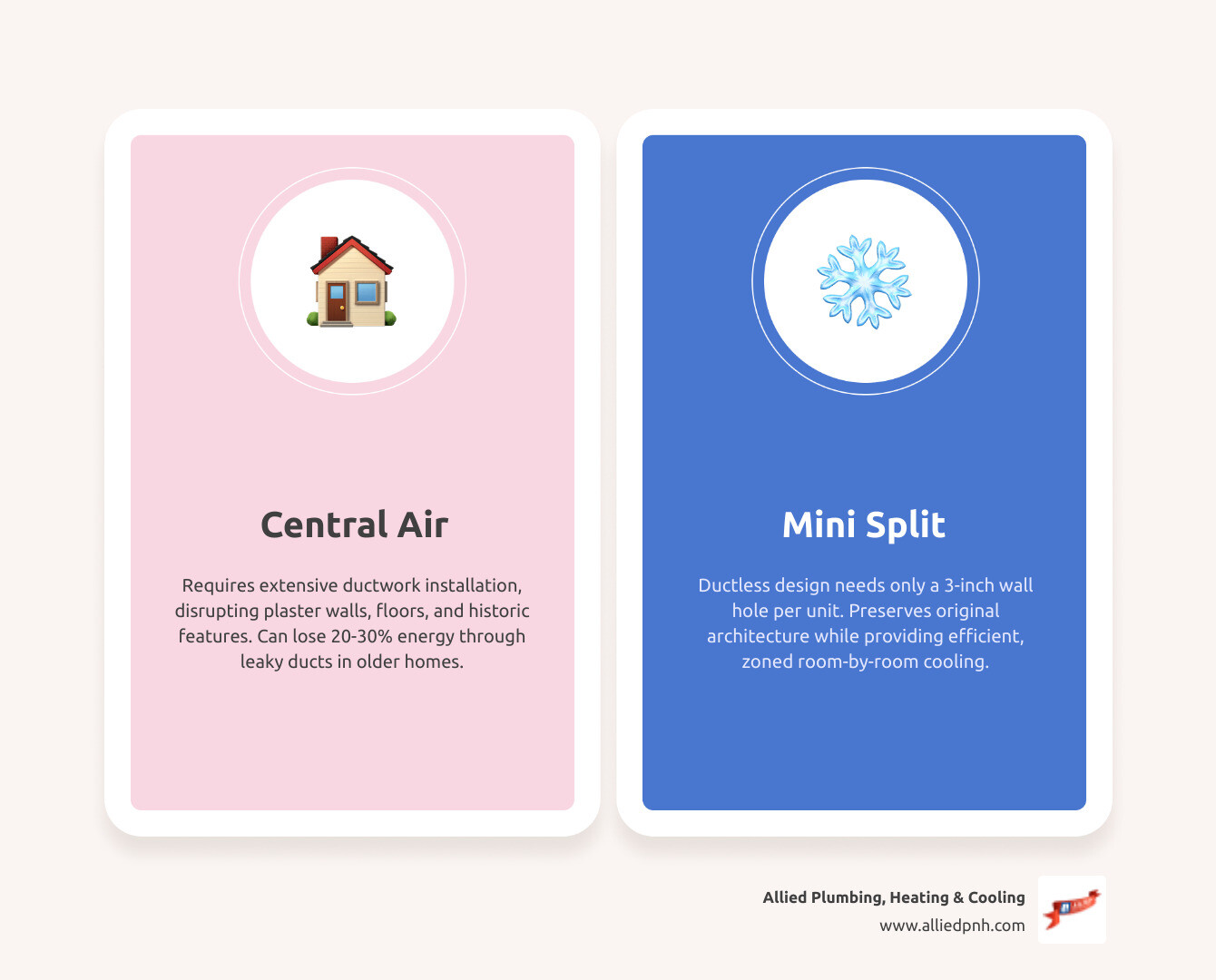
• Already have ducts in good condition? Central air may work well, but leaky older ductwork can quietly drain 20–30% of your cooling energy.
• Uneven temperatures or hard-to-reach rooms? Mini-splits offer room-by-room zoned control that central systems struggle to match without expensive add-ons.
• Historic home where preserving walls and trim matters? Mini-splits require only a small hole in the wall — no tearing through plaster or original woodwork.
• Want heating and cooling in one system? Most mini-splits are heat pumps, handling both seasons efficiently.
Older homes — especially those built before central air conditioning became standard — simply weren't designed with ductwork in mind. Retrofitting ducts into a historic home can mean opening up walls, ceilings, and floors, which is both costly and potentially damaging to the character that makes these homes special in the first place. That's a real tension that a lot of homeowners in Springfield and across central Illinois run into every summer.
The good news is that modern ductless technology has made it easier than ever to keep your home comfortable without sacrificing the craftsmanship that makes it worth preserving.
I'm looking to cool my historic house in Springfield. Should I choose central air vs mini split for older homes?
When we walk into a beautiful historic home in Springfield or Athens, the first thing we look at isn't the thermostat—it's the structure. Many of these homes were built with solid masonry, plaster-and-lath walls, and intricate crown molding. These features are gorgeous, but they are the natural enemies of traditional ductwork.
Installing a Central Air Installation in a home that wasn't built for it is a massive undertaking. To move enough air to cool a whole house, you need large, bulky ducts. In an older home, this often means sacrificing closet space, building "soffits" (those boxy drop-downs in the corner of a ceiling) that hide the pipes, or worse, cutting through original hardwood floors.
Furthermore, traditional central systems rely on a single indoor air handler and an outdoor condenser. If your home already has a forced-air furnace with ducts in good repair, central air can be a straightforward addition. However, if your home currently uses a boiler and radiators, or if the existing ducts are uninsulated and located in a scorching crawlspace or attic, the efficiency of central air drops significantly.
Is a mini split for older homes better for preserving historic aesthetics?
For many of our neighbors in historic districts, the "aesthetic" question is the dealbreaker. You’ve spent years restoring your home’s charm; the last thing you want is a contractor telling you they need to tear out a section of your original plaster ceiling to run a vent.
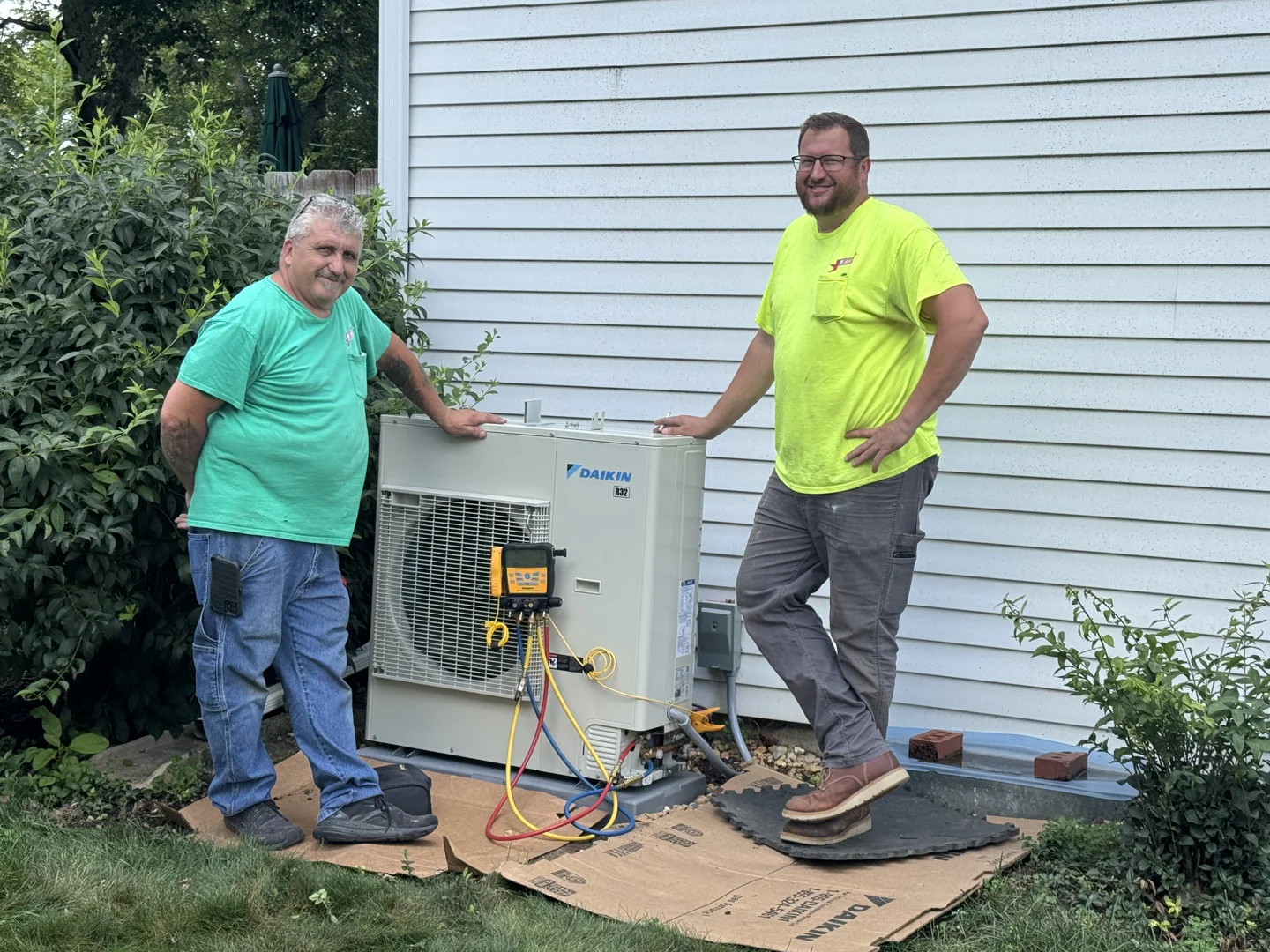
This is where a mini split for older homes truly shines. Instead of massive metal ducts, mini-splits use small copper refrigerant lines and electrical wiring that are only about three inches in diameter. We only need to drill one small hole in an exterior wall to connect the indoor unit to the outdoor compressor.
If you're worried about a white box on the wall clashing with your vintage wallpaper, there are more options than ever. When considering Where to Place Your Mini Split Units Springfield, we can look at floor-mounted units that look similar to traditional radiators, or even "ceiling cassettes" that sit flush with the ceiling. By Choosing a Ductless AC System for Your Space, you can maintain the architectural integrity of your home while enjoying modern, whisper-quiet cooling.
My upstairs is always too hot. How do ductless systems solve uneven cooling in older homes?
We hear this all the time: "Our living room is a freezer, but we can't sleep in the master bedroom because it's 80 degrees." This is the classic "hot upstairs" syndrome common in 1.5 and 2-story homes across central Illinois.
Traditional central air systems struggle with this because they usually have one thermostat located on the main floor. Once that thermostat is happy, the system shuts off, regardless of how hot the upstairs bedrooms might be. Even with the best Ductless AC Springfield IL technology available, central systems lack the native ability to treat every room differently.
Ductless systems solve this through "zoning." Each indoor unit (or "head") has its own thermostat and operates independently. If you want your bedroom at 68 degrees for sleeping but want the guest room at 74 to save energy, you can do that with the touch of a button. When we Solve Uneven Cooling with Ductless AC, we are giving you back control over the comfort of every specific square foot of your home.
Can I use a hybrid central air vs mini split for older homes approach?
You don't always have to choose one or the other! We often recommend a hybrid approach for larger homes in places like Chatham or Rochester.
For example, if you have a functional central air system for your first floor but your newly finished attic or sunroom stays miserably hot, we can perform a Mini Split Installation Chatham IL just for that specific area. This prevents you from having to overwork your main system or pay for expensive ductwork extensions.
Common hybrid scenarios include:
• Attic Bedrooms: Where it's physically impossible to run ducts from the basement.
• Home Additions: A Mini Split Installation Rochester IL is often much more affordable than resizing a central furnace and AC to handle the extra square footage.
• Garage Conversions: Keeping your workshop or "man cave" cool without connecting it to the house's main air supply (which can actually be a safety hazard due to fumes).
I want to lower my utility bills. Which system is more energy-efficient for older, drafty structures?
Efficiency is where the central air vs mini split for older homes debate gets very interesting. In the HVAC world, we measure efficiency using SEER2 (Seasonal Energy Efficiency Ratio) ratings. The higher the number, the less electricity the system uses to produce cooling.
FeatureCentral Air (Traditional)Ductless Mini-SplitTypical SEER2 Range14 - 2218 - 35+Energy Loss20-30% via duct leaks0% (No ducts)Compressor TypeSingle or Two-StageVariable-Speed InverterZoningRequires expensive dampersBuilt-in by design
One of the biggest Advantages of Mini Split Systems Installed by Us is the use of inverter technology. Think of a traditional AC like a light switch—it's either 100% on or 100% off. This "all-or-nothing" approach creates temperature swings and wastes a lot of energy during startup.
An inverter-driven mini-split is more like a dimmer switch. It slows down or speeds up to maintain a perfectly steady temperature. Because it doesn't have to deal with the 30% energy loss associated with leaky, uninsulated ductwork found in many older attics, a mini-split can often provide the same amount of cooling for a fraction of the electricity. For a drafty older home, being able to cool only the rooms you are currently using is a massive win for your wallet.
How do I keep my new AC running smoothly for years to come?
Whether you choose central air or a mini-split, your system is an investment in your home's value and your family's comfort. In our decades of experience serving Springfield and the surrounding areas, we've found that the difference between a system that lasts 12 years and one that lasts 20 is regular maintenance.
For mini-splits, the most important task is keeping the filters clean. Because these units sit inside the room, they are very efficient at pulling dust out of the air. We recommend checking and rinsing your filters every 2 to 4 weeks. If you start hearing strange noises, it's worth checking Why is Your Mini Split Making Clicking Sounds, as this can sometimes be a sign of thermal expansion or a fan issue that needs a quick adjustment.
If your system isn't cooling properly, you might see a code on the display. Knowing Why Mini Split AC is Displaying Error Codes can help you communicate with us so we can arrive with the right parts to get you back up and running.
For central systems, seasonal tune-ups are non-negotiable. We check refrigerant levels, clean the outdoor coils (which get clogged with Illinois cottonwood seeds and grass clippings), and ensure your ductwork isn't housing any unwanted "guests" or growing mold.
Frequently Asked Questions about Cooling Older Homes
Can mini-splits provide heating during Illinois winters?
Absolutely. Most modern mini-splits are "heat pumps," meaning they can reverse the cooling process to provide heat. In the past, heat pumps struggled when temperatures dropped below freezing, but newer technology (like the Daikin Aurora) is designed to provide efficient heat even when it's -13°F outside. This makes them a fantastic primary or supplemental heat source for older homes that currently rely on expensive electric baseboard heat or oil.
How long does it take to install a ductless system compared to central air?
A single-zone mini-split can often be installed in just one day with very little mess. A multi-zone system might take two days. In contrast, installing a full central air system with brand-new ductwork in an older home can take a week or more and involves significant construction, dust, and disruption to your daily life.
Conclusion
Choosing between central air vs mini split for older homes doesn't have to be a headache. At Allied Plumbing, Heating & Cooling, we’ve been helping our neighbors across central Illinois—from Sherman to Pleasant Plains—find the perfect balance between modern comfort and historic charm since 1977.
As a 3-generation family business, we take pride in our work. That’s why we’ve partnered with Daikin to offer the Daikin Comfort Promise, which includes industry-leading 12-year warranties. We want you to feel as confident in your new system as we are.
Whether you need a Mini Split Installation Springfield IL for a single room or a Mini Split Installation Sherman IL for your entire historic property, our team is ready to help. Don't spend another summer "toughing it out" with window units or uneven cooling.
Ready to find the right fit for your home? Explore our Expert Air Conditioning Services or give us a call today to schedule a consultation. We’ll help you keep the charm of your older home while bringing in the chill you deserve.
Why Is My Furnace Blowing Cold Air or Smelling Like Burning? Common Startup Questions
October 6, 2026
Smelling burning dust on the first chilly night? Get clear answers on when to wait it out or call a pro with these common homeowner questions answered.
Smelling burning dust on the first chilly night? Get clear answers on when to wait it out or call a pro with these common homeowner questions answered.
Common Homeowner Questions Answered: Is That First-Run Furnace Smell Dangerous?
October 5, 2026
Wondering if that first-run furnace smell is dangerous? Get clear answers and have your common homeowner questions answered before the cold weather hits.
Wondering if that first-run furnace smell is dangerous? Get clear answers and have your common homeowner questions answered before the cold weather hits.
Comparing Prepaid HVAC Maintenance Agreements vs A La Carte Fall Tune-Ups
October 3, 2026
Treat heating maintenance as more than a simple transaction. Weigh the long-term benefits of an ongoing service plan against a one-off furnace check before the first winter freeze hits.
Treat heating maintenance as more than a simple transaction. Weigh the long-term benefits of an ongoing service plan against a one-off furnace check before the first winter freeze hits.