Why Your Home's Plumbing Needs Attention Every Spring
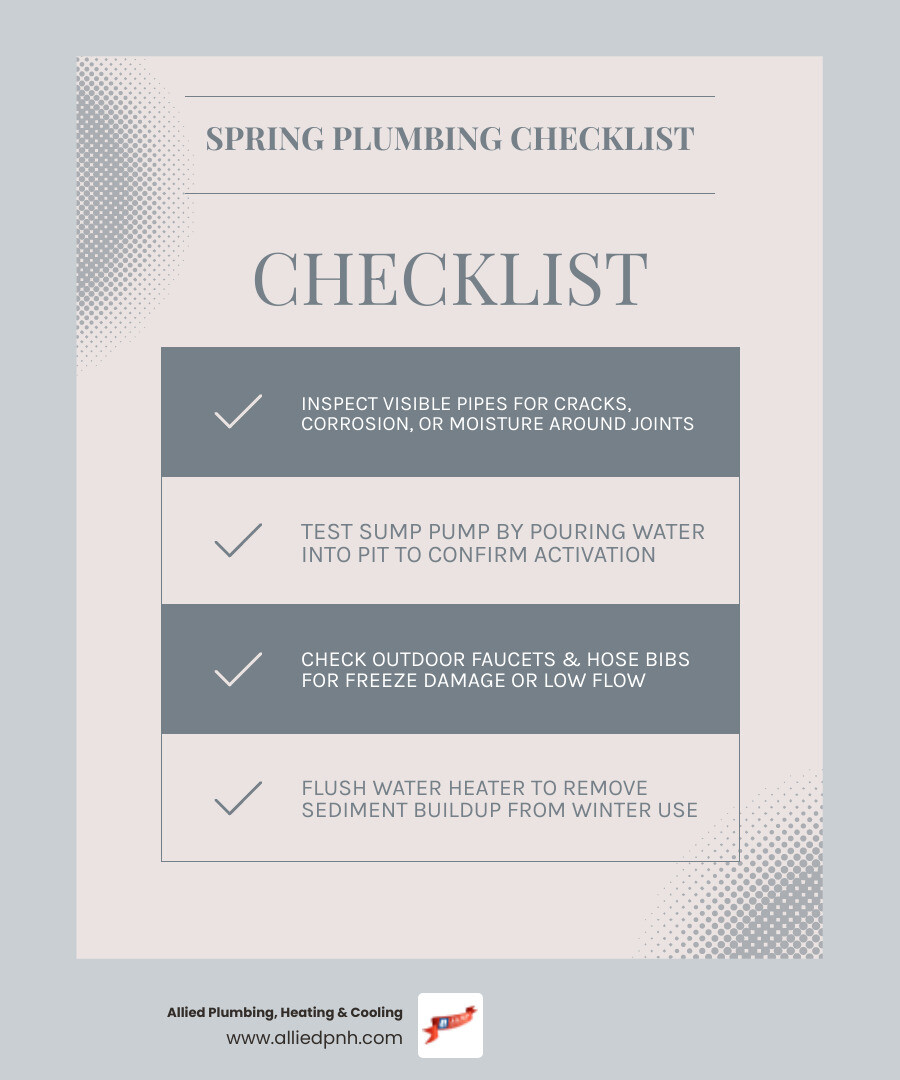
Spring plumbing inspection tips for homeowners can save you from costly surprises — here's a quick overview of what to check this season:
1. Inspect visible pipes for cracks, corrosion, or moisture around joints
2. Test your sump pump by pouring water into the pit and confirming it activates and drains
3. Check outdoor faucets and hose bibs for freeze damage or reduced flow
4. Look for toilet leaks using the food coloring tank test
5. Flush your water heater to clear sediment buildup from winter
6. Test water pressure with a gauge — ideal range is 45–60 PSI
7. Clear gutters and downspouts so water drains away from your foundation
8. Watch for slow drains or gurgling sounds that may signal sewer line issues
Winter is hard on your home's plumbing — even when nothing obviously breaks. Pipes expand and contract through repeated freeze-thaw cycles, loosening joints and seals that may hold up through the cold but quietly fail once spring water pressure returns. Melting snow and heavy spring rains add even more stress to underground pipes, sewer lines, and sump pumps. By the time you notice a drip, stain, or slow drain, the damage behind the wall may already be underway. A focused spring walkthrough of your plumbing system is one of the smartest and most straightforward things you can do to protect your home — and your wallet — before the busy summer months arrive.
Why Post-Winter Plumbing Checks are Essential for Your Home
In Central Illinois, our winters are anything but gentle. The relentless freeze-thaw cycles we experience in places like Springfield and Petersburg put immense physical stress on your plumbing. When water freezes inside a pipe, it expands with incredible force. Even if the pipe doesn't immediately explode into a geyser, that expansion can create hairline fractures or weaken soldered joints.
As the ground thaws and spring rains begin, the soil around your home shifts. This movement can put pressure on underground supply lines and sewer pipes. We often see cases of Burst Pipe Repair Springfield IL that actually started as a small winter crack that finally gave way under the increased water usage of spring.
Proactive maintenance is statistically proven to extend the lifespan of your plumbing system by up to 10 years. Considering that water damage costs American homeowners an average of $3,000 per incident, spending an hour or two on a spring inspection is a fantastic investment. If you spot signs of trouble early—like water stains on a ceiling or a musty smell in the basement—scheduling a Plumbing Repair Springfield IL promptly can prevent structural rot and mold growth that are much more expensive to remediate later.
Essential spring plumbing inspection tips for homeowners to Prevent Leaks
The first step in your spring routine should be a "leak safari" through your home. Start by checking all visible pipes. In your basement, crawl space, or utility room, look for condensation, green corrosion (verdigris) on copper, or white mineral deposits on galvanized steel. These are "smoking guns" for slow, persistent leaks.
One of the most effective spring plumbing inspection tips for homeowners is the water meter test. Ensure all water-using appliances (dishwasher, laundry) are off and no one is using a faucet. Check your water meter; if the low-flow indicator (usually a small triangular wheel) is spinning, you have a hidden leak.
If you live in an older home in an area like Athens or Auburn, you might notice that your pipes are showing significant signs of age. In these cases, Repiping Springfield IL might be a more cost-effective long-term solution than patching constant leaks. For general maintenance and peace of mind, a professional Plumbing Springfield IL assessment can identify these vulnerabilities before they become emergencies.
Testing for Hidden Toilet Leaks and Fixture Drips
Toilets are notorious for "silent leaks" that can waste up to 200 gallons of water every single day. To test yours, drop a few drops of food coloring into the tank (not the bowl). Wait about 30 minutes without flushing. If the color seeps into the bowl, your flapper valve is worn out and needs replacement. This is a simple fix that any Plumber Springfield IL can handle quickly, or you can often DIY it with a kit from the hardware store.
Don't forget to check your faucets. If you have a Clogged Sink Springfield IL, it might be due to mineral buildup in the aerator. Unscrew the aerator from the tip of the faucet and soak it in vinegar to dissolve the scale. This improves flow and prevents back-pressure on the fixture's internal seals.
Checking Outdoor Faucets and Irrigation Systems
Outdoor plumbing is the most vulnerable to winter damage. Even if you disconnected your hoses, a tiny amount of water trapped in a hose bib can cause the pipe to split inside the wall. You won't notice the leak until you turn the water on for the first time in spring.
If you are in Plumbing Elkhart IL or surrounding rural areas, check your outdoor spigots by placing your thumb over the opening and turning the water on. If you can easily stop the flow, there is likely a leak inside the pipe leading to the faucet. For homes with irrigation systems, look for "marshy" spots in the yard when the system is running, which indicates a cracked underground line. Our general Plumbing services include checking these exterior connections to ensure you aren't watering your foundation instead of your lawn.
Maintaining Your Water Heater and Sump Pump for Rainy Weather
As the saying goes, "April showers bring... a lot of water into your basement." In Springfield and the surrounding communities, a functional sump pump is your primary defense against a catastrophe.
How to Flush Your Water Heater and Remove Sediment
Your water heater works its hardest during the winter. Cold intake water means the unit runs longer to reach your desired temperature, which accelerates sediment buildup at the bottom of the tank. This sediment acts as an insulator, making the heater less efficient and eventually causing the tank to overheat and fail.
We recommend a yearly flush. Turn off the power (or gas), connect a garden hose to the drain valve, and run the water until it's clear. While you're at it, check the anode rod—a "sacrificial" rod that attracts corrosive elements to protect the tank. If it's heavily depleted, it's time for a replacement.
Whether you need Water Heater Repair Springfield IL to fix a minor issue or are considering a Water Heater Replacement Springfield IL for an aging unit, spring is the perfect time to evaluate your options. Many homeowners are now switching to Tankless Water Heaters Springfield IL to save space and energy while ensuring they never run out of hot water during those long spring showers.
Critical spring plumbing inspection tips for homeowners Regarding Sump Pumps
A sump pump that hasn't run all winter might be seized or clogged with debris. To test it, pour a five-gallon bucket of water into the pit. The float switch should rise, the pump should kick on, and the water should discharge quickly.
Check your discharge line outside to ensure it isn't blocked by ice, mulch, or debris, and that it carries water at least five to six feet away from your foundation. If your pump makes a grinding noise or fails to start, you may need an Emergency Plumber Springfield IL to replace it before the next big storm. We provide comprehensive Sump Pumps Springfield IL services, including the installation of battery backups—a must-have for when spring storms knock out the power. For all your routine needs, our Service Plumbing team is ready to help.
Clearing Drains and Protecting Your Sewer Line
Spring is prime time for root intrusion. As trees wake up, their roots seek out moisture, and the condensation on your sewer lines is a primary target. If you notice multiple slow drains, gurgling sounds from your toilets, or a foul odor in the yard, you likely have a blockage.
Professional Drain Cleaning Springfield IL is the best way to clear out winter debris and aggressive roots. For a stubborn Clogged Drain Springfield IL, we often utilize Plumbing Drain Snaking Springfield IL to restore full flow.
Also, take a look at your gutters. While not strictly "plumbing," clogged gutters force water down the side of your house and into your foundation, overwhelming your sump pump and potentially cracking your sewer lateral. Ensure downspouts are clear and directed away from the home.
Professional spring plumbing inspection tips for homeowners in Springfield
While many tasks are DIY-friendly, some things require a pro's touch. A Commercial Plumber Springfield IL or a skilled residential technician can perform a camera inspection of your sewer line to find cracks that a simple snake can't detect.
We also recommend testing your water pressure with a dedicated gauge. High water pressure (anything over 60 PSI) might feel great in the shower, but it's "hypertension" for your pipes, leading to premature leaks and failed appliances. We can install a pressure regulator to keep your home in the safe 45–60 PSI range.
Frequently Asked Questions about Spring Plumbing
How do I know if my pipes froze over the winter?
Look for "ghost" leaks—water meter movement when no water is running. Also, check for bulging pipes, discolored patches on drywall, or a sudden drop in water pressure in specific areas of the house.
What is the ideal water pressure for a residential home?
The "sweet spot" is between 45 and 60 PSI. If your pressure is over 80 PSI, you are significantly increasing the risk of a burst pipe or a failed water heater.
How often should I test my sump pump?
You should test it at least once every spring before the rainy season begins. If you live in a particularly flood-prone area like Riverton or Rochester, checking it monthly during the wet season is a wise move.
Conclusion
At Allied Plumbing, Heating & Cooling, we’ve been helping our neighbors in Springfield, Chatham, and throughout Sangamon County since 1977. As a third-generation family business, we understand the specific challenges that Illinois weather poses to your home. We are proud to offer the Daikin Comfort Promise and 12-year warranties on qualifying systems, giving you the reliability you deserve.
Don't wait for a puddle in the basement to tell you there's a problem. Take control of your home's health today. Schedule your professional spring maintenance plan today and let us help you flush away those winter woes for good!