Springfield Homeowners: Expert Boiler Repair for a Cozy Abode
Your Guide to a Warm and Comfortable Home
When your home heating fails on a freezing Illinois night, finding reliable boiler repair residential in Springfield, IL becomes an urgent priority. Whether your boiler is making strange noises, leaking water, or simply not producing heat, you need fast answers and professional help you can trust.
Quick Solutions for Springfield Homeowners:
- No heat or hot water – Check thermostat settings, pilot light, and pressure gauge first
- Strange noises (banging, whistling) – Often signals trapped air, lime buildup, or circulation issues
- Visible leaks or dripping – Requires immediate professional attention to prevent water damage
- Pilot light won't stay lit – May indicate thermocouple problems or gas supply issues
- Cold radiators – Could mean low pressure, trapped air, or circulation problems
- Frequent shutdowns – Sign of deeper system issues requiring expert diagnosis
Your boiler system works hard to keep your Springfield home comfortable during brutal Midwest winters. It heats water and distributes warmth through radiators or baseboards using radiant heat, which means no dust circulation and better indoor air quality compared to forced-air systems. When properly maintained, these systems can last 15-30 years, but they require annual professional service to operate safely and efficiently.
For expert guidance on maintaining your entire heating system, explore our comprehensive Heating Service Springfield, IL page, and when you need immediate assistance, our team at Allied Plumbing, Heating & Cooling is ready to help at Contact Us.
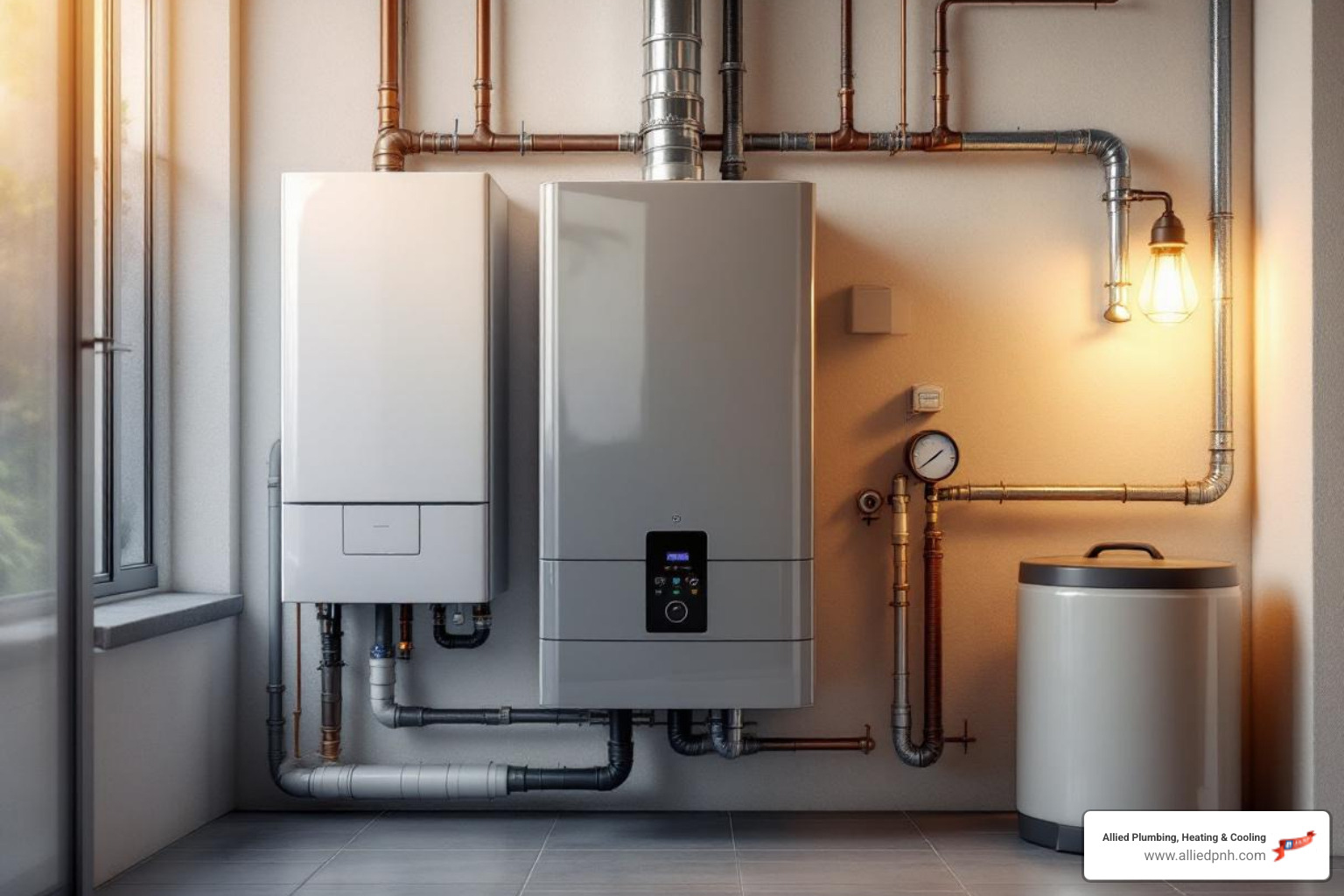
Key terms for boiler repair residential in springfield, il:
Is Your Boiler Acting Up? 7 Telltale Signs You Need a Repair
Boilers are renowned for their durability and long lifespan, but even the sturdiest systems will eventually show signs of wear and tear. Recognizing these warning signals early can save you from a complete breakdown and costly emergency repairs, especially when the cold weather hits our Springfield area. Our team has been serving homes in Springfield, IL, and surrounding communities like Chatham, Rochester, and Sherman since 1977, and we’ve seen it all.
Here are some common signs that your residential boiler might be signaling for professional help:
- No Heat or Hot Water: This is often the most obvious sign. If your radiators are cold, or you're not getting hot water, your boiler isn't doing its job. This could stem from various issues, from a faulty pilot light to a malfunctioning thermostat or a problem with the heating elements.
- Strange Noises: Boilers are generally quiet operators. If you start hearing banging, whistling, gurgling, or clanging sounds, it's a red flag. Banging or "kettling" often indicates mineral buildup inside the heat exchanger, while whistling might signal trapped air. For more on unusual noises, check out our insights on Why is Your Boiler Making Whistling Sounds.
- Leaks or Dripping: Any visible water around your boiler is a sign that something is amiss. Leaks can indicate a loose pipe, a faulty seal, or even a crack in the boiler itself. Ignoring leaks can lead to water damage, mold growth, and further system damage.
- Pilot Light Issues: If your boiler's pilot light keeps going out or has changed color (it should be a strong blue flame, not yellow or orange), it's a sign of a problem. A yellow flame can indicate incomplete combustion, which could produce dangerous carbon monoxide.
- Low Pressure: Your boiler has a pressure gauge, and if it's consistently reading low, it means there's not enough water in the system to circulate effectively. This often points to a leak somewhere in the system or a faulty pressure relief valve.
- Cold Radiators: Even if your boiler seems to be running, if some or all of your radiators remain cold, there might be trapped air in the system (requiring bleeding), blockages, or an issue with the circulation pump.
- Frequent Shutdowns (Short Cycling): If your boiler turns on and off too frequently, it's known as short cycling. This can be caused by a variety of problems, including an oversized boiler, thermostat issues, or a problem with the circulating pump. It reduces efficiency and puts undue stress on components. You can learn more about this common issue on our page Troubleshooting a Boiler That's Short Cycling.
When to Call for Residential Boiler Repair in Springfield, IL
While the signs above are a good general indicator, some issues specifically highlight the need for professional boiler repair residential in Springfield, IL.
- Uneven Heating: If certain rooms in your home are warm while others remain cold, your boiler system isn't distributing heat efficiently. This could be due to blockages, zone control issues, or problems with individual radiators.
- Rising Energy Bills: Have your heating costs suddenly spiked without a corresponding increase in usage? An inefficient boiler often consumes more fuel to achieve the same level of heat, signaling it needs a tune-up or repair.
- Visible Corrosion: Rust or corrosion on your boiler or its pipes indicates internal issues, often leaks, that are slowly damaging the system. This requires prompt attention to prevent further deterioration and potential safety hazards.
- Frozen Condensate Pipe: Modern condensing boilers have a condensate pipe that drains acidic wastewater. In freezing temperatures, this pipe can freeze, causing the boiler to shut down. Signs include gurgling noises from the boiler or a fault code. While sometimes a homeowner can thaw it, it's often best to have a professional check for underlying issues and prevent recurrence.
Don't wait for a complete system failure, especially with our cold Central Illinois winters. Proactive repair can prevent small problems from becoming major emergencies. For more insights on recognizing serious heating issues, you might find our article on Top Signs You Need Furnace Repair helpful, as many principles apply to boilers. And for urgent situations, remember we offer Boiler Emergency Repair in Springfield, IL.
Common Boiler Problems & Simple Troubleshooting Steps
Understanding how your boiler works and what its main components are can empower you to perform minor troubleshooting. A residential boiler system typically consists of a burner assembly, heat exchanger, expansion tank, circulator pump, pressure relief valve, and radiators or baseboard heaters. The thermostat acts as the brain, signaling the boiler to heat water, which is then circulated through pipes to warm your home.
Here are some common problems homeowners face and some initial checks you can perform:
- Thermostat Issues: The thermostat is your boiler's command center. If it's malfunctioning, your boiler won't know when to turn on or off. Signs of thermostat issues include inaccurate temperature readings, the boiler not responding to settings, or the heating running constantly. Ensure it's set to "heat" and the desired temperature is above the current room temperature.
- Pressure Problems: As mentioned, low pressure is a common culprit for inefficient heating. High pressure can also be problematic, potentially leading to leaks or damaging components. Your boiler's pressure gauge should typically be between 1 and 2 bar. If it's consistently outside this range, it needs attention. We dig deeper into this topic in Low Pressure Issues in Your Home Boiler System.
- Radiator Problems: Cold spots on radiators, or radiators that are completely cold, indicate issues with heat distribution. This often means trapped air, which can be "bled" out, or sludge buildup.
- Short Cycling: This means your boiler is turning on and off too frequently. It's inefficient and wears out components faster. Causes can range from a faulty thermostat to an issue with the system's water circulation. For a detailed look at this, our article Troubleshooting a Boiler That's Short Cycling offers valuable insights.
Before You Call: Homeowner Troubleshooting
Before picking up the phone for boiler repair residential in Springfield, IL, there are a few simple checks you can perform. These steps can often resolve minor issues or help you provide valuable information to our technicians.
- Check the thermostat settings: Is it set to "heat"? Is the temperature set high enough? Are the batteries dead?
- Inspect the pilot light: For older boilers, ensure the pilot light is lit and burning a strong blue flame. If it's out, follow your boiler's instructions to relight it safely. If it won't stay lit, it's time to call us.
- Check the boiler's pressure gauge: Ensure the pressure is within the recommended range (usually 1-2 bar). If it's too low, you might be able to repressurize it yourself following your boiler's manual, but be cautious. If it's too high or keeps dropping, call for professional help. For more context, see Low Pressure Issues in Your Home Boiler System.
- Reset the boiler: Many modern boilers have a reset button. Consult your manual for instructions. This can sometimes clear temporary glitches.
- Ensure power is on: Check that the boiler is plugged in and that its circuit breaker hasn't tripped. Also, ensure any emergency shut-off switches (often near the boiler or at the top of the basement stairs) are in the "on" position.
If these steps don't resolve the issue, or if you're uncomfortable performing them, it's always best to call a professional. Safety first, always!
The Importance of Professional Boiler Maintenance and Repair
Maintaining your boiler is not just about keeping warm; it's about ensuring safety, maximizing efficiency, and extending the life of your investment. Just like any complex mechanical system, boilers require regular care to function optimally.
- Safety: Boilers, especially gas-fired ones, can pose safety risks if not properly maintained. Carbon monoxide leaks, gas leaks, and even explosions are rare but serious dangers. Annual professional maintenance includes checks for leaks, proper ventilation, and safe operation of all components, protecting your home and family.
- Efficiency: A well-maintained boiler operates at peak efficiency. Over time, sediment buildup, dirty components, and minor adjustments can reduce your boiler's performance, causing it to work harder and consume more fuel. Regular preventative maintenance ensures your system is running as efficiently as possible, saving you money on energy bills.
- Longevity: Boilers are built to last, with many providing reliable service for 15-30 years. However, this impressive lifespan is heavily dependent on regular professional tune-ups. Preventative maintenance plays a vital role in extending the service life of your heating equipment, helping to avoid inconvenient and costly repairs.
- Preventative Measures: Annual inspections allow technicians to identify and address minor issues before they escalate into major breakdowns. This proactive approach ensures your boiler is ready for the demands of winter and helps you avoid unexpected heating outages.
When it comes to professional boiler services, always trust licensed and certified experts. Our team at Allied Plumbing, Heating & Cooling consists of highly trained professionals, including those who are NATE-certified. This certification signifies a technician has demonstrated knowledge and expertise in HVAC, ensuring you receive top-tier service. Our role in providing reliable heating services is something we take great pride in. Learn more about our commitment to quality on our Our Role in Reliable Heating Services page.
Finding a Reputable Service for Boiler Repair Residential in Springfield, IL
When your home's comfort is on the line, choosing the right service provider for boiler repair residential in Springfield, IL is critical. We understand you want a company that is experienced, reliable, and trustworthy.
Here's what to look for:
- Licensed and Certified: Always ensure the company and its technicians are fully licensed and certified to work on boilers in Illinois. This guarantees they meet industry standards and are qualified to perform the work safely and effectively.
- Experience: Longevity in the business often speaks volumes. Our company, Allied Plumbing, Heating & Cooling, has been a 3-generation family-owned business serving the Springfield area and communities like Glenarm, Elkhart, and Bradfordton since 1977. That's over 45 years of dedicated service and accumulated expertise!
- Local Reputation: Check online reviews and ask for recommendations from neighbors. A strong local reputation for quality work and customer satisfaction is a good indicator of a trustworthy company.
- Emergency Services: Boiler issues don't always happen during business hours. A reputable company should offer 24/7 emergency service, so you're never left in the cold.
When you contact a potential service provider, don't hesitate to ask these important questions:
- "Are you licensed and insured?"
- "How long have you served the Springfield area?"
- "Do you offer 24/7 emergency service?"
- "What warranties do you provide on parts and labor?" (For instance, we offer the Daikin Comfort Promise with 12-year warranties on qualifying installations.)
To learn more about our history and commitment to our customers, visit our About Us page.
Repair or Replace? Deciding the Future of Your Heating System
This is a question many homeowners face: should I repair my aging boiler again, or is it time for a new one? The decision often boils down to a few key factors, including your boiler's age, its efficiency, and the frequency of repairs.
A typical residential boiler provides reliable service for 15-30 years. However, performance often begins to decline significantly after about 20 years. This decline is due to various factors like internal component degradation, corrosion, and sediment buildup, which accumulate over decades of operation. If your boiler is consistently breaking down, requiring frequent and costly repairs, or if it's approaching or past the 20-year mark, replacement might be the more economical and practical long-term solution.
Consider this: if the cost of a repair is more than 50% of the cost of a new boiler, or if you're facing multiple expensive repairs in a short period, it's usually wiser to invest in a replacement. For a broader perspective on recognizing when it's time for an upgrade, our article Signs Its Time for Home Furnace Replacement offers useful insights that can often be applied to boilers as well.
Benefits of a Modern High-Efficiency Boiler
Upgrading to a new, high-efficiency boiler offers numerous advantages beyond just reliable heat.
- Energy Efficiency: Modern boilers are significantly more energy-efficient than older models. They use an Annual Fuel Utilization Efficiency (AFUE) score to indicate how much energy is converted into heat. While new boilers must have an AFUE rating of at least 80 percent, high-efficiency models can reach 90 to 98.5 percent efficiency. This means more of the fuel you pay for goes directly to heating your home, rather than being wasted.
- Lower Utility Bills: A higher AFUE rating directly translates into lower operating costs. By converting fuel more efficiently, a new boiler can significantly reduce your monthly heating bills, providing substantial savings over its lifespan.
- Improved Home Comfort: New boilers provide consistent, even heat throughout your home. They often integrate better with modern zone control systems, allowing you to customize temperatures in different areas of your home for optimal comfort.
- Environmental Benefits: More efficient combustion means less fuel consumed, which in turn reduces your home's carbon footprint. Modern boilers are a more sustainable option, contributing to a healthier environment by emitting fewer greenhouse gases.
- Latest Safety Features: New boilers come equipped with advanced safety features and controls that older models lack, providing greater peace of mind for you and your family.
Investing in a new boiler is an investment in your home's comfort, your wallet, and the environment. When considering a replacement, factors such as your home's square footage, layout, insulation, and even local utility costs should be considered. Our team can help you assess these factors and choose the right system for your needs. For more information on heating system replacements in our service area, visit our Heating Replacement Springfield, IL page.
Frequently Asked Questions about Residential Boilers
We often hear similar questions from homeowners in Springfield, IL, and surrounding areas like Rochester, Chatham, and Pleasant Plains. Here are some answers to common inquiries about residential boilers.
What's the difference between a steam boiler and a hot water boiler?
While both steam and hot water boilers use water to create heat, they operate quite differently:
- Steam Boilers: These systems heat water to its boiling point, creating steam that rises through pipes to radiators. The steam releases its heat into the room, condenses back into water, and returns to the boiler to be reheated. Steam boilers operate at higher temperatures and pressures. You'll typically find upright metal steam radiators in older homes.
- Hot Water Boilers: These systems heat water to a high temperature but below boiling. A circulator pump then moves this hot water through a closed-loop system of pipes to radiators or baseboard heaters. The water cools as it releases heat and returns to the boiler for reheating. Hot water boilers operate at lower temperatures and pressures and often allow for more precise temperature control through zone valves.
Both types provide excellent radiant heat, which many find to be a more comfortable and less irritating heat source than forced-air systems.
How often should my boiler be professionally maintained?
Residential boilers should be professionally maintained annually. This is a consistent recommendation across the industry for several crucial reasons:
- Efficiency Benefits: Annual tune-ups ensure your boiler is running at its peak efficiency, which can significantly lower your energy bills. Preventative maintenance maximizes the operating efficiency of your equipment.
- Safety Inspections: A professional technician will check for any potential safety hazards, such as carbon monoxide leaks, ensuring your system is safe for your family.
- Extending Lifespan: Regular maintenance catches small issues before they become major problems, helping to prevent inconvenient and costly repairs and extending the overall service life of your boiler.
- Pre-Season Check-ups: It's best to schedule your annual maintenance in late summer or early fall, before the cold temperatures arrive in Springfield. This ensures your boiler is ready to perform reliably throughout the winter.
For more on the value of regular upkeep, our insights on Why Regular Furnace Maintenance Matters highlight principles applicable to all heating systems, including boilers.
What should I do in a boiler emergency?
A boiler emergency can be alarming, but knowing what to do can help keep everyone safe. Here's a quick guide:
- Gas Smell Protocol: If you smell gas, immediately turn off the gas supply to your home if you know how to do so safely. Open windows and doors, evacuate everyone from the house, and call your gas company and the fire department from a safe location. Do not use any electrical switches or appliances, as a spark could ignite the gas.
- Water Leaks: For significant water leaks, turn off the water supply to your boiler (usually a valve on the pipe leading into the boiler) and turn off the boiler's power supply. Then, call us right away.
- Carbon Monoxide Detector: Ensure you have working carbon monoxide detectors in your home. If it alarms, evacuate immediately and call emergency services.
- Shutting Off the System: In most emergencies, it's wise to safely shut down your boiler by turning off its power and fuel supply. Consult your boiler's manual for specific instructions.
- Calling for 24/7 Emergency Service: Once the immediate danger is addressed and you are safe, contact us for emergency boiler repair residential in Springfield, IL. As a family-owned business since 1977, we understand that heating emergencies don't stick to business hours, which is why we offer 24/7 emergency service. Our page on Boiler Emergency Repair in Springfield, IL has more details.
Your Partner for Reliable Boiler Services in Springfield, IL
Ensuring your boiler operates safely and efficiently is key to navigating the cold Illinois winters. From recognizing the first signs of trouble to performing simple checks and knowing when to call in the experts, you are now equipped to keep your home warm and comfortable. For comprehensive service from a trusted, family-owned company with decades of experience, turn to Allied Plumbing, Heating & Cooling for all your heating needs. Contact Us today to schedule your service and experience true peace of mind.

Your Guide to a Warm and Comfortable Home
When your home heating fails on a freezing Illinois night, finding reliable boiler repair residential in Springfield, IL becomes an urgent priority. Whether your boiler is making strange noises, leaking water, or simply not producing heat, you need fast answers and professional help you can trust.
Quick Solutions for Springfield Homeowners:
- No heat or hot water – Check thermostat settings, pilot light, and pressure gauge first
- Strange noises (banging, whistling) – Often signals trapped air, lime buildup, or circulation issues
- Visible leaks or dripping – Requires immediate professional attention to prevent water damage
- Pilot light won't stay lit – May indicate thermocouple problems or gas supply issues
- Cold radiators – Could mean low pressure, trapped air, or circulation problems
- Frequent shutdowns – Sign of deeper system issues requiring expert diagnosis
Your boiler system works hard to keep your Springfield home comfortable during brutal Midwest winters. It heats water and distributes warmth through radiators or baseboards using radiant heat, which means no dust circulation and better indoor air quality compared to forced-air systems. When properly maintained, these systems can last 15-30 years, but they require annual professional service to operate safely and efficiently.
For expert guidance on maintaining your entire heating system, explore our comprehensive Heating Service Springfield, IL page, and when you need immediate assistance, our team at Allied Plumbing, Heating & Cooling is ready to help at Contact Us.

Key terms for boiler repair residential in springfield, il:
Is Your Boiler Acting Up? 7 Telltale Signs You Need a Repair
Boilers are renowned for their durability and long lifespan, but even the sturdiest systems will eventually show signs of wear and tear. Recognizing these warning signals early can save you from a complete breakdown and costly emergency repairs, especially when the cold weather hits our Springfield area. Our team has been serving homes in Springfield, IL, and surrounding communities like Chatham, Rochester, and Sherman since 1977, and we’ve seen it all.
Here are some common signs that your residential boiler might be signaling for professional help:
- No Heat or Hot Water: This is often the most obvious sign. If your radiators are cold, or you're not getting hot water, your boiler isn't doing its job. This could stem from various issues, from a faulty pilot light to a malfunctioning thermostat or a problem with the heating elements.
- Strange Noises: Boilers are generally quiet operators. If you start hearing banging, whistling, gurgling, or clanging sounds, it's a red flag. Banging or "kettling" often indicates mineral buildup inside the heat exchanger, while whistling might signal trapped air. For more on unusual noises, check out our insights on Why is Your Boiler Making Whistling Sounds.
- Leaks or Dripping: Any visible water around your boiler is a sign that something is amiss. Leaks can indicate a loose pipe, a faulty seal, or even a crack in the boiler itself. Ignoring leaks can lead to water damage, mold growth, and further system damage.
- Pilot Light Issues: If your boiler's pilot light keeps going out or has changed color (it should be a strong blue flame, not yellow or orange), it's a sign of a problem. A yellow flame can indicate incomplete combustion, which could produce dangerous carbon monoxide.
- Low Pressure: Your boiler has a pressure gauge, and if it's consistently reading low, it means there's not enough water in the system to circulate effectively. This often points to a leak somewhere in the system or a faulty pressure relief valve.
- Cold Radiators: Even if your boiler seems to be running, if some or all of your radiators remain cold, there might be trapped air in the system (requiring bleeding), blockages, or an issue with the circulation pump.
- Frequent Shutdowns (Short Cycling): If your boiler turns on and off too frequently, it's known as short cycling. This can be caused by a variety of problems, including an oversized boiler, thermostat issues, or a problem with the circulating pump. It reduces efficiency and puts undue stress on components. You can learn more about this common issue on our page Troubleshooting a Boiler That's Short Cycling.
When to Call for Residential Boiler Repair in Springfield, IL
While the signs above are a good general indicator, some issues specifically highlight the need for professional boiler repair residential in Springfield, IL.
- Uneven Heating: If certain rooms in your home are warm while others remain cold, your boiler system isn't distributing heat efficiently. This could be due to blockages, zone control issues, or problems with individual radiators.
- Rising Energy Bills: Have your heating costs suddenly spiked without a corresponding increase in usage? An inefficient boiler often consumes more fuel to achieve the same level of heat, signaling it needs a tune-up or repair.
- Visible Corrosion: Rust or corrosion on your boiler or its pipes indicates internal issues, often leaks, that are slowly damaging the system. This requires prompt attention to prevent further deterioration and potential safety hazards.
- Frozen Condensate Pipe: Modern condensing boilers have a condensate pipe that drains acidic wastewater. In freezing temperatures, this pipe can freeze, causing the boiler to shut down. Signs include gurgling noises from the boiler or a fault code. While sometimes a homeowner can thaw it, it's often best to have a professional check for underlying issues and prevent recurrence.
Don't wait for a complete system failure, especially with our cold Central Illinois winters. Proactive repair can prevent small problems from becoming major emergencies. For more insights on recognizing serious heating issues, you might find our article on Top Signs You Need Furnace Repair helpful, as many principles apply to boilers. And for urgent situations, remember we offer Boiler Emergency Repair in Springfield, IL.
Common Boiler Problems & Simple Troubleshooting Steps
Understanding how your boiler works and what its main components are can empower you to perform minor troubleshooting. A residential boiler system typically consists of a burner assembly, heat exchanger, expansion tank, circulator pump, pressure relief valve, and radiators or baseboard heaters. The thermostat acts as the brain, signaling the boiler to heat water, which is then circulated through pipes to warm your home.
Here are some common problems homeowners face and some initial checks you can perform:
- Thermostat Issues: The thermostat is your boiler's command center. If it's malfunctioning, your boiler won't know when to turn on or off. Signs of thermostat issues include inaccurate temperature readings, the boiler not responding to settings, or the heating running constantly. Ensure it's set to "heat" and the desired temperature is above the current room temperature.
- Pressure Problems: As mentioned, low pressure is a common culprit for inefficient heating. High pressure can also be problematic, potentially leading to leaks or damaging components. Your boiler's pressure gauge should typically be between 1 and 2 bar. If it's consistently outside this range, it needs attention. We dig deeper into this topic in Low Pressure Issues in Your Home Boiler System.
- Radiator Problems: Cold spots on radiators, or radiators that are completely cold, indicate issues with heat distribution. This often means trapped air, which can be "bled" out, or sludge buildup.
- Short Cycling: This means your boiler is turning on and off too frequently. It's inefficient and wears out components faster. Causes can range from a faulty thermostat to an issue with the system's water circulation. For a detailed look at this, our article Troubleshooting a Boiler That's Short Cycling offers valuable insights.
Before You Call: Homeowner Troubleshooting
Before picking up the phone for boiler repair residential in Springfield, IL, there are a few simple checks you can perform. These steps can often resolve minor issues or help you provide valuable information to our technicians.
- Check the thermostat settings: Is it set to "heat"? Is the temperature set high enough? Are the batteries dead?
- Inspect the pilot light: For older boilers, ensure the pilot light is lit and burning a strong blue flame. If it's out, follow your boiler's instructions to relight it safely. If it won't stay lit, it's time to call us.
- Check the boiler's pressure gauge: Ensure the pressure is within the recommended range (usually 1-2 bar). If it's too low, you might be able to repressurize it yourself following your boiler's manual, but be cautious. If it's too high or keeps dropping, call for professional help. For more context, see Low Pressure Issues in Your Home Boiler System.
- Reset the boiler: Many modern boilers have a reset button. Consult your manual for instructions. This can sometimes clear temporary glitches.
- Ensure power is on: Check that the boiler is plugged in and that its circuit breaker hasn't tripped. Also, ensure any emergency shut-off switches (often near the boiler or at the top of the basement stairs) are in the "on" position.
If these steps don't resolve the issue, or if you're uncomfortable performing them, it's always best to call a professional. Safety first, always!
The Importance of Professional Boiler Maintenance and Repair
Maintaining your boiler is not just about keeping warm; it's about ensuring safety, maximizing efficiency, and extending the life of your investment. Just like any complex mechanical system, boilers require regular care to function optimally.
- Safety: Boilers, especially gas-fired ones, can pose safety risks if not properly maintained. Carbon monoxide leaks, gas leaks, and even explosions are rare but serious dangers. Annual professional maintenance includes checks for leaks, proper ventilation, and safe operation of all components, protecting your home and family.
- Efficiency: A well-maintained boiler operates at peak efficiency. Over time, sediment buildup, dirty components, and minor adjustments can reduce your boiler's performance, causing it to work harder and consume more fuel. Regular preventative maintenance ensures your system is running as efficiently as possible, saving you money on energy bills.
- Longevity: Boilers are built to last, with many providing reliable service for 15-30 years. However, this impressive lifespan is heavily dependent on regular professional tune-ups. Preventative maintenance plays a vital role in extending the service life of your heating equipment, helping to avoid inconvenient and costly repairs.
- Preventative Measures: Annual inspections allow technicians to identify and address minor issues before they escalate into major breakdowns. This proactive approach ensures your boiler is ready for the demands of winter and helps you avoid unexpected heating outages.
When it comes to professional boiler services, always trust licensed and certified experts. Our team at Allied Plumbing, Heating & Cooling consists of highly trained professionals, including those who are NATE-certified. This certification signifies a technician has demonstrated knowledge and expertise in HVAC, ensuring you receive top-tier service. Our role in providing reliable heating services is something we take great pride in. Learn more about our commitment to quality on our Our Role in Reliable Heating Services page.
Finding a Reputable Service for Boiler Repair Residential in Springfield, IL
When your home's comfort is on the line, choosing the right service provider for boiler repair residential in Springfield, IL is critical. We understand you want a company that is experienced, reliable, and trustworthy.
Here's what to look for:
- Licensed and Certified: Always ensure the company and its technicians are fully licensed and certified to work on boilers in Illinois. This guarantees they meet industry standards and are qualified to perform the work safely and effectively.
- Experience: Longevity in the business often speaks volumes. Our company, Allied Plumbing, Heating & Cooling, has been a 3-generation family-owned business serving the Springfield area and communities like Glenarm, Elkhart, and Bradfordton since 1977. That's over 45 years of dedicated service and accumulated expertise!
- Local Reputation: Check online reviews and ask for recommendations from neighbors. A strong local reputation for quality work and customer satisfaction is a good indicator of a trustworthy company.
- Emergency Services: Boiler issues don't always happen during business hours. A reputable company should offer 24/7 emergency service, so you're never left in the cold.
When you contact a potential service provider, don't hesitate to ask these important questions:
- "Are you licensed and insured?"
- "How long have you served the Springfield area?"
- "Do you offer 24/7 emergency service?"
- "What warranties do you provide on parts and labor?" (For instance, we offer the Daikin Comfort Promise with 12-year warranties on qualifying installations.)
To learn more about our history and commitment to our customers, visit our About Us page.
Repair or Replace? Deciding the Future of Your Heating System
This is a question many homeowners face: should I repair my aging boiler again, or is it time for a new one? The decision often boils down to a few key factors, including your boiler's age, its efficiency, and the frequency of repairs.
A typical residential boiler provides reliable service for 15-30 years. However, performance often begins to decline significantly after about 20 years. This decline is due to various factors like internal component degradation, corrosion, and sediment buildup, which accumulate over decades of operation. If your boiler is consistently breaking down, requiring frequent and costly repairs, or if it's approaching or past the 20-year mark, replacement might be the more economical and practical long-term solution.
Consider this: if the cost of a repair is more than 50% of the cost of a new boiler, or if you're facing multiple expensive repairs in a short period, it's usually wiser to invest in a replacement. For a broader perspective on recognizing when it's time for an upgrade, our article Signs Its Time for Home Furnace Replacement offers useful insights that can often be applied to boilers as well.
Benefits of a Modern High-Efficiency Boiler
Upgrading to a new, high-efficiency boiler offers numerous advantages beyond just reliable heat.
- Energy Efficiency: Modern boilers are significantly more energy-efficient than older models. They use an Annual Fuel Utilization Efficiency (AFUE) score to indicate how much energy is converted into heat. While new boilers must have an AFUE rating of at least 80 percent, high-efficiency models can reach 90 to 98.5 percent efficiency. This means more of the fuel you pay for goes directly to heating your home, rather than being wasted.
- Lower Utility Bills: A higher AFUE rating directly translates into lower operating costs. By converting fuel more efficiently, a new boiler can significantly reduce your monthly heating bills, providing substantial savings over its lifespan.
- Improved Home Comfort: New boilers provide consistent, even heat throughout your home. They often integrate better with modern zone control systems, allowing you to customize temperatures in different areas of your home for optimal comfort.
- Environmental Benefits: More efficient combustion means less fuel consumed, which in turn reduces your home's carbon footprint. Modern boilers are a more sustainable option, contributing to a healthier environment by emitting fewer greenhouse gases.
- Latest Safety Features: New boilers come equipped with advanced safety features and controls that older models lack, providing greater peace of mind for you and your family.
Investing in a new boiler is an investment in your home's comfort, your wallet, and the environment. When considering a replacement, factors such as your home's square footage, layout, insulation, and even local utility costs should be considered. Our team can help you assess these factors and choose the right system for your needs. For more information on heating system replacements in our service area, visit our Heating Replacement Springfield, IL page.
Frequently Asked Questions about Residential Boilers
We often hear similar questions from homeowners in Springfield, IL, and surrounding areas like Rochester, Chatham, and Pleasant Plains. Here are some answers to common inquiries about residential boilers.
What's the difference between a steam boiler and a hot water boiler?
While both steam and hot water boilers use water to create heat, they operate quite differently:
- Steam Boilers: These systems heat water to its boiling point, creating steam that rises through pipes to radiators. The steam releases its heat into the room, condenses back into water, and returns to the boiler to be reheated. Steam boilers operate at higher temperatures and pressures. You'll typically find upright metal steam radiators in older homes.
- Hot Water Boilers: These systems heat water to a high temperature but below boiling. A circulator pump then moves this hot water through a closed-loop system of pipes to radiators or baseboard heaters. The water cools as it releases heat and returns to the boiler for reheating. Hot water boilers operate at lower temperatures and pressures and often allow for more precise temperature control through zone valves.
Both types provide excellent radiant heat, which many find to be a more comfortable and less irritating heat source than forced-air systems.
How often should my boiler be professionally maintained?
Residential boilers should be professionally maintained annually. This is a consistent recommendation across the industry for several crucial reasons:
- Efficiency Benefits: Annual tune-ups ensure your boiler is running at its peak efficiency, which can significantly lower your energy bills. Preventative maintenance maximizes the operating efficiency of your equipment.
- Safety Inspections: A professional technician will check for any potential safety hazards, such as carbon monoxide leaks, ensuring your system is safe for your family.
- Extending Lifespan: Regular maintenance catches small issues before they become major problems, helping to prevent inconvenient and costly repairs and extending the overall service life of your boiler.
- Pre-Season Check-ups: It's best to schedule your annual maintenance in late summer or early fall, before the cold temperatures arrive in Springfield. This ensures your boiler is ready to perform reliably throughout the winter.
For more on the value of regular upkeep, our insights on Why Regular Furnace Maintenance Matters highlight principles applicable to all heating systems, including boilers.
What should I do in a boiler emergency?
A boiler emergency can be alarming, but knowing what to do can help keep everyone safe. Here's a quick guide:
- Gas Smell Protocol: If you smell gas, immediately turn off the gas supply to your home if you know how to do so safely. Open windows and doors, evacuate everyone from the house, and call your gas company and the fire department from a safe location. Do not use any electrical switches or appliances, as a spark could ignite the gas.
- Water Leaks: For significant water leaks, turn off the water supply to your boiler (usually a valve on the pipe leading into the boiler) and turn off the boiler's power supply. Then, call us right away.
- Carbon Monoxide Detector: Ensure you have working carbon monoxide detectors in your home. If it alarms, evacuate immediately and call emergency services.
- Shutting Off the System: In most emergencies, it's wise to safely shut down your boiler by turning off its power and fuel supply. Consult your boiler's manual for specific instructions.
- Calling for 24/7 Emergency Service: Once the immediate danger is addressed and you are safe, contact us for emergency boiler repair residential in Springfield, IL. As a family-owned business since 1977, we understand that heating emergencies don't stick to business hours, which is why we offer 24/7 emergency service. Our page on Boiler Emergency Repair in Springfield, IL has more details.
Your Partner for Reliable Boiler Services in Springfield, IL
Ensuring your boiler operates safely and efficiently is key to navigating the cold Illinois winters. From recognizing the first signs of trouble to performing simple checks and knowing when to call in the experts, you are now equipped to keep your home warm and comfortable. For comprehensive service from a trusted, family-owned company with decades of experience, turn to Allied Plumbing, Heating & Cooling for all your heating needs. Contact Us today to schedule your service and experience true peace of mind.
Your Guide to a Warm and Comfortable Home
When your home heating fails on a freezing Illinois night, finding reliable boiler repair residential in Springfield, IL becomes an urgent priority. Whether your boiler is making strange noises, leaking water, or simply not producing heat, you need fast answers and professional help you can trust.
Quick Solutions for Springfield Homeowners:
- No heat or hot water – Check thermostat settings, pilot light, and pressure gauge first
- Strange noises (banging, whistling) – Often signals trapped air, lime buildup, or circulation issues
- Visible leaks or dripping – Requires immediate professional attention to prevent water damage
- Pilot light won't stay lit – May indicate thermocouple problems or gas supply issues
- Cold radiators – Could mean low pressure, trapped air, or circulation problems
- Frequent shutdowns – Sign of deeper system issues requiring expert diagnosis
Your boiler system works hard to keep your Springfield home comfortable during brutal Midwest winters. It heats water and distributes warmth through radiators or baseboards using radiant heat, which means no dust circulation and better indoor air quality compared to forced-air systems. When properly maintained, these systems can last 15-30 years, but they require annual professional service to operate safely and efficiently.
For expert guidance on maintaining your entire heating system, explore our comprehensive Heating Service Springfield, IL page, and when you need immediate assistance, our team at Allied Plumbing, Heating & Cooling is ready to help at Contact Us.

Key terms for boiler repair residential in springfield, il:
Is Your Boiler Acting Up? 7 Telltale Signs You Need a Repair
Boilers are renowned for their durability and long lifespan, but even the sturdiest systems will eventually show signs of wear and tear. Recognizing these warning signals early can save you from a complete breakdown and costly emergency repairs, especially when the cold weather hits our Springfield area. Our team has been serving homes in Springfield, IL, and surrounding communities like Chatham, Rochester, and Sherman since 1977, and we’ve seen it all.
Here are some common signs that your residential boiler might be signaling for professional help:
- No Heat or Hot Water: This is often the most obvious sign. If your radiators are cold, or you're not getting hot water, your boiler isn't doing its job. This could stem from various issues, from a faulty pilot light to a malfunctioning thermostat or a problem with the heating elements.
- Strange Noises: Boilers are generally quiet operators. If you start hearing banging, whistling, gurgling, or clanging sounds, it's a red flag. Banging or "kettling" often indicates mineral buildup inside the heat exchanger, while whistling might signal trapped air. For more on unusual noises, check out our insights on Why is Your Boiler Making Whistling Sounds.
- Leaks or Dripping: Any visible water around your boiler is a sign that something is amiss. Leaks can indicate a loose pipe, a faulty seal, or even a crack in the boiler itself. Ignoring leaks can lead to water damage, mold growth, and further system damage.
- Pilot Light Issues: If your boiler's pilot light keeps going out or has changed color (it should be a strong blue flame, not yellow or orange), it's a sign of a problem. A yellow flame can indicate incomplete combustion, which could produce dangerous carbon monoxide.
- Low Pressure: Your boiler has a pressure gauge, and if it's consistently reading low, it means there's not enough water in the system to circulate effectively. This often points to a leak somewhere in the system or a faulty pressure relief valve.
- Cold Radiators: Even if your boiler seems to be running, if some or all of your radiators remain cold, there might be trapped air in the system (requiring bleeding), blockages, or an issue with the circulation pump.
- Frequent Shutdowns (Short Cycling): If your boiler turns on and off too frequently, it's known as short cycling. This can be caused by a variety of problems, including an oversized boiler, thermostat issues, or a problem with the circulating pump. It reduces efficiency and puts undue stress on components. You can learn more about this common issue on our page Troubleshooting a Boiler That's Short Cycling.
When to Call for Residential Boiler Repair in Springfield, IL
While the signs above are a good general indicator, some issues specifically highlight the need for professional boiler repair residential in Springfield, IL.
- Uneven Heating: If certain rooms in your home are warm while others remain cold, your boiler system isn't distributing heat efficiently. This could be due to blockages, zone control issues, or problems with individual radiators.
- Rising Energy Bills: Have your heating costs suddenly spiked without a corresponding increase in usage? An inefficient boiler often consumes more fuel to achieve the same level of heat, signaling it needs a tune-up or repair.
- Visible Corrosion: Rust or corrosion on your boiler or its pipes indicates internal issues, often leaks, that are slowly damaging the system. This requires prompt attention to prevent further deterioration and potential safety hazards.
- Frozen Condensate Pipe: Modern condensing boilers have a condensate pipe that drains acidic wastewater. In freezing temperatures, this pipe can freeze, causing the boiler to shut down. Signs include gurgling noises from the boiler or a fault code. While sometimes a homeowner can thaw it, it's often best to have a professional check for underlying issues and prevent recurrence.
Don't wait for a complete system failure, especially with our cold Central Illinois winters. Proactive repair can prevent small problems from becoming major emergencies. For more insights on recognizing serious heating issues, you might find our article on Top Signs You Need Furnace Repair helpful, as many principles apply to boilers. And for urgent situations, remember we offer Boiler Emergency Repair in Springfield, IL.
Common Boiler Problems & Simple Troubleshooting Steps
Understanding how your boiler works and what its main components are can empower you to perform minor troubleshooting. A residential boiler system typically consists of a burner assembly, heat exchanger, expansion tank, circulator pump, pressure relief valve, and radiators or baseboard heaters. The thermostat acts as the brain, signaling the boiler to heat water, which is then circulated through pipes to warm your home.
Here are some common problems homeowners face and some initial checks you can perform:
- Thermostat Issues: The thermostat is your boiler's command center. If it's malfunctioning, your boiler won't know when to turn on or off. Signs of thermostat issues include inaccurate temperature readings, the boiler not responding to settings, or the heating running constantly. Ensure it's set to "heat" and the desired temperature is above the current room temperature.
- Pressure Problems: As mentioned, low pressure is a common culprit for inefficient heating. High pressure can also be problematic, potentially leading to leaks or damaging components. Your boiler's pressure gauge should typically be between 1 and 2 bar. If it's consistently outside this range, it needs attention. We dig deeper into this topic in Low Pressure Issues in Your Home Boiler System.
- Radiator Problems: Cold spots on radiators, or radiators that are completely cold, indicate issues with heat distribution. This often means trapped air, which can be "bled" out, or sludge buildup.
- Short Cycling: This means your boiler is turning on and off too frequently. It's inefficient and wears out components faster. Causes can range from a faulty thermostat to an issue with the system's water circulation. For a detailed look at this, our article Troubleshooting a Boiler That's Short Cycling offers valuable insights.
Before You Call: Homeowner Troubleshooting
Before picking up the phone for boiler repair residential in Springfield, IL, there are a few simple checks you can perform. These steps can often resolve minor issues or help you provide valuable information to our technicians.
- Check the thermostat settings: Is it set to "heat"? Is the temperature set high enough? Are the batteries dead?
- Inspect the pilot light: For older boilers, ensure the pilot light is lit and burning a strong blue flame. If it's out, follow your boiler's instructions to relight it safely. If it won't stay lit, it's time to call us.
- Check the boiler's pressure gauge: Ensure the pressure is within the recommended range (usually 1-2 bar). If it's too low, you might be able to repressurize it yourself following your boiler's manual, but be cautious. If it's too high or keeps dropping, call for professional help. For more context, see Low Pressure Issues in Your Home Boiler System.
- Reset the boiler: Many modern boilers have a reset button. Consult your manual for instructions. This can sometimes clear temporary glitches.
- Ensure power is on: Check that the boiler is plugged in and that its circuit breaker hasn't tripped. Also, ensure any emergency shut-off switches (often near the boiler or at the top of the basement stairs) are in the "on" position.
If these steps don't resolve the issue, or if you're uncomfortable performing them, it's always best to call a professional. Safety first, always!
The Importance of Professional Boiler Maintenance and Repair
Maintaining your boiler is not just about keeping warm; it's about ensuring safety, maximizing efficiency, and extending the life of your investment. Just like any complex mechanical system, boilers require regular care to function optimally.
- Safety: Boilers, especially gas-fired ones, can pose safety risks if not properly maintained. Carbon monoxide leaks, gas leaks, and even explosions are rare but serious dangers. Annual professional maintenance includes checks for leaks, proper ventilation, and safe operation of all components, protecting your home and family.
- Efficiency: A well-maintained boiler operates at peak efficiency. Over time, sediment buildup, dirty components, and minor adjustments can reduce your boiler's performance, causing it to work harder and consume more fuel. Regular preventative maintenance ensures your system is running as efficiently as possible, saving you money on energy bills.
- Longevity: Boilers are built to last, with many providing reliable service for 15-30 years. However, this impressive lifespan is heavily dependent on regular professional tune-ups. Preventative maintenance plays a vital role in extending the service life of your heating equipment, helping to avoid inconvenient and costly repairs.
- Preventative Measures: Annual inspections allow technicians to identify and address minor issues before they escalate into major breakdowns. This proactive approach ensures your boiler is ready for the demands of winter and helps you avoid unexpected heating outages.
When it comes to professional boiler services, always trust licensed and certified experts. Our team at Allied Plumbing, Heating & Cooling consists of highly trained professionals, including those who are NATE-certified. This certification signifies a technician has demonstrated knowledge and expertise in HVAC, ensuring you receive top-tier service. Our role in providing reliable heating services is something we take great pride in. Learn more about our commitment to quality on our Our Role in Reliable Heating Services page.
Finding a Reputable Service for Boiler Repair Residential in Springfield, IL
When your home's comfort is on the line, choosing the right service provider for boiler repair residential in Springfield, IL is critical. We understand you want a company that is experienced, reliable, and trustworthy.
Here's what to look for:
- Licensed and Certified: Always ensure the company and its technicians are fully licensed and certified to work on boilers in Illinois. This guarantees they meet industry standards and are qualified to perform the work safely and effectively.
- Experience: Longevity in the business often speaks volumes. Our company, Allied Plumbing, Heating & Cooling, has been a 3-generation family-owned business serving the Springfield area and communities like Glenarm, Elkhart, and Bradfordton since 1977. That's over 45 years of dedicated service and accumulated expertise!
- Local Reputation: Check online reviews and ask for recommendations from neighbors. A strong local reputation for quality work and customer satisfaction is a good indicator of a trustworthy company.
- Emergency Services: Boiler issues don't always happen during business hours. A reputable company should offer 24/7 emergency service, so you're never left in the cold.
When you contact a potential service provider, don't hesitate to ask these important questions:
- "Are you licensed and insured?"
- "How long have you served the Springfield area?"
- "Do you offer 24/7 emergency service?"
- "What warranties do you provide on parts and labor?" (For instance, we offer the Daikin Comfort Promise with 12-year warranties on qualifying installations.)
To learn more about our history and commitment to our customers, visit our About Us page.
Repair or Replace? Deciding the Future of Your Heating System
This is a question many homeowners face: should I repair my aging boiler again, or is it time for a new one? The decision often boils down to a few key factors, including your boiler's age, its efficiency, and the frequency of repairs.
A typical residential boiler provides reliable service for 15-30 years. However, performance often begins to decline significantly after about 20 years. This decline is due to various factors like internal component degradation, corrosion, and sediment buildup, which accumulate over decades of operation. If your boiler is consistently breaking down, requiring frequent and costly repairs, or if it's approaching or past the 20-year mark, replacement might be the more economical and practical long-term solution.
Consider this: if the cost of a repair is more than 50% of the cost of a new boiler, or if you're facing multiple expensive repairs in a short period, it's usually wiser to invest in a replacement. For a broader perspective on recognizing when it's time for an upgrade, our article Signs Its Time for Home Furnace Replacement offers useful insights that can often be applied to boilers as well.
Benefits of a Modern High-Efficiency Boiler
Upgrading to a new, high-efficiency boiler offers numerous advantages beyond just reliable heat.
- Energy Efficiency: Modern boilers are significantly more energy-efficient than older models. They use an Annual Fuel Utilization Efficiency (AFUE) score to indicate how much energy is converted into heat. While new boilers must have an AFUE rating of at least 80 percent, high-efficiency models can reach 90 to 98.5 percent efficiency. This means more of the fuel you pay for goes directly to heating your home, rather than being wasted.
- Lower Utility Bills: A higher AFUE rating directly translates into lower operating costs. By converting fuel more efficiently, a new boiler can significantly reduce your monthly heating bills, providing substantial savings over its lifespan.
- Improved Home Comfort: New boilers provide consistent, even heat throughout your home. They often integrate better with modern zone control systems, allowing you to customize temperatures in different areas of your home for optimal comfort.
- Environmental Benefits: More efficient combustion means less fuel consumed, which in turn reduces your home's carbon footprint. Modern boilers are a more sustainable option, contributing to a healthier environment by emitting fewer greenhouse gases.
- Latest Safety Features: New boilers come equipped with advanced safety features and controls that older models lack, providing greater peace of mind for you and your family.
Investing in a new boiler is an investment in your home's comfort, your wallet, and the environment. When considering a replacement, factors such as your home's square footage, layout, insulation, and even local utility costs should be considered. Our team can help you assess these factors and choose the right system for your needs. For more information on heating system replacements in our service area, visit our Heating Replacement Springfield, IL page.
Frequently Asked Questions about Residential Boilers
We often hear similar questions from homeowners in Springfield, IL, and surrounding areas like Rochester, Chatham, and Pleasant Plains. Here are some answers to common inquiries about residential boilers.
What's the difference between a steam boiler and a hot water boiler?
While both steam and hot water boilers use water to create heat, they operate quite differently:
- Steam Boilers: These systems heat water to its boiling point, creating steam that rises through pipes to radiators. The steam releases its heat into the room, condenses back into water, and returns to the boiler to be reheated. Steam boilers operate at higher temperatures and pressures. You'll typically find upright metal steam radiators in older homes.
- Hot Water Boilers: These systems heat water to a high temperature but below boiling. A circulator pump then moves this hot water through a closed-loop system of pipes to radiators or baseboard heaters. The water cools as it releases heat and returns to the boiler for reheating. Hot water boilers operate at lower temperatures and pressures and often allow for more precise temperature control through zone valves.
Both types provide excellent radiant heat, which many find to be a more comfortable and less irritating heat source than forced-air systems.
How often should my boiler be professionally maintained?
Residential boilers should be professionally maintained annually. This is a consistent recommendation across the industry for several crucial reasons:
- Efficiency Benefits: Annual tune-ups ensure your boiler is running at its peak efficiency, which can significantly lower your energy bills. Preventative maintenance maximizes the operating efficiency of your equipment.
- Safety Inspections: A professional technician will check for any potential safety hazards, such as carbon monoxide leaks, ensuring your system is safe for your family.
- Extending Lifespan: Regular maintenance catches small issues before they become major problems, helping to prevent inconvenient and costly repairs and extending the overall service life of your boiler.
- Pre-Season Check-ups: It's best to schedule your annual maintenance in late summer or early fall, before the cold temperatures arrive in Springfield. This ensures your boiler is ready to perform reliably throughout the winter.
For more on the value of regular upkeep, our insights on Why Regular Furnace Maintenance Matters highlight principles applicable to all heating systems, including boilers.
What should I do in a boiler emergency?
A boiler emergency can be alarming, but knowing what to do can help keep everyone safe. Here's a quick guide:
- Gas Smell Protocol: If you smell gas, immediately turn off the gas supply to your home if you know how to do so safely. Open windows and doors, evacuate everyone from the house, and call your gas company and the fire department from a safe location. Do not use any electrical switches or appliances, as a spark could ignite the gas.
- Water Leaks: For significant water leaks, turn off the water supply to your boiler (usually a valve on the pipe leading into the boiler) and turn off the boiler's power supply. Then, call us right away.
- Carbon Monoxide Detector: Ensure you have working carbon monoxide detectors in your home. If it alarms, evacuate immediately and call emergency services.
- Shutting Off the System: In most emergencies, it's wise to safely shut down your boiler by turning off its power and fuel supply. Consult your boiler's manual for specific instructions.
- Calling for 24/7 Emergency Service: Once the immediate danger is addressed and you are safe, contact us for emergency boiler repair residential in Springfield, IL. As a family-owned business since 1977, we understand that heating emergencies don't stick to business hours, which is why we offer 24/7 emergency service. Our page on Boiler Emergency Repair in Springfield, IL has more details.
Your Partner for Reliable Boiler Services in Springfield, IL
Ensuring your boiler operates safely and efficiently is key to navigating the cold Illinois winters. From recognizing the first signs of trouble to performing simple checks and knowing when to call in the experts, you are now equipped to keep your home warm and comfortable. For comprehensive service from a trusted, family-owned company with decades of experience, turn to Allied Plumbing, Heating & Cooling for all your heating needs. Contact Us today to schedule your service and experience true peace of mind.
Your Guide to a Warm and Comfortable Home
When your home heating fails on a freezing Illinois night, finding reliable boiler repair residential in Springfield, IL becomes an urgent priority. Whether your boiler is making strange noises, leaking water, or simply not producing heat, you need fast answers and professional help you can trust.
Quick Solutions for Springfield Homeowners:
- No heat or hot water – Check thermostat settings, pilot light, and pressure gauge first
- Strange noises (banging, whistling) – Often signals trapped air, lime buildup, or circulation issues
- Visible leaks or dripping – Requires immediate professional attention to prevent water damage
- Pilot light won't stay lit – May indicate thermocouple problems or gas supply issues
- Cold radiators – Could mean low pressure, trapped air, or circulation problems
- Frequent shutdowns – Sign of deeper system issues requiring expert diagnosis
Your boiler system works hard to keep your Springfield home comfortable during brutal Midwest winters. It heats water and distributes warmth through radiators or baseboards using radiant heat, which means no dust circulation and better indoor air quality compared to forced-air systems. When properly maintained, these systems can last 15-30 years, but they require annual professional service to operate safely and efficiently.
For expert guidance on maintaining your entire heating system, explore our comprehensive Heating Service Springfield, IL page, and when you need immediate assistance, our team at Allied Plumbing, Heating & Cooling is ready to help at Contact Us.

Key terms for boiler repair residential in springfield, il:
Is Your Boiler Acting Up? 7 Telltale Signs You Need a Repair
Boilers are renowned for their durability and long lifespan, but even the sturdiest systems will eventually show signs of wear and tear. Recognizing these warning signals early can save you from a complete breakdown and costly emergency repairs, especially when the cold weather hits our Springfield area. Our team has been serving homes in Springfield, IL, and surrounding communities like Chatham, Rochester, and Sherman since 1977, and we’ve seen it all.
Here are some common signs that your residential boiler might be signaling for professional help:
- No Heat or Hot Water: This is often the most obvious sign. If your radiators are cold, or you're not getting hot water, your boiler isn't doing its job. This could stem from various issues, from a faulty pilot light to a malfunctioning thermostat or a problem with the heating elements.
- Strange Noises: Boilers are generally quiet operators. If you start hearing banging, whistling, gurgling, or clanging sounds, it's a red flag. Banging or "kettling" often indicates mineral buildup inside the heat exchanger, while whistling might signal trapped air. For more on unusual noises, check out our insights on Why is Your Boiler Making Whistling Sounds.
- Leaks or Dripping: Any visible water around your boiler is a sign that something is amiss. Leaks can indicate a loose pipe, a faulty seal, or even a crack in the boiler itself. Ignoring leaks can lead to water damage, mold growth, and further system damage.
- Pilot Light Issues: If your boiler's pilot light keeps going out or has changed color (it should be a strong blue flame, not yellow or orange), it's a sign of a problem. A yellow flame can indicate incomplete combustion, which could produce dangerous carbon monoxide.
- Low Pressure: Your boiler has a pressure gauge, and if it's consistently reading low, it means there's not enough water in the system to circulate effectively. This often points to a leak somewhere in the system or a faulty pressure relief valve.
- Cold Radiators: Even if your boiler seems to be running, if some or all of your radiators remain cold, there might be trapped air in the system (requiring bleeding), blockages, or an issue with the circulation pump.
- Frequent Shutdowns (Short Cycling): If your boiler turns on and off too frequently, it's known as short cycling. This can be caused by a variety of problems, including an oversized boiler, thermostat issues, or a problem with the circulating pump. It reduces efficiency and puts undue stress on components. You can learn more about this common issue on our page Troubleshooting a Boiler That's Short Cycling.
When to Call for Residential Boiler Repair in Springfield, IL
While the signs above are a good general indicator, some issues specifically highlight the need for professional boiler repair residential in Springfield, IL.
- Uneven Heating: If certain rooms in your home are warm while others remain cold, your boiler system isn't distributing heat efficiently. This could be due to blockages, zone control issues, or problems with individual radiators.
- Rising Energy Bills: Have your heating costs suddenly spiked without a corresponding increase in usage? An inefficient boiler often consumes more fuel to achieve the same level of heat, signaling it needs a tune-up or repair.
- Visible Corrosion: Rust or corrosion on your boiler or its pipes indicates internal issues, often leaks, that are slowly damaging the system. This requires prompt attention to prevent further deterioration and potential safety hazards.
- Frozen Condensate Pipe: Modern condensing boilers have a condensate pipe that drains acidic wastewater. In freezing temperatures, this pipe can freeze, causing the boiler to shut down. Signs include gurgling noises from the boiler or a fault code. While sometimes a homeowner can thaw it, it's often best to have a professional check for underlying issues and prevent recurrence.
Don't wait for a complete system failure, especially with our cold Central Illinois winters. Proactive repair can prevent small problems from becoming major emergencies. For more insights on recognizing serious heating issues, you might find our article on Top Signs You Need Furnace Repair helpful, as many principles apply to boilers. And for urgent situations, remember we offer Boiler Emergency Repair in Springfield, IL.
Common Boiler Problems & Simple Troubleshooting Steps
Understanding how your boiler works and what its main components are can empower you to perform minor troubleshooting. A residential boiler system typically consists of a burner assembly, heat exchanger, expansion tank, circulator pump, pressure relief valve, and radiators or baseboard heaters. The thermostat acts as the brain, signaling the boiler to heat water, which is then circulated through pipes to warm your home.
Here are some common problems homeowners face and some initial checks you can perform:
- Thermostat Issues: The thermostat is your boiler's command center. If it's malfunctioning, your boiler won't know when to turn on or off. Signs of thermostat issues include inaccurate temperature readings, the boiler not responding to settings, or the heating running constantly. Ensure it's set to "heat" and the desired temperature is above the current room temperature.
- Pressure Problems: As mentioned, low pressure is a common culprit for inefficient heating. High pressure can also be problematic, potentially leading to leaks or damaging components. Your boiler's pressure gauge should typically be between 1 and 2 bar. If it's consistently outside this range, it needs attention. We dig deeper into this topic in Low Pressure Issues in Your Home Boiler System.
- Radiator Problems: Cold spots on radiators, or radiators that are completely cold, indicate issues with heat distribution. This often means trapped air, which can be "bled" out, or sludge buildup.
- Short Cycling: This means your boiler is turning on and off too frequently. It's inefficient and wears out components faster. Causes can range from a faulty thermostat to an issue with the system's water circulation. For a detailed look at this, our article Troubleshooting a Boiler That's Short Cycling offers valuable insights.
Before You Call: Homeowner Troubleshooting
Before picking up the phone for boiler repair residential in Springfield, IL, there are a few simple checks you can perform. These steps can often resolve minor issues or help you provide valuable information to our technicians.
- Check the thermostat settings: Is it set to "heat"? Is the temperature set high enough? Are the batteries dead?
- Inspect the pilot light: For older boilers, ensure the pilot light is lit and burning a strong blue flame. If it's out, follow your boiler's instructions to relight it safely. If it won't stay lit, it's time to call us.
- Check the boiler's pressure gauge: Ensure the pressure is within the recommended range (usually 1-2 bar). If it's too low, you might be able to repressurize it yourself following your boiler's manual, but be cautious. If it's too high or keeps dropping, call for professional help. For more context, see Low Pressure Issues in Your Home Boiler System.
- Reset the boiler: Many modern boilers have a reset button. Consult your manual for instructions. This can sometimes clear temporary glitches.
- Ensure power is on: Check that the boiler is plugged in and that its circuit breaker hasn't tripped. Also, ensure any emergency shut-off switches (often near the boiler or at the top of the basement stairs) are in the "on" position.
If these steps don't resolve the issue, or if you're uncomfortable performing them, it's always best to call a professional. Safety first, always!
The Importance of Professional Boiler Maintenance and Repair
Maintaining your boiler is not just about keeping warm; it's about ensuring safety, maximizing efficiency, and extending the life of your investment. Just like any complex mechanical system, boilers require regular care to function optimally.
- Safety: Boilers, especially gas-fired ones, can pose safety risks if not properly maintained. Carbon monoxide leaks, gas leaks, and even explosions are rare but serious dangers. Annual professional maintenance includes checks for leaks, proper ventilation, and safe operation of all components, protecting your home and family.
- Efficiency: A well-maintained boiler operates at peak efficiency. Over time, sediment buildup, dirty components, and minor adjustments can reduce your boiler's performance, causing it to work harder and consume more fuel. Regular preventative maintenance ensures your system is running as efficiently as possible, saving you money on energy bills.
- Longevity: Boilers are built to last, with many providing reliable service for 15-30 years. However, this impressive lifespan is heavily dependent on regular professional tune-ups. Preventative maintenance plays a vital role in extending the service life of your heating equipment, helping to avoid inconvenient and costly repairs.
- Preventative Measures: Annual inspections allow technicians to identify and address minor issues before they escalate into major breakdowns. This proactive approach ensures your boiler is ready for the demands of winter and helps you avoid unexpected heating outages.
When it comes to professional boiler services, always trust licensed and certified experts. Our team at Allied Plumbing, Heating & Cooling consists of highly trained professionals, including those who are NATE-certified. This certification signifies a technician has demonstrated knowledge and expertise in HVAC, ensuring you receive top-tier service. Our role in providing reliable heating services is something we take great pride in. Learn more about our commitment to quality on our Our Role in Reliable Heating Services page.
Finding a Reputable Service for Boiler Repair Residential in Springfield, IL
When your home's comfort is on the line, choosing the right service provider for boiler repair residential in Springfield, IL is critical. We understand you want a company that is experienced, reliable, and trustworthy.
Here's what to look for:
- Licensed and Certified: Always ensure the company and its technicians are fully licensed and certified to work on boilers in Illinois. This guarantees they meet industry standards and are qualified to perform the work safely and effectively.
- Experience: Longevity in the business often speaks volumes. Our company, Allied Plumbing, Heating & Cooling, has been a 3-generation family-owned business serving the Springfield area and communities like Glenarm, Elkhart, and Bradfordton since 1977. That's over 45 years of dedicated service and accumulated expertise!
- Local Reputation: Check online reviews and ask for recommendations from neighbors. A strong local reputation for quality work and customer satisfaction is a good indicator of a trustworthy company.
- Emergency Services: Boiler issues don't always happen during business hours. A reputable company should offer 24/7 emergency service, so you're never left in the cold.
When you contact a potential service provider, don't hesitate to ask these important questions:
- "Are you licensed and insured?"
- "How long have you served the Springfield area?"
- "Do you offer 24/7 emergency service?"
- "What warranties do you provide on parts and labor?" (For instance, we offer the Daikin Comfort Promise with 12-year warranties on qualifying installations.)
To learn more about our history and commitment to our customers, visit our About Us page.
Repair or Replace? Deciding the Future of Your Heating System
This is a question many homeowners face: should I repair my aging boiler again, or is it time for a new one? The decision often boils down to a few key factors, including your boiler's age, its efficiency, and the frequency of repairs.
A typical residential boiler provides reliable service for 15-30 years. However, performance often begins to decline significantly after about 20 years. This decline is due to various factors like internal component degradation, corrosion, and sediment buildup, which accumulate over decades of operation. If your boiler is consistently breaking down, requiring frequent and costly repairs, or if it's approaching or past the 20-year mark, replacement might be the more economical and practical long-term solution.
Consider this: if the cost of a repair is more than 50% of the cost of a new boiler, or if you're facing multiple expensive repairs in a short period, it's usually wiser to invest in a replacement. For a broader perspective on recognizing when it's time for an upgrade, our article Signs Its Time for Home Furnace Replacement offers useful insights that can often be applied to boilers as well.
Benefits of a Modern High-Efficiency Boiler
Upgrading to a new, high-efficiency boiler offers numerous advantages beyond just reliable heat.
- Energy Efficiency: Modern boilers are significantly more energy-efficient than older models. They use an Annual Fuel Utilization Efficiency (AFUE) score to indicate how much energy is converted into heat. While new boilers must have an AFUE rating of at least 80 percent, high-efficiency models can reach 90 to 98.5 percent efficiency. This means more of the fuel you pay for goes directly to heating your home, rather than being wasted.
- Lower Utility Bills: A higher AFUE rating directly translates into lower operating costs. By converting fuel more efficiently, a new boiler can significantly reduce your monthly heating bills, providing substantial savings over its lifespan.
- Improved Home Comfort: New boilers provide consistent, even heat throughout your home. They often integrate better with modern zone control systems, allowing you to customize temperatures in different areas of your home for optimal comfort.
- Environmental Benefits: More efficient combustion means less fuel consumed, which in turn reduces your home's carbon footprint. Modern boilers are a more sustainable option, contributing to a healthier environment by emitting fewer greenhouse gases.
- Latest Safety Features: New boilers come equipped with advanced safety features and controls that older models lack, providing greater peace of mind for you and your family.
Investing in a new boiler is an investment in your home's comfort, your wallet, and the environment. When considering a replacement, factors such as your home's square footage, layout, insulation, and even local utility costs should be considered. Our team can help you assess these factors and choose the right system for your needs. For more information on heating system replacements in our service area, visit our Heating Replacement Springfield, IL page.
Frequently Asked Questions about Residential Boilers
We often hear similar questions from homeowners in Springfield, IL, and surrounding areas like Rochester, Chatham, and Pleasant Plains. Here are some answers to common inquiries about residential boilers.
What's the difference between a steam boiler and a hot water boiler?
While both steam and hot water boilers use water to create heat, they operate quite differently:
- Steam Boilers: These systems heat water to its boiling point, creating steam that rises through pipes to radiators. The steam releases its heat into the room, condenses back into water, and returns to the boiler to be reheated. Steam boilers operate at higher temperatures and pressures. You'll typically find upright metal steam radiators in older homes.
- Hot Water Boilers: These systems heat water to a high temperature but below boiling. A circulator pump then moves this hot water through a closed-loop system of pipes to radiators or baseboard heaters. The water cools as it releases heat and returns to the boiler for reheating. Hot water boilers operate at lower temperatures and pressures and often allow for more precise temperature control through zone valves.
Both types provide excellent radiant heat, which many find to be a more comfortable and less irritating heat source than forced-air systems.
How often should my boiler be professionally maintained?
Residential boilers should be professionally maintained annually. This is a consistent recommendation across the industry for several crucial reasons:
- Efficiency Benefits: Annual tune-ups ensure your boiler is running at its peak efficiency, which can significantly lower your energy bills. Preventative maintenance maximizes the operating efficiency of your equipment.
- Safety Inspections: A professional technician will check for any potential safety hazards, such as carbon monoxide leaks, ensuring your system is safe for your family.
- Extending Lifespan: Regular maintenance catches small issues before they become major problems, helping to prevent inconvenient and costly repairs and extending the overall service life of your boiler.
- Pre-Season Check-ups: It's best to schedule your annual maintenance in late summer or early fall, before the cold temperatures arrive in Springfield. This ensures your boiler is ready to perform reliably throughout the winter.
For more on the value of regular upkeep, our insights on Why Regular Furnace Maintenance Matters highlight principles applicable to all heating systems, including boilers.
What should I do in a boiler emergency?
A boiler emergency can be alarming, but knowing what to do can help keep everyone safe. Here's a quick guide:
- Gas Smell Protocol: If you smell gas, immediately turn off the gas supply to your home if you know how to do so safely. Open windows and doors, evacuate everyone from the house, and call your gas company and the fire department from a safe location. Do not use any electrical switches or appliances, as a spark could ignite the gas.
- Water Leaks: For significant water leaks, turn off the water supply to your boiler (usually a valve on the pipe leading into the boiler) and turn off the boiler's power supply. Then, call us right away.
- Carbon Monoxide Detector: Ensure you have working carbon monoxide detectors in your home. If it alarms, evacuate immediately and call emergency services.
- Shutting Off the System: In most emergencies, it's wise to safely shut down your boiler by turning off its power and fuel supply. Consult your boiler's manual for specific instructions.
- Calling for 24/7 Emergency Service: Once the immediate danger is addressed and you are safe, contact us for emergency boiler repair residential in Springfield, IL. As a family-owned business since 1977, we understand that heating emergencies don't stick to business hours, which is why we offer 24/7 emergency service. Our page on Boiler Emergency Repair in Springfield, IL has more details.
Your Partner for Reliable Boiler Services in Springfield, IL
Ensuring your boiler operates safely and efficiently is key to navigating the cold Illinois winters. From recognizing the first signs of trouble to performing simple checks and knowing when to call in the experts, you are now equipped to keep your home warm and comfortable. For comprehensive service from a trusted, family-owned company with decades of experience, turn to Allied Plumbing, Heating & Cooling for all your heating needs. Contact Us today to schedule your service and experience true peace of mind.

Your Guide to a Warm and Comfortable Home
When your home heating fails on a freezing Illinois night, finding reliable boiler repair residential in Springfield, IL becomes an urgent priority. Whether your boiler is making strange noises, leaking water, or simply not producing heat, you need fast answers and professional help you can trust.
Quick Solutions for Springfield Homeowners:
- No heat or hot water – Check thermostat settings, pilot light, and pressure gauge first
- Strange noises (banging, whistling) – Often signals trapped air, lime buildup, or circulation issues
- Visible leaks or dripping – Requires immediate professional attention to prevent water damage
- Pilot light won't stay lit – May indicate thermocouple problems or gas supply issues
- Cold radiators – Could mean low pressure, trapped air, or circulation problems
- Frequent shutdowns – Sign of deeper system issues requiring expert diagnosis
Your boiler system works hard to keep your Springfield home comfortable during brutal Midwest winters. It heats water and distributes warmth through radiators or baseboards using radiant heat, which means no dust circulation and better indoor air quality compared to forced-air systems. When properly maintained, these systems can last 15-30 years, but they require annual professional service to operate safely and efficiently.
For expert guidance on maintaining your entire heating system, explore our comprehensive Heating Service Springfield, IL page, and when you need immediate assistance, our team at Allied Plumbing, Heating & Cooling is ready to help at Contact Us.

Key terms for boiler repair residential in springfield, il:
Is Your Boiler Acting Up? 7 Telltale Signs You Need a Repair
Boilers are renowned for their durability and long lifespan, but even the sturdiest systems will eventually show signs of wear and tear. Recognizing these warning signals early can save you from a complete breakdown and costly emergency repairs, especially when the cold weather hits our Springfield area. Our team has been serving homes in Springfield, IL, and surrounding communities like Chatham, Rochester, and Sherman since 1977, and we’ve seen it all.
Here are some common signs that your residential boiler might be signaling for professional help:
- No Heat or Hot Water: This is often the most obvious sign. If your radiators are cold, or you're not getting hot water, your boiler isn't doing its job. This could stem from various issues, from a faulty pilot light to a malfunctioning thermostat or a problem with the heating elements.
- Strange Noises: Boilers are generally quiet operators. If you start hearing banging, whistling, gurgling, or clanging sounds, it's a red flag. Banging or "kettling" often indicates mineral buildup inside the heat exchanger, while whistling might signal trapped air. For more on unusual noises, check out our insights on Why is Your Boiler Making Whistling Sounds.
- Leaks or Dripping: Any visible water around your boiler is a sign that something is amiss. Leaks can indicate a loose pipe, a faulty seal, or even a crack in the boiler itself. Ignoring leaks can lead to water damage, mold growth, and further system damage.
- Pilot Light Issues: If your boiler's pilot light keeps going out or has changed color (it should be a strong blue flame, not yellow or orange), it's a sign of a problem. A yellow flame can indicate incomplete combustion, which could produce dangerous carbon monoxide.
- Low Pressure: Your boiler has a pressure gauge, and if it's consistently reading low, it means there's not enough water in the system to circulate effectively. This often points to a leak somewhere in the system or a faulty pressure relief valve.
- Cold Radiators: Even if your boiler seems to be running, if some or all of your radiators remain cold, there might be trapped air in the system (requiring bleeding), blockages, or an issue with the circulation pump.
- Frequent Shutdowns (Short Cycling): If your boiler turns on and off too frequently, it's known as short cycling. This can be caused by a variety of problems, including an oversized boiler, thermostat issues, or a problem with the circulating pump. It reduces efficiency and puts undue stress on components. You can learn more about this common issue on our page Troubleshooting a Boiler That's Short Cycling.
When to Call for Residential Boiler Repair in Springfield, IL
While the signs above are a good general indicator, some issues specifically highlight the need for professional boiler repair residential in Springfield, IL.
- Uneven Heating: If certain rooms in your home are warm while others remain cold, your boiler system isn't distributing heat efficiently. This could be due to blockages, zone control issues, or problems with individual radiators.
- Rising Energy Bills: Have your heating costs suddenly spiked without a corresponding increase in usage? An inefficient boiler often consumes more fuel to achieve the same level of heat, signaling it needs a tune-up or repair.
- Visible Corrosion: Rust or corrosion on your boiler or its pipes indicates internal issues, often leaks, that are slowly damaging the system. This requires prompt attention to prevent further deterioration and potential safety hazards.
- Frozen Condensate Pipe: Modern condensing boilers have a condensate pipe that drains acidic wastewater. In freezing temperatures, this pipe can freeze, causing the boiler to shut down. Signs include gurgling noises from the boiler or a fault code. While sometimes a homeowner can thaw it, it's often best to have a professional check for underlying issues and prevent recurrence.
Don't wait for a complete system failure, especially with our cold Central Illinois winters. Proactive repair can prevent small problems from becoming major emergencies. For more insights on recognizing serious heating issues, you might find our article on Top Signs You Need Furnace Repair helpful, as many principles apply to boilers. And for urgent situations, remember we offer Boiler Emergency Repair in Springfield, IL.
Common Boiler Problems & Simple Troubleshooting Steps
Understanding how your boiler works and what its main components are can empower you to perform minor troubleshooting. A residential boiler system typically consists of a burner assembly, heat exchanger, expansion tank, circulator pump, pressure relief valve, and radiators or baseboard heaters. The thermostat acts as the brain, signaling the boiler to heat water, which is then circulated through pipes to warm your home.
Here are some common problems homeowners face and some initial checks you can perform:
- Thermostat Issues: The thermostat is your boiler's command center. If it's malfunctioning, your boiler won't know when to turn on or off. Signs of thermostat issues include inaccurate temperature readings, the boiler not responding to settings, or the heating running constantly. Ensure it's set to "heat" and the desired temperature is above the current room temperature.
- Pressure Problems: As mentioned, low pressure is a common culprit for inefficient heating. High pressure can also be problematic, potentially leading to leaks or damaging components. Your boiler's pressure gauge should typically be between 1 and 2 bar. If it's consistently outside this range, it needs attention. We dig deeper into this topic in Low Pressure Issues in Your Home Boiler System.
- Radiator Problems: Cold spots on radiators, or radiators that are completely cold, indicate issues with heat distribution. This often means trapped air, which can be "bled" out, or sludge buildup.
- Short Cycling: This means your boiler is turning on and off too frequently. It's inefficient and wears out components faster. Causes can range from a faulty thermostat to an issue with the system's water circulation. For a detailed look at this, our article Troubleshooting a Boiler That's Short Cycling offers valuable insights.
Before You Call: Homeowner Troubleshooting
Before picking up the phone for boiler repair residential in Springfield, IL, there are a few simple checks you can perform. These steps can often resolve minor issues or help you provide valuable information to our technicians.
- Check the thermostat settings: Is it set to "heat"? Is the temperature set high enough? Are the batteries dead?
- Inspect the pilot light: For older boilers, ensure the pilot light is lit and burning a strong blue flame. If it's out, follow your boiler's instructions to relight it safely. If it won't stay lit, it's time to call us.
- Check the boiler's pressure gauge: Ensure the pressure is within the recommended range (usually 1-2 bar). If it's too low, you might be able to repressurize it yourself following your boiler's manual, but be cautious. If it's too high or keeps dropping, call for professional help. For more context, see Low Pressure Issues in Your Home Boiler System.
- Reset the boiler: Many modern boilers have a reset button. Consult your manual for instructions. This can sometimes clear temporary glitches.
- Ensure power is on: Check that the boiler is plugged in and that its circuit breaker hasn't tripped. Also, ensure any emergency shut-off switches (often near the boiler or at the top of the basement stairs) are in the "on" position.
If these steps don't resolve the issue, or if you're uncomfortable performing them, it's always best to call a professional. Safety first, always!
The Importance of Professional Boiler Maintenance and Repair
Maintaining your boiler is not just about keeping warm; it's about ensuring safety, maximizing efficiency, and extending the life of your investment. Just like any complex mechanical system, boilers require regular care to function optimally.
- Safety: Boilers, especially gas-fired ones, can pose safety risks if not properly maintained. Carbon monoxide leaks, gas leaks, and even explosions are rare but serious dangers. Annual professional maintenance includes checks for leaks, proper ventilation, and safe operation of all components, protecting your home and family.
- Efficiency: A well-maintained boiler operates at peak efficiency. Over time, sediment buildup, dirty components, and minor adjustments can reduce your boiler's performance, causing it to work harder and consume more fuel. Regular preventative maintenance ensures your system is running as efficiently as possible, saving you money on energy bills.
- Longevity: Boilers are built to last, with many providing reliable service for 15-30 years. However, this impressive lifespan is heavily dependent on regular professional tune-ups. Preventative maintenance plays a vital role in extending the service life of your heating equipment, helping to avoid inconvenient and costly repairs.
- Preventative Measures: Annual inspections allow technicians to identify and address minor issues before they escalate into major breakdowns. This proactive approach ensures your boiler is ready for the demands of winter and helps you avoid unexpected heating outages.
When it comes to professional boiler services, always trust licensed and certified experts. Our team at Allied Plumbing, Heating & Cooling consists of highly trained professionals, including those who are NATE-certified. This certification signifies a technician has demonstrated knowledge and expertise in HVAC, ensuring you receive top-tier service. Our role in providing reliable heating services is something we take great pride in. Learn more about our commitment to quality on our Our Role in Reliable Heating Services page.
Finding a Reputable Service for Boiler Repair Residential in Springfield, IL
When your home's comfort is on the line, choosing the right service provider for boiler repair residential in Springfield, IL is critical. We understand you want a company that is experienced, reliable, and trustworthy.
Here's what to look for:
- Licensed and Certified: Always ensure the company and its technicians are fully licensed and certified to work on boilers in Illinois. This guarantees they meet industry standards and are qualified to perform the work safely and effectively.
- Experience: Longevity in the business often speaks volumes. Our company, Allied Plumbing, Heating & Cooling, has been a 3-generation family-owned business serving the Springfield area and communities like Glenarm, Elkhart, and Bradfordton since 1977. That's over 45 years of dedicated service and accumulated expertise!
- Local Reputation: Check online reviews and ask for recommendations from neighbors. A strong local reputation for quality work and customer satisfaction is a good indicator of a trustworthy company.
- Emergency Services: Boiler issues don't always happen during business hours. A reputable company should offer 24/7 emergency service, so you're never left in the cold.
When you contact a potential service provider, don't hesitate to ask these important questions:
- "Are you licensed and insured?"
- "How long have you served the Springfield area?"
- "Do you offer 24/7 emergency service?"
- "What warranties do you provide on parts and labor?" (For instance, we offer the Daikin Comfort Promise with 12-year warranties on qualifying installations.)
To learn more about our history and commitment to our customers, visit our About Us page.
Repair or Replace? Deciding the Future of Your Heating System
This is a question many homeowners face: should I repair my aging boiler again, or is it time for a new one? The decision often boils down to a few key factors, including your boiler's age, its efficiency, and the frequency of repairs.
A typical residential boiler provides reliable service for 15-30 years. However, performance often begins to decline significantly after about 20 years. This decline is due to various factors like internal component degradation, corrosion, and sediment buildup, which accumulate over decades of operation. If your boiler is consistently breaking down, requiring frequent and costly repairs, or if it's approaching or past the 20-year mark, replacement might be the more economical and practical long-term solution.
Consider this: if the cost of a repair is more than 50% of the cost of a new boiler, or if you're facing multiple expensive repairs in a short period, it's usually wiser to invest in a replacement. For a broader perspective on recognizing when it's time for an upgrade, our article Signs Its Time for Home Furnace Replacement offers useful insights that can often be applied to boilers as well.
Benefits of a Modern High-Efficiency Boiler
Upgrading to a new, high-efficiency boiler offers numerous advantages beyond just reliable heat.
- Energy Efficiency: Modern boilers are significantly more energy-efficient than older models. They use an Annual Fuel Utilization Efficiency (AFUE) score to indicate how much energy is converted into heat. While new boilers must have an AFUE rating of at least 80 percent, high-efficiency models can reach 90 to 98.5 percent efficiency. This means more of the fuel you pay for goes directly to heating your home, rather than being wasted.
- Lower Utility Bills: A higher AFUE rating directly translates into lower operating costs. By converting fuel more efficiently, a new boiler can significantly reduce your monthly heating bills, providing substantial savings over its lifespan.
- Improved Home Comfort: New boilers provide consistent, even heat throughout your home. They often integrate better with modern zone control systems, allowing you to customize temperatures in different areas of your home for optimal comfort.
- Environmental Benefits: More efficient combustion means less fuel consumed, which in turn reduces your home's carbon footprint. Modern boilers are a more sustainable option, contributing to a healthier environment by emitting fewer greenhouse gases.
- Latest Safety Features: New boilers come equipped with advanced safety features and controls that older models lack, providing greater peace of mind for you and your family.
Investing in a new boiler is an investment in your home's comfort, your wallet, and the environment. When considering a replacement, factors such as your home's square footage, layout, insulation, and even local utility costs should be considered. Our team can help you assess these factors and choose the right system for your needs. For more information on heating system replacements in our service area, visit our Heating Replacement Springfield, IL page.
Frequently Asked Questions about Residential Boilers
We often hear similar questions from homeowners in Springfield, IL, and surrounding areas like Rochester, Chatham, and Pleasant Plains. Here are some answers to common inquiries about residential boilers.
What's the difference between a steam boiler and a hot water boiler?
While both steam and hot water boilers use water to create heat, they operate quite differently:
- Steam Boilers: These systems heat water to its boiling point, creating steam that rises through pipes to radiators. The steam releases its heat into the room, condenses back into water, and returns to the boiler to be reheated. Steam boilers operate at higher temperatures and pressures. You'll typically find upright metal steam radiators in older homes.
- Hot Water Boilers: These systems heat water to a high temperature but below boiling. A circulator pump then moves this hot water through a closed-loop system of pipes to radiators or baseboard heaters. The water cools as it releases heat and returns to the boiler for reheating. Hot water boilers operate at lower temperatures and pressures and often allow for more precise temperature control through zone valves.
Both types provide excellent radiant heat, which many find to be a more comfortable and less irritating heat source than forced-air systems.
How often should my boiler be professionally maintained?
Residential boilers should be professionally maintained annually. This is a consistent recommendation across the industry for several crucial reasons:
- Efficiency Benefits: Annual tune-ups ensure your boiler is running at its peak efficiency, which can significantly lower your energy bills. Preventative maintenance maximizes the operating efficiency of your equipment.
- Safety Inspections: A professional technician will check for any potential safety hazards, such as carbon monoxide leaks, ensuring your system is safe for your family.
- Extending Lifespan: Regular maintenance catches small issues before they become major problems, helping to prevent inconvenient and costly repairs and extending the overall service life of your boiler.
- Pre-Season Check-ups: It's best to schedule your annual maintenance in late summer or early fall, before the cold temperatures arrive in Springfield. This ensures your boiler is ready to perform reliably throughout the winter.
For more on the value of regular upkeep, our insights on Why Regular Furnace Maintenance Matters highlight principles applicable to all heating systems, including boilers.
What should I do in a boiler emergency?
A boiler emergency can be alarming, but knowing what to do can help keep everyone safe. Here's a quick guide:
- Gas Smell Protocol: If you smell gas, immediately turn off the gas supply to your home if you know how to do so safely. Open windows and doors, evacuate everyone from the house, and call your gas company and the fire department from a safe location. Do not use any electrical switches or appliances, as a spark could ignite the gas.
- Water Leaks: For significant water leaks, turn off the water supply to your boiler (usually a valve on the pipe leading into the boiler) and turn off the boiler's power supply. Then, call us right away.
- Carbon Monoxide Detector: Ensure you have working carbon monoxide detectors in your home. If it alarms, evacuate immediately and call emergency services.
- Shutting Off the System: In most emergencies, it's wise to safely shut down your boiler by turning off its power and fuel supply. Consult your boiler's manual for specific instructions.
- Calling for 24/7 Emergency Service: Once the immediate danger is addressed and you are safe, contact us for emergency boiler repair residential in Springfield, IL. As a family-owned business since 1977, we understand that heating emergencies don't stick to business hours, which is why we offer 24/7 emergency service. Our page on Boiler Emergency Repair in Springfield, IL has more details.
Your Partner for Reliable Boiler Services in Springfield, IL
Ensuring your boiler operates safely and efficiently is key to navigating the cold Illinois winters. From recognizing the first signs of trouble to performing simple checks and knowing when to call in the experts, you are now equipped to keep your home warm and comfortable. For comprehensive service from a trusted, family-owned company with decades of experience, turn to Allied Plumbing, Heating & Cooling for all your heating needs. Contact Us today to schedule your service and experience true peace of mind.
Customer Testimonials
Financing Available
We offer some financing options with affordable monthly payments.
Short Heading Goes Here


Who provides 24/7 emergency furnace repair in Southern View?
