Why Underground Pipes in Springfield, Rochester, and Chatham Are at Risk Every Winter
How underground pipes shift and crack in Midwest winters comes down to one relentless force: the freeze-thaw cycle. When soil freezes, it expands. When it thaws, it contracts. That constant push and pull puts enormous stress on buried water and sewer lines — often without any visible warning until serious damage has already occurred.
Here is a quick breakdown of how it happens:
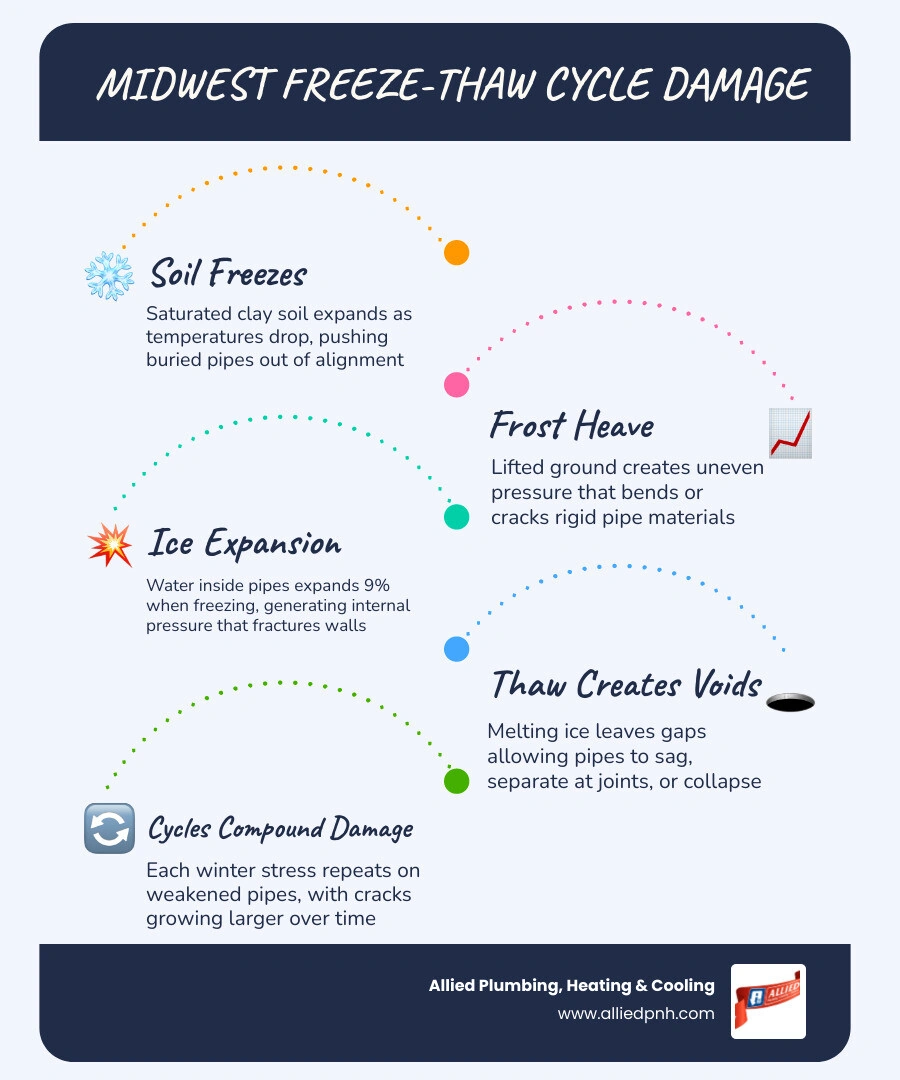
• Soil freezes and expands — saturated clay soil (common throughout central Illinois) can expand significantly, physically pushing pipes out of alignment
• Frost heave lifts the ground — soil movement above and below a pipe creates uneven pressure, bending or cracking rigid pipe materials
• Wastewater and water inside pipes freezes — water expands approximately 9% when it turns to ice, generating internal pressure that fractures pipe walls
• Thawing creates voids — as ice melts, gaps form in the soil around pipes, allowing sections to sag, separate at joints, or collapse
• Repeated cycles compound the damage — each winter, weakened pipes face the same stress all over again, with cracks growing larger over time
Data from central Illinois utilities makes the scale of this problem clear: roughly 90 out of 120 annual water main breaks occur between December and March, with the highest concentration happening as frost depth increases from 1 to 3 feet and again as it retreats in late winter. And 95% of those winter failures involve brittle cast iron pipe.
For homeowners in Springfield, Rochester, and Chatham, IL, this is not a distant infrastructure problem — it affects the private water and sewer lines running beneath your own yard, and the damage often builds quietly for years before it surfaces.
The Science Behind How Underground Pipes Shift and Crack in Midwest Winters
Understanding the science behind winter pipe damage helps us take the right steps to prevent it. In central Illinois, our winters are notorious for wild temperature swings. We can have a week of sub-zero temperatures followed by a sudden 45-degree thaw. While this might feel like a welcome break to us, it is an absolute nightmare for the soil surrounding your buried plumbing.
When water freezes, it undergoes a phase change that increases its volume by approximately 9%. When this happens inside the tiny pores of our local soil, the entire ground structure swells. This phenomenon is known as frost heave. As the ground freezes from the surface downward, it locks the upper sections of your plumbing in place while the deeper, unfrozen soil continues to shift.
To learn more about how these seasonal shifts impact your home's interior and exterior systems, check out our guide on How Illinois Freeze-Thaw Cycles Damage Your Plumbing.
Soil Expansion, Hydrostatic Pressure, and Frost Heaving
The soil across Springfield, Rochester, and Chatham contains a high concentration of clay. Clay soil is incredibly reactive to moisture. In fact, clay soils can expand up to 15% when fully saturated with water.
During the late fall and early winter, seasonal rains thoroughly saturate the ground. When the first hard freeze hits, this water-logged clay turns into a solid, expanding mass. This expansion generates immense hydrostatic pressure — the pressure exerted by a fluid (or in this case, freezing water-laden soil) at equilibrium due to the force of gravity and thermal expansion.
This pressure does not just push outward; it pushes upward, downward, and sideways. Approximately 25% of homes in the United States experience some form of foundation distress, and a significant portion of these cases occur in the Midwest due to clay soil movement. When your foundation shifts, the underground pipes passing through your foundation walls or slab are subjected to shearing forces that can easily snap rigid lines.
Temperature Fluctuations and Thermal Contraction
Another major scientific factor is thermal contraction. Just as the soil moves, the pipes themselves respond directly to temperature changes. When cold water from municipal sources or deep wells enters your home's service line, the pipe material contracts.
This shrinkage puts incredible tension on pipe joints and fittings. If a pipe is already weakened by age or rust, this thermal contraction is often the final straw that causes a joint to pull completely apart or a hairline crack to open up. To understand how age-related wear makes your plumbing more vulnerable to these thermal forces, read about How Pipe Corrosion Leads to Leaks and Low Pressure.
Types of Damage and Contributing Factors in Winter Ground Movement
When the ground moves, the pipes buried within it must either flex or break. Because older plumbing systems were built with highly rigid materials, they almost always do the latter. Underground winter pipe damage typically falls into one of four categories:
1. Joint Separation: As the soil shifts or the pipe contracts, the connections between pipe segments are pulled apart. This is especially common in bell-and-spigot style joints.
2. Pipe Bellying: When soil thaws unevenly, the support beneath a horizontal pipe line can wash away. This causes a section of the pipe to sag, creating a "belly" that traps waste and leads to chronic backups.
3. Hairline Cracks: Small fractures form due to localized hydrostatic pressure. These may not leak heavily at first, but they will expand during subsequent freeze-thaw cycles.
4. Structural Collapse: In extreme cases, the weight of shifting, frozen earth completely crushes a weakened pipe section, blocking all flow and flooding the surrounding soil.
If you suspect a pipe has already succumbed to these forces, acting quickly is vital. Learn about our local repair options by visiting our service page on Burst Pipe Repair Springfield IL.
How Underground Pipes Shift and Crack in Midwest Winters: Water Lines vs. Sewer Lines
Water service lines and sewer lateral lines experience winter stress in slightly different ways:
• Water Lines: These lines are constantly pressurized. Because they carry pressurized water, even a tiny hairline crack caused by a ground shift will immediately begin spraying water. This constant flow can quickly erode the surrounding soil, creating underground voids and accelerating the collapse of the pipe. Water lines typically begin to freeze when the surrounding soil temperature drops to a range of 24°F to 28°F for several hours.
• Sewer Lines: Unlike water lines, sewer pipes generally flow via gravity and are not pressurized. However, they are highly susceptible to freezing wastewater. If a sewer line has a belly or a partial clog, standing wastewater will collect. During a prolonged cold snap, this standing water can freeze, expand by 9%, and split the pipe wide open.
Vulnerability of Older Pipe Materials vs. Modern Solutions
The material your underground pipes are made of plays a massive role in whether they will survive a harsh Illinois winter. Brittle, rigid materials are highly susceptible to cracking under the mechanical stresses of frost heaving, while modern, flexible materials can bend and adapt to soil movement.
• Cast Iron — Flexibility: Extremely Rigid — Freeze/Thaw Resistance: Very Low — Common Failure Points: Brittle snaps, rust-through, joint leaks — Vulnerability Level: Very High (95% of winter water main failures)
• Clay Tile — Flexibility: Extremely Rigid — Freeze/Thaw Resistance: Low — Common Failure Points: Joint separation, root intrusion, crushing — Vulnerability Level: High (Common in older sewer lines)
• Galvanized Steel — Flexibility: Rigid — Freeze/Thaw Resistance: Low — Common Failure Points: Threaded joint failures, internal corrosion — Vulnerability Level: High
• PVC (Polyvinyl Chloride) — Flexibility: Moderate — Freeze/Thaw Resistance: Medium — Common Failure Points: Cracking in extreme cold, joint glue failure — Vulnerability Level: Medium
• PEX / High-Density Polyethylene (HDPE) — Flexibility: High — Freeze/Thaw Resistance: Very High — Common Failure Points: Excellent resistance; expands and contracts safely — Vulnerability Level: Low
The Role of Tree Root Intrusion and Hydrostatic Pressure
Midwest winters create a perfect storm when tree roots are involved. During the autumn, trees naturally send roots deeper into the soil searching for water and nutrients to survive the dormant winter months.
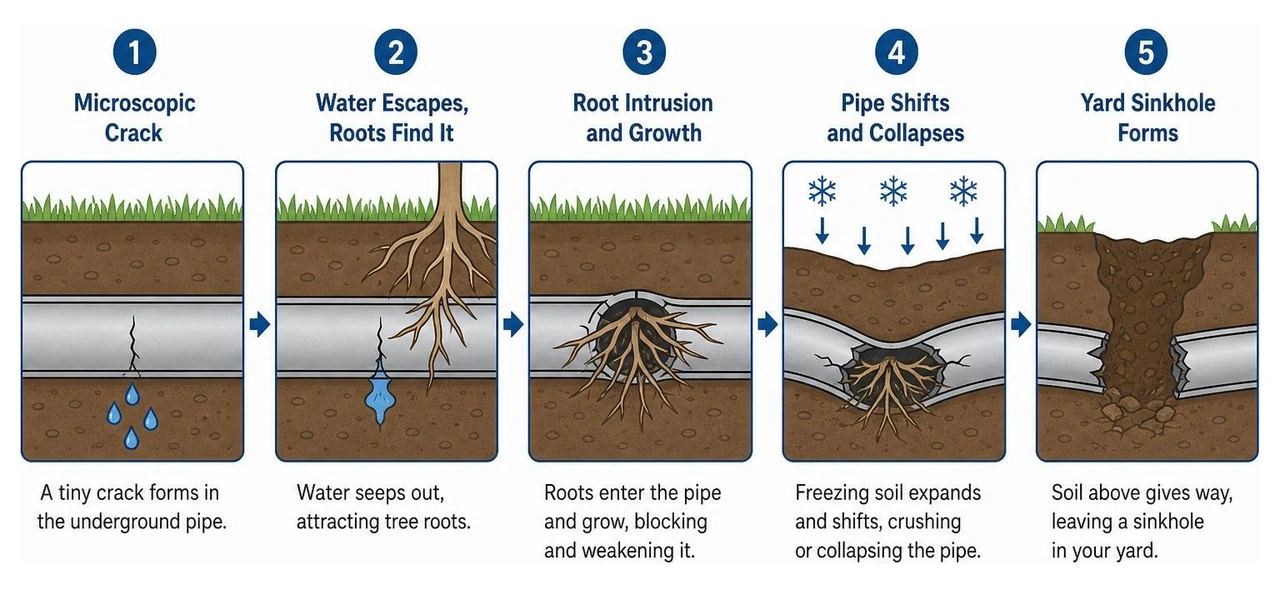
If your underground sewer pipe has even a microscopic crack or a slightly loose joint, moisture escapes into the surrounding soil. Tree roots will find this moisture, enter the pipe, and grow rapidly inside it.
When winter arrives and the surrounding clay soil expands, it pushes against the pipe. If the pipe is already structurally compromised and choked by strong tree roots, the combined force of the expanding soil and the growing roots will easily crush or displace the line.
Warning Signs of Underground Pipe Damage in Your Yard
Because your main water and sewer lines are buried several feet beneath your lawn, detecting winter damage can be tricky. However, there are several key warning signs that every homeowner in Springfield, Rochester, and Chatham should watch for:
• Unexplained Spikes in Your Water Bill: If your water usage habits haven't changed but your monthly bill has jumped, you likely have a hidden leak.
• Low Water Pressure: If you notice a sudden, persistent drop in water pressure across all the faucets in your home, your underground water line may be cracked and leaking.
• Saturated Spots in the Yard: Keep an eye out for patches of grass that remain wet, muddy, or completely free of snow even during freezing weather. Warm water leaking from a buried line will melt the snow above it.
• Gurgling Drains or Slow Drains: If your sinks, showers, or toilets are draining slowly or making strange gurgling sounds, a shifting sewer line may have developed a belly or a partial collapse.
• Discolored or Murky Tap Water: A cracked water service line can allow dirt and soil from the surrounding ground to enter your water supply, resulting in brownish or cloudy water.
To learn more about identifying these stealthy issues before they cause major structural damage, read our article on Signs of Hidden Water Leaks.
Recognizing How Underground Pipes Shift and Crack in Midwest Winters Before a Disaster
Catching a shifting or cracking pipe early can save you thousands of dollars in excavation and repair costs. If you notice any fluctuations in your household water pressure, it is important to investigate immediately rather than waiting for spring. For step-by-step guidance on diagnosing pressure drops, consult our resource on how to Identify and Fix Water Pressure Problems.
Prevention, Repair, and Winterization Strategies
Preventing winter pipe damage requires a combination of proactive household winterization and professional plumbing maintenance. For older homes with severely degraded plumbing, a proactive repiping is often the most cost-effective long-term solution. You can explore what this process looks like by visiting our service page on Repiping Springfield IL.
To protect your home's plumbing from the harsh Illinois winter, follow this essential winterization checklist:
• Disconnect and Drain Outdoor Hoses: Always remove hoses from outdoor spigots before the first freeze. Leaving a hose attached traps water inside the faucet and the pipe leading into your home, which will freeze and burst.
• Install Frost-Proof Hose Bibs: Upgrading to frost-proof outdoor faucets ensures that the water valve is located deep inside the heated envelope of your home.
• Keep Your Thermostat Consistent: If you plan to travel during the winter, never set your thermostat lower than 60°F. Keeping the home warm ensures that the crawl spaces and wall cavities housing your pipes stay above freezing.
• Seal Air Leaks Near Plumbing: Inspect your basement, crawl space, and foundation for drafts. Seal any gaps near rim joists or pipe penetrations with expanding foam or caulk.
• Drip Your Faucets During Extreme Cold: When outdoor temperatures are forecasted to drop below 20°F, let a faucet furthest from your main water shutoff drip slightly. This keeps water moving and relieves pressure inside the system.
• Insulate Exposed Pipes: Wrap any pipes in unheated crawl spaces, basements, or attics with high-quality foam pipe insulation sleeve or heat tape.
Professional Inspections and Trenchless Technology
If your underground water or sewer line has already shifted or cracked, you do not necessarily have to ruin your beautiful landscaping to fix it. Modern plumbing technology allows us to diagnose and repair buried lines with minimal disruption.
First, we utilize high-definition sewer camera inspections to pinpoint the exact location and nature of the damage. If the pipe is structurally sound but has isolated cracks or separated joints, we can often utilize trenchless repair methods:
• Pipe Lining (CIPP): We insert a flexible, epoxy-saturated liner into the damaged pipe. Once in place, the liner is inflated and cured, creating a seamless, durable "pipe within a pipe" without digging up your yard.
• Pipe Bursting: For severely damaged lines, we pull a new HDPE pipe through the old one using a bursting head that breaks the old, brittle pipe outward while instantly replacing it with a flexible, high-durability modern line.
If you find yourself facing a sudden plumbing emergency this winter, our team is always ready to help. Reach out to a trusted Emergency Plumber Springfield IL for rapid, 24/7 assistance.
Frequently Asked Questions about Winter Pipe Damage
At what temperature do underground pipes freeze in Illinois?
Underground water and sewer lines are generally buried below our local frost line (which typically ranges from 12 to 36 inches deep in central Illinois). However, during prolonged cold snaps, the frost line can push deeper.
Pipes are generally at risk of freezing when the outside temperature drops to 20°F or lower for several consecutive hours. At this point, if the soil temperature surrounding the pipe drops to between 24°F and 28°F, any standing water or wastewater inside the line will begin to freeze and expand.
What is the difference between trenchless pipe repair and full replacement?
Trenchless pipe repair (like pipe lining or pipe bursting) allows us to repair or replace buried lines through small access points, preserving your yard, driveway, and landscaping. Full replacement, or traditional excavation, requires digging a trench along the entire length of the pipe.
While trenchless methods are highly efficient and less disruptive, a full excavation replacement may be necessary if the pipe has completely collapsed, lost its structural integrity, or developed a severe belly that requires regrading the soil. To understand the long-term benefits of upgrading your pipes, read What Homeowners Should Know About Repiping.
Does homeowners insurance cover underground pipes damaged by frost heaving?
In most cases, standard homeowners insurance policies cover water damage caused by a "sudden and accidental" pipe burst, provided you have maintained proper heat in the home. However, gradual damage caused by wear and tear, age, tree root intrusion, or natural ground shifting/frost heaving is often excluded. This is why preventative maintenance, annual inspections, and timely pipe upgrades are so important for protecting your investment.
Protect Your Home’s Plumbing with Allied Plumbing, Heating & Cooling
Don't let the harsh Illinois winter take a toll on your home's underground plumbing. At Allied Plumbing, Heating & Cooling, we have been serving families across Springfield, Rochester, and Chatham, IL, since 1977. As a proud 3-generation family business, we combine decades of local expertise with cutting-edge technology to keep your water flowing safely all year long.
Whether you need a preventative sewer camera inspection, winterization assistance, or emergency trenchless pipe repair, our highly trained technicians are available 24/7 to deliver reliable, top-quality service. Plus, with our Daikin Comfort Promise and outstanding 12-year warranties on select systems, you can enjoy ultimate peace of mind.
Ready to secure your home's underground lines before the next big freeze? Contact us today to schedule an inspection or learn more about our comprehensive plumbing services by visiting Allied Plumbing, Heating & Cooling.