Why Illinois Freeze-Thaw Cycles Are So Hard on Your Home's Plumbing
Understanding how Illinois freeze-thaw cycles damage your plumbing starts with one simple fact: water expands by nearly 9% when it freezes. That expansion puts enormous pressure on your pipes — and when temperatures swing above and below 32°F repeatedly throughout a single Illinois winter, that stress adds up fast.
Here's a quick summary of how freeze-thaw cycles cause plumbing damage:
1. Water freezes inside pipes when temperatures drop below 32°F, especially in unheated or poorly insulated areas
2. Ice expands inside the pipe, building pressure that cracks or weakens the pipe wall
3. The ice thaws during a warmup, and the crack opens — releasing water into walls, ceilings, or floors
4. This cycle repeats dozens of times each winter in Springfield, Rochester, and Chatham, IL
5. Damage compounds over time, turning small weaknesses into full bursts, hidden leaks, and costly water damage
This isn't a rare worst-case scenario. Burst pipes are one of the most common causes of winter property damage in the Midwest — and many homeowners don't discover the problem until water is already soaking through drywall or pooling in the basement.
Illinois winters don't just get cold. They fluctuate. A week of sub-zero temperatures followed by a 45°F warmup is exactly the kind of pattern that stresses plumbing systems to their limits. And because much of this damage happens inside walls, under slabs, or in crawl spaces, it often goes unnoticed until it's serious.
This guide breaks down exactly what's happening to your pipes, what warning signs to watch for, and what you can do to protect your home before the next cold snap hits.
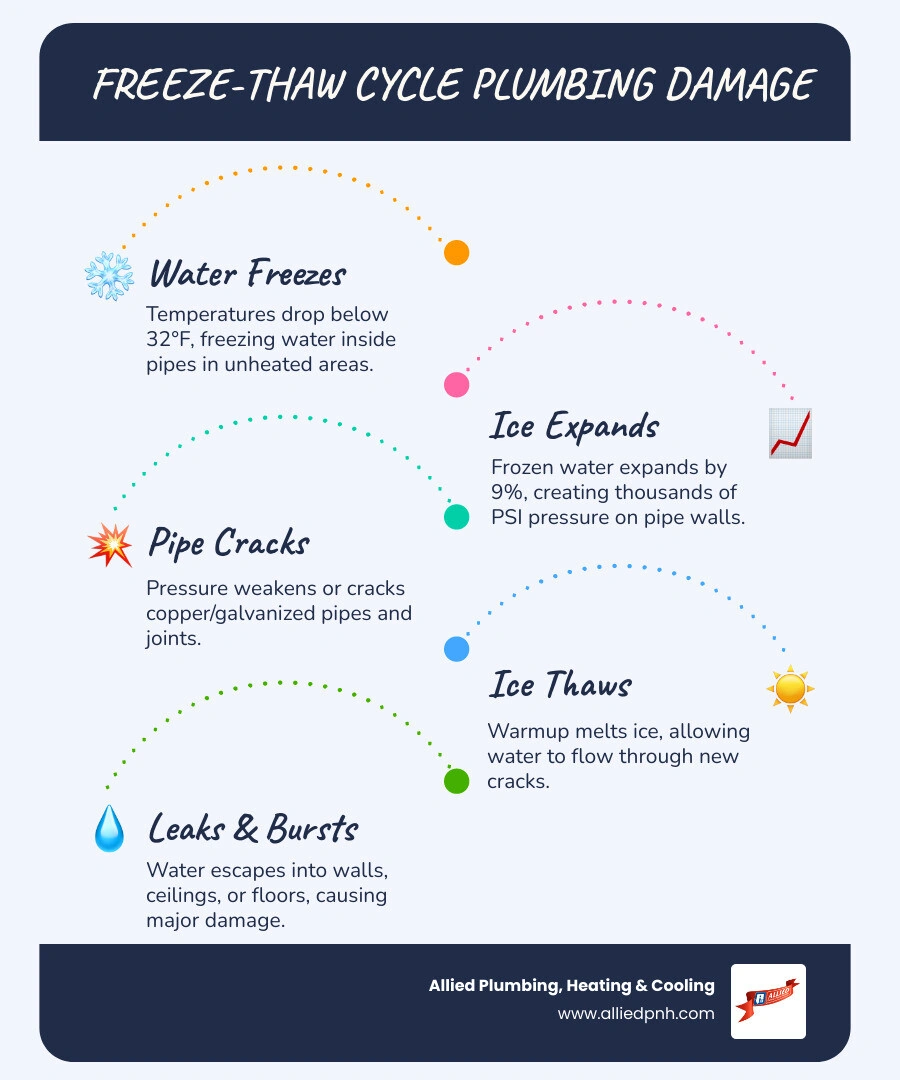
How Illinois Freeze-Thaw Cycles Damage Your Plumbing
In the Midwest, we are used to the "rollercoaster" weather. One day you’re wearing a heavy parka in Springfield, and two days later you’re seeing the snow melt away in Rochester. While we might enjoy the brief respite from the cold, these 32°F swings are a nightmare for your plumbing.
When water freezes, it doesn't just sit there; it expands by approximately 9%. If that water is trapped inside a copper or galvanized steel pipe, that expansion has nowhere to go but out. This creates thousands of pounds of pressure per square inch. Eventually, the pipe wall or a joint gives way. The "thaw" part of the cycle is when the real trouble starts, as the ice plug melts and allows pressurized water to gush through the newly created crack.
Why freeze-thaw weather is so hard on plumbing in Springfield homes
The unique challenge in Central Illinois is the frequency of these cycles. Unlike northern regions that might stay frozen for months, our climate sees constant temperature swings. These sudden warmups and prolonged cold snaps cause pipes to contract and expand repeatedly. This "fatigue" stresses the joints and soldering. Furthermore, many local homes have plumbing running through attic spaces or crawl spaces where heat from the house can cause localized snowmelt on the roof, leading to ice dams that back up water into areas it was never meant to be.
How frozen pipes lead to burst pipes during thawing
A common misconception is that the pipe bursts at the exact moment the water freezes. In reality, the ice blockage often acts as a plug. The pressure builds up between that ice plug and the closed faucet. When the weather warms up and the ice begins to melt, the structural integrity of the pipe—already compromised by the expansion—fails. This is why we see so many "hidden bursts" in ceilings and walls during the first warm day after a freeze.
How Illinois freeze-thaw cycles damage your plumbing beyond supply lines
It isn't just your drinking water lines at risk. How Illinois freeze-thaw cycles damage your plumbing extends to sewer and drainage systems too.
• Sewer Lines: If your sewer lateral is shallow, the surrounding soil can undergo "frost heave," shifting the pipe and causing cracks.
• Sump Discharge: If your sump pump discharge line is blocked by ice at the exit, the pump will work overtime, overheat, and eventually fail, leading to a flooded basement during the thaw.
• Hose Bibs: Water left in an outdoor spigot can freeze and crack the pipe inside the wall, leading to a massive leak the next time you turn the water on in the spring.
The Plumbing Problems Illinois Homeowners Notice First
Detecting winter plumbing issues early can be the difference between a quick fix and a total home renovation. Because so much of our plumbing is hidden, we have to rely on our senses—and a bit of detective work—to spot trouble in Chatham or Rochester.
Early signs of frozen pipes and hidden water damage
If you turn on your kitchen faucet on a freezing morning and only get a trickle, you likely have a frozen line. Other signs include:
• Frost on Pipes: If you can see the pipes (like in a basement or under a sink), look for visible frost on the exterior of the metal.
• Unusual Odors: If a drain line is frozen or cracked, sewer gases may escape into the home.
• Condensation or Dampness: Wet spots on drywall or warped floorboards are classic Signs of Hidden Water Leaks that often appear during a thaw.
How freeze-thaw cycles can affect foundations, drainage, and plumbing together
In Illinois, we have a lot of clay soil. This soil acts like a sponge, soaking up water and then expanding violently when it freezes. This creates "hydrostatic pressure" against your foundation. You might notice sticking doors or windows, which indicate the house is shifting. This movement can snap rigid plumbing lines or cause basement seepage through new foundation cracks.
Why winter thaws can trigger sump pump and sewer problems
When the snow finally melts in Springfield, all that water has to go somewhere. If the ground is still frozen a few inches down, the water can't soak in, so it rushes toward your foundation and into your sump pit.
• Water Flow — Frozen Pipe: No flow or very low pressure — Hidden Leak: Normal or slightly lower pressure
• Sound — Frozen Pipe: Silent — Hidden Leak: Hissing or dripping behind walls
• Visible Signs — Frozen Pipe: Frost on the pipe — Hidden Leak: Damp drywall, peeling paint
• Temperature — Frozen Pipe: Usually occurs during sub-20°F weather — Hidden Leak: Usually noticed during a warmup (thaw)
How to Prevent Freeze-Thaw Plumbing Damage in Illinois
Prevention is always more affordable than restoration. We’ve seen the damage these cycles can do since we started serving this community in 1977, and a few simple steps can save you a world of hurt.
How to protect vulnerable pipes before the next cold snap
Focus on the areas where cold air meets your plumbing.
• Insulate: Use foam sleeves on pipes in the basement, garage, and crawl spaces.
• Seal Gaps: Use spray foam or caulk to seal drafts near rim joists where pipes enter the home.
• Access: Ensure you can easily reach your water meter and main shut-off valve even in the dark.
Smart habits during extreme cold and winter warmups
When the forecast calls for "brutal" temperatures, change your routine:
• Steady Heat: Set your thermostat to at least 55°F, even if you are leaving for vacation.
• Circulate Air: Open cabinet doors under sinks located on exterior walls to let warm house air reach the pipes.
• The Drip: Let a faucet furthest from the main shut-off drip at a slow, steady rate. Moving water is much harder to freeze.
Outdoor and whole-home winterization steps that reduce plumbing risk
Before the first frost hits Rochester or Chatham:
1. Disconnect Hoses: A hose full of water attached to a spigot is a leading cause of burst pipes inside the wall.
2. Clean Gutters: Clear debris so snowmelt can flow freely instead of forming ice dams.
3. Check Drainage: Ensure downspouts direct water at least 5 to 10 feet away from your foundation.
What to Do If a Pipe Freezes or Bursts
If you find yourself facing a plumbing emergency, the first rule is: Don't Panic. How you handle the first 30 minutes will determine the extent of the damage.
What to do when you think a pipe is frozen
If you suspect a pipe is frozen but not yet burst, keep the faucet open. As you treat the pipe, the melting ice will need a place to go. Use a hair dryer on a low setting or a space heater to gently warm the area. Never use an open flame or torch. This is a fire hazard and can cause the water inside to boil, leading to an explosion. If you can't reach the frozen section, it's time to call for professional Burst Pipe Repair.
What to do immediately after a burst pipe or active leak
If a pipe has already burst:
1. Shut off the main water valve immediately.
2. Turn off electricity at the breaker if water is near outlets or your electrical panel.
3. Call for help. Contact a professional for Burst Pipe Repair Springfield IL to get the line capped or replaced.
4. Document everything. Take photos of the damage for your insurance company before you start cleaning up.
When repeated winter damage means repairs are no longer enough
If you find yourself calling us every single winter for the same leaks, your plumbing may have reached its "material limit." Older copper can become thin and brittle, and galvanized steel pipes eventually corrode from the inside out. In these cases, it’s often more cost-effective to look into Repiping Your Home - What to Expect rather than paying for endless emergency repairs. You can learn more about the Signs Your Home Needs to Be Repiped to see if your system is at risk.
How Illinois Freeze-Thaw Cycles Damage Your Plumbing Over the Long Term
The damage from these cycles isn't always immediate. Sometimes, it’s a slow degradation that takes years to manifest. Every time a pipe expands and contracts, the metal undergoes "work hardening," making it more prone to pinhole leaks and cracks in the future.
How Illinois freeze-thaw cycles damage your plumbing year after year
Think of a paperclip. If you bend it back and forth once, it stays intact. If you do it fifty times, it snaps. Your pipes are the same way. The repeated stress of how Illinois freeze-thaw cycles damage your plumbing leads to:
• Widening Leaks: A tiny crack from three winters ago becomes a major flood this year.
• Structural Movement: As the ground shifts, your underground sewer lines can lose their "slope," leading to frequent backups.
• Insulation Gaps: Over time, insulation can settle or be moved by pests, leaving previously protected pipes exposed.
Which pipes and home areas are most vulnerable in Rochester and Chatham
While PEX piping is more flexible and resistant to freeze-bursting than copper, no material is 100% "freeze-proof." We often see the most issues in:
• Crawl Spaces: These areas are notoriously difficult to heat and insulate properly.
• Garages: Many homeowners forget that the wall shared between the house and the garage often contains plumbing.
• Sewer Laterals: Shallow lines are highly susceptible to frost heave. If you're having recurring sewer issues, you might need Repiping Springfield IL to move or protect those lines.
When to schedule a plumbing inspection after winter
We recommend a "post-winter" checkup in late March or early April. Look for:
• New water stains on basement joists.
• Musty odors in the crawl space.
• Sump pumps that seem to be running more than usual.
• Low water pressure that doesn't go away.
Frequently Asked Questions About How Illinois Freeze-Thaw Cycles Damage Your Plumbing
At what temperature do pipes usually freeze in an Illinois home?
While water freezes at 32°F, pipes inside a home are usually protected by the house's insulation. The "danger zone" typically starts when outdoor temperatures drop below 20°F for several consecutive hours, especially if there is a high wind chill pushing cold air into small gaps in your siding.
Does keeping the heat at 55°F really help prevent frozen pipes?
Yes! Keeping your home at a minimum of 55°F ensures that the air inside the wall cavities stays just above freezing. If you turn the heat off completely while away, the thermal mass of the house will eventually drop to the outdoor temperature, guaranteed to freeze your lines.
Can a dripping faucet help during extreme cold?
Absolutely. A dripping faucet relieves the pressure that builds up between an ice blockage and the tap. It also keeps water moving, which requires much lower temperatures to freeze than standing water. Focus on faucets that are located on exterior walls.
Conclusion
Living in Springfield, Rochester, or Chatham means dealing with the reality of Midwest winters. While we can't change the weather, we can change how prepared our homes are for it. By understanding how Illinois freeze-thaw cycles damage your plumbing, you can take proactive steps to insulate, monitor, and maintain your system.
If you do find yourself with a winter plumbing emergency, Allied Plumbing, Heating & Cooling has been a 3-generation, family-owned business since 1977. We offer 24/7 emergency services and the Daikin Comfort Promise to ensure your home stays safe and warm all season long. More info about plumbing services.