Why Choosing the Right AC Filter Matters for Illinois Homeowners
Finding the best ac filter options for Illinois homes is more important than most homeowners realize — especially in Springfield, Rochester, and Chatham, where seasonal weather swings between heavy spring pollen, humid summers, and cold winters that run your HVAC hard year-round. The filter sitting in your system does two jobs at once: it protects your equipment and directly impacts the air your family breathes every day.
Here are the top AC filter options for Illinois homes at a glance:
1. MERV 11 pleated filter — Best for most Illinois homes; captures pet dander, mold spores, and pollen without restricting airflow
2. MERV 13 pleated filter — Best for allergy sufferers, wildfire smoke events, or homes with respiratory health concerns
3. MERV 8 pleated filter — Minimum recommended standard; good for basic dust and pollen control in newer systems
4. 4-to-5-inch deep media cabinet filter — Best for longer filter life and higher MERV ratings without straining your system
5. Whole-house air cleaner — Best for households with severe allergies, asthma, or immunocompromised residents
Illinois homes face unique air quality pressures. Central Illinois sits in a region with high agricultural dust, significant spring and fall pollen counts, and occasional wildfire smoke drifting in from western states. Add pets or an older HVAC system into the mix, and picking the wrong filter can mean more dust on surfaces, more allergens in the air, or worse — a strained blower motor and a frozen evaporator coil.
The good news is that understanding a few simple rating numbers helps you cut through the confusion fast.
Understanding MERV Ratings for Illinois Climate Demands
When shopping for the best ac filter options for Illinois homes, the first acronym you will run into is MERV. MERV stands for Minimum Efficiency Reporting Value. This is the industry-standard scale, ranging from 1 to 16 for residential systems, that measures an air filter’s ability to capture particles of various sizes. The higher the MERV rating, the smaller the particles the filter can trap.
However, selecting a filter is not as simple as buying the highest number on the shelf. In central Illinois, our HVAC systems have to work incredibly hard. Our winters are freezing, requiring consistent heating, and our summers are notoriously hot and humid, demanding non-stop cooling. Because higher-MERV filters are woven more tightly to catch smaller particles, they naturally create more resistance to airflow.
If your furnace or air handler has to struggle to pull air through a dense filter, your system's efficiency drops, your utility bills climb, and you risk wearing out your blower motor prematurely. Finding the perfect balance between clean indoor air and unrestricted system airflow is the key to year-round comfort. For a deeper dive into how filters interact with your system, take a look at our Air Filter Replacement Complete Guide.
Comparing MERV 8, MERV 11, and MERV 13 for Local Allergens
To make the right choice for your home in Springfield, Rochester, or Chatham, it helps to compare the three most common residential filter ratings and see how they handle local air quality challenges:
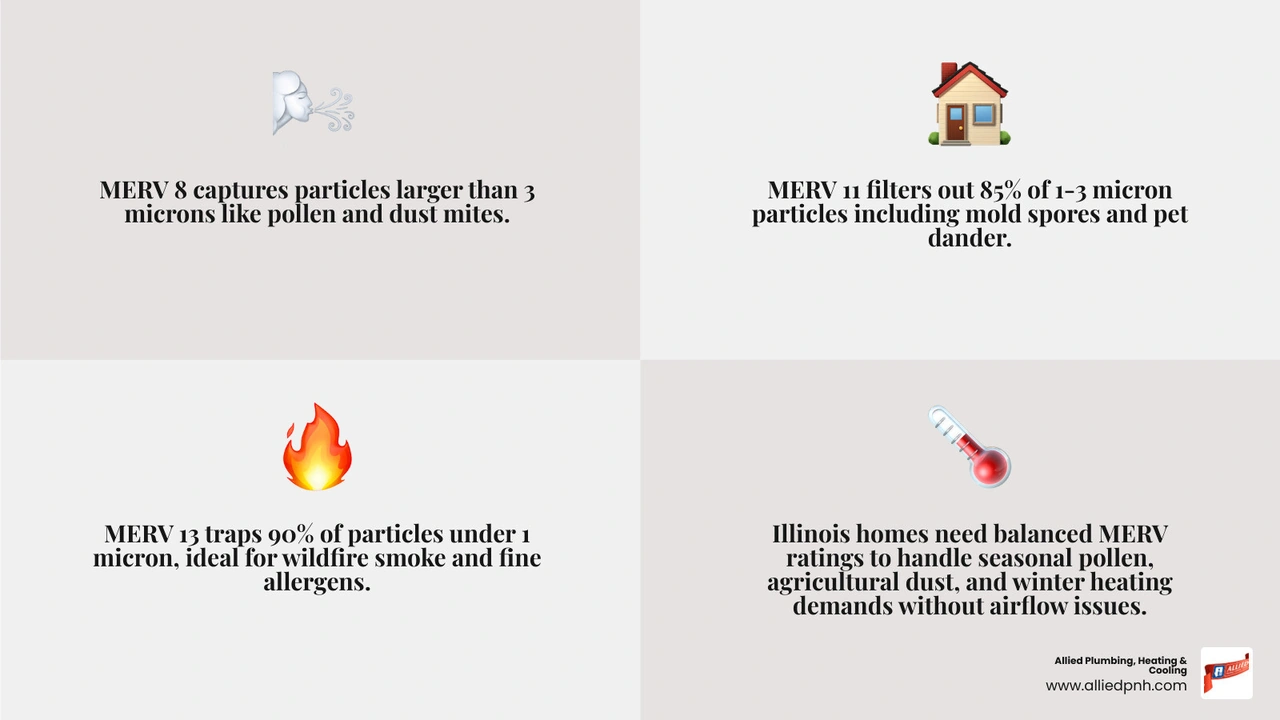
• MERV 8 Filters: These are considered the minimum acceptable standard for residential HVAC systems. A MERV 8 filter is designed to capture larger airborne particles between 3.0 and 10.0 microns in size. This includes common household dust, lint, dust mites, and larger pollen particles. If you do not have pets or severe allergies, a MERV 8 filter provides reliable, basic protection for your HVAC equipment.
• MERV 11 Filters: Often described as the "sweet spot" for most central Illinois households, MERV 11 filters capture smaller particles in the 1.0 to 3.0-micron range. This includes pet dander, mold spores, auto emissions, and fine agricultural dust. If you have dogs or cats, or if someone in your home experiences mild seasonal allergies, upgrading to a MERV 11 filter offers a significant boost in air quality without putting excessive strain on your heating and cooling system.
• MERV 13 Filters: For premium filtration, MERV 13 filters are the highest practical rating for standard residential systems. They capture at least 50% of extremely fine particles between 0.3 and 1.0 microns, including bacteria, cooking smoke, viruses, and wildfire smoke particulate (PM 2.5). A MERV 13 filter is up to 20 times more effective at filtering microscopic pollutants than a standard 1-inch fiberglass filter. It is highly recommended for households with asthma, severe allergies, or immunocompromised residents.
To help you visualize how these options compare, here is a breakdown of their performance:
• MERV 8 — Target Particle Size: 3.0 to 10.0 microns — Common Pollutants Captured: Dust, pollen, lint, dust mites — Average Lifespan (1-Inch Filter): 60 to 90 days — Best Suited For: Homes without pets or allergies; basic system protection
• MERV 11 — Target Particle Size: 1.0 to 3.0 microns — Common Pollutants Captured: Pet dander, mold spores, fine dust, auto emissions — Average Lifespan (1-Inch Filter): 60 to 90 days — Best Suited For: Pet owners; mild allergy sufferers; standard modern systems
• MERV 13 — Target Particle Size: 0.3 to 1.0 microns — Common Pollutants Captured: Viruses, bacteria, smoke, smog, microscopic allergens — Average Lifespan (1-Inch Filter): 30 to 60 days — Best Suited For: Severe allergy/asthma sufferers; homes prone to smoke
Evaluating the Best AC Filter Options for Illinois Homes by Type
Beyond the MERV rating, the physical construction of the filter plays a massive role in how well it performs in your system. Let's look at the most common filter types you will encounter when shopping for your home.
Flat Fiberglass Filters
These are the extremely thin, see-through filters often sold in cheap multi-packs. While they are highly budget-friendly, they offer very poor filtration. In fact, if you hold one up to the light, you can easily see right through it. They are designed almost exclusively to keep large debris, like hairballs and giant dust bunnies, out of your HVAC cabinet. They do almost nothing to clean the air you breathe and require replacement every 30 days.
Disposable Pleated Filters
Made from polyester or cotton folds, pleated filters are the standard recommendation for modern homes. The pleats vastly increase the surface area of the filter, allowing it to trap a high volume of dust and allergens without immediately clogging and blocking airflow. They are available in MERV ratings from 8 to 13 and typically last anywhere from 60 to 90 days.
Electrostatic Pleated Filters
These filters use self-charging paper or synthetic fibers that act like a magnet for airborne particles. As air flows through the filter, the static charge pulls tiny pollutants out of the air stream and holds them tight. These are incredibly effective at capturing microparticles like smoke and fine pollen, making them an excellent choice for allergy relief.
Washable Filters
While washable, reusable filters sound like a great, eco-friendly way to save money, they come with significant drawbacks. Most washable residential filters only perform at a MERV 1 to 4 level, meaning they do not protect your indoor air quality very well. Additionally, if you do not let them dry completely after washing, reinstalling a damp filter can lead to mold and mildew growth inside your dark ductwork.
Using a low-quality or completely clogged filter does more than just let dust settle on your living room furniture. It can severely impact your cooling system's health. To learn more about how this happens, check out our guide on How Dirty Air Filters Destroy Your AC Performance.
Choosing the Best AC Filter Options for Illinois Homes with Pets or Allergies
If you share your Chatham home with a golden retriever, or if the spring oak and maple pollen in Rochester leaves you sneezing, your criteria for an air filter changes. Pet hair and dander are constant battles, and standard filters can get overwhelmed quickly.
For pet owners and allergy sufferers, we highly recommend upgrading to at least a MERV 11 electrostatic pleated filter. The electrostatic charge is particularly excellent at grabbing microscopic pet dander and skin flakes that standard cotton filters miss.
If anyone in your household has asthma or chronic respiratory conditions, stepping up to a MERV 13 filter is highly beneficial, provided your system can handle the airflow restriction. By capturing the tiny mold spores that thrive during humid Central Illinois summers, a high-quality filter acts as a constant shield for your lungs. If you want to explore more ways to clean up your home's air, browse our specialized Indoor Air Quality Solutions.
Filter Thickness: 1-Inch vs. Deep-Media 4-to-5-Inch Cabinets
When most homeowners think of an air filter, they picture the standard 1-inch thick filter that slides into a narrow slot on the side of their furnace. However, one of the best upgrades you can make for both your air quality and your HVAC system’s longevity is transitioning to a deep-media cabinet that holds a 4-to-5-inch thick filter.
The primary benefit of a thicker filter comes down to surface area. A 4-inch pleated filter has up to nine times more surface area than a standard 1-inch filter. Think of it like a multi-lane highway versus a single-lane country road; the extra space allows far more air to pass through easily, even when the filter is highly efficient.
This massive surface area provides two major advantages:
1. Lower Static Pressure: Because there is more physical material for the air to flow through, a 4-inch MERV 11 or MERV 13 filter actually restricts airflow less than a thin 1-inch filter of the same rating. This protects your blower motor from strain.
2. Longer Lifespan: While a 1-inch filter needs to be changed every 1 to 3 months, a 5-inch media filter can comfortably last up to 6 months (and sometimes up to a full year in homes without pets) before needing a replacement.
If you are interested in keeping your system running smoothly through all four seasons, be sure to read our tips on AC Maintenance for Year-Round Comfort.
Managing Airflow and Compatibility in Older Springfield Systems
If you live in one of Springfield’s beautiful historic homes or have an HVAC system that is more than a decade old, you must exercise caution when upgrading to higher MERV ratings.
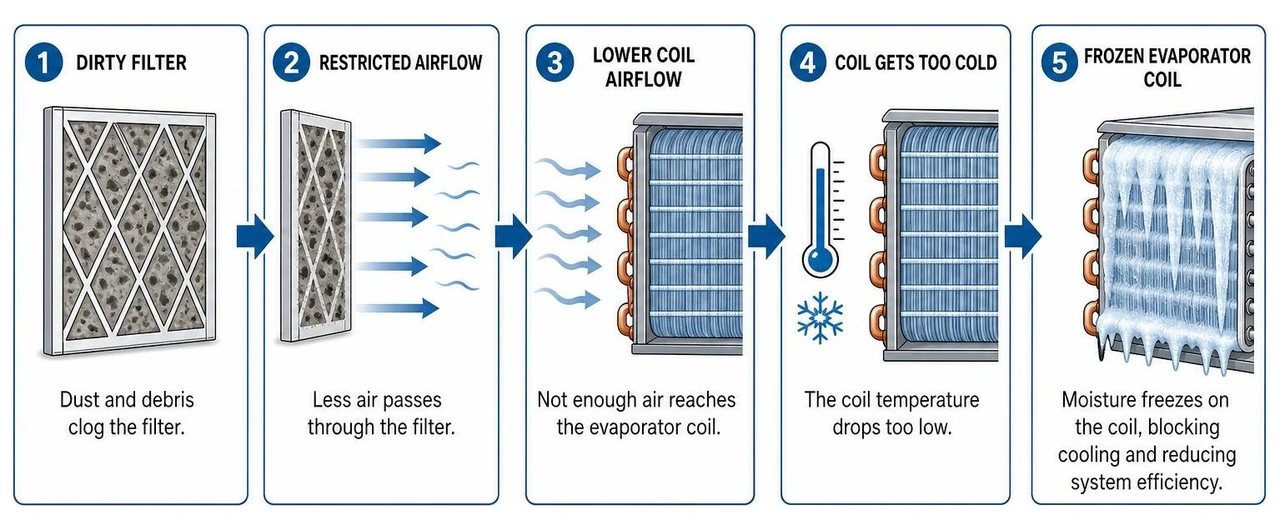
Older heating and cooling systems were simply not designed to push air through dense, high-efficiency filters. If you slide a thick, 1-inch MERV 13 filter into an older, single-speed system, the high static pressure can cause the airflow across your cooling system's evaporator coil to drop dramatically.
When airflow drops too low during the hot summer months, the moisture that condenses on the coil can freeze solid. A frozen evaporator coil can block air completely, cause water to leak into your home as it melts, and potentially destroy your compressor — resulting in an expensive, avoidable repair.
Before making the jump to a high-MERV filter in an older system, it is always wise to have a professional HVAC technician assess your system's static pressure and overall compatibility.
Seasonal Replacement Schedules for Central Illinois Weather
One of the most common questions we hear in Springfield, Rochester, and Chatham is: "How often do I actually need to change my filter?"
The truth is, a rigid "one-size-fits-all" schedule does not work well in Central Illinois because our weather shifts so dramatically. During our mild spring and autumn months, your HVAC system might barely run. But when July brings 90-degree humidity, or January brings sub-zero wind chills, your system runs almost continuously, pulling massive volumes of air—and airborne dust—through the filter.
As a general rule of thumb for standard 1-inch pleated filters (MERV 8 to 11), we recommend the following replacement schedule:
• Single-occupant home, no pets: Every 90 days.
• Average suburban home with one pet: Every 60 days.
• Homes with multiple pets, smokers, or severe allergy sufferers: Every 30 to 45 days.
• During peak summer and winter seasons: Check the filter monthly and replace it as soon as it begins to look grey or dusty.
For those running 4-to-5-inch deep media filters, you can typically replace them every 6 to 9 months, though checking them at the 6-month mark is highly recommended.
To help you stay on top of your system’s seasonal needs, check out our Slug Spring Air Filter Replacement Tips 2026 and download our handy Summer AC Maintenance Checklist for Homeowners.
Premium Whole-House Air Cleaners and Budget-Friendly Alternatives
If standard filters are not providing the level of relief you need, or if you want the absolute best protection for your home, you might want to consider a premium whole-house air cleaner.
Systems like the Daikin One Premium Air Cleaner are installed directly into your ductwork. Instead of just catching dust as it passes by, these advanced systems treat the air throughout your entire home, capturing microscopic physical particles, odors, and chemical pollutants down to 0.3 microns. They provide hospital-grade filtration and only require maintenance once a year, making them an incredibly convenient and powerful solution for families dealing with severe asthma or respiratory issues.
On the other hand, if you are looking for a highly effective but budget-friendly approach, here is our favorite pro-tip: buy your pleated filters by the case. Purchasing a box of six or twelve MERV 11 filters online or from a local supplier is far more cost-effective than buying them individually at big-box stores. Plus, having a fresh filter sitting on your shelf means you are much more likely to replace it on time!
Keeping your filters fresh is the single easiest way to prevent unexpected breakdowns. To learn what else you can do to keep your system in top shape, read our comprehensive AC Tune-Up Guide for Illinois Homeowners.
Frequently Asked Questions About Illinois AC Filters
What is the best ac filter options for illinois homes during high pollen seasons?
During the heavy spring and fall pollen seasons in Springfield, the best ac filter options for Illinois homes are MERV 11 electrostatic pleated filters. They offer the perfect balance, capturing fine pollen grains and mold spores without restricting the airflow your system needs to keep your home comfortable.
Can a MERV 13 filter damage my older HVAC system in Rochester?
Yes, it can if your system is not designed to handle it. A MERV 13 filter is highly restrictive. In older Rochester HVAC systems, this restriction can strain the blower motor, reduce heating and cooling efficiency, and even cause your cooling coils to freeze up. It is always best to have an HVAC professional check your system's static pressure before upgrading to MERV 13.
How often should I change my AC filter during an Illinois summer?
During a hot, humid Illinois summer, you should check your 1-inch filter every 30 days. If you have pets or active allergies, expect to replace it every 30 to 60 days. When your air conditioner is running long cooling cycles, dust builds up much faster on the pleats. Keeping the filter clean prevents unnecessary wear and tear. You can learn more about how this simple step saves your system by reading How an AC Tune-Up Prevents Costly Summer Breakdowns.
Conclusion
Choosing the right AC filter is one of the simplest, most effective ways to protect your home's HVAC system and keep your family breathing clean, healthy air. Whether you opt for a highly efficient MERV 11 pleated filter to combat pet dander or decide to upgrade to a premium whole-house air cleaner, matching the filter to your specific household needs and system capabilities is key.
At Allied Plumbing, Heating & Cooling, we have been helping families across Springfield, Rochester, and Chatham stay comfortable in their homes since 1977. As a third-generation, family-owned business, we take pride in delivering reliable, high-quality service. We back our work with the Daikin Comfort Promise, offering outstanding 12-year warranties for ultimate peace of mind.
If you are unsure which filter is right for your older system, or if you want to upgrade to a deep-media cabinet for effortless, high-efficiency filtration, we are here to help. Schedule an air conditioning service with Allied Plumbing, Heating & Cooling today, and let our friendly, experienced team ensure your home's air is clean, safe, and perfectly conditioned!