Why Does My Furnace Smell Like Burning? Common Homeowner Questions Answered
Why Does My Furnace Smell Like Burning? Common Homeowner Questions Answered
Is It Normal for a Furnace to Smell Like Burning on the First Cold Day?
Have you ever adjusted your thermostat on a chilly autumn evening, only to be greeted by an alarming, smoky odor spreading through your house? When compiling the most common homeowner questions answered by HVAC professionals each fall, this exact scenario always tops the list. The immediate panic is entirely understandable. You expect warm air to flow from your vents, not a scent that makes you want to check the nearest smoke detector.
This situation is incredibly common during a mid-fall heating startup in October. Throughout the humid Midwestern summer, your household relies heavily on Air Conditioning Services to stay comfortable. While the cooling side of your system works overtime, the heating components sit completely idle in a dark, often dusty basement or utility closet. When those sharp October temperature drops finally hit, forcing sudden, system-wide furnace startups, the unit must suddenly spring to life after months of inactivity.
The symptoms of a cooling failure are very different from a heating startup issue. While you may have needed professional AC repair over the summer for a frozen coil or a clogged drain line, the first heating cycle brings entirely different physical reactions. The most critical decision point for any homeowner is determining whether that sudden burning odor is a harmless seasonal dust burn-off or a serious mechanical failure that poses a safety risk to the household.
Understanding what is happening inside the metal cabinet of your heating system is the first step toward peace of mind. By learning how to differentiate between standard operational quirks and genuine emergencies, you can ensure your home stays both warm and safe throughout the winter months ahead.
The Anatomy of the Mid-Fall Furnace Startup
To understand why a perfectly healthy heating system might produce an alarming scent, it helps to look closely at the science of a mid-fall heating startup in October. Your furnace is a complex piece of machinery that relies on precise combustion and heat transfer. When it operates normally, it is highly efficient and odorless. However, the long offseason changes the internal environment of the unit.
Why Idle Summer Months Lead to Fall Odors
During the summer, while your air conditioner pushes chilled air through the ductwork, the actual heating components—specifically the heat exchanger and the burner assembly—experience a complete lack of airflow and thermal activity. This extended idle period allows household debris to settle directly onto these critical parts.
• Dust accumulation: Microscopic particles of standard household dust slowly coat the metallic surfaces.
• Pet dander and hair: Even with a good air filter in place, tiny amounts of dander can bypass the media and settle inside the cabinet.
• Microscopic lint: Fibers from carpets, clothing, and upholstery circulate through the return vents and eventually find a resting place on the cold heat exchanger.
When the thermostat finally calls for heat, the system ignites. The burners generate intense flames, rapidly raising the temperature of the heat exchanger to hundreds of degrees. This initial ignition creates an immediate flash-burn of all the harmless debris that has accumulated since spring. The resulting scent is quickly caught by the blower motor and distributed through the supply vents into every room of the house.
This flash-burn is a standard physical reaction, not a sign of system failure. However, navigating this seasonal transition is much easier when the system is properly prepared. As a multi-generational, family-owned business, our team at local heating and cooling experts Allied Plumbing Heating & Cooling has safely guided neighbors through decades of these seasonal transitions by emphasizing proactive care. We frequently hear from customers who schedule their yearly fall checkup that our technicians arrived on time and provided the courteous, respectful service needed to ensure the system was entirely clean and mechanically sound before the weather turned cold. Pre-seasonal checks remove the bulk of this debris, significantly reducing the intensity of any startup odors.
Normal Dust Burn-Off vs. Dangerous Electrical Smells
Because safety is always the highest priority in any home, you must be able to clearly distinguish between harmless seasonal odors and genuine emergencies. An odor that requires a simple open window is vastly different from an odor that requires an immediate shutdown.
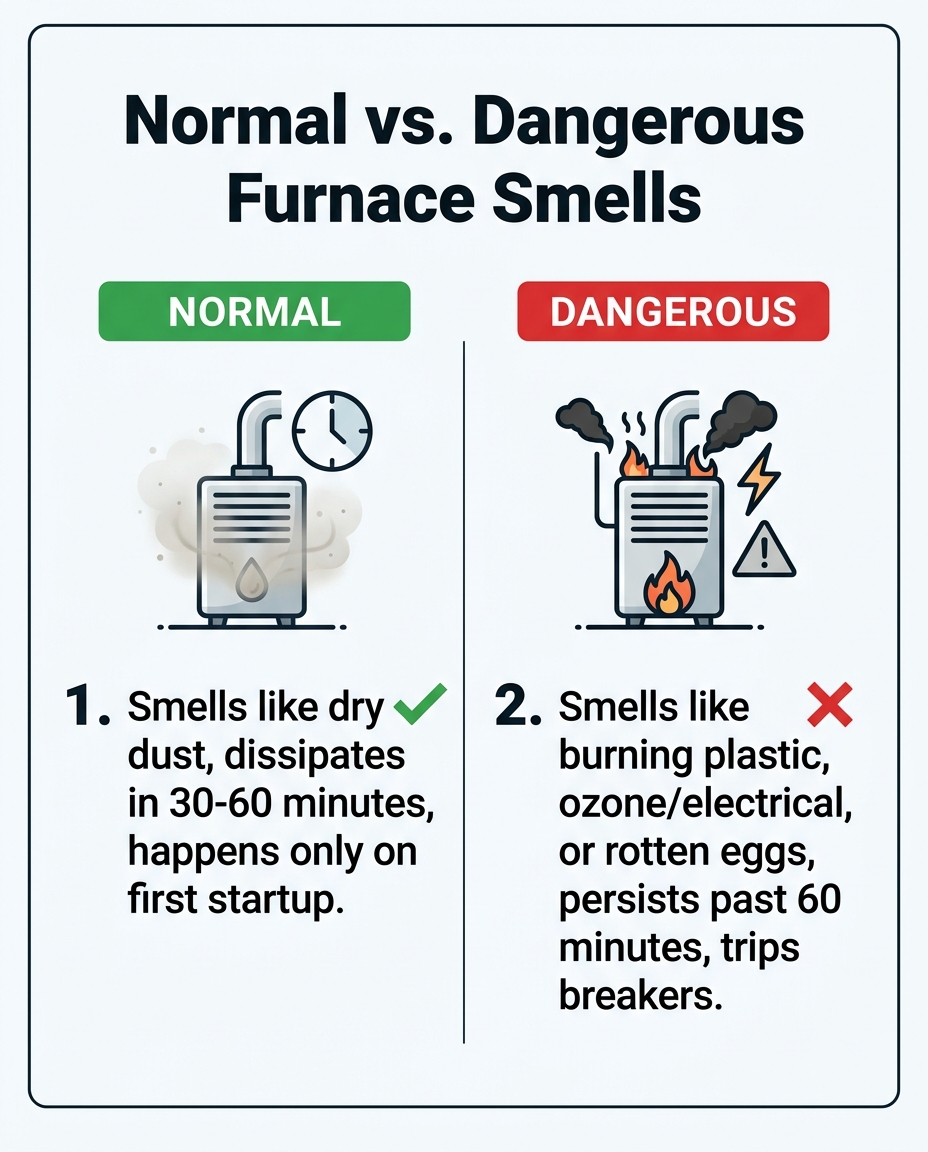
Normal dust burn-off has a very distinct scent profile. It is often described as a dry, dusty, or slightly singed odor—similar to the smell of a hot clothing iron or a space heater that has just been turned on. It is generally mild and should not cause your eyes to water or your throat to burn. In our experience serving homes across Springfield IL, this is a routine occurrence that resolves itself quickly.
Conversely, mechanical and electrical failures produce sharp, acrid odors that are impossible to ignore. These smells indicate that something inside the cabinet is actively failing, melting, or overheating beyond safe operational limits.
• Smells like dry, singed dust or warm metal — Characteristics of Dangerous Smells: Smells like melting plastic, burning rubber, or sharp ozone
• Occurs only during the first few heating cycles of the year — Characteristics of Dangerous Smells: Occurs suddenly during mid-season or persists continuously
• Fades away steadily as the system continues to run — Characteristics of Dangerous Smells: Grows stronger or more pungent the longer the system runs
• Accompanied by normal blower and burner noises — Characteristics of Dangerous Smells: Accompanied by loud pops, grinding, or buzzing noises
If you detect any characteristics of a dangerous smell, you must establish a strict "do not DIY" boundary. Modern heating systems contain high-voltage electrical components and pressurized gas lines that require specialized training to handle safely.
• Never open the blower cabinet: Exposing internal components while the system is energized can result in severe injury.
• Do not attempt to reset a tripping breaker repeatedly: If the system trips the electrical panel, it is doing so to prevent a fire.
• Act immediately: Shut the system off at the thermostat and flip the dedicated breaker to the "off" position until a professional arrives.
Normal vs. Dangerous Furnace Smells
How Long Should the Furnace Burning Smell Last?
Setting realistic expectations for a mid-fall heating startup in October helps prevent unnecessary panic. When a homeowner understands the standard timeline for dust burn-off, they can monitor the situation calmly and take appropriate action if the odor overstays its welcome.
Based on guidelines regarding indoor air quality and system maintenance, a normal dust burn-off should be a brief event. Here is a step-by-step framework for managing the initial startup:
1. Monitor the duration: Normal dust burn-off odors typically dissipate within 30 to 60 minutes of continuous operation. The smell will be strongest during the first 10 minutes and should steadily weaken thereafter.
2. Improve ventilation: To protect your indoor air quality and accelerate the clearing of the odor, open a few windows temporarily. Creating a cross-breeze allows the singed dust particles to exit the home rather than recirculating through the return vents.
3. Upgrade your filtration: Changing the HVAC air filter immediately prior to startup can significantly reduce the intensity of the smell. A fresh, highly rated pleated filter will catch airborne particulates before they can settle on the heat exchanger.
4. Observe subsequent cycles: Once the initial 60 minutes have passed and the smell has cleared, the system should operate odor-free for the remainder of the season.
If the smell persists beyond the first hour of continuous operation, or if it disappears but returns every time the thermostat calls for heat on subsequent days, our technicians highly recommend scheduling a diagnostic visit. A lingering odor suggests that debris is continuously being introduced into the burner area, or that a component is operating outside of its safe temperature range.
Warning Signs That Require Immediate Professional Attention
While dust burn-off is harmless, there are specific red flags that indicate a critical failure within the heating system. Recognizing these symptoms early can prevent catastrophic damage to the equipment and protect your household from dangerous hazards during a mid-fall heating startup in October.
Electrical and Mechanical Odors: If you detect the sharp, chemical scent of burning plastic, melting wire insulation, or ozone, shut the system down immediately. Blower motor failures, seized bearings, or frayed internal wiring can sometimes mimic the initial smell of burning dust, but they quickly escalate into highly dangerous situations. Just as you would be highly vigilant for AC electrical problems after a power outage during the summer, you must take electrical heating smells seriously in the fall.
The Smell of Rotten Eggs: Natural gas is naturally odorless, but utility companies add a chemical called mercaptan to give it a distinct, sulfur-like smell. If you smell rotten eggs near your furnace or vents, this is a gas leak. Evacuate the home immediately and contact your utility provider and emergency services.
When to Turn Off Your System at the Breaker
Diagnosing internal electrical or mechanical failures requires a licensed professional. You should immediately turn off your system at the main electrical panel if you observe any of the following:
• Visible smoke: If smoke is visibly exiting the supply vents or escaping from the seams of the furnace cabinet.
• Repeated breaker trips: If the furnace repeatedly trips the circuit breaker upon startup, it indicates a severe electrical short or a grounded motor.
• Loud mechanical noises: If the burning smell is accompanied by loud screeching, grinding, or popping noises, a moving part has likely failed.
Professional technicians are equipped to handle these emergencies safely. For example, during a particularly cold 20-degree night around the Thanksgiving holiday, our team responded to a local homeowner who experienced a complete furnace failure accompanied by alarming symptoms. Our technicians thoroughly explained the mechanical problem, answered all questions, and safely turned a highly stressful situation around, restoring safe heat to the home.
How Local Climate and Humidity Increase HVAC Dust
The intensity of that initial burning smell is often influenced by where you live. For Springfield area homes, our team regularly sees how the local climate plays a significant role in how much debris accumulates inside the HVAC cabinet during the off-season.
Midwestern Agricultural Dust: The region is surrounded by vast agricultural activity. During the late summer and early fall harvests, massive amounts of dust, pollen, and organic particulates are kicked up into the atmosphere. This agricultural dust easily infiltrates residential homes, bypassing standard weatherstripping and settling into ductwork and HVAC cabinets at a higher rate than in urban or coastal environments.
High Summer Humidity: The Midwest is also known for its intensely humid summers. When high humidity levels combine with airborne agricultural dust, the particulates become heavy and sticky. Instead of simply blowing through the system, this damp dust clings stubbornly to the idle heating components, including the heat exchanger and burner tubes.
Because of this sticky accumulation, the first October startup in Springfield IL is often particularly noticeable. The baked-on dust takes slightly longer to flash-burn than dry, loose dust. To mitigate this specific regional issue, homeowners should consider proactive air quality solutions. Upgrading to a higher MERV-rated filter during the late summer, or scheduling professional duct cleaning and internal cabinet detailing before the heating season begins, can drastically reduce the amount of combustible material waiting inside the unit.
Common Homeowner Questions Answered: Fall Furnace Safety
Is a burning smell from the heater dangerous?
The short answer is that a brief, dusty burning smell on the very first startup of the season is usually not dangerous. It is simply the system incinerating settled dust. However, if the smell is acrid, smells like plastic, or lasts longer than an hour, our team considers it a serious safety concern that requires a professional inspection to rule out electrical fires or motor failure.
What does a bad furnace smell like?
A failing furnace will produce odors that are distinctly chemical, metallic, or gaseous. You may notice the smell of melting plastic, burning rubber, sharp electrical ozone, or the rotten egg scent of a natural gas leak. These odors are sharp, highly unpleasant, and generally grow stronger the longer the system operates, indicating an active mechanical or electrical breakdown.
How long should a furnace smell like burning dust?
Normal dust burn-off should dissipate entirely within 30 to 60 minutes of continuous operation. During this window, the heat exchanger reaches its maximum temperature and clears away the summer debris. If the dusty smell lingers for hours, or if it returns every time the heat kicks on over several days, you should schedule a diagnostic visit.
Why does my heater smell like burning plastic?
A burning plastic smell usually means a foreign object has fallen into the ductwork, or internal wire insulation is melting due to an electrical short. This is never a normal operational smell. If you detect burning plastic, you should turn the heating system off immediately at the thermostat and the breaker to prevent a potential electrical fire.
Should I open windows when turning on the furnace for the first time?
Yes, opening a few windows temporarily during the first heating cycle is a highly recommended practice. It provides necessary ventilation, allowing the singed dust particles and minor odors to escape the home rather than recirculating through your return vents and negatively impacting your indoor air quality.
Ensure a Safe Heating Season with Professional Diagnostics
Navigating the transition from summer cooling to winter heating doesn't have to be a stressful event. While a brief, dusty odor during that first mid-fall startup is a normal physical reaction, lingering smells or sharp chemical odors are clear indicators that your system needs expert attention. Prioritizing household safety over DIY investigation is always the smartest approach when dealing with high-voltage components and combustible gas.
If you are experiencing persistent odors, unusual noises, or simply want the peace of mind that comes with a thoroughly vetted system in Springfield IL, proactive care from Allied Plumbing Heating & Cooling is the answer. A clear explanation of why a smell happens, how long it normally lasts, and a professional verification that your equipment is safe can completely eliminate seasonal anxiety. Schedule a professional inspection with our team today to ensure your heating system is clean, efficient, and ready to provide safe, reliable warmth for the long winter months ahead.
What Our Technicians Look for During a Heat Exchanger Crack Inspection
September 30, 2026
Your aging furnace needs more than a quick visual check this fall. See how our high-tech diagnostic tools uncover hidden micro-fractures before they leak.
Your aging furnace needs more than a quick visual check this fall. See how our high-tech diagnostic tools uncover hidden micro-fractures before they leak.