Why Adding a Whole-Home Humidifier Prevents Dry Skin and Warped Hardwood Floors in Winter
Why Adding a Whole-Home Humidifier Prevents Dry Skin and Warped Hardwood Floors in Winter
The Hidden Cost of Heated Winter Air on Your Home and Health
The Environmental Protection Agency recommends keeping your indoor relative humidity between 30% and 50% for optimal health and comfort. If you are wondering exactly why adding a whole-home humidifier prevents dry skin and warped hardwood floors in winter, the answer begins with understanding how your home's baseline moisture levels drastically change as the seasons shift. When the temperature drops across Springfield IL, our team at Allied Plumbing Heating & Cooling knows local homeowners rely heavily on their heating systems to stay safe and warm. While gas furnaces are absolutely essential for winter survival, decades of servicing these systems have shown us that their constant operation severely depletes the natural moisture inside your living spaces.
Most homeowners do not realize that their heating system is actively changing the physical composition of their indoor air. As the furnace runs cycle after cycle, the relative humidity inside the house plummets. This sudden drop in moisture does not just make the air feel slightly different; it triggers a cascade of physical reactions throughout your property. The primary symptoms of this severe moisture drop include painful static shocks every time you touch a doorknob, excessively dry and itchy skin, and slow, progressive damage to your expensive woodwork and cabinetry.
Addressing this hidden cost of winter heating requires a proactive approach. Waiting until the deep freeze sets in means the damage to your home's interior and your family's comfort has already begun. By understanding the mechanics of heated winter air and taking action during the September pre-heating season, you can protect your property and ensure a comfortable, healthy environment all winter long.
Why Gas Furnaces Create Desert-Like Indoor Conditions
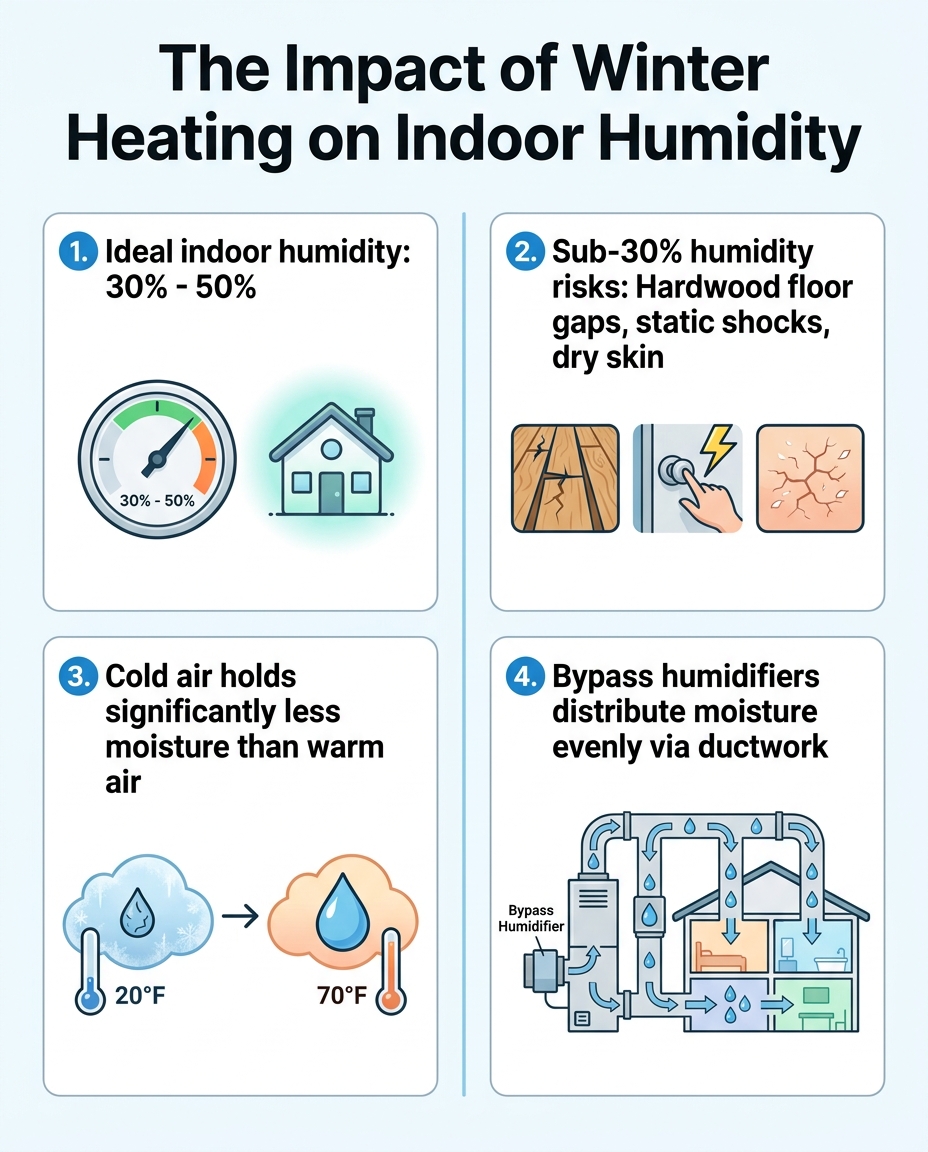
To understand why your house feels so dry in January, you have to look at the basic physics of cold air. Cold outdoor air inherently holds significantly less moisture than warm air. When the freezing winter temperatures of Springfield IL force your furnace to run nearly 24/7, your system pulls in this cold, dry air and heats it up rapidly. Heating the air expands its capacity to hold moisture, but the furnace does not supply any actual water to fill that expanded capacity. The result is a drastic drop in relative humidity, often pushing indoor conditions to desert-like levels.
The problem: Your gas furnace is not actually "destroying" the water in your air. Instead, it is dramatically increasing the air's thirst for moisture. When the relative humidity drops below 30%, the dry air begins pulling moisture from anywhere it can find it—including your body, your furniture, and your hardwood floors.
The cause: Standalone room humidifiers simply cannot keep up with the constant, aggressive drying effect of a central forced-air furnace. A small bedroom unit might add a pint of water to a single room, but the moment the furnace blower kicks on, that slightly humidified air is swept away and replaced with bone-dry air from the rest of the house.
The solution: The only way to effectively counteract this massive moisture deficit is through comprehensive indoor air quality solutions that treat the air before it circulates. By adding moisture directly into the ductwork, you neutralize the drying effect of the furnace at the source.
Comparing Indoor vs. Outdoor Humidity Dynamics
• Outdoor Winter Air — Air Temperature: Below Freezing — Moisture Capacity: Very Low — Resulting Relative Humidity: Can be high (but total water volume is low)
• Heated Indoor Air (No Humidifier) — Air Temperature: 70°F - 72°F — Moisture Capacity: Greatly Expanded — Resulting Relative Humidity: Drops below 20% (Desert-like)
• Heated Indoor Air (With Humidifier) — Air Temperature: 70°F - 72°F — Moisture Capacity: Greatly Expanded — Resulting Relative Humidity: Maintained at 30% - 50% (Ideal)
The Impact of Winter Heating on Indoor Humidity
Protecting Hardwood Floors from Shrinking and Warping
One of the most expensive casualties of low indoor humidity is your home's woodwork. Wood is a hygroscopic material, meaning it constantly absorbs and releases moisture depending on the surrounding environment. According to the National Wood Flooring Association (NWFA) guidelines, maintaining consistent indoor humidity is an absolute necessity for preserving the structural integrity and appearance of hardwood floors.
When relative humidity plummets below 30% during the winter, the dry air acts like a sponge, aggressively pulling moisture out of your floorboards. In our years of providing HVAC services throughout the Springfield area, we frequently see homeowners mistake this seasonal shrinkage for poor flooring installation. As the boards contract, you will start to notice unsightly gaps forming between the planks. Over time, this uneven moisture loss can lead to cupping, where the edges of the boards raise higher than the center, or crowning, where the center swells.
Prolonged exposure to these severely dry conditions does not just cause temporary aesthetic issues; it can cause permanent structural damage to expensive flooring, antique furniture, custom cabinetry, and even the structural framing of your home. The wood can become brittle, leading to splinters and cracks that cannot be fixed without complete replacement.
Positioning whole-home moisture control as a financial protection measure is simply smart homeownership. By maintaining the EPA-recommended 30% to 50% humidity range throughout the winter, you stabilize the wood's environment. The floorboards stop contracting, the joints remain tight, and your investment in high-quality interior finishes is protected from the invisible threat of bone-dry furnace air.
Eliminating Static Shocks and Severe Dry Skin
Beyond the structural damage to your home, severely dry indoor air takes a significant toll on your personal comfort and health. If you have ever walked across a carpet in January and received a painful zap upon touching a light switch, you have experienced the direct result of dropping relative humidity. Static electricity builds up rapidly in dry environments because moisture in the air normally helps dissipate electrical charges naturally. When the air is stripped of water, those charges accumulate on your body until they find a conductive surface to jump to.
The biological impacts are even more frustrating. Dry air accelerates the evaporation of moisture directly from your skin's surface and your respiratory tract. This rapid moisture loss compromises your skin's natural barrier, leading to a host of uncomfortable symptoms.
• Itchy, flaky skin: Your body cannot produce oils fast enough to counteract the constant evaporation, leaving your skin severely dehydrated.
• Chapped lips and cracked hands: Extremities and sensitive areas lose moisture first, often leading to painful cracking.
• Irritated sinuses: The mucous membranes in your nose and throat require moisture to function properly. When they dry out, you become more susceptible to winter colds and respiratory irritation.
Restoring proper humidity levels does more than just soothe your skin; it actually changes how your home feels. Humidified air retains heat better and reduces the evaporative cooling effect on your skin. This means a home kept at 68 degrees with proper humidity will feel significantly warmer and more comfortable than a bone-dry home kept at 72 degrees. By addressing the root cause of the dry air, you can alleviate these health discomforts while potentially lowering your thermostat, which is a great way to mitigate common furnace problems caused by overworking the system.
How a Bypass Humidifier Integrates with Your Ductwork
The most effective way to combat the aggressive drying effect of a gas furnace is by installing a bypass humidifier. Unlike portable units that you have to drag from room to room and refill constantly, a bypass humidifier is a permanent, whole-home solution that mounts directly to your existing HVAC system.
The mechanism behind a bypass humidifier is brilliantly efficient. It connects to both the supply and return plenums of your ductwork. When your furnace kicks on, the system's blower motor pushes a portion of the newly heated air through a specialized bypass duct. This air passes through a water panel (also known as an evaporator pad) inside the humidifier. As the hot air moves through the saturated panel, it absorbs water vapor. This newly moisturized air is then distributed evenly throughout every room in your home via your existing ductwork.
This whole-home approach completely eliminates the inefficiency of filling individual room humidifiers daily, cleaning slimy water tanks, and dealing with uneven moisture levels where one room is a sauna and the next is a desert. The bypass humidifier regulates the entire house automatically based on the settings of a humidistat, much like your thermostat controls the temperature.
The Importance of Professional Integration
While the concept is straightforward, integrating a bypass humidifier into a central heating system requires precise technical knowledge. Professional integration ensures that the system safely manages the water supply and drainage without risking any water damage to your expensive furnace components or ductwork. Our licensed technicians at Allied Plumbing Heating & Cooling must correctly size the bypass duct, calibrate the humidistat, and ensure that the water lines are securely tapped and routed. Proper installation guarantees that the humidifier works in perfect harmony with your system, providing seamless comfort whenever you rely on our heating services.
Why Early Fall is the Ideal Time for Installation
Timing is everything when it comes to preparing your home for winter. While it might be tempting to wait until the first major snowfall to think about your indoor air quality, the optimal window for action is actually the September pre-heating season. Waiting until mid-winter means the damage to your hardwood floors and the discomfort of severely dry skin have already begun.
As a multi-generational, family-owned company, our decades of serving Springfield homes have shown us that proactive installations save homeowners from mid-winter floor damage and frantic emergency calls. One pattern our Allied Plumbing Heating & Cooling technicians observe year after year is that homeowners who consistently schedule pre-seasonal checks for their furnace and air conditioner—often maintaining that routine for nine years or more—consistently find the proactive approach well worth the investment, as it ensures prompt, courteous, and qualified service before a breakdown occurs.
Here is why early fall is the most strategic time to upgrade your system:
1. Preventative protection: Installing the humidifier before the furnace starts running 24/7 ensures your home's relative humidity never drops into the danger zone. Your hardwood floors remain stable, and your skin stays hydrated from day one.
2. Maintenance efficiency: The absolute best time to integrate a bypass humidifier is during a routine pre-season furnace tune-up. A technician can clean the burners, check the heat exchanger, and install the humidifier all in one streamlined visit.
3. System calibration: Testing a newly installed humidifier requires running the furnace. Doing this in September allows technicians to perfectly calibrate the humidistat and water flow without letting your house freeze during a winter service interruption.
4. Peace of mind: Proactive maintenance prevents emergency calls when the weather turns harsh. You can enter the holiday season knowing your home is fully equipped to handle whatever the winter climate throws at it.
Frequently Asked Questions About Winter Indoor Air Quality
Why does my house get so dry when the furnace runs?
Cold outdoor air naturally holds very little moisture compared to warm air. When your gas furnace pulls in this cold air and heats it up, the air's capacity to hold moisture expands dramatically, but no new water is added to the system. This rapidly drops the relative humidity in your home, creating a desert-like environment every time the heating cycle runs.
Do humidifiers prevent hardwood floors from warping?
Yes, maintaining proper indoor humidity is the most effective way to protect hardwood floors. Wood is highly responsive to moisture changes; when the air is too dry, wood shrinks, causing unsightly gaps and cupping between the boards. A whole-home humidifier maintains consistent moisture levels, preventing the wood from expanding and contracting violently throughout the winter.
Do whole house humidifiers help with dry skin?
Absolutely. Whole-house humidifiers add essential moisture to the air before it circulates through your home's ductwork. This prevents the dry, heated air from rapidly evaporating the natural moisture from your skin's surface, significantly reducing the occurrence of itchy skin, chapped lips, and winter eczema flare-ups.
What is the best humidity level for hardwood floors?
The ideal humidity level for preserving hardwood floors sits between 30% and 50% relative humidity. Staying within this specific range ensures the wood retains enough moisture to prevent shrinking and gapping, while avoiding excessive moisture that could lead to swelling or mold growth. Consistency is the key to preventing long-term structural damage.
Can a bypass humidifier be added to an existing furnace?
Yes, bypass humidifiers can be seamlessly retrofitted to most existing forced-air heating systems. They are designed to mount directly onto the existing supply or return ductwork. However, this integration requires professional installation to ensure proper duct sizing, safe water line connections, and correct drainage to protect your system from water damage.
Prepare Your Home Before the First Freeze Hits
The transition into winter does not have to mean accepting months of painful static shocks, irritated skin, and degrading woodwork. By understanding the profound impact that your gas furnace has on indoor moisture levels, you can take control of your home's environment. A bypass humidifier offers the ultimate dual benefit: protecting your expensive home investments like hardwood floors and cabinetry, while simultaneously dramatically improving your family's daily comfort and respiratory health.
Acting proactively during the September pre-heating season ensures your system is fully equipped and calibrated before the severe weather arrives. We encourage you to explore professional indoor air quality solutions during your next routine maintenance visit, securing a warmer, healthier, and more comfortable home for the entire winter season.
Why Adding a Whole-Home Humidifier Prevents Dry Skin and Warped Hardwood Floors in Winter
September 25, 2026
Gas furnaces strip natural moisture from your home, causing painful static shocks and shrinking woodwork. Adding a bypass humidifier this fall proactively counteracts severe winter dryness.
Gas furnaces strip natural moisture from your home, causing painful static shocks and shrinking woodwork. Adding a bypass humidifier this fall proactively counteracts severe winter dryness.
Hyper-Heating Technology: How Modern Mini-Splits Produce Heat Even at Negative 13 Degrees
September 24, 2026
Don't let outdated myths leave you freezing this winter. We break down the exact inverter technology that allows ductless systems to reliably heat your home in sub-zero temperatures.
Don't let outdated myths leave you freezing this winter. We break down the exact inverter technology that allows ductless systems to reliably heat your home in sub-zero temperatures.
Camera Inspections: Seeing Exactly What Tree Roots Did to Your Sewer Line Over the Summer
September 23, 2026
Tree roots aggressively infiltrate aging sewer lines during dry summers. A proactive early fall camera inspection catches this hidden damage before it causes catastrophic backups during holiday hosting.
Tree roots aggressively infiltrate aging sewer lines during dry summers. A proactive early fall camera inspection catches this hidden damage before it causes catastrophic backups during holiday hosting.