Why Your Furnace Smells Like Burning Dust (And When to Worry)
Why Your Furnace Smells Like Burning Dust (And When to Worry)
The Alarming Burning Smell During Your First Fall Heating Cycle
You just switched your thermostat to "heat" for the first time this season, expecting a wave of cozy warmth. Instead, a harsh, dusty odor fills the hallway. That sudden smell of smoke or burning dust is one of the most common homeowner questions answered by our team at Allied Plumbing Heating & Cooling during the mid fall / October heating startup. It is completely natural to feel a spike of anxiety when your vents start blowing air that smells like a campfire. However, before you panic and assume the worst, it helps to understand exactly what is happening inside your HVAC system.
The transition from summer cooling to winter heating always brings this unexpected scent. While you might have trusted our local team with your Air Conditioning Services all summer long, your heating equipment has been sitting completely idle. For the vast majority of homes, this initial odor is a perfectly normal part of seasonal startup. The key to protecting your home is knowing the distinct difference between a harmless, temporary burn-off and a true mechanical hazard. By learning to identify the specific smells coming from your ductwork, you can make safe, confident decisions about when to wait it out and when to call us for emergency help.
The Science Behind the Scent: Why Idle Furnaces Collect Dust
To understand why your house smells like burning dust, you have to look at what happens to your furnace during the long off-season. From late spring through early autumn, your heating elements do absolutely nothing. They sit in the dark, acting as a resting place for the air circulating through your home.
How Summer Humidity Creates a Dust Trap
In our years of maintaining HVAC systems across Springfield IL, we frequently see how the humid summer air can carry a heavy load of microscopic debris. As your system pushes cooled air through the house, airborne particles naturally settle on the internal components of your furnace. This settled debris includes:
• Household dust: Microscopic skin cells, fabric fibers, and dirt from outside.
• Pet dander: Hair and skin flakes from dogs and cats that bypass the filter.
• Cooking oils: Airborne grease particles from your kitchen that circulate through the return vents.
• Pollen and mold spores: Outdoor allergens that find their way indoors during the humid months.
Because the summer air carries moisture, this dust does not just sit lightly on the metal surfaces; it clumps and sticks heavily to the furnace's heat exchangers and gas burners. When the first cold night arrives and you finally turn on the heat, those internal metal components rapidly heat up to hundreds of degrees. The settled layer of organic particles is instantly incinerated by the high heat.
This rapid incineration releases a distinct, dusty burning odor directly into your ductwork, which the blower motor then pushes into every room of your house. It is a completely natural physical reaction. In fact, heavy dust accumulation inside your HVAC system is a major reason why our technicians emphasize that monitoring your indoor air quality is so important year-round. The more particles floating through your home during the summer, the stronger that burning smell will be during the mid fall / October heating startup.
The 30-to-60 Minute Rule for Normal Burn-Off
When that dusty smell hits your nose, your first instinct might be to rush to the thermostat and turn the system off. However, shutting the furnace down immediately actually prolongs the problem. To clear the dust safely, our experts recommend following the strict 30-to-60 minute rule for normal burn-off.
1. Let the system run continuously: The heat exchanger needs to reach its maximum operating temperature to burn off all the accumulated dust. If you turn the system on and off repeatedly (short-cycling), you are just pausing the incineration process. Let the furnace run a full, uninterrupted heating cycle.
2. Ventilate the house temporarily: Since the smell can be overwhelming, open a few windows or crack a door to let fresh air circulate. Turn on ceiling fans to help push the dusty air out of your living spaces faster.
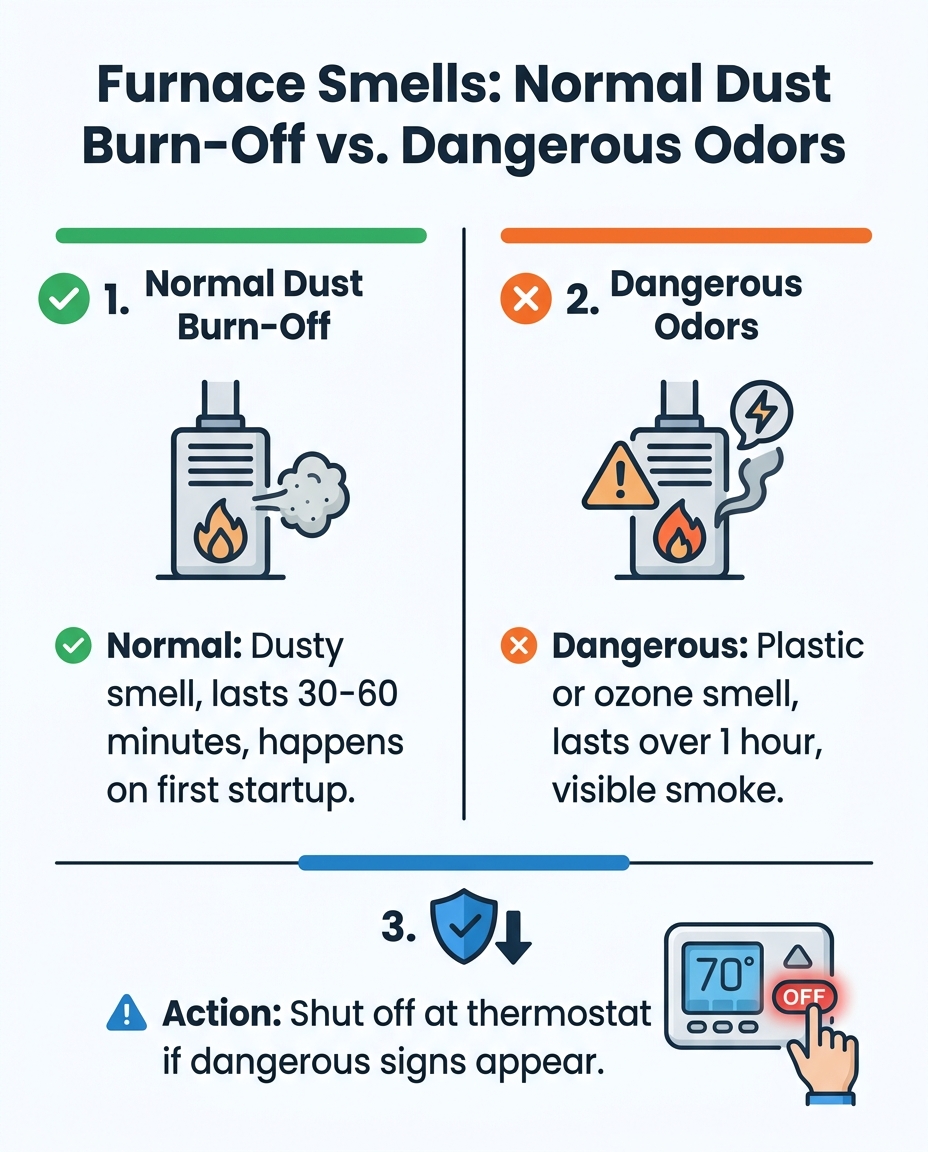
3. Monitor the strict timeline: A normal dust burn-off will peak in intensity within the first 10 minutes. After that, the smell should steadily decrease. By the 30-minute mark, it should be barely noticeable. By the 60-minute mark, the odor must be completely gone.
Tracking the Timeline
To help you gauge whether your system is behaving normally during that mid fall / October heating startup, we share this simple reference guide with our customers:
• Minutes 1 to 10 — Normal System Behavior: Strong dusty smell, warm air blowing steadily. — Warning Signs to Watch For: Visible smoke coming from vents or a sharp electrical scent.
• Minutes 10 to 30 — Normal System Behavior: Smell begins to fade significantly. House warms up. — Warning Signs to Watch For: Smell intensifies or changes from dust to melting plastic.
• Minutes 30 to 60 — Normal System Behavior: Faint lingering odor, mostly cleared out. — Warning Signs to Watch For: Furnace shuts down unexpectedly or the smell remains strong.
• Over 60 Minutes — Normal System Behavior: No burning smell at all. Clean, warm air. — Warning Signs to Watch For: Any lingering burning odor requires immediate shutdown.
If the smell persists beyond one hour of continuous operation, it is no longer a simple dust issue. A lingering odor warrants further investigation by a licensed technician from our team.
When to Shut It Down: Identifying Hazardous Odors
While burning dust is harmless, your furnace contains high-voltage wiring, powerful motors, and combustible gases. It is critical to draw a clear boundary between a normal seasonal scent and a dangerous mechanical failure. If you smell anything other than standard household dust, you need to take immediate action.
The Scent of Burning Plastic
Burning plastic is a sharp, acrid smell that stings the back of your throat. It does not smell like a dusty attic; it smells like a melting trash bag. This odor usually indicates that wire insulation is melting near the heat exchanger, or that a foreign object (like a child's toy or a piece of construction debris) has fallen into the ductwork and is actively melting against the heating elements. If you smell melting plastic, turn the system off at the thermostat immediately.
The Distinct Smell of Ozone
An ozone smell is often described as the scent of the air right after a severe lightning storm, or the metallic smell of an overheating power drill. This odor points directly to an electrical short or an overheating blower motor. Your heating system uses just as much electrical power as your summer cooling equipment. Just as you would exercise extreme caution when resetting your AC's disconnect box, you must treat furnace electrical smells with the utmost respect. An overheating motor can quickly lead to wire damage or a localized fire inside the cabinet.
If you experience an ozone smell, a plastic smell, or see any visible smoke coming from your vents in Springfield IL, do not wait for the 60-minute mark. Shut the thermostat off, open your windows, and call our professional team at Allied Plumbing Heating & Cooling for an emergency diagnostic.
Furnace Smells: Normal Dust Burn-Off vs. Dangerous Odors
Safe Troubleshooting Before Calling a Professional
If your furnace is producing a strange smell, there are a few safe, simple checks you can perform before picking up the phone. However, as a local family-owned business, Allied Plumbing Heating & Cooling always prioritizes your safety over quick fixes. We strongly encourage homeowners to rely on our expert diagnostics rather than risking dangerous DIY teardowns.
Here is what we recommend safely checking during your mid fall / October heating startup:
• Check the air filter: A severely clogged air filter restricts airflow, causing the furnace to work harder than necessary. This lack of airflow can cause the internal components to overheat, producing a strong burning smell. Slide the old filter out and replace it if it is gray and completely coated in dust.
• Inspect your vents and return registers: Walk through every room in the house to ensure no furniture, rugs, or heavy curtains are blocking the air vents. Blocked vents create dangerous back-pressure inside the ductwork, which forces the furnace to overheat and shut down prematurely.
• Verify the thermostat settings: Ensure the thermostat is set firmly to "heat" and that the fan is set to "auto" rather than "on" so the system cycles correctly.
Explicit Safety Warning: Never open the furnace cabinet to clean the burners, inspect the wiring, or poke around the heat exchanger. Combustion appliances and high-voltage electrical systems require specialized tools and training. Opening the cabinet exposes you to the risk of electrical shock, and accidentally bumping a gas line or burner assembly can create a carbon monoxide hazard.
One of our Springfield IL customers found this out on a freezing 20+ degree night when their furnace quit working entirely. Instead of attempting a risky midnight teardown, they reached out to us for help. Our technicians arrived, explained the problem thoroughly, and fixed the heating system safely and quickly, resolving a highly stressful situation. Just as you would trust an expert for professional AC repair, you should always leave internal furnace diagnostics to a licensed professional.
Preventing the Panic with Annual Heating Startup Checks
The easiest way to avoid the anxiety of a burning smell is to prevent the dust from incinerating in the first place. Proactive fall maintenance minimizes the dust burn-off and catches potential mechanical hazards long before you actually need the heat.
In the Midwest, October temperature drops happen fast. One week you are comfortable with open windows, and the next week you are facing a severe nighttime freeze. A pre-season checkup is critical before that severe winter weather hits. During a professional tune-up, our technicians will open the cabinet and carefully clean the heat exchanger, vacuum the burners, and wipe down the blower motor. By removing the summer dust buildup by hand, we prevent that alarming burning smell from ever reaching your vents.
Beyond simply cleaning the unit, our annual checkups catch minor gas leaks, failing motors, or frayed electrical wires while they are still small, inexpensive fixes. Just last season, a local family scheduled a routine yearly checkup with us right as the leaves started turning in Springfield IL. Our technicians arrived on time, were incredibly courteous, and thoroughly prepped the system for winter. That kind of proactive care delivers total peace of mind. You sleep much better knowing your system has been professionally cleared, cleaned, and verified safe to operate on the very first cold night of the year.
Frequently Asked Questions About Furnace Odors
How long should a furnace smell like burning?
A normal dust burn-off should last between 30 to 60 minutes of continuous operation. During this window, the smell will peak early and gradually fade away. If the dusty odor lingers for several hours or returns days after the mid fall / October heating startup, it indicates a deeper issue. Always shut the system off if the smell persists beyond that initial one-hour mark.
Is it normal for a heater to smell like burning plastic?
No, a burning plastic smell is never part of normal operation. This acrid odor usually indicates melting wire insulation, a failing electrical component, or a foreign object trapped inside the ductwork. Because melting plastic can quickly lead to a fire hazard or release toxic fumes, you must shut the furnace down immediately and request a professional inspection.
Can a dusty furnace catch fire?
While the normal dust burn-off that happens on the first cold day is safe, heavy debris or severely neglected maintenance can pose a real fire hazard. If the internal cabinet is packed with pet hair, lint, or accumulated dirt, the high heat of the burners can ignite the debris. Regular professional cleaning completely mitigates this risk by keeping the heat exchanger spotless.
When should I worry about my furnace smelling?
You should worry if the smell is sharp, acrid, or smells like melting plastic or ozone. You should also take immediate action if you see any visible smoke coming from your vents, or if the standard dusty smell lasts longer than an hour. Trust your instincts; if the odor gives you a headache or causes your eyes to water, shut the system down.
Why does my furnace smell like ozone?
An ozone smell—often described as the scent of a passing thunderstorm or an overheating electrical drill—points to a serious electrical issue. It typically means the blower motor is overheating, a capacitor is failing, or there is an active electrical short on the control board. Do not ignore an ozone smell; turn off the power at the thermostat to prevent permanent damage to the unit.
Keep Your Home Safe and Warm This Fall
Dealing with strange odors from your vents can be stressful, but understanding the mechanics behind your system takes the fear out of the equation. A brief, dusty smell during your first heating cycle is perfectly normal, but your family's safety must always come first. If you are ever unsure about the odors coming from your ductwork in Springfield IL, or if you simply want the peace of mind that comes from a thoroughly cleaned system, do not hesitate to schedule a professional inspection with Allied Plumbing Heating & Cooling. A quick, thorough checkup by our local experts will ensure your home stays safe, warm, and comfortable all winter long.
What Our Technicians Look for During a Heat Exchanger Crack Inspection
September 30, 2026
Your aging furnace needs more than a quick visual check this fall. See how our high-tech diagnostic tools uncover hidden micro-fractures before they leak.
Your aging furnace needs more than a quick visual check this fall. See how our high-tech diagnostic tools uncover hidden micro-fractures before they leak.
Using a Ductless Mini-Split to Heat a Sunroom Addition Through an Illinois Winter
September 29, 2026
Glass-heavy sunrooms lose heat rapidly during freezing winters. A dedicated mini-split offers independent zone control to keep your addition warm without overtaxing your home's main furnace.
Glass-heavy sunrooms lose heat rapidly during freezing winters. A dedicated mini-split offers independent zone control to keep your addition warm without overtaxing your home's main furnace.