Why Fibrous Late-Summer Vegetables Are the Number One Enemy of Your Kitchen Disposal
Why Fibrous Late-Summer Vegetables Are the Number One Enemy of Your Kitchen Disposal
The Late-Summer Harvest and Your Kitchen Drain
As the August sweet corn harvest fills local farmers markets, many homeowners quickly discover why fibrous late-summer vegetables are the number one enemy of your kitchen disposal. Late summer in Central Illinois brings an abundance of fresh, locally grown produce straight into our kitchens. While farm-fresh meals are a highlight of the season, our plumbers at Allied Plumbing Heating & Cooling know all too well that the resulting food prep waste introduces unique hazards to residential plumbing systems. The massive volume of husks, stalks, and leaves generated during this time of year creates a perfect storm for kitchen sink backups.
If you are dealing with a jammed sink right now, professional plumbing services can get your kitchen back on track. Understanding how your disposal actually works is the first step to avoiding a frustrating disruption in the middle of meal prep.
The Hidden Danger in Farm-Fresh Prep
During the peak of the Central Illinois harvest season, kitchens get busy with shucking, peeling, and prepping local crops. Most families naturally scrape their cutting boards directly into the sink, assuming the appliance under the drain can handle whatever fits through the flange. Unfortunately, our team frequently fields emergency calls right around the back-to-school transition because fibrous scraps from late-summer vegetables are the leading cause of impeller binding. These specific plant materials do not break down like standard food waste. Instead, they survive the grinding process intact, creating mechanical nightmares for the motor.
The problem usually starts subtly. You might notice the sink draining a bit slower than usual, or the appliance might sound slightly louder when you flip the switch. These are the early warning signs that resilient plant fibers are beginning to accumulate inside the grinding chamber, setting the stage for a complete mechanical lockup.
The Blender Myth: Why Disposals Rely on Blunt Impellers
Most homeowners mistakenly treat their garbage disposal like a high-powered kitchen blender, assuming it chops waste with razor-sharp blades. This common misconception leads people in Springfield and Central Illinois to put highly resilient, stringy foods down the drain, fully expecting the machine to slice them into manageable pieces. In reality, residential disposals do not have blades at all.
Understanding Centrifugal Grinding
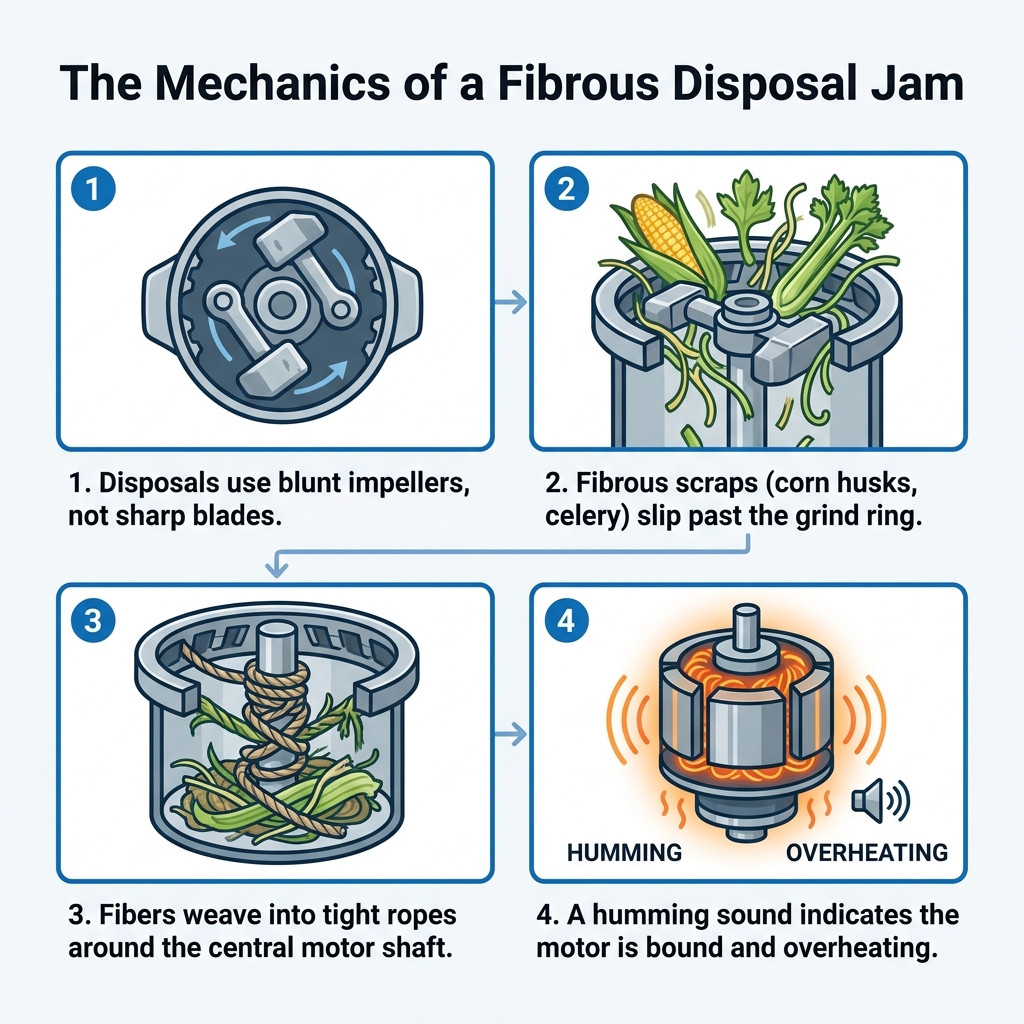
Standard disposals use blunt impellers—also known as lugs—mounted on a spinning metal plate at the bottom of the chamber. When you turn the unit on, this plate spins rapidly. The impellers use centrifugal force to throw food waste outward against a stationary, grooved grind ring lining the perimeter of the chamber. This action is designed to pulverize and smash food, not cut it.
Because there is no cutting or slicing action, the system relies entirely on the brittleness of the food waste to break it down. Brittle items like eggshells, small fruit pits, and cooked vegetables easily shatter against the grind ring. Fibrous materials, however, simply flatten out and absorb the blunt-force impacts without breaking apart.
• Kitchen Blender — Mechanism: Sharp, spinning blades — Action on Food: Slices and chops fibers — Vulnerability: Dulls over time
• Garbage Disposal — Mechanism: Blunt impellers and grind ring — Action on Food: Smashes and pulverizes — Vulnerability: Defeated by flexible fibers
When you understand that your disposal is essentially a high-speed hammer rather than a spinning knife, it becomes clear why certain textures pose such a significant threat to the appliance.
The Worst Harvest Offenders: Corn Husks, Celery, and Artichokes
Not all vegetables are created equal when it comes to plumbing safety. In our experience unclogging Springfield drains, the massive volume of sweet corn husks generated during the August sweet corn harvest is a prime example of seasonal waste that destroys kitchen plumbing. Major disposal manufacturers explicitly warn against putting these specific items down the drain to avoid catastrophic jams. If you want to focus on preventing clogged drains, you must keep the following harvest offenders out of your sink.
• Sweet Corn Husks and Silks: These protective layers are designed by nature to be highly resilient. They do not snap, shatter, or pulverize under pressure. When thrown against a blunt grind ring, corn silks simply bend and slide through the gaps, while the husks flatten into unbreakable sheets.
• Celery Stalks: Celery contains long, stringy fibers running the length of the stalk. While the watery flesh of the celery might mash away, those tough strings easily detach and remain fully intact during the grinding process, turning into miniature ropes inside the chamber.
• Artichoke Leaves: Artichoke leaves are incredibly dense and fibrous. They resist the blunt-force grinding action completely. Their tough exterior acts like armor against the impellers, often wedging themselves between the spinning plate and the stationary ring.
• Asparagus Ends: Similar to celery, the woody ends of asparagus stalks are packed with resilient, stringy fibers that refuse to break down under blunt force.
• Onion Skins: While not as thick as a corn husk, the thin, papery membrane of an onion skin is remarkably flexible. It easily slips past the impellers and can plaster itself over the drain line exit, blocking water flow.
Keeping these specific vegetables out of the sink is the most effective way to protect your plumbing during the busy harvest months.
The Physics of a Bound Motor: How Fibers Weave and Choke
When fibrous vegetables defeat the impellers, the resulting mechanical failure is fascinating but highly destructive. Instead of being pulverized by the blunt impellers, strong plant fibers flatten out and slip past the grind ring. This is where the real trouble begins for homeowners across Springfield and Central Illinois, and our technicians frequently pull out densely woven rings of plant material that have completely choked the appliance.
The Weaving Process
The Problem: As the motor plate spins at high speeds—often exceeding 1,700 revolutions per minute—the loose threads from celery or corn silks are whipped around the chamber. Because they are not broken down, they begin to catch on the moving parts.
The Cause: These loose threads begin to weave together into dense, strong ropes. The centrifugal force pulls these makeshift ropes tighter and tighter, wrapping them securely around the moving impeller assembly and the central motor shaft underneath the spinning plate.
The Solution: Eventually, the woven fibers create enough friction to completely choke the shaft, physically stopping the motor from turning. The only way to resolve this is to manually extract the tangled fibers, which often requires disassembling the unit from below the sink.
The strength of these woven vegetable fibers is astonishing. Just a few celery strings or a single ear's worth of corn silk is enough to completely halt a heavy-duty electric motor in its tracks.
The Mechanics of a Fibrous Disposal Jam
Diagnosing the Telltale 'Humming' Sound
When a disposal is turned on but the impellers are bound by fibers from the August sweet corn harvest, the unit will produce a distinct, loud humming or buzzing noise. This sound is the ultimate red flag for your kitchen plumbing. It indicates that the motor is receiving electricity and is actively trying to spin, but is mechanically locked in place by the tangled ropes of vegetable matter.
The Danger of Overheating
Leaving the unit powered on while it hums is one of the worst things a homeowner can do. Because the motor cannot turn, the electrical current generates massive amounts of heat. Within just a minute or two, this heat will rapidly cause the motor to overheat and potentially burn out permanently. If the internal windings of the motor melt, the entire appliance is ruined.
The quick fix: Homeowners must immediately turn off the power switch to prevent permanent electrical damage to the appliance. Most modern units are equipped with an internal thermal overload switch—a small red button on the bottom of the canister—that will pop out and cut the power automatically if the unit gets too hot. However, you should never rely solely on this safety feature. If you hear the hum, kill the power instantly. Once the power is safely off, it is time to look into professional plumbing repairs to clear the bound shaft safely.
Safe Disposal Habits During Peak Produce Season
Protecting your plumbing during the busy harvest months in Springfield and Central Illinois comes down to changing a few simple habits at the sink. By keeping fibrous waste out of the grinding chamber entirely, you can enjoy seasonal cooking without the looming threat of a clogged drain or a burned-out motor.
1. Use the Trash or Compost: Always dispose of corn husks, silks, artichoke leaves, and onion skins directly into the trash can or a dedicated outdoor compost bin. These items simply do not belong in residential plumbing.
2. Scrape the Cutting Board: If you are chopping celery, asparagus, or other stringy vegetables, scrape the cutting board directly into the garbage rather than rinsing the scraps down the sink. Even small pieces of celery string can weave together over time.
3. The 15-Second Cold Water Rule: When grinding approved, brittle food scraps, run cold water for at least 15 seconds before turning the unit on, keep it running during the grind, and let it run for another 15 seconds after turning the unit off. Cold water keeps the motor cool and helps flush the pulverized waste completely out of the drain lines.
4. Feed Waste Gradually: Never pack the disposal chamber full before turning it on. Shoving a large pile of potato peels or vegetable scraps into the sink and then flipping the switch is a guaranteed recipe for a jam. Feed acceptable waste into the chamber gradually while the water is running.
5. Avoid Hot Water During Grinding: While hot water is great for washing dishes, it should not be used while running the disposal. Hot water melts fats and greases, allowing them to coat the blades and the inside of your pipes, where they will later solidify and trap other food particles.
When to Stop Forcing the Grind and Call a Professional
There is a strict limit to what a homeowner should attempt when a disposal motor is physically locked. Once fibers have woven tightly around the motor shaft, DIY methods like pouring boiling water, baking soda, or harsh consumer drain cleaners down the sink will not dissolve the jam. Plant fibers are highly resistant to chemical breakdown, and pouring caustic liquids into a standing sink only creates a hazardous environment for whoever eventually has to open the pipes.
The Risks of DIY Unjamming
Attempting to manually force the impellers with wrenches or broom handles can damage the housing, bend the motor shaft, or lead to serious injury if the unit is not properly disconnected from the electrical panel. Just recently, our team at Allied Plumbing Heating & Cooling helped a Springfield homeowner whose leaking and broken garbage disposal brought their back-to-school meal prep to a complete halt. Recognizing they needed an immediate replacement rather than risking further damage, they called us for help. We dispatched a technician to remove the old, jammed unit and install a new one within two hours of the appointment request, getting their kitchen back up and running quickly and professionally.
A licensed professional has the proper tools to safely disassemble the unit, clear the bound fibers from the shaft, inspect for leaks, and reset the internal breakers. If the motor has already burned out from being left on while humming, a fast, professional replacement is the safest way to restore kitchen functionality. As a fast, reliable local rescue team, Allied Plumbing Heating & Cooling understands how disruptive a broken sink is during busy family meal prep in Springfield and Central Illinois. If you are stuck with a humming motor, it is time to contact our plumbing team for safe, effective service.
Frequently Asked Questions About Seasonal Disposal Jams
Can you put corn husks in the garbage disposal?
No, you should never put corn husks in the garbage disposal. Corn husks are incredibly fibrous and flexible, meaning they will slip past the blunt grind ring without breaking down. The high-speed spinning action causes these tough fibers to weave into tight ropes that quickly jam the motor shaft, leading to mechanical failure and potential motor burnout during the August sweet corn harvest.
Why does my garbage disposal hum but not spin?
The humming sound indicates the motor is receiving electrical power but the impeller shaft is physically locked in place. This lockup is almost always caused by tangled vegetable fibers, foreign objects like silverware, or hardened grease binding the moving parts. If you hear this hum, turn off the power immediately to prevent the motor from overheating and melting its internal wiring.
What vegetables shouldn't go in a garbage disposal?
You should avoid putting celery, artichoke leaves, corn husks, asparagus ends, and onion skins down the sink. Their long, stringy fibers and flexible membranes resist the blunt-force grinding action of the impellers. Instead of shattering, these vegetables survive the process and wrap around the internal components, creating stubborn clogs and mechanical jams.
Why is my garbage disposal blocked?
Blockages usually occur when inappropriate items build up in the drain pipe or wrap around the impeller assembly. Fibrous vegetables, starchy foods like potato peels or pasta that swell with water, and liquid grease that cools and solidifies in the pipes are the most common culprits. Once a blockage forms, water cannot pass through, and the motor may eventually bind.
Do expensive garbage disposals have sharp blades that can handle celery?
No, all residential disposals—regardless of price—use blunt impellers rather than sharp blades. Higher-end models do feature stronger motors, better sound insulation, and multiple grind stages that can handle tougher brittle foods. However, because they still rely on smashing rather than slicing, even premium units are susceptible to jams if fed large amounts of fibrous celery strings or corn husks.
Keep Your Kitchen Running Smoothly Through the Harvest
Enjoying the local August sweet corn harvest shouldn't come at the cost of your plumbing system. By keeping fibrous vegetables out of the sink and utilizing your trash can or compost bin, you protect your disposal's motor and keep meal prep moving smoothly. Recognizing the limitations of your appliance is the best way to prevent unexpected breakdowns.
If you do hear that dreaded electrical hum, don't force it. Continuing to run a bound motor will only cause permanent electrical damage. Reach out to our local experts for a safe, professional clearing or replacement before the season gets any busier. Keep your kitchen running reliably so you can focus on enjoying the harvest, not fighting with your sink.
Checking Your Water Softener's Salt Bridge Before the Heavy Winter Usage Season
September 28, 2026
Summer humidity can fuse your softener salt into a solid dome, making the tank look full while your home suffers from hard water. We explain how to safely break a hidden salt bridge this fall.
Summer humidity can fuse your softener salt into a solid dome, making the tank look full while your home suffers from hard water. We explain how to safely break a hidden salt bridge this fall.
Why Adding a Whole-Home Humidifier Prevents Dry Skin and Warped Hardwood Floors in Winter
September 25, 2026
Gas furnaces strip natural moisture from your home, causing painful static shocks and shrinking woodwork. Adding a bypass humidifier this fall proactively counteracts severe winter dryness.
Gas furnaces strip natural moisture from your home, causing painful static shocks and shrinking woodwork. Adding a bypass humidifier this fall proactively counteracts severe winter dryness.
Hyper-Heating Technology: How Modern Mini-Splits Produce Heat Even at Negative 13 Degrees
September 24, 2026
Don't let outdated myths leave you freezing this winter. We break down the exact inverter technology that allows ductless systems to reliably heat your home in sub-zero temperatures.
Don't let outdated myths leave you freezing this winter. We break down the exact inverter technology that allows ductless systems to reliably heat your home in sub-zero temperatures.