Hyper-Heating Technology: How Modern Mini-Splits Produce Heat Even at Negative 13 Degrees
Hyper-Heating Technology: How Modern Mini-Splits Produce Heat Even at Negative 13 Degrees
The Persistent Myth About Heat Pumps in the Midwest
For decades, a stubborn myth has circulated among Midwest homeowners: heat pumps are only meant for mild, southern climates. If you are researching Hyper-Heating Technology: How Modern Mini-Splits Produce Heat Even at Negative 13 Degrees, you likely already know that this outdated belief is holding many homeowners back from a major comfort upgrade. The concrete problem our team at Allied Plumbing Heating & Cooling sees across the Springfield region is hesitation. Homeowners stick with aging, inefficient heating systems because they fear a modern heat pump will leave them freezing on the coldest nights of the year. When winter weather brings rapid temperature drops and high wind chills, that fear feels entirely justified.
To upgrade your comfort with confidence, our local experts recommend scheduling professional heating installation while the September weather is still cooperative.
The reality of modern HVAC engineering has completely changed what ductless systems can do in sub-zero environments. Today's hyper-heating systems are not the same heat pumps built twenty years ago. The decision point for many homeowners in Springfield IL is whether to evaluate this advanced technology as a reliable primary or supplemental heat source before the harsh winter arrives.
Common misconceptions we frequently help homeowners overcome:
• The "freezing cutoff" myth: The belief that all heat pumps automatically shut down when temperatures drop below 32°F.
• The "weak heat" myth: The idea that ductless systems only blow lukewarm air, failing to actually warm up a room.
• The "backup only" myth: The assumption that a heat pump can never serve as a primary heating source in a true Midwest winter.
By understanding the mechanics behind modern hyper-heating, you can confidently prepare your home for the deep freeze without relying entirely on traditional fossil fuels.
How Inverter-Driven Compressors Defy the Cold
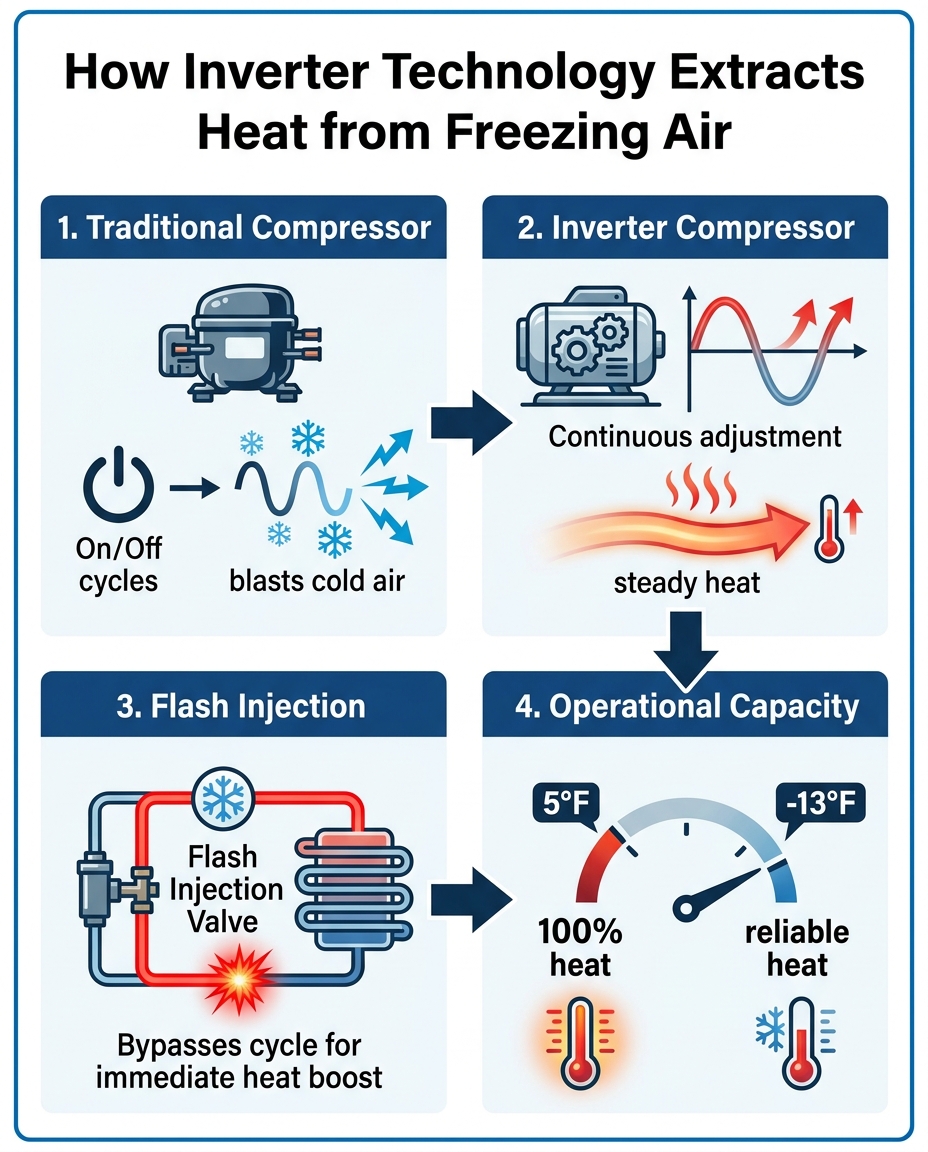
The Problem: Traditional single-speed compressors operate on a very basic principle: they are either 100% on or 100% off. When your thermostat calls for heat, a standard compressor kicks on at full blast, pumps out air, and then shuts down completely once the target temperature is reached. In our years of servicing Springfield homes, we've seen how this constant stop-and-start cycling places immense strain on older equipment and often results in uncomfortable temperature swings and blasts of cold air before the system warms up.
The Cause: The limitation lies in the lack of variable speed. Older systems cannot adapt to the changing outdoor environment; they only know one speed. When the outside air drops below freezing, a single-speed compressor struggles to extract enough thermal energy quickly enough to keep up with the heat loss inside your home.
The Solution: Modern variable-speed inverter compressors solve this by operating like the accelerator pedal in a car. Instead of turning on and off, the inverter continuously adjusts its speed to match the exact heating demand of your home. If the temperature drops sharply, the compressor ramps up. Once the room is comfortable, it dials back to a low, steady hum to maintain that exact temperature without harsh cycling.
You might wonder how any system extracts heat from freezing air. The physics are surprisingly simple: absolute zero is -459°F. This means that even at freezing temperatures, the outdoor air still contains ambient thermal energy. The advanced inverter compressor is designed to extract this energy, compress it, and amplify it to heat your home. These systems can operate at 100% heating capacity down to 5 degrees, and they maintain a highly reliable -13 degrees Fahrenheit operational capacity.
At Allied Plumbing Heating & Cooling, our technicians have firsthand experience installing these specific inverter systems locally. We see exactly how they handle the deep freeze year after year, proving to our customers that this technology is built for our demanding climate. Understanding where we mount mini-split compressors to survive Springfield's deep snow is also a critical part of ensuring your system runs flawlessly when you need it most.
• Temperature Stability — Traditional Single-Speed Heat Pump: Noticeable swings between cycles — Inverter-Driven Hyper-Heating: Precise, consistent room temperature
• Extreme Cold Performance — Traditional Single-Speed Heat Pump: Loses capacity rapidly below 32°F — Inverter-Driven Hyper-Heating: 100% capacity at 5°F, reliable to -13°F
• Energy Consumption — Traditional Single-Speed Heat Pump: High startup power spikes — Inverter-Driven Hyper-Heating: Low, steady energy usage
The Role of Flash Injection and Low-Boiling Refrigerants
To truly understand how a mini-split produces heat in sub-zero weather, we often explain two massive leaps in HVAC engineering to our customers: flash injection technology and low-boiling refrigerants. These are the specific mechanisms that allow heat extraction when the outdoor air feels brutally cold.
Modern hyper-heating systems utilize specialized refrigerants that have extremely low boiling points. In everyday terms, water boils at 212°F, turning from liquid to gas. These advanced refrigerants boil and turn into a gas at temperatures well below zero. When the cold outdoor air passes over the outdoor coil, the refrigerant absorbs the ambient thermal energy and boils into a vapor. Think of this process like a dry sponge soaking up the very last drops of water on a counter—even when it seems like there is no heat left in the air, the low-boiling refrigerant easily absorbs what is there.
The second critical component is the flash injection circuit. In standard systems, extreme cold causes the refrigerant flow to slow down, reducing the amount of heat the system can move indoors. Flash injection bypasses this traditional cycle. It injects a precise mixture of liquid and vapor refrigerant directly into the compressor. This acts like a supercharger, giving the system an immediate boost of heat delivery precisely when temperatures plummet, ensuring you maintain a -13 degrees Fahrenheit operational capacity.
Key cold-weather protections built into the systems we install:
• Base pan heaters: Built-in heating elements that prevent ice from building up inside the outdoor unit, keeping the fan blades spinning freely.
• Intelligent defrost cycles: Sensors that detect frost buildup on the outdoor coil and temporarily reverse the cycle to melt the ice quickly and efficiently.
• Elevated mounting: Keeping the outdoor unit raised above the average snowfall line prevents the system from being smothered during heavy winter storms.
How Inverter Technology Extracts Heat from Freezing Air
Efficiency, Incentives, and the Financial Upside
One of the most compelling reasons we see homeowners in Springfield IL making the switch to hyper-heating technology is the dramatic improvement in energy efficiency compared to traditional fossil fuel heating. The secret to this efficiency is measured by something called the Coefficient of Performance, or COP.
The COP is a simple ratio that measures how much heating energy a system produces for every unit of electrical energy it consumes. Traditional electric baseboard heaters have a COP of 1—they use one unit of electricity to create one unit of heat. Hyper-heating mini-splits, however, do not create heat from scratch; they simply move existing heat from outside to inside. Because moving heat requires far less energy than generating it, a high-efficiency heat pump can achieve a COP of 3 or higher. This means it delivers three times more heat energy than the electrical energy it uses, even in cold weather.
This remarkable efficiency drastically reduces your reliance on expensive emergency backup heating systems. Instead of watching your utility meter spin out of control when the temperature drops, the inverter compressor gently sips electricity to keep your home warm.
Furthermore, upgrading to this technology often comes with financial incentives. Qualifying high-efficiency cold-climate heat pumps may be eligible for generic federal tax credits and local utility incentive programs designed to encourage energy-efficient home upgrades. Because these programs change frequently and vary by municipality, our team strongly advises consulting with a local HVAC professional to identify which high-efficiency models qualify for current energy rebates before you make a final decision.
Beyond Winter: Year-Round Comfort and Air Quality
While the ability to produce heat at negative 13 degrees is the headline feature, our technicians always remind homeowners that a ductless mini-split is a comprehensive, 12-month climate control solution. The exact same inverter technology that works so hard to extract heat in the winter perfectly reverses its operation to provide high-efficiency cooling in the summer.
Springfield IL experiences a climate of extremes. We transition from bitter, dry winters to hot, heavily humid summers. When our installed systems operate in cooling mode, they don't just lower the temperature of the room; they actively pull excess moisture out of the air. This dehumidification process is vital for maintaining a comfortable home during the stickiest days of July and August. A home with balanced humidity feels cooler, allowing you to set the thermostat a few degrees higher without sacrificing comfort.
The year-round benefits of ductless technology include:
• Targeted zoning: You control the temperature room by room, so you never waste energy heating or cooling empty spaces.
• Whisper-quiet operation: Both the indoor air handlers and outdoor compressors operate at incredibly low decibel levels.
• Advanced filtration: Built-in, washable filters continuously clean the air as it circulates through the room.
The built-in filtration systems are particularly beneficial for homes dealing with dust, pet dander, and seasonal allergens. By continuously cycling the air through multi-stage filters, the system actively improves your indoor environment. For homeowners looking to breathe easier, integrating these systems with comprehensive indoor air quality solutions ensures your family stays comfortable and healthy all year long, rather than just relying on the system as a winter emergency backup.
Why Early Fall is the Critical Window for System Upgrades
Timing is everything when it comes to upgrading your home's HVAC infrastructure. While it is tempting to wait until the first snowfall to think about your heating needs, early fall (September) pre-heating prep is the optimal window to make the switch to hyper-heating technology. Waiting until emergency heating season begins puts you at the mercy of tight scheduling and frozen outdoor conditions.
Here is why our team insists early fall is the best time to upgrade:
1. Favorable installation conditions: Mounting the heavy outdoor compressor requires a stable base. Completing this work in September means the ground is still soft and workable, making it much easier for our crews to pour concrete pads or install elevated mounting brackets before the soil freezes solid.
2. Proper system calibration: Installing the system during moderate fall temperatures allows our technicians to thoroughly test and calibrate both the heating and cooling functions without fighting extreme weather conditions.
3. Proactive maintenance opportunities: Fall is the perfect time to address existing equipment alongside new installations. For example, just last September, a local customer reached out for routine maintenance on their heating and air appliances. Our technician Richard performed a thorough check and replaced necessary furnace parts before the cold arrived. This proactive approach ensures you aren't caught off guard.
4. Avoiding the emergency rush: Once the first deep freeze hits, HVAC schedules fill up rapidly with emergency no-heat calls. Upgrading in early fall secures your place on our schedule and provides total peace of mind.
Taking action in September means your home is fully prepared long before the harsh weather arrives. This is also the ideal time to ensure your cooling equipment is properly shut down or serviced, which is why scheduling comprehensive air conditioning services alongside your heating prep is a smart move for total home comfort.
Frequently Asked Questions About Cold-Climate Mini-Splits
How does a heat pump work in freezing weather?
A heat pump works in freezing weather by extracting ambient thermal energy from the outdoor air using specialized refrigerants with ultra-low boiling points. Even when the air feels freezing to the human skin, it still contains heat energy. The system's compressor absorbs this heat, compresses the refrigerant gas to raise its temperature significantly, and then transfers that concentrated heat indoors to warm your home.
Do mini splits work in below zero weather?
Yes, in our experience across Springfield, mini-splits work exceptionally well in below-zero weather, provided they are equipped with hyper-heating or cold-climate inverter technology. While older, standard models may struggle or shut down when temperatures dip below freezing, specialized cold-climate units are specifically engineered to thrive in sub-zero conditions. They continuously adjust their compressor speeds to keep the heat flowing even on the most bitterly cold days.
At what temperature do mini splits stop working?
Advanced hyper-heating models are designed to maintain a -13 degrees Fahrenheit operational capacity, continuing to produce reliable heat even at that extreme low. Below that specific threshold, the system does not automatically shut down; however, it may begin to lose efficiency and could require the help of a supplemental heat source to keep the home perfectly comfortable.
What is hyper heat technology?
Hyper heat technology is an advanced combination of variable-speed inverter compressors and flash injection technology. This engineering is designed specifically to maintain 100% of the system's heating capacity in extreme cold, preventing the rapid drop-off in performance that plagues traditional heat pumps. It ensures that the system can rapidly deliver high-temperature heat precisely when the outdoor temperatures plummet.
Can a hyper-heating mini-split replace my furnace entirely?
Depending on your home's insulation levels, square footage, and exact layout, a hyper-heating mini-split can absolutely serve as a primary heat source. Many of our local homeowners successfully use them to offset or entirely replace their daily furnace use. However, some homeowners choose to keep their existing furnace as a secondary backup specifically for historic, record-breaking freeze events that push beyond the system's optimal design limits.
Making the Switch to Reliable Winter Comfort
The outdated myth that heat pumps cannot survive a Midwest winter has been thoroughly debunked by modern engineering and our own field experience. With the ability to extract ambient heat and maintain reliable operation down to negative 13 degrees, hyper-heating technology offers a highly efficient, year-round solution for your home. Freezing temperatures are no longer a barrier to enjoying the precise zoning, whisper-quiet operation, and energy savings of a ductless system.
Remember that early fall (September) pre-heating prep is the critical window to act. By evaluating your options before the ground freezes and emergency season begins, you ensure a smooth installation and total peace of mind. If you are ready to explore how this technology can transform your home's comfort, reach out to our team at Allied Plumbing Heating & Cooling. We understand our regional climate demands and can guide you through comprehensive heating services tailored to your specific needs.
Hyper-Heating Technology: How Modern Mini-Splits Produce Heat Even at Negative 13 Degrees
September 24, 2026
Don't let outdated myths leave you freezing this winter. We break down the exact inverter technology that allows ductless systems to reliably heat your home in sub-zero temperatures.
Don't let outdated myths leave you freezing this winter. We break down the exact inverter technology that allows ductless systems to reliably heat your home in sub-zero temperatures.
Camera Inspections: Seeing Exactly What Tree Roots Did to Your Sewer Line Over the Summer
September 23, 2026
Tree roots aggressively infiltrate aging sewer lines during dry summers. A proactive early fall camera inspection catches this hidden damage before it causes catastrophic backups during holiday hosting.
Tree roots aggressively infiltrate aging sewer lines during dry summers. A proactive early fall camera inspection catches this hidden damage before it causes catastrophic backups during holiday hosting.
Why Leaving a Failing AC Unrepaired Over Winter Guarantees a Spring Replacement
September 22, 2026
Shutting off a struggling air conditioner for the winter doesn't stop the damage—it accelerates it. Unseen chemical reactions inside dormant lines turn minor leaks into total failures.
Shutting off a struggling air conditioner for the winter doesn't stop the damage—it accelerates it. Unseen chemical reactions inside dormant lines turn minor leaks into total failures.