How Municipal Water Main Flushing in August Affects Your Home's Faucet Aerators
How Municipal Water Main Flushing in August Affects Your Home's Faucet Aerators
Sudden Low Water Pressure at One Sink? Don't Panic Just Yet
You turn on the kitchen tap to rinse a plate, but instead of a strong, steady stream, you get a sputtering trickle—leaving you wondering exactly how municipal water main flushing in August affects your home's faucet aerators. Your mind immediately jumps to the worst-case scenario: a catastrophic pipe burst somewhere behind the drywall, a collapsed main line deep under the front yard, or a failing water heater. That sudden, alarming drop in water pressure at a single fixture is enough to make any homeowner brace for an expensive emergency. But before you panic over the prospect of a major residential plumbing disaster, take a deep breath and check the other sinks in your home.
If the sudden loss of pressure is isolated to just one or two fixtures—perhaps the kitchen sink and the guest bathroom—while the shower and the garden hose flow normally, you are likely dealing with a harmless, temporary side effect of seasonal city maintenance. During the August late-summer months, municipalities actively maintain their infrastructure, and the resulting shifts in the water grid can have surprising, highly localized effects on your home's plumbing. Understanding how these city-wide activities impact your individual fixtures is the key to knowing whether you need a simple five-minute fix or professional intervention.
Why Springfield Flushes Its Water Mains in Late Summer
Municipal water systems are massive, complex networks of underground piping that require regular, aggressive maintenance to keep drinking water safe and clear. To understand why your kitchen sink is suddenly acting up, you have to look at what is happening beneath the streets. Municipalities flush water mains primarily to remove accumulated mineral deposits—such as iron and manganese—and to ensure that chlorine residuals remain at safe, effective levels throughout the furthest reaches of the distribution system. Over time, perfectly safe minerals naturally precipitate out of the water and settle on the bottom of the large city mains.
The timing of this maintenance is not random. The warm, late-summer climate plays a significant role in the schedule. As ground temperatures rise throughout July and August, the water inside the municipal mains also warms up. This warmer water accelerates the degradation of chlorine and encourages the growth of harmless but undesirable biofilms along the interior walls of the pipes. By executing a comprehensive flushing program in August, the city clears out this summer buildup, stabilizing water quality before the fall and winter temperature drops change the dynamics of the grid once again.
The Mechanics of Municipal Flushing
When the city flushes the Springfield IL municipal water grid, utility workers open specific fire hydrants to force water through the mains at exceptionally high velocities. This process is heavily guided by Environmental Protection Agency (EPA) and American Water Works Association (AWWA) standards. It is a routine, necessary procedure for maintaining public health, not a sign that the city grid is failing. However, this high-speed scouring action disrupts the settled environment inside the pipes.
• Normal Grid Operation — Water Velocity: Low to Moderate — Impact on Sediment: Minerals settle safely at the bottom of city mains — Effect on Residential Homes: Clear water, consistent pressure
• Active Hydrant Flushing — Water Velocity: Extremely High — Impact on Sediment: Scours pipe walls, suspends iron and manganese — Effect on Residential Homes: Temporary discoloration, potential aerator clogs
• Post-Flushing Stabilization — Water Velocity: Returning to Normal — Impact on Sediment: Remaining suspended sediment begins to settle — Effect on Residential Homes: Sediment may be drawn into home service lines if water is used
While the city's goal is to expel this sediment out through the open hydrants, some of the stirred-up minerals inevitably remain suspended in the water column as the grid's pressure normalizes. This suspended material is what eventually finds its way into residential neighborhoods, leading to temporary disruptions in water clarity and pressure.
How Municipal Sediment Travels to Your Residential Pipes
The Problem: You experience a sudden, dramatic loss of water pressure at a specific fixture shortly after seeing city utility trucks working in your neighborhood, or after receiving a notice about seasonal hydrant flushing.
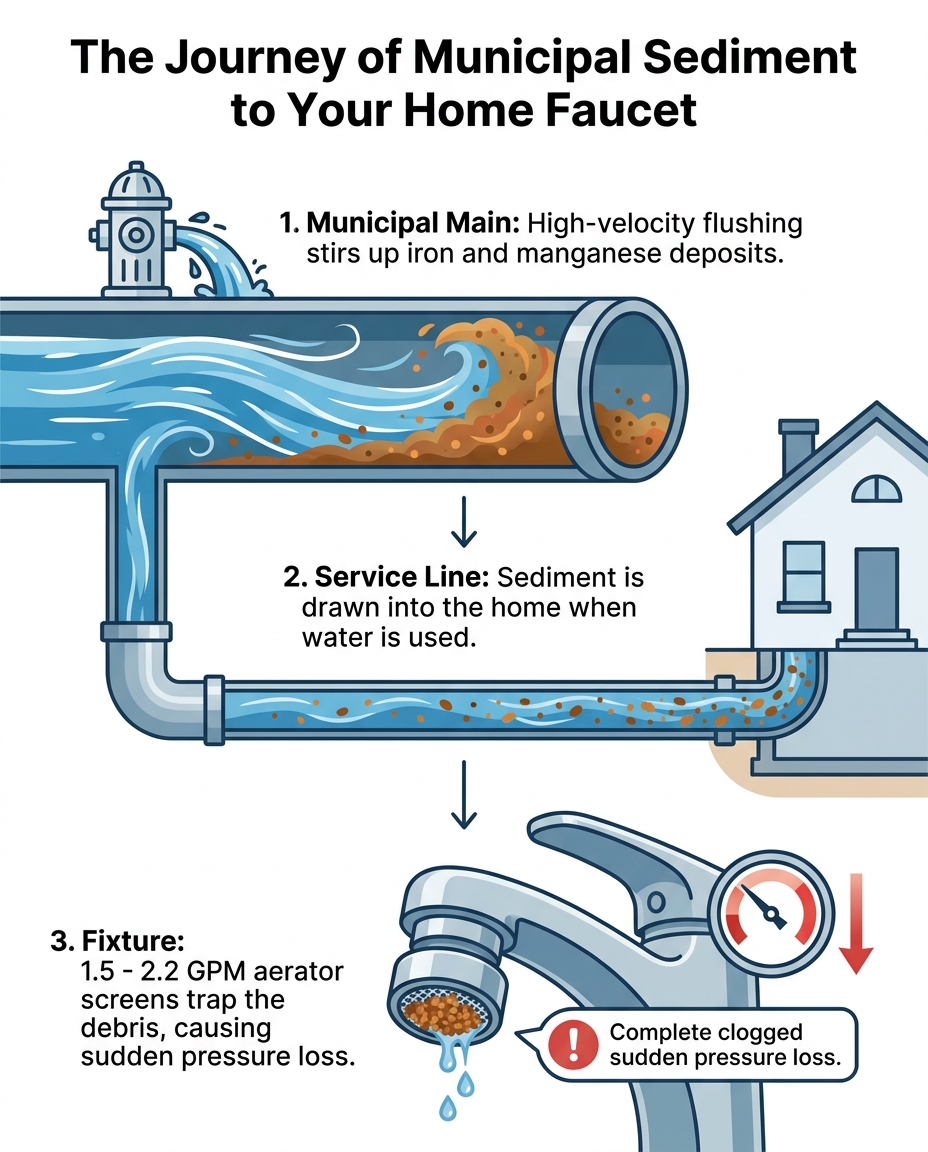
The Cause: The journey of this sediment from the city main to your kitchen sink is a matter of simple fluid dynamics. When the hydrants are closed after a flush, the water in the main lines is still swirling with dislodged iron flakes, manganese specks, and harmless mineral scale. If you happen to run your washing machine, flush a toilet, or turn on a faucet during this vulnerable window, your home's water demand creates a vacuum effect. This draws the suspended, sediment-heavy water directly out of the city main and into your private residential service line.
Because Allied Plumbing Heating & Cooling has deep local expertise regarding Springfield's specific municipal plumbing infrastructure, we frequently see how the older, scale-heavy city mains interact with modern residential fixtures. Older municipal pipes tend to release more mineral flakes during a flush. Once that sediment enters your home's plumbing system, it travels along the path of least resistance until it hits a bottleneck. If the sediment is fine enough, it might just cause a few minutes of discolored water. But if the flakes are larger, they will physically block the flow of water at the narrowest points in your system.
The Solution: The key to resolving this is isolating the bottleneck. You must differentiate between a whole-house pressure drop and a single-fixture drop. If every tap in the house is barely trickling, the sediment may have clogged your main Pressure Reducing Valve (PRV), or you might be dealing with a larger issue requiring you to look into solving low water pressure issues at the main line level. However, if the master bathroom shower works perfectly but the downstairs half-bath faucet is barely dripping, the sediment has localized at that specific fixture. The debris itself is generally harmless to humans, but it is highly disruptive to the mechanical function of modern plumbing.
The Journey of Municipal Sediment to Your Home Faucet
The Anatomy of a Faucet Aerator Clog
To understand why municipal flushing targets your sinks so specifically, you have to look closely at the design of a modern faucet. The unsung hero of your sink is the faucet aerator—a small, screw-on attachment located at the very tip of the spout. Its primary function is to mix air into the water stream. This aeration process reduces the overall volume of water flowing out of the tap while maintaining the physical sensation of high pressure. It prevents splashing, saves water, and shapes the stream into a neat, uniform column.
To achieve this, standard aerators are engineered with highly restrictive internal components. They typically limit water flow to between 1.5 and 2.2 Gallons Per Minute (GPM) to meet modern efficiency standards. Inside the small metal housing, you will find a flow restrictor, a mixer, and, most importantly, a series of exceptionally fine mesh screens.
These tiny wire or plastic screens are the perfect trap for dislodged municipal sediment. Because they are located at the absolute end of the plumbing line, they act as a filter of last resort for your home. When a rush of sediment-laden water reaches the faucet, the water pushes through, but the physical debris cannot.
• Iron Flakes: Often appear as rusty, orange, or brown brittle flakes that lay flat against the aerator screen, instantly blocking water flow.
• Manganese Specks: Look like coarse black pepper or dark sand. These hard particles wedge themselves deeply into the tiny squares of the mesh.
• Calcium Scale: White or off-white gritty material that can break loose from both city mains and your own internal water heater.
It takes a surprisingly small amount of this debris to cripple a faucet. Even a pinch of iron flakes can completely cover the surface area of a standard aerator screen. The moment that screen is blinded by sediment, the water has nowhere to go, resulting in an instant, frustrating loss of pressure at that specific sink.
Safe Steps to Check and Clear Your Aerator Screen
If you have determined that the pressure drop is isolated to a single sink following late-summer city maintenance, clearing the blockage is usually a straightforward process. You do not need to dismantle your pipes or resort to harsh chemicals. In fact, you should strictly avoid using chemical drain cleaners, as they do nothing to clear physical mineral blockages in the supply lines and can severely damage your fixtures.
Tools Needed for Safe Aerator Cleaning
• A dry microfiber towel for grip and finish protection
• Masking tape (if using pliers, to wrap the jaws and prevent scratching)
• An old, clean toothbrush for gentle scrubbing
• A small bowl of white vinegar (optional, for dissolving hard water scale)
Follow these steps to safely restore your faucet's pressure:
1. Plug the drain: Before you do anything else, close the sink stopper or place a towel over the drain. Aerator components are tiny; if you drop a washer or a screen down an open drain, a simple cleaning job instantly becomes a frustrating retrieval mission.
2. Unscrew the aerator housing: Grip the very end of the faucet spout with a dry towel and turn it counter-clockwise (to the left). Most aerators are only hand-tightened and will come off easily. If it is stuck due to hard water buildup, wrap the jaws of slip-joint pliers with masking tape to protect the metal finish, and apply gentle turning pressure.
3. Inspect and disassemble: Once the housing is off, carefully push the internal components out. Pay close attention to the order they sit in: usually the rubber washer goes on top, followed by the screen and the mixer. You will likely see a layer of grit, sand, or mineral flakes trapped on the top side of the screen.
4. Rinse backward: Take the clogged screen to another functioning sink. Turn the screen upside down so the water flows backward through the mesh, pushing the trapped municipal sediment out the way it came. Use an old toothbrush to gently dislodge any stubborn black manganese specks wedged in the grid.
5. Flush the immediate line: Before reassembling the aerator, return to the affected sink. Turn both the hot and cold water handles on full blast for about 30 to 60 seconds without the aerator attached. This high-volume flow will flush out any remaining sediment sitting in the supply lines directly below the sink.
6. Reassemble and test: Put the screen, mixer, and washer back into the housing in the correct order. Carefully thread the housing back onto the faucet spout by hand, ensuring you do not cross-thread it. Turn the water on. You should immediately see a return to normal, high-pressure flow.
When Sediment Buildup Requires Professional Intervention
While cleaning an aerator is a safe, manageable task for most homeowners, municipal flushing events can sometimes push sediment much deeper into a home's plumbing architecture. It is vital to recognize the boundary between a simple localized clog and a complex plumbing issue that requires the expertise of a licensed plumber.
If you clear the aerators but the water pressure remains stubbornly low, or if you notice that the pressure drop affects the entire house simultaneously, the problem has escalated. Severe flushing events can push massive amounts of sediment into your home's main water entry point, severely clogging the main Pressure Reducing Valve (PRV). When a PRV becomes jammed with municipal debris, it can fail in the closed position, choking off the water supply to the entire property.
Another major vulnerability is your water heater. If you run hot water during a municipal flush, heavy sediment can be drawn directly into the water heater tank. Because the tank acts as a large settling basin, the minerals drop to the bottom, burying the heating elements or clogging the drain valve. This not only reduces hot water pressure but also forces the unit to overwork, drastically shortening its lifespan. If you notice that only your hot water pressure is low, or if the water heater is making loud popping or rumbling noises, sediment has likely infiltrated the tank.
When a perceived minor issue turns out to be a real plumbing complication, fast, reliable intervention is essential. For example, one local homeowner recently found themselves in an emergency plumbing situation requiring same-day service when sediment bypassed the aerators and severely clogged their main pressure reducing valve. Because they reached out immediately, a technician arrived that same afternoon and provided reliable same-day service, resolving the crisis promptly before the system sustained permanent damage. If sediment has heavily infiltrated your residential system, a professional line flush and PRV inspection are the safest ways to restore full functionality. Don't hesitate to contact our local plumbers if you suspect the blockage is deeper than the sink spout.
Frequently Asked Questions About Water Main Flushing and Pressure
Why is my water pressure low after the city worked on pipes?
Low pressure after city pipe work is usually caused by dislodged mineral sediment entering your home's plumbing. When the city works on mains or flushes hydrants, the high water velocity stirs up rust and scale. If you use water during this time, that debris is pulled into your home and gets trapped in the fine mesh screens of your faucet aerators, instantly restricting the flow.
Does hydrant flushing affect water pressure?
Yes, hydrant flushing can temporarily affect your home's water pressure in two ways. During the actual flushing process, the massive draw of water out of the hydrants can temporarily lower the overall pressure in your neighborhood's grid. After the flushing is complete, dislodged sediment can physically clog your home's fixtures or main pressure reducing valve, resulting in a sustained pressure drop until the debris is cleared.
How do I fix low water pressure in one sink?
If low pressure is isolated to a single sink, the most likely culprit is a clogged aerator screen. You can fix this by unscrewing the aerator at the tip of the faucet spout, removing the internal mesh screen, and rinsing away any trapped sand or mineral flakes. Flushing the open tap for a minute before reattaching the aerator ensures the immediate supply line is fully clear.
How do you clean sediment out of water lines?
Cleaning sediment out of main water lines requires flushing the system by opening fixtures without their restrictive aerators attached. For minor sediment, running the bathtub (which lacks an aerator) on cold for several minutes can draw the debris out of the main lines. If the sediment is severe or has infiltrated the water heater, a licensed plumber must perform a professional system flush to prevent damage to valves and appliances.
Is it safe to drink tap water during municipal flushing?
While the discolored water caused by municipal flushing is generally considered safe and non-toxic by health authorities, it is highly unappetizing and can stain laundry. The discoloration comes from naturally occurring iron and manganese. It is recommended to avoid drinking tap water or doing laundry until you have run your cold water taps long enough for the water to run completely clear.
Can city water main flushing damage my water heater?
Yes, if large amounts of municipal sediment are drawn into your home, it can settle at the bottom of your water heater tank. This thick layer of mineral debris acts as an insulator, forcing the water heater to work much harder to heat the water, which can cause overheating, increased energy bills, and premature failure of the tank or heating elements. Regular maintenance is required to flush this buildup away.
Restore Your Home's Water Flow with Expert Local Care
Understanding the reasoning behind the city's late-summer flushing schedule takes the panic out of sudden pressure drops. When you know that a sputtering kitchen sink is likely just a harmless collection of iron and manganese trapped in a tiny mesh screen, you can approach the problem calmly. Checking and clearing your faucet aerators is a quick, empowering maintenance step that every homeowner can master to keep their water flowing smoothly after municipal utility work.
However, while aerator cleaning is a simple fix, widespread pressure issues or sediment deeply embedded in your water heater require an expert eye. If clearing the screens does not bring your pressure back to normal, or if you suspect your main pressure reducing valve has been compromised by city debris, do not force the issue. Reach out to a local professional to inspect your lines and ensure your plumbing infrastructure is fully protected. Restoring your home's comfort and your peace of mind is always our primary focus.
Why Adding a Whole-Home Humidifier Prevents Dry Skin and Warped Hardwood Floors in Winter
September 25, 2026
Gas furnaces strip natural moisture from your home, causing painful static shocks and shrinking woodwork. Adding a bypass humidifier this fall proactively counteracts severe winter dryness.
Gas furnaces strip natural moisture from your home, causing painful static shocks and shrinking woodwork. Adding a bypass humidifier this fall proactively counteracts severe winter dryness.
Hyper-Heating Technology: How Modern Mini-Splits Produce Heat Even at Negative 13 Degrees
September 24, 2026
Don't let outdated myths leave you freezing this winter. We break down the exact inverter technology that allows ductless systems to reliably heat your home in sub-zero temperatures.
Don't let outdated myths leave you freezing this winter. We break down the exact inverter technology that allows ductless systems to reliably heat your home in sub-zero temperatures.
Camera Inspections: Seeing Exactly What Tree Roots Did to Your Sewer Line Over the Summer
September 23, 2026
Tree roots aggressively infiltrate aging sewer lines during dry summers. A proactive early fall camera inspection catches this hidden damage before it causes catastrophic backups during holiday hosting.
Tree roots aggressively infiltrate aging sewer lines during dry summers. A proactive early fall camera inspection catches this hidden damage before it causes catastrophic backups during holiday hosting.