Why Falling Leaves and Acorns Are a Hidden Threat to Your Exterior Drain Cleanouts
Why Falling Leaves and Acorns Are a Hidden Threat to Your Exterior Drain Cleanouts
The Hidden Autumn Vulnerability in Your Yard
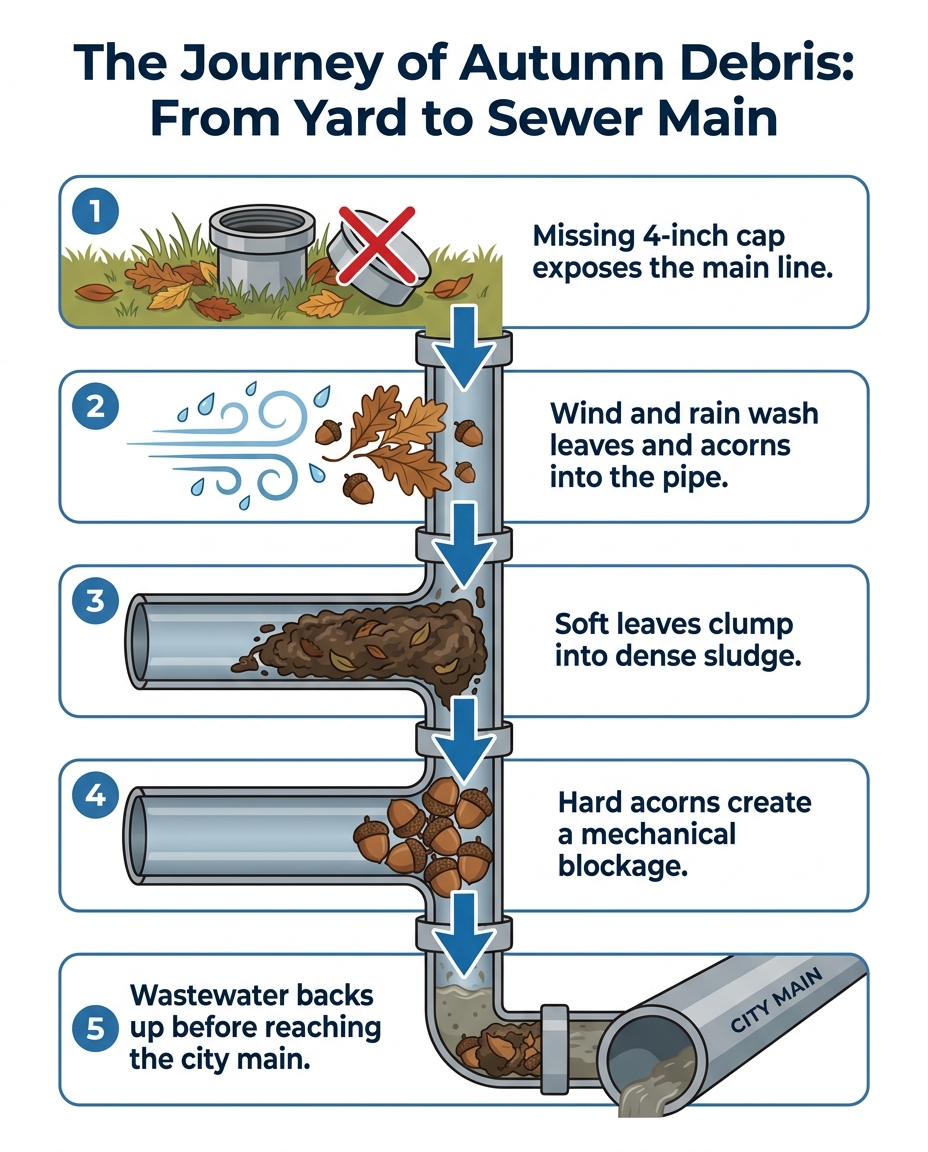
As early fall arrives and the weather begins to cool, you might be wondering why falling leaves and acorns are a hidden threat to your exterior drain cleanouts. September marks the beginning of heavy yard preparation for most homeowners. You are likely focused on clearing out your roof gutters, scheduling your seasonal HVAC tune-up, and prepping your lawn for the dormant months ahead. However, while you are looking up at your roof and down at your grass, there is a critical plumbing component sitting right at ground level that often goes completely ignored. When an exterior cleanout cap is cracked, damaged, or simply missing, this open pipe acts as a direct funnel for yard debris to pour straight into your main sewer line.
Identifying this vulnerability before the peak foliage drop is essential to preventing massive, unexpected blockages. If you want to ensure your home's wastewater system remains secure this season, exploring professional plumbing services is a smart first step.
The Danger Lurking Under Mature Trees
The risk is especially high for Springfield IL properties with mature oak and maple trees. In our years of servicing local homes, our team at Allied Plumbing Heating & Cooling typically sees a sharp increase in sewer backups right after these beautiful, established canopies drop an enormous volume of organic material over a very short period. Homeowners typically anticipate the work required to rake and bag these leaves, but very few consider where the stray debris ends up. A strong autumn wind can easily blow heavy clusters of wet leaves and dense acorns across your yard.
If your exterior drain cleanout is missing its protective cover, that four-inch PVC pipe becomes a trap. It does not take long for a steady stream of autumn debris to fill the pipe. Because this cleanout leads directly to the primary sewer line connecting your home to the municipal waste system, any debris that falls inside immediately threatens your entire plumbing network. Addressing this hidden vulnerability early in the season is the only reliable way to keep your home safe from severe wastewater backups.
Understanding Your Exterior Drain Cleanout's Role
To fully grasp why yard waste is so dangerous to your plumbing, it helps to understand exactly what an exterior sewer cleanout is designed to do. In simple terms, the cleanout is the direct access point to your home's main sewer line. It typically looks like a white PVC or black cast-iron pipe protruding just a few inches above the soil, usually located near the foundation of your house or out near the municipal property line.
The Gateway to the Municipal Sewer
This pipe is the primary artery that connects your home's internal wastewater system directly to the city sewer. Every time you flush a toilet, drain a bathtub, or run your washing machine, that wastewater travels out of your house and passes through this main line. The cleanout exists so that professional plumbers have immediate access to clear severe clogs without having to dismantle the plumbing inside your home.
Because it serves as a direct gateway, the protective cap on top of this pipe is absolutely essential. A properly threaded, intact cap performs several vital functions:
• Sealing out rainwater: Prevents heavy autumn storms from flooding your sanitary sewer line.
• Blocking pests: Keeps rodents, insects, and other wildlife from nesting in your pipes.
• Stopping organic debris: Acts as a physical barrier against dirt, mulch, leaves, and twigs.
• Maintaining pressure: Helps keep harmful sewer gases contained and venting properly through your roof stack.
Older residential plumbing systems are particularly susceptible to infiltration if these caps fail. In our decades of experience working in Springfield and the surrounding areas, our plumbers at Allied Plumbing Heating & Cooling have seen firsthand how mature Midwestern trees interact with older pipes. We frequently find that when a cap is compromised, the very access point designed to help maintain your sewer line becomes the primary cause of its failure.
The Lawnmower Effect: How Cleanout Caps Sustain Summer Damage
You might be wondering how a heavy-duty plastic or metal cap simply goes missing or breaks in the first place. The answer usually lies in the routine yard maintenance performed months before the leaves ever start to fall. Many homeowners unknowingly damage their ground-level PVC caps with lawnmowers, heavy landscaping equipment, or weed trimmers during summer lawn care.
The Anatomy of Summer Damage
Because the cleanout pipe sits so low to the ground, it is incredibly easy for it to become hidden by tall summer grass or overgrown landscaping brush. A pattern we see often during our early fall inspections is damage from summer lawn care. When a lawnmower blade or a high-speed weed trimmer line strikes the side of the PVC cap, it can easily chip the plastic, strip the threading, or shatter the top of the cover entirely.
The progression of this damage usually follows a predictable pattern:
1. The initial strike: A mower blade clips the edge of the cap, causing a hairline crack that goes unnoticed under the grass clippings.
2. The widening gap: Over weeks of sun exposure and temperature fluctuations, the plastic expands and contracts, causing the small crack to widen into a significant hole.
3. The complete failure: Eventually, the structural integrity of the cap fails, and the top breaks off completely, exposing the open pipe to the elements.
Once the pipe is exposed, the danger multiplies rapidly. A standard four-inch sewer pipe is remarkably spacious. On a single windy autumn day, an open cleanout can swallow pounds of un-degradable organic yard waste. Because the damage occurred during the summer, homeowners are often completely unaware that their plumbing system is sitting wide open just as the heaviest debris drop of the year begins.
Soft vs. Hard Debris: Why Acorns Are a Plumber's Nightmare
Not all yard waste affects your plumbing system in the same way. When debris enters an uncapped cleanout, it generally falls into two categories: soft debris and hard debris. Understanding the difference between the two highlights exactly why autumn foliage is so destructive to underground pipes.
The Mechanics of Organic Blockages
Soft debris, primarily consisting of fallen leaves, grass clippings, and pine needles, creates a unique type of blockage. When leaves enter the sewer line, they quickly become saturated with wastewater. Instead of flushing away, wet leaves stick to the walls of the pipe and clump together, creating a dense, heavy, sludge-like barrier. This sludge restricts the flow of water and acts like a net, catching toilet paper and other waste until the pipe is completely choked off.
Hard debris, such as acorns, walnuts, and thick twigs, presents a much more severe mechanical blockage. Unlike toilet paper or human waste, acorns do not dissolve, soften, or break down in water. They are dense, solid objects that sink to the bottom of the pipe and wedge themselves into the joints and curves of your plumbing system.
Attempting to clear this type of blockage with harsh over-the-counter liquids is highly ineffective. In fact, learning the truth about chemical drain cleaners reveals that these caustic solutions cannot dissolve hard wood or nut shells, but they can generate enough heat to warp and damage your PVC pipes.
Comparing Autumn Debris Threats
• Soft Debris — Examples: Leaves, grass, pine needles — How It Behaves in Pipes: Absorbs water, clumps together, and forms a thick sludge. — Impact on Main Sewer Line: Creates a sticky net that catches other waste, leading to slow, gradual backups.
• Hard Debris — Examples: Acorns, twigs, walnuts, bark — How It Behaves in Pipes: Sinks, wedges into pipe joints, and refuses to break down. — Impact on Main Sewer Line: Causes immediate mechanical blockages that completely stop wastewater flow.
The Journey of Autumn Debris: From Yard to Sewer Main
The Danger of the Approaching Winter Freeze
Leaving a cleanout uncapped during the autumn months is risky enough, but the true danger lies in what happens when the season changes. The transition from fall to winter brings a severe climate threat to compromised plumbing systems. Leaving a cleanout uncapped allows water, dirt, and organic debris to accumulate deep within the pipe just as ambient temperatures begin to drop.
The Cost of Frozen Excavation
Springfield experiences rapid temperature swings in late autumn. The average first freeze typically arrives by late October or early November, effectively locking the ground solid. Our technicians routinely respond to emergency calls where a blockage formed from accumulated leaves and acorns, and once the ground froze around it, the situation escalated from a routine drain clearing to a major plumbing emergency.
When debris and trapped wastewater freeze inside your main sewer line, the ice expands. This expansion places immense pressure on the walls of the PVC or cast-iron pipe, dramatically increasing the risk of the main line cracking or bursting underground. If the pipe bursts, the only solution is to dig up the yard to replace the broken section.
Accessing and excavating a main line through frozen, rock-solid earth is significantly more disruptive, time-consuming, and difficult than digging through soft summer soil. Securing your cleanout system now prevents the need for emergency excavations in freezing conditions. If you suspect your line is already compromised, reaching out to experienced plumbers in Springfield and surrounding areas before the freeze hits is the safest course of action.
Early Fall Inspection Steps for Your Cleanout
Protecting your home from autumn debris does not require specialized tools, but it does require proactive attention. By taking a few minutes to inspect your yard during early fall (September is the ideal window), you can identify vulnerabilities before the heavy leaf drop begins. Here are the actionable steps to inspect your property safely.
Your Seasonal Cleanout Checklist
1. Locate the exterior cleanout: Walk the perimeter of your home and locate the pipe in the yard. It is typically a white PVC or black cast-iron pipe sticking slightly above the ground, often situated near the foundation walls or out toward the street.
2. Clear the surrounding area: Carefully clear away surrounding brush, tall grass, dead leaves, and heavy mulch to ensure the cap is entirely visible and easily accessible. Do not use a weed trimmer close to the plastic.
3. Visually inspect the cap: Look closely at the cover for any signs of summer damage. Check for hairline cracks, chips along the rim, or missing threading that might prevent a tight seal.
4. Test the security: Ensure the cap is threaded securely onto the pipe. It should not be loose, wobbly, or easily lifted off by hand.
5. Monitor your indoor drains: Pay attention to how your home is draining. If you notice slow drains, gurgling toilets, or foul odors in the home, it may indicate that debris has already breached the main line.
If the cap is missing, severely damaged, or if you notice any signs of a backup inside your home, do not attempt to clear the main line yourself. Schedule a professional inspection immediately to have the cap replaced and the line safely evaluated.
Frequently Asked Questions About Exterior Cleanouts and Yard Debris
What happens if a sewer cleanout is uncapped?
An uncapped cleanout allows yard waste, rainwater, and pests to enter the main sewer line directly. Because the pipe is a straight path to your home's wastewater system, this debris quickly leads to severe blockages. If left unaddressed, these blockages can cause raw sewage to back up into the lowest drains of your home.
Can leaves clog a main sewer line?
Yes. Wet leaves clump together to form a dense, heavy sludge that restricts wastewater flow and creates stubborn clogs in the main line. Unlike toilet paper, leaves do not break down easily in water, meaning they will continue to accumulate and catch other waste until the pipe is completely blocked.
How do I protect my outside drain pipe from debris?
Ensure a durable, properly fitted PVC or cast-iron cap is securely threaded onto the pipe at all times. Additionally, keep the immediate area clear of heavy mulch, tall grass, and overgrowth so the cap remains visible and is less likely to be struck by lawnmowers or landscaping equipment.
Why is my exterior cleanout backing up?
A backup at the exterior cleanout indicates a severe blockage further down the main line, preventing wastewater from reaching the city sewer. This is often caused by tree root intrusion, accumulated debris like leaves and acorns, or a collapsed pipe, all of which require professional assessment to resolve.
Are acorns worse for my sewer line than regular leaves?
Yes, because acorns are hard organic matter that will not break down, soften, or dissolve in water under any circumstances. When they enter the sewer line, they create a solid mechanical blockage that wedges into pipe joints and requires heavy-duty professional tools to physically remove.
Can I use chemical drain cleaners to dissolve yard debris in my main line?
No. Chemical cleaners are completely ineffective against hard yard waste like wood, bark, and acorns. Furthermore, pouring these harsh chemicals down your drains can cause severe chemical burns to the interior of your PVC piping, ultimately worsening the plumbing issue and creating a hazard for repair technicians.
Secure Your Home's Plumbing Before the Leaves Fall
A simple visual check of your yard today can prevent a massive plumbing disaster tomorrow. Do not wait until the leaves have already fallen, the acorns have filled the pipes, and the ground is freezing solid. Understanding why falling leaves and acorns are a hidden threat to your exterior drain cleanouts gives you the advantage you need to protect your property. Take action now and reach out for professional plumbing repair to replace damaged caps and clear any early blockages safely before winter arrives.
Why Falling Leaves and Acorns Are a Hidden Threat to Your Exterior Drain Cleanouts
September 18, 2026
During early fall yard prep, a cracked or missing exterior cleanout cap can act as a direct funnel for yard debris. Find out how this hidden vulnerability leads to severe main sewer line blockages.
During early fall yard prep, a cracked or missing exterior cleanout cap can act as a direct funnel for yard debris. Find out how this hidden vulnerability leads to severe main sewer line blockages.
Understanding the Role of the Circulator Pump in Your Hydronic Heating System
September 17, 2026
You turn on your boiler for the first brisk fall cold snap, but the radiators stay freezing. Discover why a dormant circulator pump is usually the culprit.
You turn on your boiler for the first brisk fall cold snap, but the radiators stay freezing. Discover why a dormant circulator pump is usually the culprit.
Where to Place Carbon Monoxide Detectors Relative to Your Gas Furnace and Bedrooms
September 16, 2026
Finding the exact wall height and distance for a new CO alarm is a critical decision point. See the precise measurements needed to maximize early warning and prevent false alarms this fall.
Finding the exact wall height and distance for a new CO alarm is a critical decision point. See the precise measurements needed to maximize early warning and prevent false alarms this fall.