When Your Plumbing Is Trying to Tell You Something
If you're noticing rust-colored water, dropping water pressure, or leaks that just keep coming back, the signs your home needs to be repiped may already be showing up throughout your house. These aren't random, isolated problems. They're often your plumbing system sending a clear message that patching individual issues isn't cutting it anymore.
Most residential pipes — depending on the material — last anywhere from 20 to 80 years. In older homes especially, the pipes hidden inside your walls and under your floors may be well past their prime. And by the time visible problems show up, the damage is often already spreading.
Here's a quick look at the most common warning signs:
• Discolored, rusty, or cloudy water coming from your taps
• Low or inconsistent water pressure throughout the house
• Recurring leaks in multiple areas, not just one spot
• Metallic taste or foul smell in your tap water
• Noisy pipes — banging, whistling, or rattling sounds
• Visible corrosion on exposed pipes in basements or utility rooms
• Wet spots near the foundation or unexplained damp areas
• Frequent clogs across multiple drains
• Fluctuating water temperatures during normal use
• A home over 50 years old with original plumbing still in place
Any one of these could point to a localized issue. But when several show up together, it's usually a sign the whole system is aging out — and repiping may be the right long-term solution.
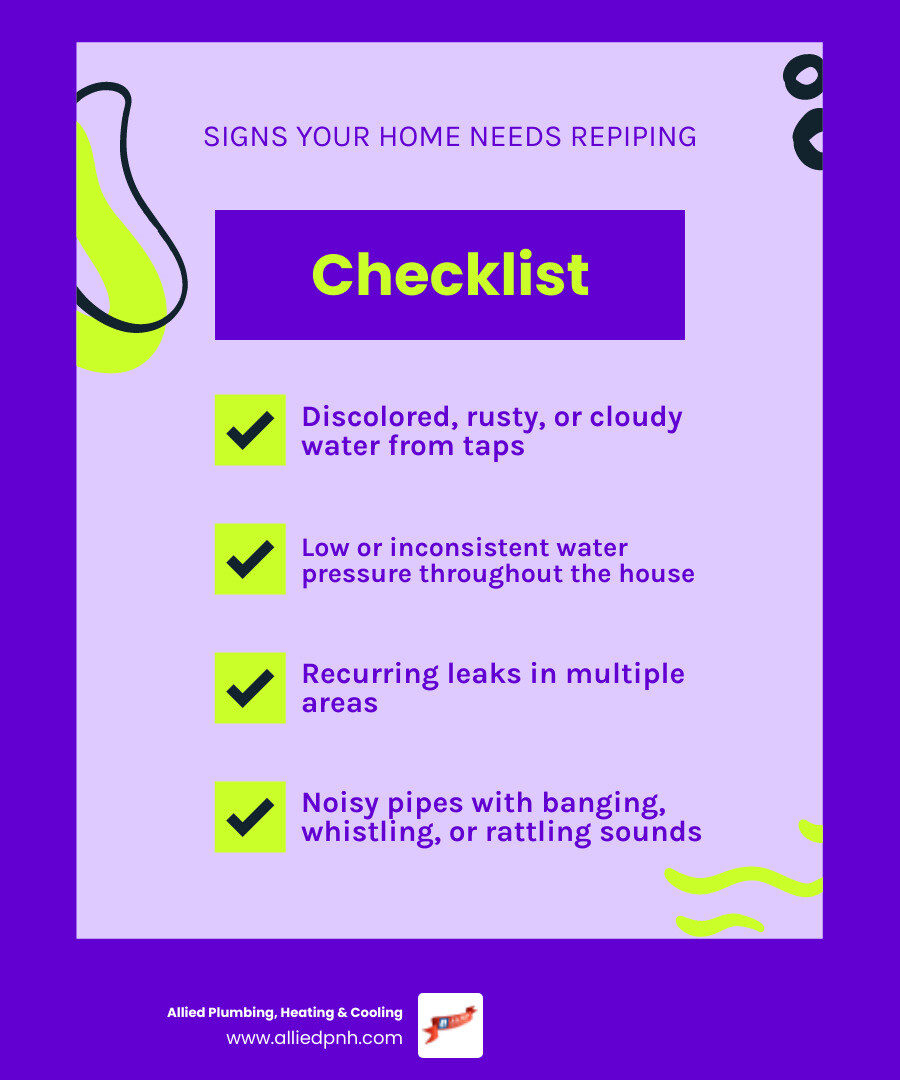
5 Critical signs your home needs to be repiped
When we talk about a "repipe," we are referring to the process of replacing the entire water supply system in your home. It sounds like a massive undertaking, but for many homeowners in Springfield, IL, and surrounding areas like Chatham or Rochester, it is the only way to stop the cycle of endless repairs.
When you find yourself calling a plumber every few months to fix a pinhole leak in the laundry room and then another in the kitchen, you aren't just dealing with bad luck; you're dealing with systemic failure. Patching a single leak is like putting a band-aid on a dam that's about to burst. If the pipe material itself has reached the end of its life, it becomes thin and brittle. One repair increases the pressure on the next weakest point, leading to Signs of Hidden Water Leaks that can rot your subfloors and invite mold growth before you even realize there's a problem.
Discolored Water and Metallic Tastes
Have you ever turned on the tap after a weekend away only to see "rusty soup" or water that looks like weak tea? This is a classic indicator of internal corrosion. As metal pipes like galvanized steel age, they oxidize. This rust flakes off into your water supply, leading to Rusty Water from Your Taps in Chatham.
Beyond the unappetizing color, you might notice a distinct metallic taste or a persistent "off" smell. This isn't just a nuisance; it’s a sign that the structural integrity of your pipes is dissolving from the inside out. This sediment buildup doesn't just ruin your morning coffee; it also settles in your water heater and appliances, shortening their lifespan.
Persistent Low Water Pressure Throughout the House
If your morning shower has turned into a sad drizzle, the culprit might be hiding inside your walls. Over decades, mineral deposits and rust build up inside older pipes, narrowing the path for water to flow. It’s similar to a clogged artery.
When you have low pressure at every single faucet, it’s rarely a simple fix like cleaning an aerator. Instead, it reveals that the entire network is restricted. We often help homeowners Identify and Fix Water Pressure Problems, and frequently, the conclusion is that the pipes are simply too choked with debris to function. Solving Low Water Pressure Issues from Plumbing often requires a fresh start with modern PEX or copper lines that provide the smooth, wide-open flow your home was designed for.
How Pipe Material and Age Impact Your System
Understanding what your pipes are made of is the first step in predicting when they will fail. As of April 2026, many homes in the Springfield area are reaching a critical age where original plumbing is simply timed out.
• Galvanized Steel — Typical Lifespan: 20–50 Years — Common Issues: Internal rust, lead leaching, clogs
• Copper — Typical Lifespan: 50+ Years — Common Issues: Pinhole leaks, pitted corrosion
• PEX — Typical Lifespan: 40–50 Years — Common Issues: Very durable, flexible, freeze-resistant
• PVC / CPVC — Typical Lifespan: 50–70 Years — Common Issues: Brittle with age, joint failures
• Cast Iron — Typical Lifespan: 75–100 Years — Common Issues: Cracking, tree root intrusion (sewer)
• Brass — Typical Lifespan: 40–70 Years — Common Issues: Corrosion at fittings
If you are unsure what is behind your walls, a professional assessment for Repiping Springfield IL can help identify your materials and their current condition.
Why Home Age is One of the Biggest signs your home needs to be repiped
In our experience serving communities from Auburn to Sherman, the age of the home is the most reliable predictor of plumbing health. Most homes built before 1960 were outfitted with galvanized steel pipes. By now, these systems are 60 to 70 years old—well past their maximum 50-year life expectancy.
Even homes built in the 1970s and 80s are now entering the "danger zone." Plumbing codes have changed significantly over the decades to favor safer, more durable materials. If your home is hitting that 50-year milestone, it’s a good idea to have a proactive inspection for Plumbing Springfield IL before an emergency occurs.
Identifying Dangerous or Obsolete Pipe Materials
Some materials were popular in their day but have since been proven unreliable or even dangerous:
1. Lead Pipes: Found in very old homes (100+ years), these pose a severe health risk and should be replaced immediately.
2. Polybutylene (PB): This flexible plastic was used from the late '70s to the early '90s. It is notorious for sudden, catastrophic failure without warning. If you see "PB" on your pipes, a repipe is highly recommended.
3. Galvanized Steel: As these rust, they can actually trap lead and other contaminants, releasing them into your drinking water.
When these materials fail, they often result in a Burst Pipe Repair call in the middle of the night. Proactive repiping eliminates that stress.
Identifying Corrosion and Unusual Plumbing Noises
Sometimes your pipes don't leak—they scream. Unusual noises are often dismissed as "character" in an older home, but they are usually signs of mechanical stress.
Visible signs your home needs to be repiped on Exposed Lines
You don't always need to cut into drywall to see the problem. Take a flashlight into your basement, crawlspace, or utility room. Look at the exposed lines. Are there "pimples" or flaking on the metal? Do you see green, white, or blue oxidation spots around the joints?
These are signs that the metal is eating itself. If you see these signs on the pipes you can see, you can bet the same thing is happening to the pipes hidden in your ceilings. If you spot these, calling for Plumbing Repair Springfield IL or even an Emergency Plumber Springfield IL for a diagnostic check is the smartest move.
Frequent Clogs and Foundation Wet Spots
While we often focus on supply lines, your drain lines are just as important. If you are constantly dealing with a Clogged Drain Springfield IL, it might not just be what you're putting down the sink. Older cast iron or clay pipes can crack, allowing tree roots to enter or creating rough patches where debris snag.
More seriously, if you notice wet spots on your floor or around your foundation, you could be dealing with a slab leak. This happens when pipes under your concrete foundation fail. Instead of just paying for Drain Cleaning Springfield IL over and over, a repipe can reroute your water lines and protect your home's structural integrity.
The Long-Term Benefits of Professional Repiping
Repiping is an investment, but the benefits go far beyond just stopping leaks.
1. Increased Property Value: A whole-home repipe is a major selling point. It gives buyers peace of mind knowing they won't face a plumbing disaster next month.
2. Appliance Efficiency: Your dishwasher and washing machine will work better and last longer when they aren't being fed rusty, sediment-heavy water.
3. Consistent Temperatures: Ever get "scalded" in the shower because someone turned on a faucet elsewhere? Modern repiping ensures consistent pressure and temperature regulation.
4. Lower Water Bills: Those tiny, hidden leaks you haven't found yet? They add up. New pipes mean every drop you pay for actually reaches the tap.
Whether you've been struggling with a Clogged Sink Springfield IL or you've had to call for Plumbing Drain Snaking Springfield IL three times this year, a repipe offers a permanent "reset" button for your home's health.
Frequently Asked Questions About Repiping
How long does a typical home repipe take?
Most standard homes in our area can be repiped in just one to two days. Larger or more complex homes might take three to seven days. We work efficiently to minimize the time your walls are open and your water is off.
Can I stay in my house during the plumbing replacement?
Yes! We typically work in "zones." This means we only turn off the water for a few hours at a time during the day while we are actively working. By the time we leave for the evening, we ensure you have functional water for your nightly routine.
Will repiping improve my water's taste and smell?
Absolutely. By removing old, corroded galvanized steel or copper and replacing it with clean PEX or new copper, you eliminate the source of metallic tastes and sulfuric odors. Your water will be clearer, safer, and better-tasting.
Conclusion
Plumbing issues rarely get better on their own. They start as a small drip or a slight change in water color and eventually turn into a major emergency. Recognizing the signs your home needs to be repiped early can save you from the stress and expense of major water damage.
At Allied Plumbing, Heating & Cooling, we are a 3-generation family business that has been serving Springfield and surrounding communities like Pleasant Plains, Divernon, and Athens since 1977. We don't just fix pipes; we provide peace of mind. With our Daikin Comfort Promise and decades of local experience, we can help you determine if a repipe is the right move for your home.
Don't wait for a "crime scene" in your bathroom. If your pipes are screaming for help, give us a call today for a professional assessment of Repiping Springfield IL.