The Role of the Draft Inducer Motor in Safely Starting Your Gas Furnace
The Role of the Draft Inducer Motor in Safely Starting Your Gas Furnace
That First Fall Chill: Why Your Furnace Hums Before Heating
October is here, and as the overnight temperatures finally drop, you might find yourself wondering about the role of the draft inducer motor in safely starting your gas furnace. During that first October pre-winter startup, it is completely normal to feel a brief moment of anxiety when you adjust the thermostat, hear a motor humming from the basement or utility closet, but do not immediately feel any warm air coming from your vents. In our years of serving the Springfield, IL area, the team at Allied Plumbing Heating & Cooling sees firsthand how the transition from late summer to fall brings a sudden chill that prompts the first major heating demand of the season. When you switch your system from cooling to heating, you expect instant gratification. Instead, you hear a distinct whirring noise for nearly a minute before the familiar whoosh of ignition occurs.
Many homeowners assume this delay means something is broken. However, that initial humming sound is actually a non-negotiable safety mechanism kicking into gear. Before a single burner ignites, your heating system must verify that it can safely vent exhaust gases outside your home. Rather than being a sign of immediate failure, this component is actively protecting your household from dangerous gases.
Whether you are looking to schedule routine heating services or you find yourself needing emergency furnace service, understanding how this vital component works can save you from unnecessary worry.
Understanding the Draft Inducer Motor's Critical Job
The draft inducer motor is a small but powerful blower fan located inside your furnace cabinet, typically mounted near the top of the heat exchanger. Its primary function is to pull air through the heat exchanger, creating a controlled flow of oxygen to ensure proper combustion once the gas valve opens.
But its job goes far beyond just supplying air. The inducer creates a negative pressure—often referred to as a draft—that safely pulls toxic exhaust gases out of the combustion chamber. When natural gas burns, it produces byproducts, including water vapor and carbon monoxide. The inducer motor ensures these hazardous gases are pushed safely up through the flue pipe and completely out of your home.
Because we live in the Springfield IL area, our technicians frequently see the toll that long, highly humid summer months take on dormant HVAC systems. This high humidity can cause minor oxidation on the small bearings inside the inducer motor while it sits idle. When autumn arrives, this motor must wake up and perform flawlessly despite months of inactivity.
To ensure everything is working safely, the inducer motor communicates directly with another critical component: the pressure switch. Here is how they work together:
• Creating the draft: The motor spins up to its maximum speed, pulling air through the system and creating suction.
• Proving the draft: A small rubber tube connects the inducer housing to the pressure switch. The suction pulls a flexible diaphragm inside the switch closed.
• Signaling for gas: Only when the pressure switch closes does the furnace control board know the venting system is completely clear and it is safe to introduce natural gas.
If the inducer motor fails to spin fast enough, or if something is blocking your flue pipe, the pressure switch will never close. This is exactly why our team stresses that scheduling an annual furnace check is so important—a technician can verify these safety mechanisms are communicating correctly before you truly need the heat.
The Pre-Purge Cycle: A Vital Safety Window
The Problem: When you turn on your furnace, the immediate expectation is a rush of warm air. Hearing a motor run for nearly a minute while the air from the vents remains cold can easily trigger panic. It leads many homeowners to wonder if their ignition system is broken or if their furnace is struggling to start.
The Cause: The delay you are experiencing is a highly engineered, programmed safety window known as the 30 to 60 second pre-purge cycle. Before the igniter is allowed to spark or glow, the draft inducer motor must run for this specific duration to clear out the combustion chamber. Over the course of normal operation, or if a previous heating cycle was interrupted prematurely by a power flicker, residual unburned natural gas or carbon monoxide can linger inside the heat exchanger. If the furnace were to introduce a spark immediately while those lingering gases were present, it could result in a dangerous, explosive ignition. The pre-purge cycle acts as a mandatory sweep, pushing any hazardous, stagnant gases out of the flue.
The Solution: The best thing a homeowner can do during this window is simply practice patience. Understanding that the 30 to 60 second pre-purge cycle is a feature, not a bug, allows you to listen to your furnace with confidence. That humming sound is the audible proof that your system's safety protocols are working exactly as designed. The control board is strictly enforcing this timeframe to ensure the combustion chamber is completely clear and perfectly safe before the gas valve ever clicks open.
The Furnace Sequence of Operations Explained
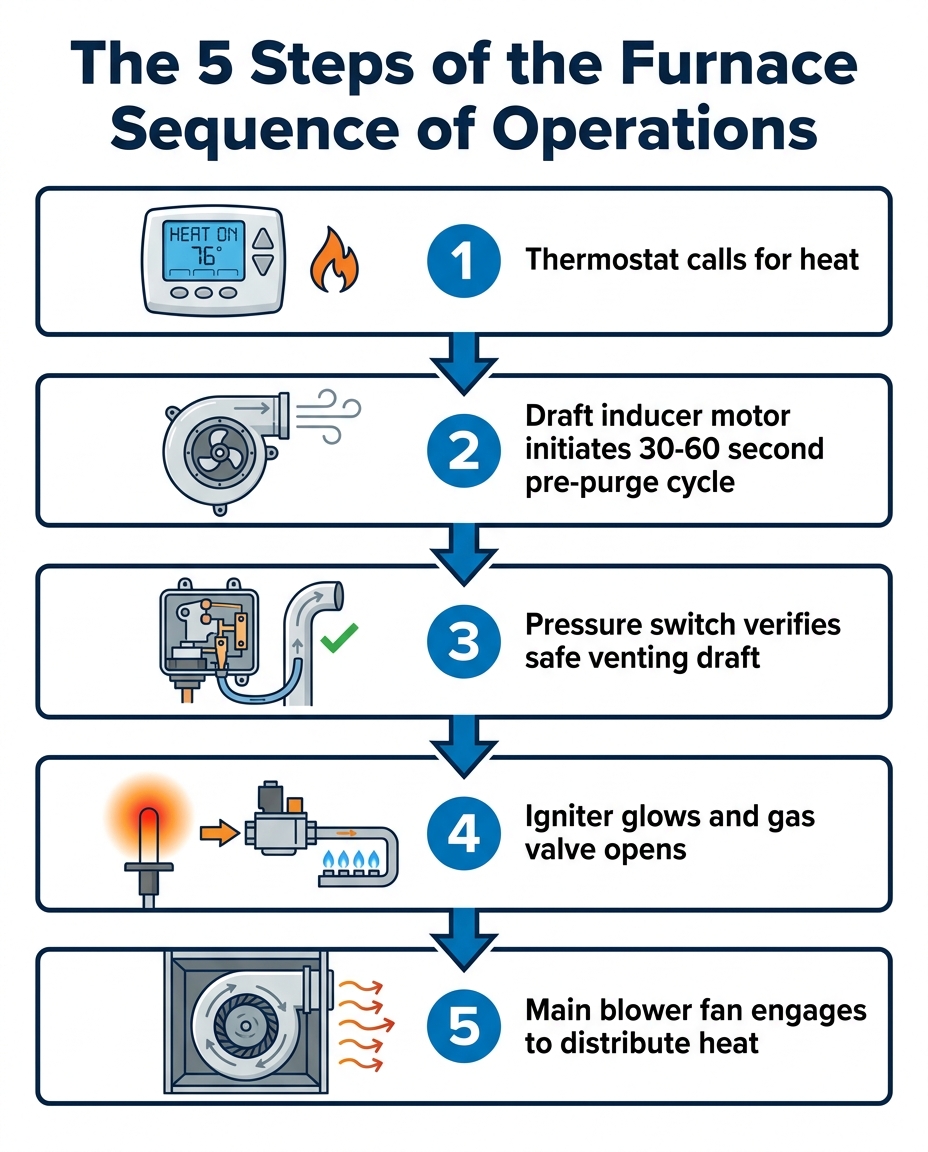
To truly appreciate the role of the draft inducer motor, it helps to understand exactly what happens inside your heating system from the moment you adjust the thermostat. Modern gas furnaces follow a strict, unyielding sequence of operations. If any single step fails, the entire process halts immediately to protect your home.
Here is the step-by-step breakdown of a normal heating cycle:
1. The call for heat: The thermostat detects that the room temperature has dropped below your set point and sends a low-voltage electrical signal to the furnace control board.
2. The pre-purge begins: The control board sends power to the draft inducer motor. The motor spins up to speed, initiating the standard 30 to 60 second pre-purge cycle to clear the heat exchanger of any residual gases.
3. The safety verification: As the inducer motor pulls air, it creates a negative pressure draft. The pressure switch detects this draft, closes its internal contacts, and signals the control board that the flue is clear and venting is safe.
4. Ignition and combustion: With safety verified, the control board sends voltage to the igniter (which will either glow white-hot or spark, depending on your specific model). A few seconds later, the gas valve opens, releasing natural gas over the igniter to light the burners.
5. Heat distribution: The burners heat the metal walls of the heat exchanger. After a brief delay to ensure the air won't be cold, the main blower fan engages to push indoor air over the hot heat exchanger and distribute warm air throughout your home's ductwork.
Why Sequence Matters for Diagnostics
This strict order of operations is the key to troubleshooting your system. Because the sequence halts immediately if a step fails, knowing the order helps you communicate symptoms accurately to a technician. For example, if you understand why your furnace blower keeps running after the burners shut off, you can easily distinguish between a normal post-purge cooling cycle and a system that is stuck in a safety lockout.
The 5 Steps of the Furnace Sequence of Operations
Combustion Safety and the Danger of Bypassing Switches
Modern gas furnaces are engineered with a "fail-safe" philosophy. This means that if a component is going to fail, the system is designed to shut down entirely rather than run in a compromised, potentially dangerous state. If the inducer motor does not pull enough draft to close the pressure switch, the furnace simply locks out. The gas valve will not open, and no combustion will occur.
Unfortunately, a quick search online will often yield terrible advice suggesting that homeowners can temporarily bypass a pressure switch with a piece of wire to force the furnace to run. You should never, under any circumstances, attempt to bypass a safety switch on a gas appliance.
These switches exist to prevent catastrophic outcomes. If you bypass the pressure switch when the draft inducer motor is failing, the furnace will ignite natural gas without a safe pathway for the exhaust. This can lead to a severe buildup of carbon monoxide spilling directly into your living space, or even a localized fire inside the furnace cabinet. The risks are simply too high to leave to guesswork.
At Allied Plumbing Heating & Cooling, our commitment to safety and technical expertise means we treat combustion and venting issues with the utmost seriousness. Trained professionals must handle these critical components. A licensed technician has the specialized manometers and multimeters required to test the exact draft pressure and electrical draw of the inducer motor in your Springfield IL home, ensuring your family stays safe and your equipment operates exactly as the manufacturer intended.
Normal Humming vs. A Failing Inducer Motor
Because the draft inducer motor is often the loudest part of the startup sequence, it is important to know the difference between the normal sound of a 30 to 60 second pre-purge cycle and the mechanical cries of a failing component.
Just last season, a local homeowner reached out to our emergency dispatch on a freezing winter night when their furnace stopped working suddenly. They had heard the furnace trying to start repeatedly, making a terrible grinding noise before shutting down completely. One of our Allied technicians arrived promptly, diagnosed a seized inducer motor, explained the problem clearly, and quickly restored the heat. Recognizing these warning signs early can save you from waking up to a completely cold house.
Here is a breakdown of what to listen for when your furnace starts:
• A smooth, consistent hum for about a minute, followed by a click and a whoosh. — What It Usually Means: Normal operation. The inducer is successfully completing the pre-purge and proving draft. — Required Action: None. Enjoy the warm air.
• A loud grinding, rattling, or squealing noise during startup. — What It Usually Means: Failing inducer motor bearings or an out-of-balance blower wheel inside the inducer housing. — Required Action: Schedule an inspection before the motor seizes completely.
• A faint humming or buzzing, but the motor does not actually spin. — What It Usually Means: A seized motor or a failed capacitor. The furnace will not ignite. — Required Action: Professional repair is required.
• The furnace clicks repeatedly, runs for a minute, shuts off, and tries again. — What It Usually Means: The inducer is running, but the pressure switch is not closing, or the flue is blocked (short cycling without heat). — Required Action: Turn off the system and call for professional diagnostics.
If your system repeatedly tries to start and shuts down without ever producing heat, it is trapped in a safety lockout. This is not a situation that will resolve itself, and it requires emergency furnace service to properly diagnose the root cause.
Overcoming Summer Dormancy and Oxidation
A gas furnace works incredibly hard all winter, but it faces a completely different kind of stress during the off-season. Sitting idle for months at a time allows dust to settle deep inside the cabinet. More importantly, the humid summer climate we experience throughout the Springfield IL region can cause moisture to accumulate on the internal metal components.
This humidity often leads to minor oxidation and rust on the small, sealed bearings of the draft inducer motor. Because the motor has not spun since the spring, this oxidation can cause the bearings to stick. This dormancy makes the very first October pre-winter startup a critical test of the motor's health. The motor has to overcome months of stillness, accumulated dust, and potential rust to spin up to its required RPMs.
If the oxidation is severe, the motor may struggle to start. You might even notice your lights dim slightly as the motor draws too much electrical current trying to break free of the rust, or it may seize up entirely. This is exactly why our team at Allied Plumbing Heating & Cooling highly recommends proactive maintenance before the freezing temperatures arrive.
A professional furnace cleaning service does more than just wipe down the cabinet. A technician will inspect the inducer motor for signs of wear, check the electrical draw to ensure it isn't overworking, and verify that the venting path is completely clear of off-season debris, such as leaves, twigs, or bird nests that often find their way into flue pipes during the summer months.
Common Questions About Furnace Startup Delays and Inducer Motors
Why does my furnace hum for a minute before it lights?
That humming sound is the draft inducer motor running its mandatory safety cycle. Before the gas valve is allowed to open, the furnace must prove that it can safely vent exhaust out of your home. The motor runs for nearly a minute to create a draft and clear the heat exchanger of any stagnant air.
What is the pre-purge cycle on a gas furnace?
The pre-purge cycle is a programmed 30 to 60 second pre-purge cycle where the inducer motor runs before ignition. Its primary purpose is to sweep out any residual, unburned natural gas or carbon monoxide left over from a previous heating cycle. This ensures the combustion chamber is completely safe before a spark or glowing igniter is introduced.
Can a furnace run without a draft inducer motor?
No, a modern high-efficiency or mid-efficiency gas furnace cannot run without a functioning draft inducer motor. If the motor fails to turn on or fails to pull enough air, the pressure switch will remain open. The furnace's control board will recognize this safety fault and lock out the ignition sequence to prevent carbon monoxide buildup.
Is a noisy inducer motor dangerous?
While a noisy inducer motor is not immediately dangerous, it is a strong warning sign of impending failure. Grinding, squealing, or rattling noises usually indicate that the motor's bearings are wearing out or the internal fan wheel is damaged. If left ignored, the motor will eventually seize, causing the furnace to shut down completely when you might need it most.
How do I know if my draft inducer motor is bad?
The most common signs of a bad inducer motor include loud mechanical noises during startup, a motor that gets very hot to the touch but won't spin, or a furnace that repeatedly tries to start but shuts down before the burners ignite. You may also notice a faint electrical humming sound without any actual air movement. A professional technician can test the electrical draw to confirm if the motor has failed.
Why does my furnace click but won't ignite?
If your furnace clicks repeatedly but never achieves ignition, it is likely failing a safety check during the sequence of operations. The clicking is often the sound of relays on the control board or the gas valve attempting to open, but if the inducer motor hasn't proven a safe draft, the system will abort the startup. This requires professional diagnosis to determine if the issue lies with the motor, the pressure switch, or a blocked flue.
Trust the Professionals for Safe Heating Performance
When you turn on your thermostat for that October pre-winter startup, that initial humming delay isn't a nuisance—it is a sign that your furnace is actively protecting your home and your family. The draft inducer motor and its accompanying safety switches work together to ensure that every single heating cycle begins with a perfectly clear, safely vented combustion chamber.
However, if that startup sequence fails, or if the normal hum turns into a loud, grinding struggle, it requires expert diagnosis, not guesswork. Tampering with combustion components or ignoring warning signs can lead to serious safety hazards. If you notice unusual noises, delayed ignition issues, or a system that refuses to blow warm air, it is always best to let a licensed professional handle the repair. Schedule an inspection with Allied Plumbing Heating & Cooling today to ensure your heating system remains a safe, reliable source of comfort all winter long.
The Role of the Draft Inducer Motor in Safely Starting Your Gas Furnace
October 12, 2026
When you turn on your heater for the first fall chill, that initial 60-second humming isn't a malfunction. It's the pre-purge cycle clearing residual gases to protect your home.
When you turn on your heater for the first fall chill, that initial 60-second humming isn't a malfunction. It's the pre-purge cycle clearing residual gases to protect your home.
Identifying Older Galvanized Pipes in Historic Chatham Homes Before Winter Hits
October 10, 2026
Freezing temperatures put immense stress on pre-1960s plumbing. Spotting hidden internal corrosion early helps you decide if a drop in water pressure warrants a professional inspection.
Freezing temperatures put immense stress on pre-1960s plumbing. Spotting hidden internal corrosion early helps you decide if a drop in water pressure warrants a professional inspection.
Standard vs Modulating Gas Valves for Consistent Heating in Two-Story Homes
October 9, 2026
Extreme temperature differences between floors often come down to your furnace's gas valve. See how a modulating system balances airflow to eliminate hot and cold zones.
Extreme temperature differences between floors often come down to your furnace's gas valve. See how a modulating system balances airflow to eliminate hot and cold zones.