Standard vs Modulating Gas Valves for Consistent Heating in Two-Story Homes
Standard vs Modulating Gas Valves for Consistent Heating in Two-Story Homes
Why Your Second Floor Feels Like Summer While the First Floor Feels Like Fall
Are you tired of constantly adjusting the thermostat because your upstairs bedrooms are sweltering while the living room feels like a refrigerator? If you are researching standard vs modulating gas valves for consistent heating in two-story homes, you are already asking the right questions. Many homeowners assume that extreme temperature differences between floors are just an unfixable quirk of their house, or perhaps a sign of failing insulation. However, the root cause often lies entirely within the metal cabinet of your furnace.
When you start turning on your heating system this fall, those drastic indoor temperature differences will likely become obvious again. The culprit is rarely just drafty windows; it is frequently the type of gas valve operating inside your heating equipment. If your system relies on outdated, single-stage technology, it simply lacks the mechanical ability to balance temperatures across multiple floors. Deciding whether upgrading to a modern modulating gas valve is the right long-term solution requires a clear understanding of how different systems manage airflow. If you are struggling with these dramatic hot and cold zones, exploring professional home heating services can help you evaluate the best path forward for whole-house comfort.
The Physics of Heat Stratification in Multi-Level Architecture
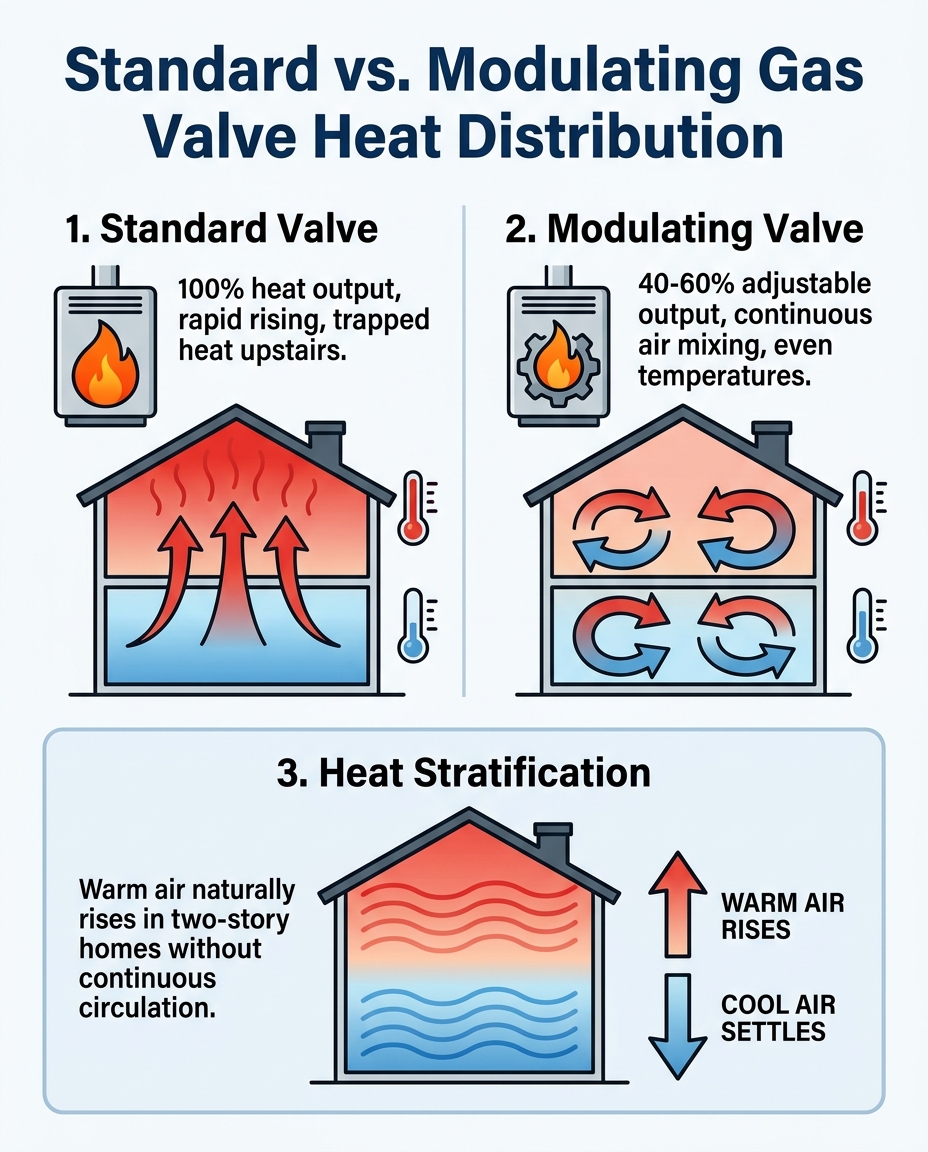
To understand why your furnace struggles to heat your house evenly, we first have to look at the basic physics of thermal stratification. Warm air is naturally less dense than cold air. Because it is lighter, warm air will always seek the highest possible point in an enclosed space. In a single-story ranch home, this isn't a massive issue. But in Springfield IL two-story homes, this natural physical property creates a significant comfort challenge.
Open stairwells act like massive indoor chimneys. When your furnace pushes warm air into your living spaces, that heat immediately begins funneling up the stairs, accumulating in the upper bedrooms and hallways while leaving the main floor feeling drafty and cool. This effect becomes especially noticeable during unpredictable Midwest autumns. We frequently experience October temperature swings with cool mornings and mild afternoons. When the outdoor temperature drops 40 degrees overnight, your heating system is forced to react abruptly, pumping out intense heat that rapidly rises to the second floor before it ever has a chance to warm the downstairs living areas.
If you have been diagnosing a second floor that stays significantly hotter or colder, you are witnessing thermal stratification in action. The way your furnace delivers its heat will either exacerbate this architectural challenge or actively solve it.
How Lack of Zoned Ductwork Contributes to the Problem
The layout of your home's ductwork plays a massive role in this temperature imbalance. Many older multi-level homes were built with a single, centralized duct system controlled by one thermostat located on the first floor.
• The sensor blind spot: Because the thermostat is downstairs, it only measures the temperature of the first floor.
• The endless heating loop: As the warm air naturally escapes up the stairwell, the downstairs area remains cool. The thermostat senses this chill and continues calling for more heat.
• The overheating effect: The furnace keeps running to satisfy the downstairs thermostat, inadvertently pumping more and more trapped heat into the already-sweltering second floor.
Without separate thermostats and motorized dampers to direct airflow (a zoned system), the house relies entirely on the furnace's blower motor to mix the air. This is where the specific type of gas valve inside your furnace becomes the deciding factor in your daily comfort.
The Limitations of Standard Single-Stage Gas Valves
The Problem: A standard single-stage gas valve operates like a simple light switch. It is either 100% on or 100% off. There is no middle ground, no low setting, and no ability to adjust to the specific weather conditions outside. When your thermostat calls for heat, a single-stage furnace immediately fires up at maximum capacity, blasting a massive volume of hot air into your ductwork.
The Cause: This "blast" effect is exactly what drives severe heat stratification. Because the furnace is delivering heat so rapidly and intensely, that incredibly hot air immediately shoots up the stairwell to the second floor. Furthermore, standard single-stage furnaces are notorious for short-cycling during mild weather. Because they treat mild autumn days with the same intensity as deep winter blizzards, they heat the downstairs area very quickly, shut off, and then turn back on a few minutes later when the downstairs cools off again.
The Solution: When comparing single-stage vs. modulating gas valve furnaces, it becomes clear that the rapid stop-and-start nature of a single-stage system is the core issue. The blower motor simply does not run long enough during these short cycles to pull the trapped warm air down from the second floor and mix it with the cooler air downstairs. Upgrading the valve technology changes the entire delivery method.
How Modulating Gas Valves Provide Continuous Air Mixing
A modulating gas valve is a massive leap forward in heating technology. Instead of operating like a simple on/off switch, a modulating valve functions more like the gas pedal in a car. It can adjust its heating output in precise, small increments, often running anywhere between 40% and 100% of its total capacity based on exactly what the home needs at that exact moment.
During those mild October temperature swings with cool mornings and mild afternoons, a modulating furnace will rarely run at full capacity. Instead, it will drop down to a low, steady output—perhaps just 40% capacity. Because the heat output is lower, the furnace has to run for a much longer duration to satisfy the thermostat.
This longer, low-intensity heating cycle is the secret to solving uneven temperatures. Because the furnace is running continuously at a low speed, the blower motor is also running continuously. This constant circulation actively pulls air from all parts of the house, mixing the cooler downstairs air with the trapped heat upstairs. By keeping the air moving constantly, a modulating system physically prevents warm air from stagnating on the second floor.
Beyond comfort, avoiding the constant stop-and-start cycles of older systems significantly reduces wear and tear on the equipment while lowering energy consumption. If you are exploring high-efficiency HVAC products, you will find that modulating technology consistently ranks at the top for both energy conservation and whole-house temperature balancing.
Side-by-Side Comparison: Single-Stage vs. Modulating Systems
To make the best decision for your home, it helps to see exactly how these two technologies stack up against each other when operating in a multi-level environment. When evaluating single-stage vs. modulating gas valve furnaces, the differences in daily operation are stark.
• Heat Delivery Method — Standard Single-Stage Valve: 100% maximum output blast every time it turns on. — Modulating Gas Valve: Precise, adaptable increments (often 40% to 100% output).
• Air Circulation & Mixing — Standard Single-Stage Valve: Intermittent, short bursts that fail to mix upper and lower air. — Modulating Gas Valve: Continuous, steady circulation that actively blends air across floors.
• Temperature Consistency — Standard Single-Stage Valve: High fluctuations, drafty main floors, and hot upper bedrooms. — Modulating Gas Valve: Steady, uniform temperatures across the entire home.
• Mild Weather Performance — Standard Single-Stage Valve: Prone to short-cycling; treats mild fall days like winter blizzards. — Modulating Gas Valve: Highly adaptable; runs at low speeds to match changing daily weather.
• Energy Efficiency — Standard Single-Stage Valve: Lower efficiency due to frequent stop-and-start energy spikes. — Modulating Gas Valve: High efficiency due to long, low-power continuous operation.
Standard vs. Modulating Gas Valve Heat Distribution
Retrofitting Modern Modulating Technology into Older Homes
A common concern for homeowners is whether their existing house can even support this advanced technology. Many older Springfield IL two-story homes were built decades ago, long before modern zoned ductwork or smart thermostats were standard.
The good news is that tearing down drywall to install complicated new ductwork is often entirely unnecessary. Upgrading the furnace itself is a non-invasive solution that works directly with your existing infrastructure. When you pair a modulating gas valve with an advanced variable-speed blower motor, the furnace essentially mimics the benefits of a zoned duct system simply by keeping the indoor air moving continuously.
Retrofitting this modern technology into older architecture is a standard procedure for experienced technicians. Relying on multi-generational, family-owned expertise means working with professionals who have spent decades successfully retrofitting modern modulating furnaces into older, existing two-story homes in the area. We understand the specific quirks of local home layouts, from narrow return vents to uninsulated stairwells, and know exactly how to calibrate a new modulating system to overcome those architectural hurdles.
When to Evaluate Your Current Heating Equipment
How do you know if your current furnace is simply struggling or actively failing? As the weather cools down, your heating system will start giving you clear signals that its single-stage valve is no longer adequate for your comfort needs. Pay attention to these warning signs:
• Frequent short-cycling: The furnace turns on, blasts heat for five minutes, shuts off, and turns right back on a few minutes later during mild fall evenings.
• Extreme temperature gaps: You experience the daily frustration of waking up to a freezing first floor while the upstairs bedrooms are sweltering.
• Loud, aggressive startups: A noticeable "boom" or rush of air every time the system kicks on, indicating a 100% capacity blast rather than a smooth, gradual startup.
• Constantly adjusting the thermostat: You find yourself manually turning the heat up and down throughout the day to compensate for October temperature swings with cool mornings and mild afternoons.
Unexpected breakdowns often happen on the first truly cold night of the season when an aging single-stage system is finally pushed to its absolute limit. One local homeowner experienced exactly this when their aging furnace quit working unexpectedly on a freezing 20-degree fall night. They reached out for help, and our team routed technicians to the property the very next morning to inspect the system, thoroughly explain the underlying mechanical problem, and resolve the issue quickly so the household could warm back up.
To avoid emergency situations, we highly recommend scheduling a thorough seasonal inspection now. A professional assessment will determine if your current gas valve is operating safely and effectively, or if it is time to plan for an upgrade.
Frequently Asked Questions About Furnace Gas Valves
Why is my second floor so much hotter than my first floor in the fall?
Warm air naturally rises due to thermal stratification, escaping up your stairwell to the second floor. In the fall, mild weather causes standard single-stage furnaces to run in short, aggressive bursts. These short cycles don't give the blower motor enough time to circulate and mix the air, leaving all the heat trapped upstairs while the downstairs stays cold.
How does a modulating gas valve work?
A modulating gas valve adjusts its heating output in tiny, precise increments based on the exact temperature needs of the home. Instead of blasting at 100% capacity every time, it can run at lower levels (like 40% or 60%) for longer periods. This steady, low-intensity operation keeps the home consistently warm without dramatic temperature spikes.
Is a modulating furnace better for a two-story house?
Yes, it is highly recommended for multi-level homes. Because modulating furnaces run for longer cycles at lower speeds, the blower motor continuously mixes the air between the first and second floors. This constant circulation prevents warm air from stagnating upstairs, effectively solving the hot-upstairs/cold-downstairs problem.
What is the difference between a single stage and a modulating furnace?
When comparing single-stage vs. modulating gas valve furnaces, the difference is adaptability. A single-stage furnace only has one setting: 100% on or fully off, which often leads to uneven heating and short-cycling. A modulating furnace adjusts its output up and down like a dimmer switch, providing exactly the amount of heat needed to maintain a steady temperature.
Do modulating furnaces run constantly?
They do run much more frequently than standard furnaces, but at a much lower intensity. This continuous, low-speed operation is entirely intentional. It uses less energy than the constant stop-and-start spikes of a standard furnace while keeping the indoor air perfectly mixed and comfortable.
Will a modulating gas valve fix a drafty downstairs?
In most cases, yes. A drafty downstairs is often caused by warm air rapidly escaping upward, leaving cold air behind. By running continuously at a low speed, a modulating gas valve keeps pushing warm air into the downstairs space while pulling the trapped hot air down from upstairs, eliminating those cold, drafty pockets.
Achieve Whole-House Comfort This Fall
A clear understanding of gas valve differences empowers homeowners to finally solve chronic uneven heating. You do not have to settle for a home where half the rooms are uncomfortable. By moving away from outdated single-stage blasts and embracing the continuous, even air mixing of modulating technology, you can balance the temperatures across every level of your Springfield IL two-story home.
Every house has a unique layout, and a professional assessment can determine exactly which equipment will best serve your specific floor plan and ductwork. Don't wait until your aging system fails on the coldest night of the year. Reach out for an expert consultation regarding furnace replacement and installation before the deep winter freeze arrives, and enjoy consistent, whole-house comfort all season long.
Standard vs Modulating Gas Valves for Consistent Heating in Two-Story Homes
October 9, 2026
Extreme temperature differences between floors often come down to your furnace's gas valve. See how a modulating system balances airflow to eliminate hot and cold zones.
Extreme temperature differences between floors often come down to your furnace's gas valve. See how a modulating system balances airflow to eliminate hot and cold zones.
Why Your Furnace Blower Keeps Running After the Burners Shut Off
October 8, 2026
That cool breeze from your vents after a heating cycle isn't always a malfunction. Understand how the fan limit switch actively protects your heat exchanger from cracking.
That cool breeze from your vents after a heating cycle isn't always a malfunction. Understand how the fan limit switch actively protects your heat exchanger from cracking.
Why Combining Water Heater Replacement and Furnace Maintenance Saves Money
October 7, 2026
Your furnace needs a pre-winter tune-up, but that aging water heater is also failing. Bundling these services eliminates redundant labor and preps your home for freezing temps.
Your furnace needs a pre-winter tune-up, but that aging water heater is also failing. Bundling these services eliminates redundant labor and preps your home for freezing temps.