Why Your Furnace Blower Keeps Running After the Burners Shut Off
Why Your Furnace Blower Keeps Running After the Burners Shut Off
The Chilly Surprise of an Unstoppable Furnace Blower
If you are wondering why your furnace blower keeps running after the burners shut off during that first mid-fall October heating startup, you are certainly not alone. At Allied Plumbing Heating & Cooling, our dispatchers field dozens of calls every autumn from local residents asking this exact question. The transition from late summer to autumn brings a familiar routine to the Midwest: the temperatures drop, you turn on the heating system for the first time in months, and you listen for the comforting sound of the system roaring to life. The thermostat clicks, the burners ignite, the blower engages, and the house warms up beautifully. But then the heating cycle ends, the flames extinguish, and the fan simply refuses to quit.
During cold mid-fall nights in the region, a continuous blower can circulate unheated, drafty air, making your home feel chilly despite the heating cycle having just finished. Homeowners immediately worry when they feel this cool breeze coming from the vents. Is the system completely broken? Is it wasting massive amounts of energy? Why is it blowing cold air when the house is supposed to be warming up?
The good news is that this extended blowing is often a deliberate mechanical function rather than a sudden, catastrophic malfunction. Modern heating systems are designed with strict safety protocols, and the blower motor plays a crucial role in those protocols. Before you assume the worst and call for heating services, it helps to understand exactly what your equipment is doing behind the scenes. Our goal is to help you distinguish between a completely normal safety cool-down cycle and a genuinely stuck switch that requires professional attention, ensuring your home remains both comfortable and safe throughout the winter season.
Understanding the Fan Limit Switch: Your Furnace's Thermal Guardian
To understand the blower motor's behavior, we first need to look at the brain behind the operation: the fan limit switch. While your wall thermostat monitors the ambient air temperature inside your living room, the fan limit switch monitors the intense internal temperature inside the furnace itself—specifically within the supply plenum right above the heat exchanger.
When you set your thermostat to warm up your Springfield IL area home, the burners ignite and generate intense heat inside the combustion chamber. However, the blower fan does not turn on immediately. If it did, it would blast cold air into your rooms before the furnace had a chance to warm up. Instead, the fan limit switch waits patiently. Its temperature probe extends directly into the airflow, constantly measuring the heat. Once the internal chamber reaches a specific, high temperature, the switch clicks and kicks the fan on, delivering warm, comfortable air into your ductwork.
Conversely, when the room reaches your desired temperature, the wall thermostat tells the burners to shut down. The flames go out, but the internal chamber is still incredibly hot. If the fan stopped immediately, all that intense heat would remain trapped inside the metal casing. The fan limit switch recognizes this danger and keeps the blower running until that internal temperature drops back down to a safe, manageable level.
This sequence of operations is entirely separate from what your wall thermostat is doing. If you are already familiar with diagnosing a furnace flame sensor, you know that modern heating equipment relies on a complex network of safety sensors to operate properly. The fan limit switch is one of the most critical sensors in that entire network, acting as the ultimate thermal guardian for your equipment by strictly controlling when the blower motor is allowed to rest.
Why a Post-Cycle Cool-Down is a Critical Safety Feature
The Problem: When the heating cycle ends, a massive amount of residual heat remains trapped inside the metal heat exchanger. The heat exchanger is the core component of your furnace, responsible for transferring the heat from the combustion gases into the clean air circulating through your home. If the system simply shut everything off at once, that trapped heat would have nowhere to go, causing the internal temperature to spike dangerously high.
The Cause: Metal naturally expands when it gets hot and contracts when it cools. If the heat exchanger is left to bake in its own trapped heat without any airflow to dissipate it, the metal experiences severe thermal stress. Over time, this rapid fluctuation and trapped extreme heat lead to metal fatigue. It is similar to bending a paperclip back and forth; eventually, the metal weakens and snaps. In a furnace, the metal will eventually crack under the immense strain of uncontrolled thermal expansion.
The Solution: The fan limit switch prevents this exact scenario. It keeps the blower running to actively cool the heat exchanger down at a gradual, controlled pace. By pushing the remaining warm air out into your ductwork during that mid-fall October heating startup, the system protects its most vital components from catastrophic failure. As a local family-owned HVAC business, our expert technicians at Allied Plumbing Heating & Cooling emphasize safety and longevity above all else, ensuring the fan limit switch properly protects the heat exchanger from cracking. This gradual cooling process is also why professional furnace cleaning is so important—a clean, well-maintained system cools down much more efficiently than one coated in insulating dust.
The Danger of Carbon Monoxide
A cracked heat exchanger is not just an expensive repair; it is a serious, life-threatening safety hazard. The heat exchanger is the only physical barrier separating the toxic combustion gases—like carbon monoxide—from the clean breathing air circulating through your vents.
If thermal stress causes that metal to crack, those deadly, odorless gases can leak directly into your living spaces. Proper fan limit switch operation is your very first line of defense against this dangerous wear and tear. By ensuring the heat exchanger cools down safely after every single cycle, the limit switch actively prevents the metal fatigue that leads to carbon monoxide leaks, keeping your household safe and healthy all winter long.
Normal Operation vs. A Malfunctioning System
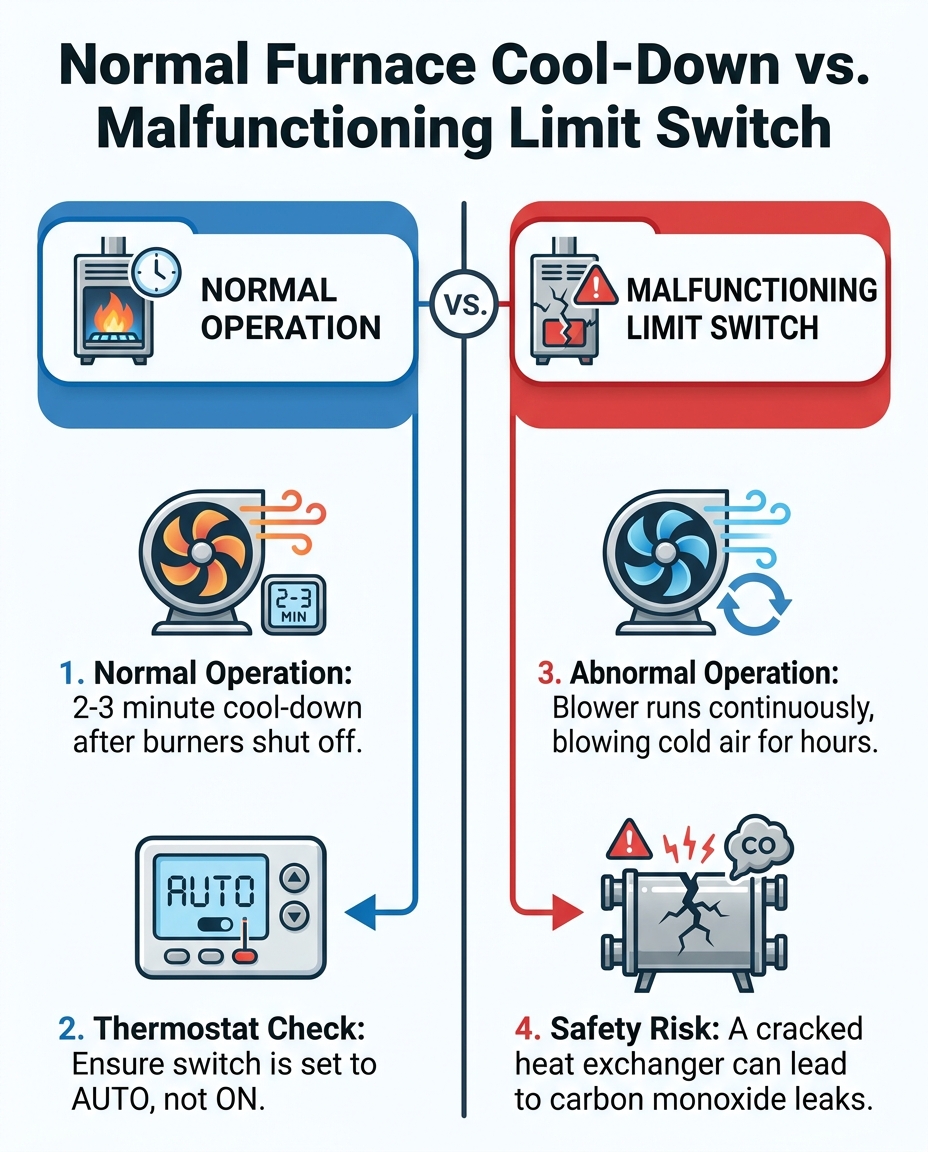
How do you know if your fan is performing a normal, necessary cool-down or if it is actually broken? In our years of servicing heating equipment across Springfield IL area homes, our team typically sees a normal cool-down cycle lasting roughly two to three minutes after the burners shut down. If the fan runs significantly longer than that, or never shuts off at all, you need to investigate further.
• Fan runs 2 to 3 minutes after heat stops — Likely Cause: Normal safety cool-down cycle — Required Action: None; the system is operating perfectly and protecting the heat exchanger.
• Fan runs continuously, blowing cool air — Likely Cause: Thermostat switch accidentally set to "ON" instead of "AUTO" — Required Action: Switch the fan setting on the thermostat back to "AUTO".
• Fan runs endlessly even on "AUTO" setting — Likely Cause: Stuck or faulty fan limit switch — Required Action: Requires professional electrical testing and component replacement.
• Intermittent endless running, unresponsive to settings — Likely Cause: Bad thermostat relay communicating poorly with the blower — Required Action: Requires professional thermostat diagnostics and potential replacement.
The most common non-mechanical reason for a continuous fan is surprisingly simple: someone accidentally bumped the thermostat fan setting to 'ON' instead of 'AUTO'. When set to 'ON', the blower motor will run 24 hours a day, regardless of whether the furnace is actively heating. Always check this setting first before assuming a part is broken. Additionally, some modern smart thermostats have a "circulation" mode that runs the fan for a set number of minutes per hour to filter the air; ensure this feature is not causing the confusion.
If the thermostat is set correctly to 'AUTO' but the fan continues blowing cold air for hours on end, you are likely dealing with a genuinely stuck limit switch or a bad thermostat relay. At this point, the safety mechanism has failed, and the system requires professional intervention.
Normal Furnace Cool-Down vs. Malfunctioning Limit Switch
The Hidden Risks of Ignoring a Stuck Blower Fan
If you confirm that the fan is genuinely stuck, you might be tempted to just let it run. After all, it is just moving air through the house, right? Unfortunately, in our experience, ignoring a stuck blower fan introduces several hidden risks to your home, your comfort, and your wallet.
Massive Energy Waste: Your furnace blower motor is a high-voltage component designed to move a massive volume of air. Running it 24 hours a day, seven days a week consumes a tremendous amount of electricity. This constant operation will quickly show up as an unexpected spike on your next utility bill.
Decreased Indoor Comfort: As mentioned earlier, a continuous fan pushes unheated air through your ductwork. During a mid-fall October heating startup, the air moving through the ducts will eventually match the temperature of your unheated basement or attic. This constant circulation of drafty, room-temperature air creates a wind-chill effect, making your home feel much colder than the thermostat reading suggests.
Accelerated Wear and Tear: Blower motors are designed to run in cycles, taking necessary breaks between heating demands. Forcing the motor to run non-stop accelerates wear and tear on the internal bearings, the run capacitor, and the electrical windings. We often see this continuous strain drastically reduce the lifespan of the motor, leading to a premature and costly breakdown.
Severe Overheating Risks: The most concerning risk is that a malfunctioning limit switch is completely unpredictable. If it fails to turn the fan off, it might also fail to turn the fan on during the next heating cycle. Without the blower motor pushing the heat out of the combustion chamber, the furnace will quickly overheat and shut down entirely via a secondary safety trip. Ignoring the issue leaves you vulnerable to a complete system failure, putting you in immediate need of an emergency furnace repair on a freezing winter night.
Why Proper Diagnosis Requires a Professional Touch
When dealing with a faulty limit switch, the internet is full of quick-fix tutorials and bypass tricks. However, testing and replacing a fan limit switch requires interacting directly with high-voltage electrical components and the sensitive gas heating chamber. DIY limit switch replacement is highly dangerous, strictly discouraged, and can easily void your manufacturer warranty.
This is not a simple maintenance task like swapping out an air filter. It requires professional tools, specific electrical training, and a deep understanding of furnace safety protocols to ensure the system remains safe to operate. Here is what an Allied Plumbing Heating & Cooling professional technician does during a proper diagnosis:
1. High-Voltage Electrical Testing: The technician uses specialized multimeters to test the voltage and continuity across the limit switch, the control board, and the thermostat relay to pinpoint the exact point of electrical failure.
2. Safe Component Replacement: If the switch is stuck closed, they safely isolate the power, remove the faulty high-voltage component, and install an exact, manufacturer-approved replacement part calibrated for your specific furnace model.
3. Thorough Heat Exchanger Inspection: Because a faulty switch often points to historical overheating issues, the technician will visually inspect the heat exchanger for any signs of thermal stress, metal fatigue, or hairline cracks to ensure the system is safe from carbon monoxide risks.
4. System Calibration and Cycling: Finally, they cycle the furnace through a complete heating demand to ensure the new switch turns the blower on and off at the precise, safe temperatures required by the manufacturer.
Positioning professional maintenance as an investment in your home's safety and equipment longevity is the best approach. For example, our team recently visited a local homeowner who needed routine furnace maintenance and a tune-up before the cold weather set in. We arrived promptly, performed a thorough inspection of the entire system, and ensured the furnace was successfully tuned up and checked. Catching mechanical quirks early through annual furnace maintenance prevents major, unsafe breakdowns later in the season for Springfield IL area homes. Also, keep in mind that federal tax credits or utility rebates may apply to qualifying high-efficiency upgrades if your current system is beyond repair, so it is always a good idea to verify current programs with your utility provider or a tax professional.
Frequently Asked Questions About Furnace Blower Operation
How long should a furnace fan run after the heat turns off?
A furnace fan typically runs for 2 to 3 minutes after the heating cycle ends. This brief period is just long enough to cool the heat exchanger safely and push the remaining warm air into your living spaces. If it runs significantly longer during your mid-fall October heating startup, there may be a mechanical issue requiring attention.
Why is my furnace blowing cold air after the heating cycle?
Your furnace blows cooler air at the end of a cycle because the burners have stopped producing heat. The fan is simply pushing the remaining ambient air through the ducts to cool the internal components. Once the internal chamber reaches a safe temperature, the fan should shut down automatically.
Is it bad if my furnace fan runs continuously?
Yes, letting your furnace fan run continuously when it shouldn't is generally a bad idea. It wastes a significant amount of electrical energy and creates uncomfortable drafts throughout the house. Furthermore, it adds unnecessary wear and tear to the blower motor, potentially leading to premature failure of the equipment.
What does a furnace fan limit switch do?
The furnace fan limit switch monitors the intense internal temperature of the furnace chamber. It turns the blower on when the internal air is hot enough to warm your home, and it turns the blower off when the system has safely cooled down. It serves as a critical safety mechanism to prevent the equipment from overheating and cracking.
Can a bad thermostat cause the fan to stay on?
Yes, a faulty thermostat relay can definitely cause the fan to stay on indefinitely. If the relay gets stuck, it sends a continuous electrical signal to the blower motor, commanding it to run even when the heating cycle is over. This often mimics the exact symptoms of a bad limit switch, which is why professional diagnostics are essential to pinpoint the true cause.
Ensure Your System is Ready for the Cold Months Ahead
Understanding how your furnace operates brings incredible peace of mind as the temperatures drop and the winter weather approaches. While a brief cool-down period is a perfectly normal and necessary safety feature, a blower that runs continuously warrants a closer, professional look. Do not let a minor mechanical quirk turn into a major, unexpected breakdown in the middle of a freezing night.
For residents in Springfield IL area homes, ensuring your limit switch and heat exchanger are in perfect working order is the best way to guarantee a warm, comfortable, and safe season. Schedule a seasonal check with Allied Plumbing Heating & Cooling today to keep your heating system running efficiently, protect your vital components from thermal stress, and enjoy true comfort all winter long.
Why Your Furnace Blower Keeps Running After the Burners Shut Off
October 8, 2026
That cool breeze from your vents after a heating cycle isn't always a malfunction. Understand how the fan limit switch actively protects your heat exchanger from cracking.
That cool breeze from your vents after a heating cycle isn't always a malfunction. Understand how the fan limit switch actively protects your heat exchanger from cracking.
Why Combining Water Heater Replacement and Furnace Maintenance Saves Money
October 7, 2026
Your furnace needs a pre-winter tune-up, but that aging water heater is also failing. Bundling these services eliminates redundant labor and preps your home for freezing temps.
Your furnace needs a pre-winter tune-up, but that aging water heater is also failing. Bundling these services eliminates redundant labor and preps your home for freezing temps.
Why Is My Furnace Blowing Cold Air or Smelling Like Burning? Common Startup Questions
October 6, 2026
Smelling burning dust on the first chilly night? Get clear answers on when to wait it out or call a pro with these common homeowner questions answered.
Smelling burning dust on the first chilly night? Get clear answers on when to wait it out or call a pro with these common homeowner questions answered.