Why Combining Water Heater Replacement and Furnace Maintenance Saves Money
Why Combining Water Heater Replacement and Furnace Maintenance Saves Money
The October Dilemma: Prepping Your Home's Core Systems for Winter
October is officially here, and the critical window for your pre-winter heating startup is closing fast. As the chill sets in, many homeowners find themselves asking exactly why combining water heater replacement and furnace maintenance saves money before freezing temperatures arrive. In our years of serving the Springfield area, our team sees this situation constantly: you know your heating system needs its annual tune-up to handle the coming freeze, but sitting right next to it is an aging water heater that has been showing unmistakable signs of failure. The primary decision point is whether to handle these essential tasks in separate appointments or bundle them together for maximum efficiency.
For comprehensive heating services and professional plumbing solutions, tackling both systems at once is the smartest move you can make. When you schedule a furnace tune-up while knowing the water heater is nearing the end of its lifespan, you are essentially looking at two overlapping projects in the exact same footprint of your home. Handling them simultaneously eliminates redundant labor, reduces the number of times a technician has to set up their workspace, and guarantees that your home is fully prepared for the harsh winter months ahead.
Signs your water heater might not survive the winter:
• Rumbling or popping noises: Heavy sediment buildup at the bottom of the tank forces the burner to work overtime.
• Inconsistent water temperatures: A failing heating element or damaged dip tube will leave you with lukewarm showers.
• Visible rust or moisture: Any pooling water or corrosion around the base of the tank indicates an impending structural failure.
• Increased age: Traditional tank water heaters typically last about a decade before efficiency drops off sharply.
Addressing these warning signs during your October pre-winter heating startup prevents a mid-winter emergency. By having our professionals assess the entire mechanical footprint in a single visit, you ensure that both of your home's most vital winter systems are ready to perform when you need them most.
The Mechanical Reality of Shared Utility Spaces
The physical layout of your home plays a massive role in why bundled services make sense. As a local contractor, we know firsthand that most Springfield IL basements and shared utility spaces are tightly packed. Furnaces and water heaters are rarely installed on opposite sides of the house; they are usually sitting shoulder-to-shoulder in a cramped utility closet or a designated mechanical corner of the basement. This proximity is not a coincidence. Builders place them together so they can share access to gas lines, electrical circuits, and exterior venting systems.
Because these units share the same physical space, the cause of high service costs often comes down to repetitive labor. If you hire a technician to maintain your furnace in October, they have to clear access to the utility area, lay down protective drop cloths, bring in their diagnostic tools, and set up their workspace. If you call someone back in December because your water heater finally failed, that second technician has to perform the exact same preparatory steps all over again.
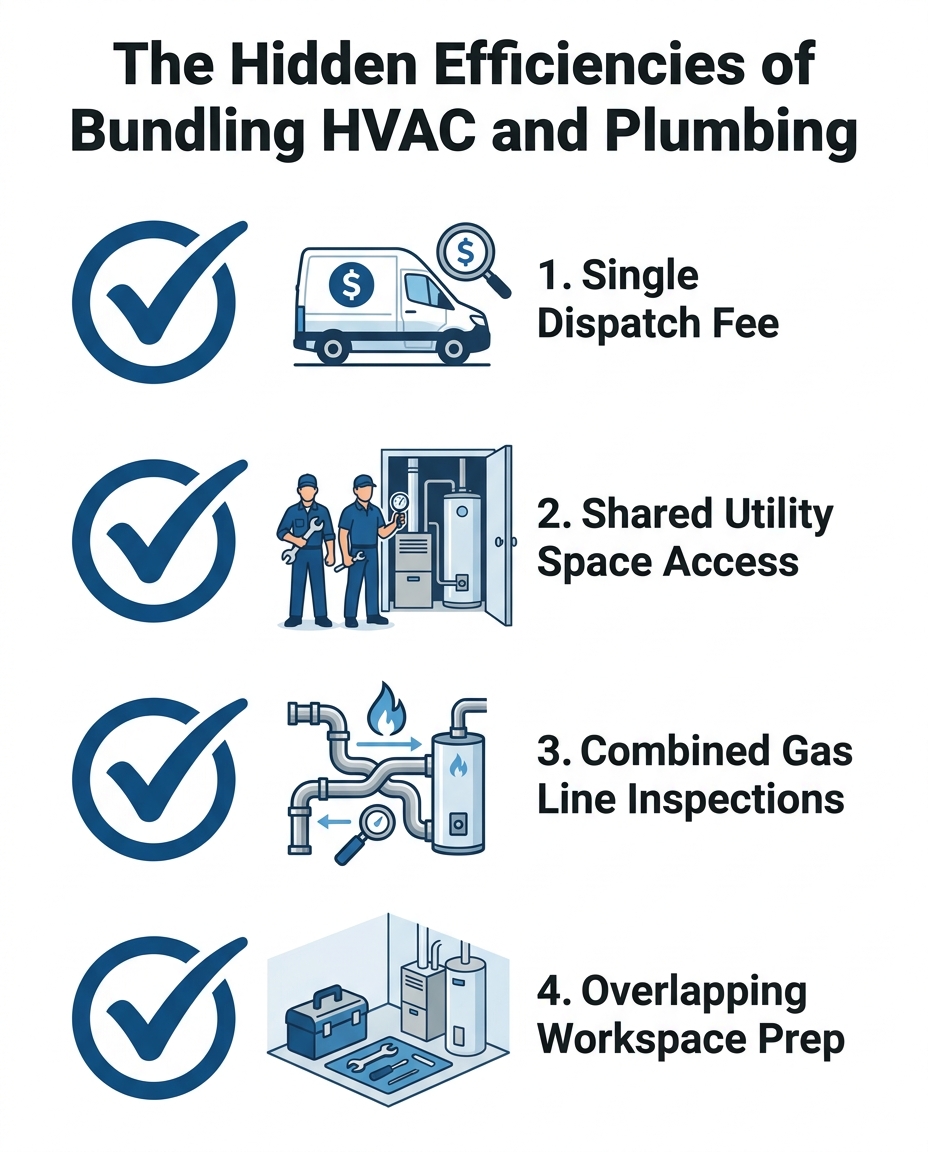
The solution is to leverage the physical proximity of these systems. Overlapping workspace preparation only needs to happen once when tasks are combined. A technician can lay down their protective gear, clear the necessary access paths, and begin working on both units seamlessly. Space heating and water heating combined account for nearly two-thirds of home energy use, making their simultaneous operation and maintenance critical to your overall home efficiency.
Maximizing Workspace Efficiency
Single-visit access dramatically reduces disruption to your household. You do not have to clear out utility room storage, move boxes, or rearrange your basement twice. You also avoid the hassle of coordinating your schedule to be home for multiple service windows.
• Separate Visits — Workspace Preparation: Technicians must lay drop cloths, haul tools, and clear access twice. — Household Disruption: Requires scheduling two separate days off or adjusting work hours twice. — System Assessment: Systems are evaluated in isolation, missing potential shared issues.
• Bundled Service — Workspace Preparation: Setup and breakdown happen exactly once for both appliances. — Household Disruption: One single service window covers all mechanical upgrades. — System Assessment: Technician evaluates the entire shared gas and venting infrastructure at once.
When a professional can stand in one spot and evaluate the total mechanical health of your utility room, they can identify potential hazards that might be missed if the systems were viewed in isolation. This holistic approach ensures that your home operates safely and efficiently all winter long.
Labor Efficiencies and the Single-Visit Advantage
Every time a service vehicle rolls out to your property, there are built-in logistical costs. Separate service calls require redundant travel time, multiple dispatch logistics, and separate diagnostic periods. When you bundle a water heater replacement with your annual furnace maintenance, you effectively bypass these repetitive administrative steps. The overlapping labor efficiencies directly translate to significant time saved for the homeowner.
For example, our team recently helped a local homeowner who reached out needing multiple home improvements, including a water heater replacement, furnace maintenance, and general plumbing work. Because we dispatched a comprehensive team to handle the water heater, furnace, and plumbing efficiently in one go, all tasks were completed successfully without the headache of coordinating multiple contractors. This single-visit advantage meant less time waiting around and immediate resolution of all their mechanical needs.
Working with Allied Plumbing Heating & Cooling gives you a distinct advantage because we dispatch cross-trained technicians capable of handling both HVAC and plumbing tasks in a single visit. Instead of calling a dedicated plumber on Tuesday and a dedicated heating specialist on Thursday, our comprehensive service model allows one highly skilled professional to address both disciplines. This saves customers on overlapping labor time and completely eliminates the friction of dealing with multiple contracting companies.
Eliminating Redundant Dispatch Logistics
The hidden time costs of multiple service appointments add up quickly. Think about the administrative burden alone: making multiple phone calls, explaining your system's symptoms to different dispatchers, waiting for different technicians to arrive, and processing separate service invoices. By streamlining this into a single visit, you simplify your life.
The workflow of a bundled service visit:
1. Comprehensive assessment: The technician evaluates both the furnace and the water heater, checking shared connections.
2. Workspace preparation: Drop cloths are laid down and tools are brought in for both plumbing and HVAC tasks simultaneously.
3. Furnace maintenance: The heating system is cleaned, inspected, and tested for proper winter operation.
4. Water heater replacement: The old tank is drained and removed while the furnace is running its diagnostic cycles.
5. Final safety check: Both systems are fired up together to ensure shared gas lines and vents operate flawlessly under a full load.
This streamlined approach is why comprehensive mechanical service providers offer such a distinct advantage over single-trade contractors. You get a complete utility room overhaul in a fraction of the time.
The Hidden Efficiencies of Bundling HVAC and Plumbing
Technical Overlaps: Shared Venting and Gas Infrastructure
Beyond the simple convenience of a single visit, there are deep technical reasons why bundling these services is the safest choice. The problem is that many homeowners view their furnace and water heater as completely independent appliances. In our experience performing hundreds of inspections in typical Springfield IL basements and shared utility spaces, we find that these two systems are deeply intertwined mechanically. They often share a common B-vent or masonry chimney to exhaust dangerous combustion gases outdoors. They also draw fuel from the exact same gas manifold.
The cause of many post-installation safety issues stems from ignoring this relationship. If you replace a water heater but ignore the furnace, or upgrade a furnace to a high-efficiency model while leaving an old standard-efficiency water heater behind, you change the drafting dynamics of the shared chimney. International Mechanical Code standards dictate strict rules for how multiple appliances share a flue. If the vent is no longer sized correctly for the combined output of the appliances, you risk backdrafting—where dangerous carbon monoxide spills back into your basement instead of venting outside.
The solution is simultaneous professional oversight. Upgrading a water heater during a furnace tune-up allows our technicians to verify that both systems are venting combustion gases properly. They can measure the draft pressure while both burners are firing, ensuring that the shared infrastructure is perfectly balanced and safe for winter operation.
The Importance of Proper Draft and Venting
Shared flues operate on the principle of thermal buoyancy—hot air rises. When a furnace and water heater share a vent, the heat from the larger appliance often helps establish a strong draft that carries the exhaust from both units safely outside. If you alter one appliance without assessing the other, that delicate balance can be destroyed. A cross-trained technician understands these complex venting relationships and will ensure that your new water heater integrates perfectly with your existing or newly tuned furnace.
Streamlined Gas Line Inspections
Another major technical overlap is the gas supply. Both units require a steady, regulated flow of natural gas or propane. During a bundled service visit, the technician can perform a comprehensive inspection of the entire gas manifold. They will test the gas pressure, check the drip legs for sediment, and verify the integrity of the shut-off valves for both units concurrently. Preventing future leaks by addressing the entire gas infrastructure at once provides a level of safety that isolated service calls simply cannot match.
The Urgency of Fall Preparation Before Freezing Temperatures
Timing is everything when it comes to mechanical upgrades. October is the critical window for pre-winter heating startup before severe weather sets in. Springfield experiences harsh, freezing winters, making the simultaneous reliability of both your heating and hot water systems an absolute necessity. This is not just about staying comfortable; it is about protecting your property from catastrophic damage.
The cascading risks of a failed water heater or furnace during a deep freeze are severe. If your furnace fails on a 10-degree night, the ambient temperature in your home drops rapidly. Within hours, the water sitting in your plumbing pipes—and inside your aging water heater—can freeze and expand. This leads to burst pipes, massive water damage, and a complete lack of sanitation. Proactive water heater replacement during your fall furnace check prevents these emergency service calls during peak winter demand.
We recently worked with another local resident who required long-term maintenance alongside multi-system home upgrades, including new furnace installations, plumbing repairs, and sump pump fixes. By performing semi-annual clean and checks while our technicians installed the new furnaces and completed the plumbing work comprehensively, all heating and plumbing issues were successfully resolved and maintained over the years. This proactive approach kept their home safe through multiple harsh winter seasons. Framing simultaneous system reliability as a critical safety priority ensures your family is never left in the cold.
Streamlining Your Mechanical Upgrades
Planning your fall mechanical upgrades does not have to be overwhelming. The overarching benefits of the single-visit bundle are clear: you save significant time, reduce repetitive dispatch logistics, and drastically enhance the safety of your home's shared gas and venting infrastructure. By tackling the October pre-winter heating startup and the aging water heater simultaneously, you cross two major stress points off your list before the snow flies.
While upgrading multiple mechanical systems is certainly an investment in your home, the long-term efficiency and waived redundant fees provide exceptional value. Modern, high-efficiency equipment uses significantly less energy to heat your home and your water, meaning the new systems actively work to lower your monthly utility consumption. Furthermore, generally applicable energy rebates or federal tax credits may apply to certain high-efficiency HVAC upgrades or heat pump water heaters. We always advise readers to verify current programs and eligibility with their utility provider or a qualified tax professional.
To make comprehensive upgrades more accessible, many of our customers take advantage of flexible financing options. Spreading the investment out allows you to secure the reliable, efficient equipment your home needs right now, without compromising on quality or safety. By streamlining the installation and the financing, you secure total peace of mind for the winter.
Frequently Asked Questions About Bundling Home Services
Should I replace my furnace and water heater at the same time?
If both systems are aging and share utility space, doing both at once saves on labor and dispatch logistics. Technicians can utilize the same workspace preparation, drop cloths, and access paths for both appliances. Furthermore, replacing them together ensures that shared components, like gas manifolds and exhaust venting, are perfectly calibrated to work safely in tandem.
Why do furnaces and water heaters share a vent?
Many homes were built with a single masonry chimney or B-vent designed to safely exhaust combustion gases from multiple appliances to the outdoors. Because furnaces and water heaters are typically located right next to each other in Springfield IL basements and shared utility spaces, tying them into a single vertical exhaust flue is the most efficient building practice. However, this shared flue means changes to one appliance can directly impact how safely the other appliance drafts its exhaust.
Can a plumber also work on a furnace?
Cross-trained technicians who hold certifications in both HVAC and plumbing can seamlessly handle both, eliminating the need for separate contractors. A comprehensive mechanical contractor employs professionals who understand the intricate overlaps between gas lines, venting, and water systems. This dual expertise ensures that your entire utility room operates safely without requiring multiple companies to visit your home.
Is it more efficient to schedule plumbing and HVAC service together?
Yes, combining visits reduces overlapping setup time, travel, and disruption to your daily schedule. Instead of taking two separate days off work to wait for two different service windows, everything is handled in one comprehensive appointment. The technician can also test the gas pressure and safety features of both systems simultaneously, providing a more thorough safety check.
How long does a combined installation or maintenance visit take?
While it varies by home, a single combined visit is significantly faster than scheduling two separate appointments on different days. A skilled technician can run diagnostic tests on the furnace while simultaneously draining the old water tank, overlapping the labor. This streamlined workflow gets your home's core systems back online quickly and efficiently.
Make the Smart Choice for Your Winter Comfort
The peace of mind that comes from knowing both of your core winter systems are fully prepped and ready for freezing temperatures is invaluable. When the first major winter storm hits, you want absolute confidence that your furnace will keep the house warm and your water heater will deliver consistently hot showers without fail. Evaluating your utility room setup this fall is the best way to catch aging equipment before it turns into a midnight emergency.
Take a few minutes this week to look at the age of your water heater and the maintenance history of your furnace. If both are due for attention, reaching out to our cross-trained professionals at Allied Plumbing Heating & Cooling who can handle both systems simultaneously is the most efficient path forward. A clear understanding of these mechanical overlaps makes a single-visit bundle the smartest move for your home and your schedule.
Why Combining Water Heater Replacement and Furnace Maintenance Saves Money
October 7, 2026
Your furnace needs a pre-winter tune-up, but that aging water heater is also failing. Bundling these services eliminates redundant labor and preps your home for freezing temps.
Your furnace needs a pre-winter tune-up, but that aging water heater is also failing. Bundling these services eliminates redundant labor and preps your home for freezing temps.
Why Is My Furnace Blowing Cold Air or Smelling Like Burning? Common Startup Questions
October 6, 2026
Smelling burning dust on the first chilly night? Get clear answers on when to wait it out or call a pro with these common homeowner questions answered.
Smelling burning dust on the first chilly night? Get clear answers on when to wait it out or call a pro with these common homeowner questions answered.
Common Homeowner Questions Answered: Is That First-Run Furnace Smell Dangerous?
October 5, 2026
Wondering if that first-run furnace smell is dangerous? Get clear answers and have your common homeowner questions answered before the cold weather hits.
Wondering if that first-run furnace smell is dangerous? Get clear answers and have your common homeowner questions answered before the cold weather hits.