Why Outdated Fixtures Quietly Drain Your Home's Water Pressure and Efficiency
How outdated fixtures affect water pressure and efficiency is straightforward: aging faucets, showerheads, and toilets restrict water flow, waste thousands of gallons per year, and force your entire plumbing system to work harder than it should.
Here is a quick summary of the core impacts:
• Restricted flow - Mineral buildup and internal corrosion narrow the passageways inside old fixtures, reducing the water pressure you feel at the tap
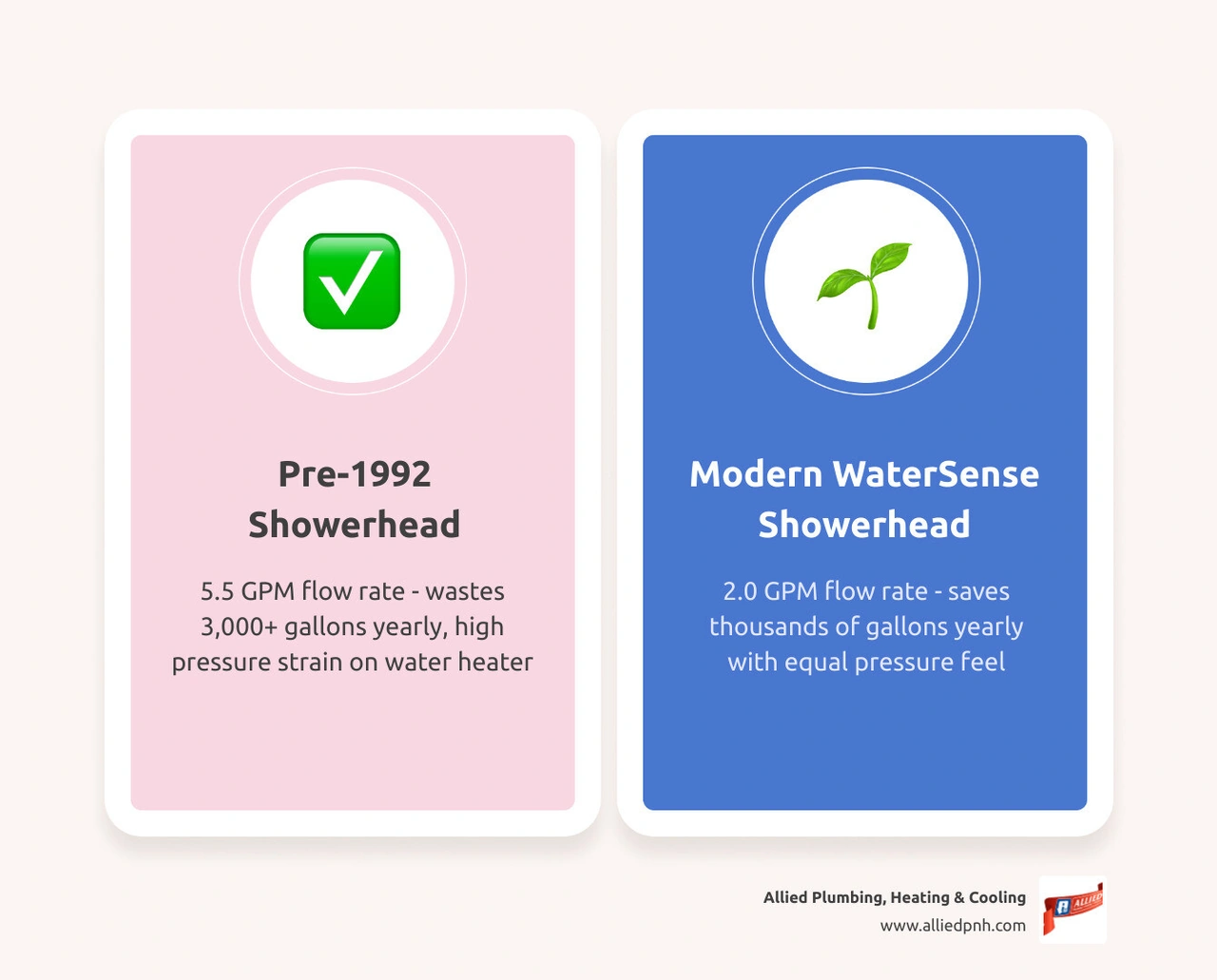
• Higher water waste - Pre-1992 showerheads can dump up to 5.5 gallons per minute (GPM), more than double what a modern model uses
• Rising utility bills - A single dripping faucet can waste over 3,000 gallons per year; a running toilet can lose up to 200 gallons per day
• Water heater strain - High-volume fixtures push more water through your water heater, accelerating sediment buildup and shortening its lifespan
• Increased repair risk - Worn seals, corroded valves, and degraded gaskets create leaks and failures that often go unnoticed until serious damage occurs
Many Springfield homeowners focus on visible leaks when thinking about water waste, but the bigger problem is often hiding in plain sight. Outdated plumbing fixtures installed before modern efficiency standards quietly drive up water usage and utility bills every single month, without ever showing an obvious drip or crack. And when those fixtures are paired with aging galvanized pipes already narrowed by internal rust and mineral scale, the pressure loss and inefficiency compound fast.
This guide walks you through exactly what is happening inside your aging fixtures, how to tell whether the problem is the fixture itself or your pipes, what the hidden costs really add up to, and when upgrading makes the most sense for your home.
How outdated fixtures affect water pressure and efficiency further reading:
• faucet and fixture repair when to fix vs replace
• how a dripping faucet wastes hundreds of gallons per year
• why your faucet drips and what it means for your plumbing
Common Outdated Plumbing Fixtures That Drain Performance
When we walk into older homes across Springfield, Rochester, and Chatham, the fixtures themselves often tell the story of the home’s plumbing health. While a vintage brass faucet or a heavy-duty showerhead from the 1980s might look like they have "good bones," they are often the primary culprits behind sluggish water pressure and skyrocketing water bills.
Before federal standards went into effect in the early 1990s, plumbing fixtures were manufactured with very little regard for water conservation. They relied on sheer volume to deliver what felt like high pressure. Over time, wear and tear, internal decay, and mineral deposits turn these high-volume water hogs into low-pressure, highly inefficient headaches. If you are experiencing weak water flow or high bills, scheduling a professional inspection for Plumbing Springfield is the best first step. Often, targeted Plumbing Repair Springfield or fixture replacements can instantly restore your system's performance.
How Outdated Fixtures Affect Water Pressure and Efficiency in Showers
If you live in Rochester, and your morning shower feels more like a gentle, disappointing mist than a refreshing spray, your showerhead is likely to blame.
Before 1992, standard residential showerheads were designed to dump up to 5.5 gallons of water per minute (GPM). To put that in perspective, a single 10-minute shower with an old fixture could easily consume 55 gallons of water. Compare that to a modern, high-efficiency showerhead, which is federally restricted to a maximum flow rate of 2.5 GPM, with many eco-friendly models using 2.0 GPM or less.
But why does an old, high-flow showerhead eventually lose its water pressure? The answer lies in the physics of flow and restriction. Because these legacy fixtures require such a high volume of water to create a satisfying spray pattern, any slight restriction in your home's water supply—or any accumulation of mineral buildup inside the showerhead itself—will cause the pressure to drop dramatically.
When an old showerhead's internal nozzles clog, it cannot self-regulate. Instead of compensating for the restricted flow, the spray pattern becomes inconsistent, weak, and highly frustrating.
The Impact of Older Toilets and Faucets on Household Water Waste
Faucets and toilets in older Chatham homes are equally notorious for wasting water and dragging down system efficiency.
Toilets manufactured before the 1994 federal conservation standards can use anywhere from 3.5 to 7.0 gallons per flush (GPF). Modern high-efficiency toilets, by contrast, use a maximum of 1.28 GPF without sacrificing flushing power. If you have a household of four, an outdated single-flush toilet can easily waste up to 13,000 gallons of clean water every single year.
Furthermore, older faucets and toilets are highly susceptible to internal wear and tear. Over time, the rubber flappers inside older toilets degrade, causing silent leaks where water constantly trickles from the tank into the bowl. A single running toilet can waste up to 200 gallons of water per day.
Similarly, older kitchen and bathroom faucets with worn-out cartridges, corroded valve seats, or decayed seals can develop slow, steady drips. A faucet dripping just once per second can waste more than 3,000 gallons of water annually. Many of these issues are slow-burning and hard to spot, making it essential to understand the Signs of Hidden Water Leaks before they cause structural damage or massive utility bills.
How Outdated Fixtures Affect Water Pressure and Efficiency
To understand exactly how outdated fixtures affect water pressure and efficiency, we have to look at what happens inside the metal and plastic components over years of daily use.
When water flows through a fixture, it encounters friction. In a brand-new, modern fixture, the internal pathways are smooth and engineered to optimize flow velocity, maintaining strong pressure even with lower water volumes.
However, as a fixture ages, its internal surfaces degrade. Mineral buildup, rust, and physical decay create physical barriers that narrow the pathways water must travel. This narrowing causes massive friction loss, which directly translates to a drop in water pressure at the point of exit.
The table below illustrates the stark contrast between legacy fixtures and modern, high-efficiency upgrades:
• Showerhead — Legacy Flow Rate (Pre-1992/1994): 5.5 GPM — Modern Standard Flow Rate (2026): 2.0 GPM — Annual Water Savings (Average Family): ~11,000 Gallons — Common Pressure Failure Mode: Clogged spray nozzles, weak misting
• Bathroom Faucet — Legacy Flow Rate (Pre-1992/1994): 3.0 GPM — Modern Standard Flow Rate (2026): 1.5 GPM — Annual Water Savings (Average Family): ~3,000 Gallons — Common Pressure Failure Mode: Corroded aerator screen, slow trickle
• Kitchen Faucet — Legacy Flow Rate (Pre-1992/1994): 3.5 GPM — Modern Standard Flow Rate (2026): 2.2 GPM — Annual Water Savings (Average Family): ~2,500 Gallons — Common Pressure Failure Mode: Internal cartridge decay, low flow
• Toilet — Legacy Flow Rate (Pre-1992/1994): 5.0 GPF — Modern Standard Flow Rate (2026): 1.28 GPF — Annual Water Savings (Average Family): ~13,000 Gallons — Common Pressure Failure Mode: Degraded flapper, constant running
The Role of Hard Water and Mineral Scale in Clogging Old Fixtures
Hard water is an incredibly common challenge for homeowners in Springfield. Our local water contains high levels of dissolved minerals, primarily calcium carbonate and magnesium. When hard water is heated or allowed to sit, these minerals precipitate out of the liquid and form a hard, chalky white substance known as limescale.
Older fixtures are particularly vulnerable to hard water damage. Because they lack the advanced, flexible silicone nozzles found on modern showerheads, mineral scale easily clings to their rigid metal or plastic openings. As the scale builds up, it physically chokes off the water flow.
This restriction increases the velocity of the water trying to squeeze through the remaining tiny openings, which often results in a harsh, painful, or completely crooked spray pattern, followed by a total loss of volume. If you are struggling with these symptoms, learning how to Identify and Fix Water Pressure Problems can help you determine if a simple cleaning will suffice or if the scale has permanently ruined the fixture.
How Pipe Corrosion and Aging Connections Restrict Water Flow
While the fixture itself is often the bottleneck, we cannot ignore the pipes supplying them. Many older homes in Springfield, Rochester, and Chatham still contain galvanized steel water lines. Galvanized pipes are notorious for corroding from the inside out. Over decades, the protective zinc coating wears away, allowing the raw steel to react with oxygen and water to form heavy, jagged layers of rust.
This internal corrosion restricts water flow in two distinct ways:
1. Narrowed Diameter: The rust layers grow thicker over time, reducing a pipe's internal diameter from a clean half-inch to the width of a pencil.
2. Debris Clogging: Rust flakes and mineral grit frequently break free from the pipe walls and travel downstream, where they get trapped directly behind your faucet aerators and showerhead cartridges.
When this debris accumulates, it creates a physical dam inside your fixtures. You might clean your faucet's aerator only to find it completely clogged with black, gritty rust particles again just a few weeks later. This is a classic sign that your plumbing system is suffering from systemic decay. To understand the long-term risks of this issue, read more about How Pipe Corrosion Leads to Leaks and Low Pressure.
Diagnosing the Issue: Is It the Fixture or the Pipes?
When you turn on your faucet and get a weak trickle, how do you know whether you need a simple fixture replacement or a major pipe repair?
Distinguishing between a localized fixture issue and a systemic piping problem is crucial for avoiding unnecessary repairs. Fortunately, you can run a few simple diagnostic steps yourself before calling in the professionals. For a comprehensive look at systemic pressure issues, check out our guide on Solving Low Water Pressure Issues From Plumbing.
Testing Localized Pressure at a Single Fixture
If you suspect a specific faucet in your Rochester home is acting up, start by checking its aerator. The aerator is the small, threaded screen assembly at the very tip of the faucet spout designed to introduce air into the water stream.
1. Remove the Aerator: Carefully unscrew the aerator by hand or using a pair of pliers wrapped in a cloth (to protect the finish).
2. Inspect for Debris: Look inside the screen for sand, rust flakes, or white mineral scale.
3. Perform a Flow Test: Turn on the faucet with the aerator removed. If the water gushes out with strong, steady force, congratulations! The issue is localized entirely to a dirty aerator.
4. Clean or Replace: Soak the aerator in warm white vinegar overnight to dissolve calcium deposits, or buy a cheap replacement at your local hardware store.
If the flow remains weak even with the aerator completely removed, the problem lies deeper—either in the faucet's internal cartridge, the localized shut-off valves under the sink, or the supply lines leading to that specific room.
Identifying Systemic Pressure Issues Across the Home
When low water pressure affects multiple fixtures across your Chatham home—such as the kitchen sink, the master shower, and the guest bathroom—the issue is systemic.
To confirm a systemic problem, try running a simple "bucket test."
Take a one-gallon bucket, place it under your bathtub spout (which usually does not have an aerator), turn the cold water on fully, and time how long it takes to fill. If it takes longer than 15 to 20 seconds to fill a single gallon, your home’s overall flow rate is severely restricted.
Systemic low pressure is typically caused by:
• A partially closed main shut-off valve: Ensure your main water valve (usually located where the water line enters your home or near the water meter) is fully open.
• A failing Pressure Reducing Valve (PRV): Many homes have a bell-shaped brass valve installed on the main line to regulate municipal water pressure. If this valve fails, it can choke off your home's water supply, causing a massive drop in working pressure.
• Shared or undersized water lines: In older neighborhoods, undersized service lines can cause your water pressure to plummet whenever a neighbor turns on their hose or you run a second appliance inside your own home.
The Hidden Costs and Risks of Keeping Legacy Fixtures
Many homeowners choose to tolerate weak water pressure and minor drips, viewing fixture replacement as an unnecessary luxury. However, keeping outdated plumbing fixtures in service carries significant hidden costs that far outweigh the effort of an upgrade.
From bloated utility bills to accelerated appliance wear, outdated fixtures act as a constant drain on your home's performance and your wallet.
One of the most severely impacted appliances in this scenario is your water heater. When high-volume, inefficient fixtures force your water heater to process twice as much hot water as necessary, they accelerate sediment accumulation and thermal stress inside the tank. When these connections are subjected to constant stress, they eventually fail, leading to catastrophic leaks. To understand why these failures occur and how to prevent them, see Why Water Heater Connections Fail.
How Outdated Fixtures Affect Water Pressure and Efficiency of Water Heaters
Every gallon of hot water that escapes through an inefficient pre-1992 showerhead or a dripping faucet has to be replaced by cold water entering your water heater. Your water heater must then burn gas or electricity to bring that new water up to temperature.
This constant cycle of heating and reheating wasted water leads to:
• Higher energy bills: Heating water accounts for roughly 18% of the average home's energy use. Outdated fixtures force your water heater to run longer and more frequently, driving up your monthly utility bills.
• Standby heat loss: As your water heater struggles to keep up with the high demand of high-flow fixtures, it experiences greater standby heat loss, further reducing overall efficiency.
• Accelerated sediment buildup: The more water that passes through your water heater, the more dissolved minerals are introduced into the tank. These minerals settle to the bottom, forming a thick layer of sediment that insulates the water from the heating element. This causes the tank to overheat, crack, and fail prematurely.
The Risk of Seal Blowouts After Whole-Home Repiping
A highly specific and costly risk occurs when homeowners in Springfield decide to repipe their older homes but keep their legacy fixtures to save money.
When old, corroded galvanized pipes are replaced with smooth, modern copper or PEX water lines, the restriction in the pipe system is completely eliminated. As a result, the water pressure and flow rate delivered to your fixtures instantly return to their full, robust levels.
While this is fantastic news for your showers, it can be a death sentence for old, fragile faucets. The sudden increase in working pressure can easily blow out the weak, degraded rubber seals, paper-thin gaskets, and corroded cartridges inside 15- or 20-year-old fixtures.
Suddenly, you are dealing with multiple active leaks behind your walls or under your sinks. When upgrading your home's piping, it is always highly recommended to replace old fixtures at the same time to ensure the entire system can handle the restored pressure.
Modern High-Efficiency Solutions and When to Replace
Upgrading to modern, high-efficiency plumbing fixtures is one of the smartest investments you can make for your home. Today’s fixtures are engineered to deliver a powerful, satisfying user experience while using a fraction of the water.
Look for fixtures bearing the Environmental Protection Agency's (EPA) WaterSense label. This certification guarantees that the fixture uses at least 20% less water than standard models while meeting strict performance guidelines.
Modern high-efficiency fixtures offer several key benefits:
• Air-infused technology: Many modern showerheads mix air directly into the water stream. This increases the velocity and droplet size, giving you the sensation of a high-pressure shower while actually using less than 2.0 GPM.
• Dual-flush capability: Modern toilets allow you to choose between a full flush for solids (usually 1.6 GPF) and a partial flush for liquids (0.8 GPF), drastically reducing daily water consumption.
• Pressure-compensating aerators: Modern faucets feature advanced aerators that maintain a steady, consistent stream of water even if your home's municipal water pressure fluctuates.
• Corrosion-resistant materials: Today's fixtures are constructed with advanced ceramics, lead-free brass, and high-grade plastics that resist mineral scale buildup and internal corrosion.
How Outdated Fixtures Affect Water Pressure and Efficiency Compared to Modern Upgrades
In Rochester, comparing an old fixture to a modern upgrade is like night and day.
An old showerhead relies entirely on the pressure pushing through the pipe. If someone flushes a toilet downstairs, the flow rate drops instantly, leaving you with a sad, freezing trickle.
A modern, WaterSense-certified showerhead utilizes an internal pressure-compensating mechanism. This device automatically adjusts to pressure fluctuations in your home's plumbing lines, maintaining a steady, comfortable spray pattern even when other appliances are running simultaneously.
By optimizing the flow path and utilizing air-injection, modern fixtures maximize every single drop of water, ensuring that "low flow" never translates to "low pressure."
Repair vs. Replace: Making the Cost-Effective Choice
If you have a 15-year-old faucet in Chatham that is dripping or suffering from weak flow, should you try to repair it or simply replace it?
While replacing a washer or cartridge is relatively inexpensive, older fixtures often enter a "cycle of repairs." Once the internal metal body of a faucet begins to corrode or the valve seats become pitted, replacing individual parts only provides short-term relief.
Before long, another leak will develop, or the pressure will drop again.
As a general rule, if a fixture is more than 10 to 15 years old, has visible corrosion, or requires frequent repairs, complete replacement is the most cost-effective and long-term solution. The water and energy savings alone will quickly offset the initial cost of the upgrade, all while restoring strong, satisfying pressure to your daily routine.
Frequently Asked Questions About Outdated Fixtures
Can cleaning an old fixture fully restore its original water pressure?
In some cases, yes, but it is often only a temporary fix. If the low pressure is caused solely by mineral scale clogging the aerator screen or the spray nozzles, soaking the fixture in white vinegar overnight will dissolve the calcium carbonate and temporarily restore flow.
However, if the fixture's internal cartridge is worn, the metal body is corroded, or the rubber seals have degraded, cleaning will not solve the underlying physical restriction. In these instances, replacement is necessary.
How do I know if my low water pressure is a municipal issue or my home's plumbing?
The easiest way to check is to compare with your neighbors. If your neighbors are experiencing similar low pressure, the issue likely lies with the municipal water supply or a nearby water main break.
You can also test your home's "static" pressure by attaching a pressure gauge to an outdoor hose bib. If the gauge reads between 40 and 60 PSI, your municipal supply is perfectly fine, meaning the restriction is localized entirely within your home's internal plumbing lines or fixtures.
How often should I inspect or upgrade my home's plumbing fixtures?
We recommend performing a quick visual inspection of all your home's fixtures at least once a year. Look for green or white mineral crust around the joints, slow drips, or inconsistent spray patterns.
Generally, plumbing fixtures should be upgraded every 10 to 15 years. Even if they appear to be working fine, older fixtures lack modern water-saving technology, meaning they are quietly driving up your utility bills every day they remain in service.
Conclusion
Understanding how outdated fixtures affect water pressure and efficiency is the key to unlocking a more comfortable, efficient, and cost-effective home. From weak shower spray to running toilets and strained water heaters, legacy fixtures quietly drain your home's resources and stress your entire plumbing system.
At Allied Plumbing, Heating & Cooling, we have been serving our neighbors in Springfield, Rochester, and Chatham since 1977. As a third-generation, family-owned business, we bring decades of hands-on experience to every job. Whether you need a simple fixture upgrade, a localized repair, or a comprehensive plumbing inspection, our team is dedicated to delivering outstanding customer satisfaction and peace of mind.
Don't let outdated fixtures dictate your morning routine or bloat your water bills. Schedule a professional plumbing evaluation today and let us help you restore perfect pressure and efficiency to your home!