Identifying Sweaty Ductwork in Unconditioned Crawlspaces Before It Causes Mold
Identifying Sweaty Ductwork in Unconditioned Crawlspaces Before It Causes Mold
When End-of-Summer Humidity Collides with Freezing AC Ducts
If your air conditioner has been running nonstop, identifying sweaty ductwork in unconditioned crawlspaces before it causes mold is a critical priority when August late-summer humidity reaches its peak. You might notice that your house feels comfortably cool, but beneath your floors, a hidden environmental clash is taking place. The stark reality of late-summer weather places maximum stress on home cooling systems, forcing them to run in continuous cycles just to maintain indoor comfort. While your living space stays dry, the ductwork routing that cold air is exposed to entirely different conditions.
The core problem stems from weeks of continuous AC use creating freezing sheet metal surfaces that clash violently with heavy environmental moisture. When these two extremes meet in a dark, unventilated space, condensation forms rapidly. This "sweating" is not a minor nuisance; it is an active moisture problem that degrades building materials and compromises your air quality. Highlighting the urgency of identifying this sweating early is essential, as the window before it transitions into a severe biological issue is incredibly short.
The Hidden Mechanics of Summer Cooling
Most homeowners rarely think about the spaces beneath their feet. However, understanding how your cooling system interacts with these zones is vital. We often see the physical toll that August late-summer humidity takes on infrastructure. The continuous flow of cold air drops the temperature of the duct material significantly. Without a perfect thermal barrier, the surrounding humid air is drawn to this cold surface like a magnet.
• Temperature — Inside the Ductwork: 55°F - 60°F — Outside the Ductwork (Crawlspace): 85°F+
• Humidity Level — Inside the Ductwork: Low (Dehumidified) — Outside the Ductwork (Crawlspace): Extremely High
• Airflow — Inside the Ductwork: Rapid / Pressurized — Outside the Ductwork (Crawlspace): Stagnant / Trapped
• Moisture State — Inside the Ductwork: Dry Air — Outside the Ductwork (Crawlspace): Heavy Vapor / Condensation Risk
Setting the stage for proactive homeowner awareness means recognizing these invisible dynamics without stepping into dangerous DIY territory. By understanding the forces at play, you can monitor your home's lower levels and know exactly when it is time to call a professional for an inspection.
The Physics of Condensation in Your Crawlspace
To truly understand why ductwork sweats, we have to look at the basic science of temperature and moisture. Condensation is not a random occurrence; it is a predictable physical reaction governed by specific environmental triggers. Fulfilling the need for advanced foundational knowledge helps explain why this issue is so prevalent in Springfield IL homes with unconditioned crawlspaces.
Understanding Dew Point and Duct Surface Temperatures
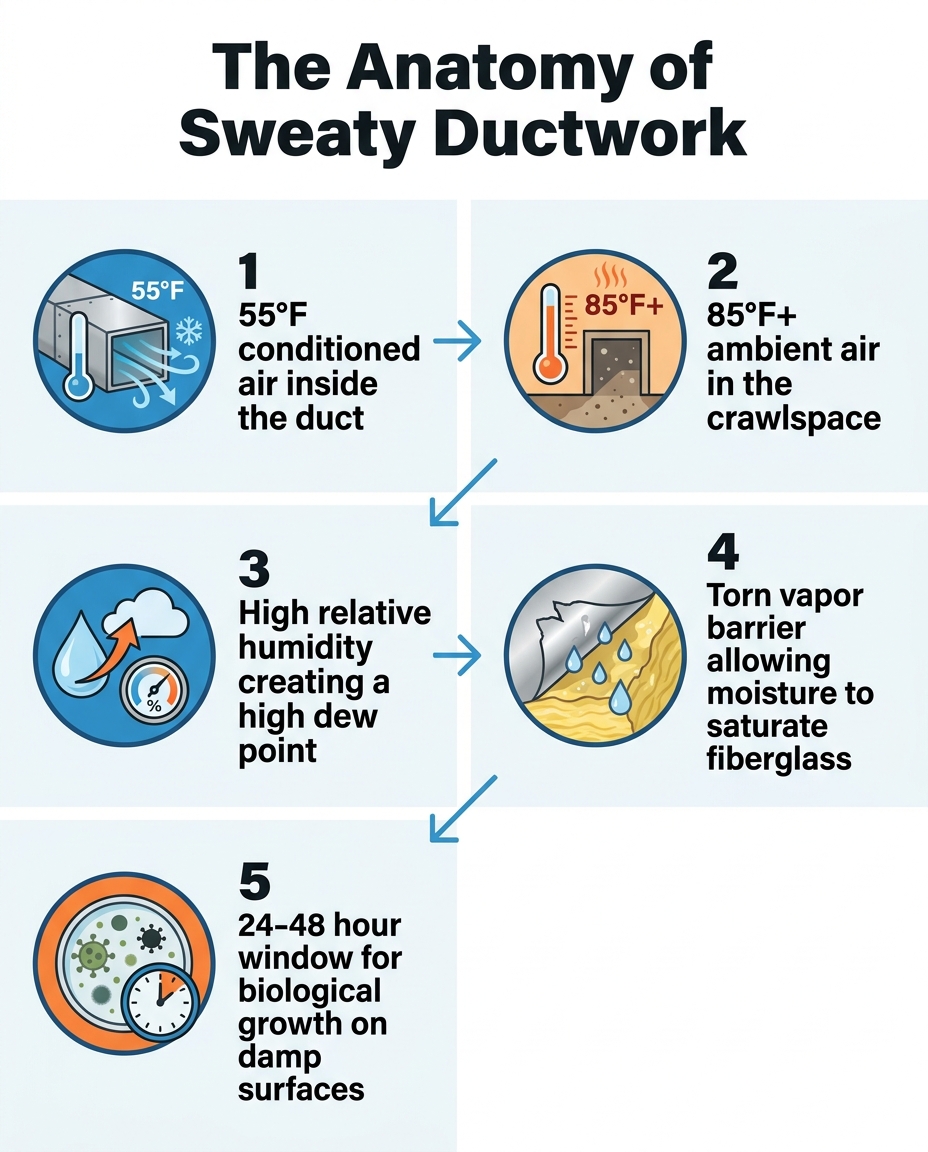
The concept of dew point is the most important factor in crawlspace condensation. Dew point is the specific temperature at which the air can no longer hold all its water vapor, forcing that moisture to turn into liquid water on surfaces. When you have 55-degree conditioned air rushing through the inside of the ducts and 85-plus degree ambient air sitting outside, the temperature differential is massive.
Metal ductwork is the perfect medium for rapid heat transfer. Because sheet metal has virtually no insulating value on its own, the exterior surface of the duct quickly drops to match the temperature of the cold air inside. If the dew point of the humid crawlspace air is 70 degrees, and your duct surface is 58 degrees, condensation is mathematically guaranteed to form. Learning how high summer humidity impacts indoor air quality often begins with understanding this exact temperature clash.
The Compounding Effect of Continuous Cooling
During the peak heat of late summer, cooling cycles become longer and more frequent. These long runtimes prevent the ductwork from ever warming up to the ambient temperature of the crawlspace.
• Sustained low temperatures: The metal remains constantly cold, meaning the condensation process never pauses.
• Accumulation over evaporation: Because the ducts never warm up, the water droplets never have a chance to evaporate back into the air.
• Thermal bridging: Any metal brackets, hangers, or uninsulated joints transfer the cold outward, expanding the surface area where sweating occurs.
This creates a continuous condensation engine in dark spaces. Unconditioned spaces lack the climate control necessary to mitigate these extreme differentials, meaning the ductwork is entirely at the mercy of the outdoor weather conditions seeping into the foundation.
The Anatomy of Sweaty Ductwork
Why Unconditioned Crawlspaces Are Highly Vulnerable
Not all areas of your home face the same risks. Conditioned living spaces are actively dehumidified by your HVAC system, keeping moisture levels balanced. Unconditioned zones, however, absorb ground moisture and outdoor air without any mechanical intervention to dry them out.
Springfield, IL experiences hot, highly humid summers, making unconditioned crawlspaces in the region particularly vulnerable to extreme dew points compared to more arid climates. When August late-summer humidity blankets the region, that heavy, wet air inevitably finds its way into foundation vents and gaps. When this moisture meets the infrastructure of your cooling system, the results can be highly destructive to your home's structural integrity.
Trapped Moisture and Stagnant Airflow
The role of poor ventilation and stagnant air cannot be overstated when discussing trapped heavy moisture. In many homes, the crawlspace features an exposed dirt floor or a compromised plastic moisture barrier. Ground evaporation constantly pumps water vapor upward into the space.
Because the air is stagnant, this moisture cannot escape. Stagnant air prevents condensation from evaporating back into the environment, meaning once a surface gets wet, it stays wet. The lack of sunlight and constant dampness create an ideal microclimate for trouble. Without UV light to inhibit growth and without moving air to dry surfaces, the crawlspace becomes a high-risk zone for your HVAC infrastructure. Ensuring your system is protected from these elements is a vital part of long-term air conditioning services and maintenance.
Key Vulnerability Factors in Crawlspaces:
• Ground evaporation: Unsealed dirt floors release gallons of water vapor daily.
• Foundation vents: Open vents pull in hot, humid outdoor air during the summer months.
• Lack of conditioning: No supply registers mean the air is never actively dehumidified.
• Proximity to duct runs: Main supply trunks often run directly through the most stagnant zones.
Visual Signs: Identifying Sweaty Ductwork Early
Catching condensation early requires knowing exactly what to look for before biological growth spreads. We recommend giving your lower levels a safe, visual-only inspection using a strong flashlight. Because Springfield IL homes with unconditioned crawlspaces often feature dark, tight quarters, you must rely on distinct visual cues rather than invasive probing.
1. Water droplets on the exterior: Look closely at the silver or black outer jacket of the duct insulation. If you see beads of water forming on the exterior, or on any exposed metal joints, the dew point has been breached.
2. Pooling water on the floor: Check the ground directly beneath the main duct runs. Water pooling on the plastic ground cover or damp, dark patches on a dirt floor often indicate that ducts above are dripping consistently.
3. Sagging or heavy insulation: Fiberglass insulation is designed to be fluffy and lightweight. When it becomes saturated with water, it grows heavy. Look for insulation that is drooping, pulling away from the duct, or straining against its tape and hangers.
4. Rusted metal components: Examine the metal strapping holding the ducts up, as well as the registers protruding through the subfloor. Surface rust is a clear indicator of chronic moisture exposure.
5. Musty odors indoors: Sometimes the first sign isn't visual at all. A sudden musty odor rising from floor registers inside the living space often means the ductwork below is compromised.
Spotting Compromised Vapor Barriers
The vapor barrier is the thin outer jacket (usually silver foil or thick plastic) wrapping the fiberglass insulation around your ducts. Its sole function is to prevent humid air from reaching the cold metal inside. To visually identify failures, look for tears, punctures, or degraded seams. Even a pinhole leak or a piece of peeling tape allows condensation to start. Once moisture breaches this barrier, the insulation beneath acts like a sponge, soaking up water and holding it directly against the metal.
How Torn Insulation Accelerates Biological Growth
Connecting the physics of condensation to biological consequences requires looking at how fast materials degrade. The critical role of the vapor barrier is keeping humid air away from the cold duct surface. When that barrier fails, the timeline for severe problems accelerates dramatically.
Even small tears allow moisture to bypass the barrier, saturating the fiberglass insulation beneath. When August late-summer humidity infiltrates that fiberglass, it displaces the tiny air pockets that provide insulating value. Wet fiberglass loses its R-value entirely, further dropping the surface temperature of the outer jacket and worsening the sweating. It becomes a vicious cycle: condensation causes wet insulation, wet insulation causes more cold transfer, and more cold transfer causes more condensation.
The 48-Hour Window for Mold Development
According to environmental guidelines, the window for trouble is shockingly brief. Biological growth can begin on damp surfaces within 24 to 48 hours under optimal conditions.
The Three Requirements for Biological Growth:
• Moisture: Provided continuously by the sweating ducts.
• Warmth: Provided by the hot ambient air in the crawlspace.
• Food Source: Provided by dust, organic debris, and the paper backing of the insulation itself.
The dark, damp environment of a late-summer crawlspace is the perfect incubator. Because the insulation is porous, roots can embed deeply into the fiberglass fibers. Once this occurs, the material cannot be salvaged or cleaned. Understanding this rapid timeline highlights why professional air duct cleaning and remediation assessments are necessary at the first sign of saturation, rather than waiting for the season to end.
The Danger of DIY Remediation on Compromised Ducts
When homeowners in Springfield IL homes with unconditioned crawlspaces notice wet ducts, the immediate instinct is often to grab a towel and start wiping things down. However, DIY repairs or cleaning attempts on compromised ductwork are highly dangerous and ultimately ineffective.
Wiping down sweaty ducts does not solve the underlying dew point or insulation failure. You are merely treating a symptom while the continuous condensation engine keeps running. More importantly, using bleach or household cleaners on porous duct insulation is a severe mistake. Bleach is largely water-based; when applied to porous fiberglass, the chemical evaporates quickly, leaving the water behind to feed the roots. It degrades the materials and fails to kill the underlying growth embedded in the fibers.
Why DIY Fixes Fail:
• Taping over wet insulation: Slapping foil tape over a wet tear traps moisture inside, accelerating rust on the metal and promoting unseen mold growth beneath the patch.
• Disturbing existing growth: Scrubbing or tearing away moldy insulation without proper negative pressure containment can spread microscopic spores directly into your home's living areas through the floorboards.
• Ignoring the R-value: Wrapping blankets or standard attic insulation around a duct does not provide the correct vapor barrier, leading to immediate re-saturation.
Because ductwork is directly connected to the air you breathe, remediation requires specialized knowledge of airflow, static pressure, and material science. Attempting to fix saturated, biologically compromised ducts without proper training puts your entire household's air quality at risk.
Professional Assessment and Long-Term Prevention
Addressing sweaty ducts permanently requires a professional approach to replacing waterlogged insulation and restoring the vapor barrier with the correct R-value. As a local family-owned HVAC company, Allied Plumbing Heating & Cooling understands Midwest climate dynamics and exactly how to properly insulate ductwork to withstand severe seasonal humidity.
Professionals begin by safely removing the compromised materials under controlled conditions. Once the bare metal is exposed, the next critical step is sealing duct leaks using specialized mastic sealant or approved metal tape. This prevents conditioned air from escaping into the crawlspace and stops humid air from being sucked into the system. After the duct is airtight, new, high R-value insulation with an intact vapor barrier is installed to completely isolate the cold metal from the hot August late-summer humidity.
The Role of Routine HVAC Inspections
Routine system maintenance is the most effective way to catch airflow issues and minor insulation tears before the most humid months arrive. Bi-annual checks ensure the system is operating at the correct temperatures and pressures.
One homeowner recently reached out for their pre-fall seasonal checks on their furnace and air conditioner. By scheduling this routine maintenance, the technicians were able to provide prompt, courteous, and qualified service, inspecting the exposed ductwork and ensuring the system was prepared for the seasonal shift. Catching minor wear and tear during these visits proves well worth the money, as it prevents total insulation failure down the road.
Beyond duct repair, professionals can also recommend broader solutions like crawlspace encapsulation or dedicated dehumidification. By sealing the earth and controlling the ambient moisture, you eliminate the high dew point entirely, protecting your routine AC maintenance investments and ensuring your ductwork remains dry, efficient, and safe for years to come.
Frequently Asked Questions
Why is there condensation on my ductwork in the crawl space? Condensation forms when the surface temperature of your ductwork drops below the dew point of the surrounding air. In a crawlspace, the hot, humid outdoor air clashes with the cold metal of the ducts carrying conditioned air, causing moisture to rapidly accumulate on the exterior.
Can sweating ducts cause mold? Yes, sweating ducts are a primary catalyst for biological growth. When condensation saturates the porous fiberglass insulation wrapping the ducts, it creates a dark, damp environment where mold can thrive and embed into the materials.
Is it normal for AC ducts to sweat? While minor condensation can occasionally happen on exceptionally humid days, chronic sweating is not normal and indicates a failure in your insulation or vapor barrier. Properly insulated and sealed ductwork should maintain a thermal barrier that prevents moisture buildup.
How can I tell if my crawlspace ducts are sweating? Visual signs include water droplets on the duct's outer jacket, water pooling on the ground directly beneath the duct runs, and sagging or heavy insulation. You may also notice surface rust on metal hangers or a musty odor coming from your indoor floor registers.
What is the correct R-value for duct insulation in an unconditioned space? Building codes generally require a minimum of R-8 insulation for ductwork located in unconditioned spaces like crawlspaces or attics. This level of thermal resistance is necessary to prevent the cold metal from interacting with the hot, humid ambient air.
How fast can biological growth spread on wet fiberglass insulation? Under optimal conditions with high humidity and warm temperatures, biological growth can begin to develop on damp surfaces within 24 to 48 hours. Once established in porous fiberglass, it spreads quickly and cannot be effectively cleaned.
Identifying Sweaty Ductwork in Unconditioned Crawlspaces Before It Causes Mold
Protecting your home means recognizing the signs of sweaty ducts and torn insulation before the damage becomes irreversible. If you notice sagging insulation, pooling water, or musty odors this season, do not wait for the problem to resolve itself. Contact a professional to assess your crawlspace and restore your ductwork, ensuring your home remains safe, dry, and comfortable before biological growth has a chance to spread.
Why Adding a Whole-Home Humidifier Prevents Dry Skin and Warped Hardwood Floors in Winter
September 25, 2026
Gas furnaces strip natural moisture from your home, causing painful static shocks and shrinking woodwork. Adding a bypass humidifier this fall proactively counteracts severe winter dryness.
Gas furnaces strip natural moisture from your home, causing painful static shocks and shrinking woodwork. Adding a bypass humidifier this fall proactively counteracts severe winter dryness.
Hyper-Heating Technology: How Modern Mini-Splits Produce Heat Even at Negative 13 Degrees
September 24, 2026
Don't let outdated myths leave you freezing this winter. We break down the exact inverter technology that allows ductless systems to reliably heat your home in sub-zero temperatures.
Don't let outdated myths leave you freezing this winter. We break down the exact inverter technology that allows ductless systems to reliably heat your home in sub-zero temperatures.
Camera Inspections: Seeing Exactly What Tree Roots Did to Your Sewer Line Over the Summer
September 23, 2026
Tree roots aggressively infiltrate aging sewer lines during dry summers. A proactive early fall camera inspection catches this hidden damage before it causes catastrophic backups during holiday hosting.
Tree roots aggressively infiltrate aging sewer lines during dry summers. A proactive early fall camera inspection catches this hidden damage before it causes catastrophic backups during holiday hosting.