Diagnosing a Toilet That Ghost-Flushes in the Middle of the Night
Diagnosing a Toilet That Ghost-Flushes in the Middle of the Night
Why Is Your Toilet Randomly Running at Night?
Have you ever been woken up by the strange sound of water running, leaving you wondering about diagnosing a toilet that ghost-flushes in the middle of the night? This unsettling sound—a toilet tank spontaneously refilling when no one has pressed the handle—is a common frustration for homeowners. Often referred to as "ghost flushing" or "phantom flushing," this phenomenon primarily plagues standard gravity-fed toilet tanks. While it might sound like a major plumbing failure or a supernatural event in the dark, the reality is much more mundane. A ghost flush is almost always the result of a slow, silent water leak inside the tank.
When you hear that sudden rush of water, your toilet is simply doing its job by replacing water that has mysteriously escaped into the bowl. Before you worry about extensive repairs or replacing the entire fixture, you can definitively diagnose this issue yourself. Using a safe, simple food coloring test, you can pinpoint the exact cause of the leak without a single tool. If you discover a larger issue during your investigation, reaching out for professional plumbing services ensures your home's water systems remain efficient and reliable.
The Mechanics Behind the Ghost Flush Phenomenon
To understand why a phantom flush happens, it helps to look inside standard gravity-fed toilet tanks. These systems operate on a very simple principle: holding a large volume of water in reserve and releasing it rapidly to create a siphon effect. The component responsible for holding that water back is a watertight seal at the bottom of the tank, created by a rubber flapper valve resting against the flush valve seat.
The Anatomy of a Phantom Flush:
• The compromised seal: When the rubber flapper fails to sit perfectly flat against the flush valve seat, water begins to slowly seep from the tank down into the toilet bowl.
• The silent escape: Because this leak happens below the water line and flows down the sides of the bowl, it is usually completely silent and visually undetectable.
• The trigger point: Inside the tank, a fill valve float monitors the water level. As the slow leak drains the tank, the float gradually drops lower and lower.
• The refill cycle: Once the water level drops below a critical point, the fill valve opens, triggering the water supply to turn on for a few seconds to refill the tank back to its proper level.
This cycle of slowly draining and rapidly refilling repeats continuously. During a busy afternoon with televisions running and doors opening, you might never hear the brief rush of water. However, during late summer nights when ambient house noise is lower, making ghost flushes more noticeable, the sound can easily wake you from a deep sleep. Beyond the nuisance of midnight interruptions, this continuous cycle is a massive drain on your home's efficiency. In fact, ignoring the mechanics of how running toilets waste water and money allows a minor mechanical hiccup to turn into a significant waste of natural resources.
How Hard Water and Wear Destroy Flapper Valves
The rubber flapper is the hardest-working component inside standard gravity-fed toilet tanks, spending its entire lifespan submerged in water. Over time, the materials naturally degrade, warp, and lose their flexibility. Most standard flappers have a lifespan of about three to five years before the rubber begins to break down. However, several environmental factors can drastically accelerate this timeline.
Chemical drop-in tank cleaners are one of the primary culprits behind premature flapper failure. While these tablets promise a sparkling bowl, the high concentrations of chlorine and bleach they release directly attack the vulcanized rubber of the flapper. The chemicals cause the rubber to become brittle, blistered, and warped, completely destroying its ability to form a watertight seal. Furthermore, the local water supply plays a massive role in plumbing health. Springfield IL water hardness can accelerate mineral buildup and crusting on rubber plumbing components like flapper valves, making this a common local issue. As calcium and magnesium precipitate out of the standing water, they form a hard, jagged crust that prevents the flapper from sitting flush.
Warping vs. Mineral Crusting
While both warping and mineral crusting lead to the exact same symptom—the phantom flush—they affect the toilet tank in different ways. Understanding the difference can help you determine the best path forward once you diagnose the leak.
• Rubber Warping — Primary Cause: Age, chlorine tablets, chemical cleaners — Physical Condition: Brittle, curled edges, dissolving rubber — Impact on the Toilet: Creates permanent gaps; flapper must be entirely replaced.
• Mineral Crusting — Primary Cause: Hard water, high calcium/magnesium levels — Physical Condition: Chalky, white buildup on the valve seat — Impact on the Toilet: Prevents a flat seal; sometimes the seat can be cleaned, but severe crusting requires part replacement.
Regardless of whether the seal is failing due to chemical warping or hard water crusting, the result is a continuous, slow leak. A toilet that frequently ghost-flushes can waste up to 200 gallons of water per day, putting unnecessary strain on your plumbing system and municipal water supplies.
How to Perform the Food Coloring Dye Test
Before you start replacing parts, you need to prove that the flapper is actually the source of the leak. Fortunately, diagnosing a flapper leak requires no tools and is completely safe for standard gravity-fed toilet tanks. The food coloring dye test is a foolproof way to visually confirm a silent leak.
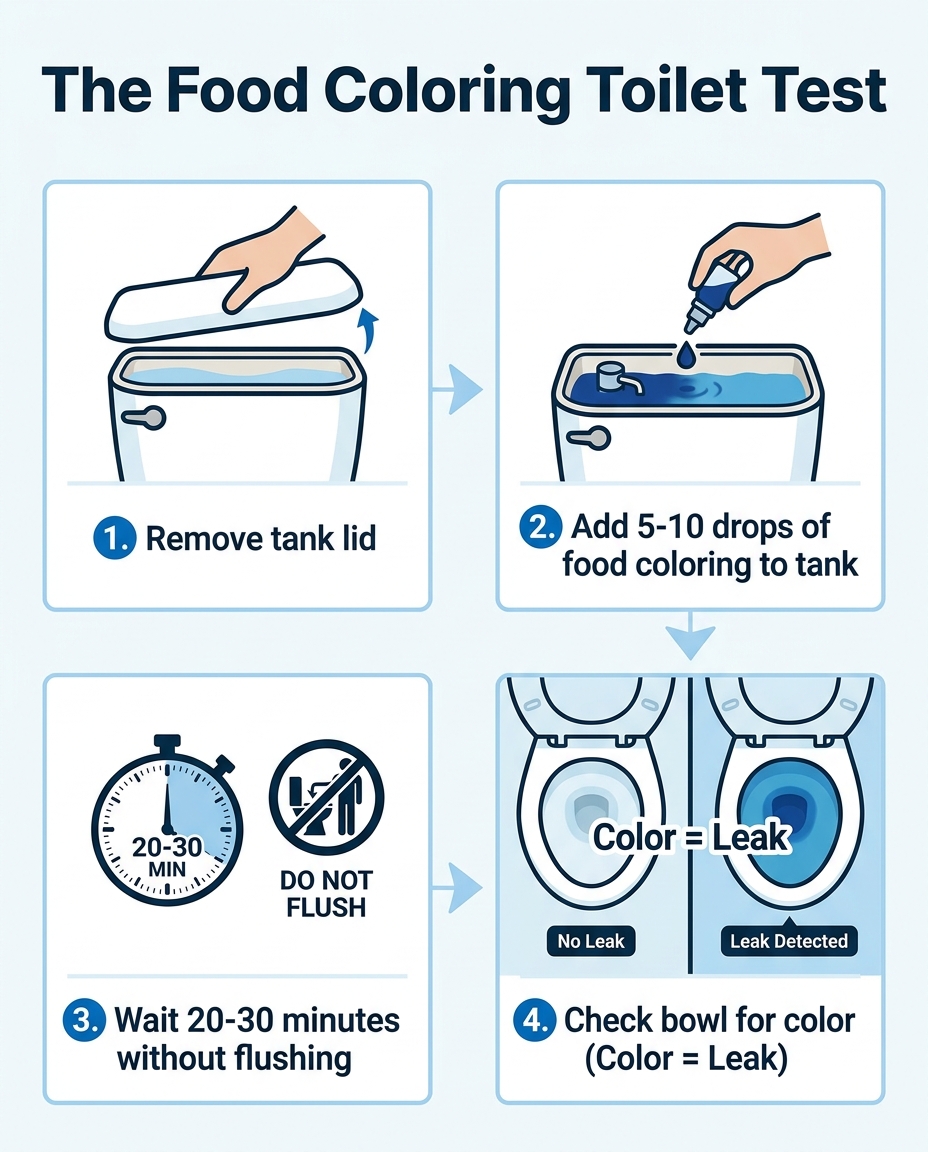
1. Prepare the area: Clear off any items resting on top of the toilet tank. Carefully remove the heavy porcelain tank lid and set it aside on a thick towel on the floor to prevent accidental chipping or cracking.
2. Add the dye: Squeeze 5 to 10 drops of dark liquid food coloring directly into the upper tank water. Blue or red food coloring works best because they provide the highest contrast against the white porcelain bowl. Avoid yellow or green, as they can be harder to see.
3. Let it sit: Wait 20 to 30 minutes. This is the most crucial step—do not flush the toilet or use the bathroom during this waiting period. You must give the water enough time to slowly seep through any microscopic gaps in the flapper seal.
4. Check the results: After the time has passed, look into the toilet bowl. Do not look in the tank; inspect the standing water in the bowl itself.
The Food Coloring Toilet Test
Interpreting Your Dye Test Results
Once the waiting period is over, the color of the water in the toilet bowl will tell you exactly what is happening inside your standard gravity-fed toilet tanks. The results are binary, making it very easy to interpret the mechanical state of your plumbing.
If the bowl water remains clear: The flapper is sealing perfectly. If you are still experiencing a phantom flush, the issue lies elsewhere. A typical pattern we see is an improperly adjusted fill valve. If the water level is set too high, water will continuously spill over the top of the open overflow tube, slowly draining the tank and triggering the refill cycle. You can usually fix this by adjusting the float arm downward so the water shuts off about an inch below the top of the overflow tube.
If the bowl water turns the color of the dye: The flapper valve has definitively failed and is leaking water. The dyed tank water has seeped past the compromised rubber seal and pooled in the bowl. While replacing a flapper is a common fix that many homeowners tackle themselves, persistent issues or severely mineral-damaged flush valves often require professional intervention to ensure a permanent, watertight seal.
Addressing this immediately prevents further water waste and stops the annoying midnight interruptions. A typical pattern we see involves homeowners mentioning general plumbing issues during routine maintenance. In one instance, a local customer had general plumbing work investigated while a technician was already on-site performing water heater and furnace maintenance, resulting in a completely resolved plumbing issue alongside their regular service. Leveraging multi-generational, family-owned local expertise means you have an honest partner for frustrating plumbing mysteries across the Springfield service area.
Beyond the Bathroom: Preparing Your Home for Changing Seasons
Catching a small plumbing issue like a ghost flush is a great reminder to check on other critical home systems. Houses are interconnected environments, and when one mechanical system shows signs of wear, it is often a good time to evaluate the rest of the home. As late summer transitions into fall, ensuring all mechanical systems are operating efficiently prevents sudden emergencies when the weather turns harsh.
During late summer nights when ambient house noise is lower, making ghost flushes more noticeable, you might also notice the sounds of an aging air conditioner or a water heater working overtime. Scheduling yearly checkups for both plumbing and HVAC systems provides immense peace of mind. Proactive homeowners often recommend pairing a thorough plumbing inspection with seasonal heating services to ensure comprehensive home readiness. By taking care of a worn-out toilet flapper and a furnace tune-up at the same time, you protect your home from unexpected breakdowns and ensure a comfortable environment all year long.
Frequently Asked Questions About Phantom Flushing
Why does my toilet randomly run for a few seconds?
Your toilet randomly runs for a few seconds because the water level inside the tank has slowly dropped below the required threshold. When the water level drops, the fill valve float lowers, which triggers the water supply to turn on and refill the tank. This drop in water is almost always caused by a slow, silent leak where water escapes past a worn flapper valve and into the toilet bowl.
How do you test a toilet flapper with food coloring?
You test a toilet flapper by removing the tank lid and dropping 5 to 10 drops of dark food coloring into the upper tank water. Wait 20 to 30 minutes without flushing the toilet or using the bathroom. If the water in the toilet bowl turns the color of the dye, it confirms that the flapper is failing to hold a watertight seal and is allowing water to leak through.
Can a ghost flushing toilet increase my water bill?
Yes, a ghost flushing toilet can significantly increase your water consumption and waste natural resources. A continuously running or frequently ghost-flushing toilet can waste up to 200 gallons of water per day. Because the leak is silent and often goes unnoticed, this massive amount of water waste can continue for months if the underlying mechanical issue is not diagnosed and repaired.
How do you fix a phantom flush?
You fix a phantom flush by addressing the component that is allowing water to escape the tank. Most commonly, this requires replacing the warped or degraded rubber flapper valve at the bottom of the tank. If the flapper is in good condition, you may need to adjust the fill valve float downward so that the water level stops rising before it spills into the overflow tube.
Are drop-in tank cleaners bad for toilet flappers?
Yes, chemical drop-in tank cleaners are highly detrimental to standard gravity-fed toilet tanks. The high concentrations of bleach and chlorine in these tablets attack the vulcanized rubber of the flapper and other internal seals. Over time, these harsh chemicals cause the rubber to blister, become brittle, and warp, leading directly to silent leaks and phantom flushing.
Solve Your Plumbing Mysteries with Local Experts
Understanding the mechanics of a slow leak and running a quick food coloring test puts you completely in control of your home's plumbing. By taking a few minutes to diagnose the issue, you can determine exactly why your toilet is acting up in the middle of the night. Never ignore the signs of a ghost flush, as allowing standard gravity-fed toilet tanks to leak continuously wastes vast amounts of water and disrupts your well-deserved sleep.
If your dye test reveals a leak but a simple flapper replacement doesn't solve the problem, you may be dealing with severe mineral crusting or a failing flush valve assembly. When you need a definitive solution to stop the phantom flushing for good, schedule professional plumbing repair to restore your fixture to perfect working order.
Deciding Between an 80% and 96% AFUE Furnace for a Springfield Area Home
September 21, 2026
Before the Midwest winter hits, choosing a new heating system goes beyond the energy label. See how physical venting requirements impact your upgrade choice.
Before the Midwest winter hits, choosing a new heating system goes beyond the energy label. See how physical venting requirements impact your upgrade choice.
Why Falling Leaves and Acorns Are a Hidden Threat to Your Exterior Drain Cleanouts
September 18, 2026
During early fall yard prep, a cracked or missing exterior cleanout cap can act as a direct funnel for yard debris. Find out how this hidden vulnerability leads to severe main sewer line blockages.
During early fall yard prep, a cracked or missing exterior cleanout cap can act as a direct funnel for yard debris. Find out how this hidden vulnerability leads to severe main sewer line blockages.
Understanding the Role of the Circulator Pump in Your Hydronic Heating System
September 17, 2026
You turn on your boiler for the first brisk fall cold snap, but the radiators stay freezing. Discover why a dormant circulator pump is usually the culprit.
You turn on your boiler for the first brisk fall cold snap, but the radiators stay freezing. Discover why a dormant circulator pump is usually the culprit.