Where to Place Carbon Monoxide Detectors Relative to Your Gas Furnace and Bedrooms
Where to Place Carbon Monoxide Detectors Relative to Your Gas Furnace and Bedrooms
Navigating Carbon Monoxide Safety Before the Heating Season Begins
You have the alarm out of the box, but figuring out exactly where to place carbon monoxide detectors relative to your gas furnace and bedrooms can feel like a high-stakes guessing game. As temperatures drop and the September pre-heating season arrives, homeowners across Springfield often ask our team at Allied Plumbing Heating & Cooling about the precise heights and distances required to ensure their families are protected. Finding the correct placement is a critical decision point: you need maximum life-safety and early warning, but you also want to avoid the frustrating nuisance alarms that happen when a sensor is installed too close to a heating appliance.
During the colder months, tightly sealed homes increase the risk of carbon monoxide exposure due to the continuous operation of gas appliances. Proper detector placement is a vital component of maintaining a safe environment, but it is only a secondary measure. A true baseline of safety starts with proactive, professional care for your equipment. To ensure your home is fully protected, you need reliable heating systems backed by professional heating service from our experienced technicians.
The Physics of Fall Furnace Startups and Nuisance Alarms
The problem: Every fall, our Allied technicians respond to calls from homeowners experiencing sudden, alarming beeps from their carbon monoxide detectors during the first cold snap of the year. When this happens repeatedly, it often leads to "alarm fatigue," a dangerous situation where people assume the device is broken and simply unplug it or remove the batteries right when they need protection most.
The cause: Understanding why these false alarms happen requires looking at how gas furnaces operate after sitting dormant through the long summer months. When you start the system for the first time in the September pre-heating season, the unit goes through an initial ignition sequence. This startup often involves very minor, harmless off-gassing and the burning off of accumulated dust that has settled on the heat exchanger. If you are turning your furnace on for the first time in fall, this temporary emission of trace gases is entirely normal. However, if your carbon monoxide detector is mounted directly next to the furnace, the highly sensitive sensor will pick up these harmless startup emissions and trigger a full-volume alert.
The solution: The key to preventing alarm fatigue is respecting the physics of gas dispersion. By providing enough physical distance between the combustion appliance and the sensor, you allow those harmless trace amounts of startup gases to dissipate into the surrounding air before they ever reach the detector. This ensures that when the alarm does sound, it is alerting you to a genuine safety hazard rather than a routine seasonal startup.
Exact Placement Distances: Where to Place Carbon Monoxide Detectors Relative to Your Gas Furnace and Bedrooms
When it comes to life-safety devices, guessing isn't an option. While authoritative bodies like the Environmental Protection Agency (EPA) and the Consumer Product Safety Commission (CPSC) provide specific measurement guidelines, our team relies on these standards every day to ensure your alarms function correctly without driving you crazy with false alerts.
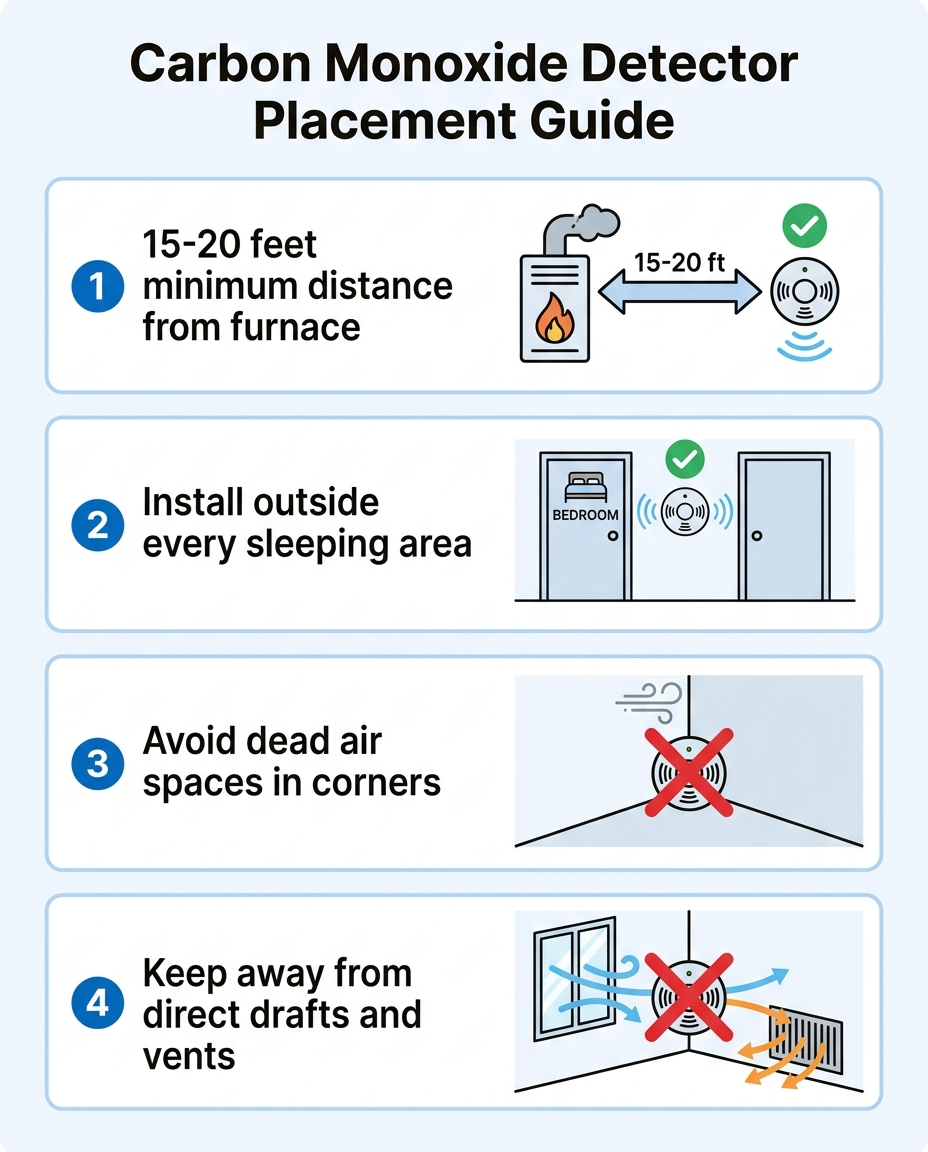
1. Measure the 15-foot buffer zone: The core rule for installation is that carbon monoxide detectors must be placed a minimum of 15-20 feet away from your gas furnace or any other fossil-fuel burning appliance. This specific distance is the sweet spot that allows harmless startup combustion gases to dissipate before reaching the sensor, while still keeping the device close enough to detect a real, sustained leak.
2. Evaluate your home's layout: Walk off the 15-20 feet minimum distance from furnace locations. If your furnace is in an open basement, this is usually straightforward. You simply measure across the room and mount the device on a distant wall or ceiling.
3. Adjust for small spaces: In many of the tighter Springfield homes we service, furnaces are located in small utility closets or basements where achieving a full 15-foot distance is physically impossible. In these scenarios, place the detector as far away from the furnace as the room allows, preferably on the other side of a closed utility room door, or immediately outside the room in the adjoining hallway.
4. Verify air circulation: Ensure the chosen spot within that 15-20 foot radius has natural air movement. A detector cannot warn you of danger if it is hidden behind a bookshelf, blocked by heavy curtains, or shoved behind a large piece of furniture where room air cannot freely reach the sensor.
Carbon Monoxide Detector Placement Guide
Protecting Your Family While They Sleep: Bedroom Placement Guidelines
The most critical function of a carbon monoxide detector is waking you up if a leak occurs during the night. Because carbon monoxide is a colorless, odorless, and tasteless gas, sleeping occupants are entirely vulnerable to its effects. We see Springfield IL homes undergo extensive winterization and sealing against freezing temperatures, which is fantastic for energy efficiency but traps indoor air inside. This tight envelope increases the risk of CO buildup during continuous winter furnace operation, making proximity to bedrooms absolutely essential.
Following NFPA 720 requirements: The National Fire Protection Association (NFPA) mandates that carbon monoxide alarms must be installed outside each separate sleeping area in the immediate vicinity of the bedrooms. If your home has multiple bedroom wings or sleeping areas on different floors, you need a detector placed in the hallway outside of each one.
Audibility is everything: The placement must ensure the alarm is loud enough to wake sleeping occupants through closed solid-core doors. If you place the detector at the far end of a long hallway, the decibel level may drop too low to rouse a heavy sleeper. Test the alarm with the bedroom doors closed to verify it can be clearly heard from the pillow.
The power of interconnected alarms: For maximum protection, safety experts strongly recommend interconnected alarms. With an interconnected system, if the detector in the basement senses a dangerous buildup of carbon monoxide from the furnace, the alarm in the hallway near the bedrooms will sound simultaneously. This immediate, whole-house notification provides precious extra minutes for your family to evacuate safely.
Wall vs. Ceiling Installation: Dispelling the Height Myth
The problem: Customers frequently ask our Allied technicians whether they should install their detectors near the floor, at eye level, or on the ceiling. This confusion usually stems from a misunderstanding of how carbon monoxide behaves in a room compared to other gases.
The cause: There is a persistent myth that carbon monoxide is significantly heavier than air and sinks to the floor, or that it is much lighter than air and rises rapidly to the ceiling like smoke. In reality, carbon monoxide has a molecular weight that is nearly identical to the air we breathe. Because of this, it mixes evenly with the air in your home rather than stratifying at the top or bottom of a room.
The solution: Because the gas mixes evenly, the height on the wall is less about physics and entirely about the manufacturer's specific design for that model. As long as you maintain that 15-20 feet minimum distance from furnace rule, you can focus on the practical requirements of the device itself.
• Plug-in Models — Typical Placement Height: Low to the ground (outlet height) — Key Considerations: Must not be blocked by furniture. Easy to install but vulnerable to being unplugged or tampered with by pets and toddlers.
• Battery-Operated — Typical Placement Height: Eye-level (5 feet up) or higher — Key Considerations: Ideal for keeping out of reach of children. Easy to test and replace batteries without a ladder.
• Hardwired / Combo Units — Typical Placement Height: Ceiling mounted — Key Considerations: Often combined with smoke detectors. Excellent for whole-house interconnected systems. Requires professional installation.
Regardless of the model you choose, always prioritize keeping the detector out of reach of small children and curious pets to prevent accidental unplugging or tampering. An unplugged alarm offers zero protection.
Dead Air Spaces and Drafts: Where NOT to Place Your Detector
Even if you follow the distance rules perfectly, placing a detector in the wrong micro-environment can completely compromise its functionality. Certain areas in your home actively prevent the sensor from reading the ambient air accurately. When our team evaluates Springfield IL homes for safety, we always advise avoiding these specific locations:
1. Dead air spaces: Avoid the absolute peaks of vaulted ceilings or the exact 90-degree corners where walls and ceilings meet. Air does not circulate well in these tight geometric pockets, meaning carbon monoxide could fill the room while the "dead air" pocket around the sensor remains clear, delaying the alarm. Install detectors at least 6 inches down from the ceiling if wall-mounting, or 6 inches away from the wall if ceiling-mounting.
2. Direct drafts and vents: Never place a detector directly next to HVAC supply registers, return vents, ceiling fans, or drafty windows. The high volume of moving air can literally blow carbon monoxide away from the sensor, preventing it from registering a dangerous concentration in the room.
3. Kitchens and bathrooms: These rooms are poor locations for CO detectors. The high humidity from bathroom showers can interfere with the sensor's electronics, while the harmless, temporary combustion from gas stoves or ovens in the kitchen can cause constant nuisance alarms.
4. Extreme temperature zones: Keep detectors away from direct sunlight, uninsulated attics, or unheated garages. Extreme temperature fluctuations and direct UV heat can degrade the sensor and cause the unit to fail prematurely.
Stopping Leaks Before They Start: The Role of Professional Maintenance
While having a properly placed carbon monoxide detector is an absolute necessity, it is crucial to remember that an alarm is your last line of defense. It only alerts you after a dangerous situation has already developed. The true goal of home safety is preventing the leak from ever happening in the first place.
The primary causes of carbon monoxide leaks in gas furnaces are cracked heat exchangers, improper venting, or severely restricted airflow. These are not issues that resolve themselves, nor are they always obvious to the naked eye. This is where professional intervention becomes vital. Comprehensive pre-season tune-ups include rigorous combustion safety checks to verify that your system is operating safely and venting correctly.
As life-safety experts, our professional technicians verify safe combustion according to strict manufacturer specifications. We move beyond just "fixing" broken parts to actively protecting families. For example, when local homeowners reach out to Allied for a routine furnace tune-up this fall, our team performs a thorough inspection of the entire system. Because our service is prompt and thorough, our customers have total peace of mind knowing their equipment is operating safely for the winter ahead.
Maintaining optimal indoor air quality requires a two-pronged approach: functional, correctly placed safety alarms on the walls, and a well-maintained, cleanly burning HVAC system in the utility room. Scheduling your September pre-heating season checkup ensures both sides of that equation are working together to protect your family.
Frequently Asked Questions About Carbon Monoxide Detector Placement
How far should a carbon monoxide detector be from a furnace?
Our team recommends placing a carbon monoxide detector a minimum of 15 to 20 feet away from your furnace. Maintaining this specific distance prevents false alarms during normal furnace startup. When a furnace first ignites, it can release a tiny, harmless amount of combustion gas; keeping the detector at least 15 feet away allows this gas to dissipate before triggering the sensor.
Should a carbon monoxide detector be placed high or low?
Height does not matter for gas detection, as carbon monoxide mixes evenly with the air in your home. Because it is roughly the same weight as standard air, it does not sink to the floor or rise rapidly to the ceiling. You should always follow the manufacturer's specific instructions for your model—plug-in units will naturally sit low, while battery-operated units are often placed at eye level to keep them away from children.
Where is the best place to put a carbon monoxide detector in a bedroom?
The best place is technically outside the bedroom in the immediate hallway, rather than inside the room itself. According to NFPA guidelines, alarms must be installed outside each separate sleeping area. The most important factor is ensuring the alarm is loud enough to wake all occupants through closed doors, which is why interconnected systems are highly recommended.
Where should you not put a carbon monoxide detector?
You should avoid placing detectors in kitchens, bathrooms, and utility rooms where humidity or cooking appliances can cause false alarms. Additionally, keep them away from HVAC vents, drafty windows, and ceiling fans that can blow the gas away from the sensor. Finally, never install them in "dead air spaces" like the exact corners where walls and ceilings meet.
How often should I test my carbon monoxide detector?
You should test your carbon monoxide detector monthly using the built-in test button. To ensure continuous protection, replace the batteries every six months—many people do this when they change their clocks for daylight saving time. Remember that the sensors degrade over time, so the entire unit must be replaced every 5 to 7 years according to the manufacturer's expiration date.
Ensure Your Home's Safety This Heating Season
Understanding exactly where to place carbon monoxide detectors relative to your gas furnace and bedrooms provides incredible peace of mind as the cold weather approaches. By respecting the 15-20 foot distance rule and ensuring your sleeping areas are blanketed by interconnected alarms, you can rest easy knowing your family has the early warning they need without the frustration of false alarms.
However, while alarms save lives, well-maintained equipment prevents emergencies from happening at all. As we move through the September pre-heating season, now is the ideal time to let our team verify your system's integrity. Schedule a professional pre-season check with Allied Plumbing Heating & Cooling to ensure your furnace is operating safely, burning cleanly, and venting properly before the heavy winter usage begins.
Where to Place Carbon Monoxide Detectors Relative to Your Gas Furnace and Bedrooms
September 16, 2026
Finding the exact wall height and distance for a new CO alarm is a critical decision point. See the precise measurements needed to maximize early warning and prevent false alarms this fall.
Finding the exact wall height and distance for a new CO alarm is a critical decision point. See the precise measurements needed to maximize early warning and prevent false alarms this fall.
Upgrading to a High-Recovery Water Heater for Families with Overlapping Morning Showers
September 15, 2026
A bigger tank isn't always the answer to morning hot water shortages. We break down why recovery speed matters more than gallon capacity when back-to-back showers drain your system.
A bigger tank isn't always the answer to morning hot water shortages. We break down why recovery speed matters more than gallon capacity when back-to-back showers drain your system.
Diagnosing a Furnace Flame Sensor That Shuts the System Down After Three Seconds
September 15, 2026
Turning on your heat only to watch the burners die instantly is a frustrating fall surprise. We explain why this three-second safety lockout happens to protect your home.
Turning on your heat only to watch the burners die instantly is a frustrating fall surprise. We explain why this three-second safety lockout happens to protect your home.