Common Homeowner Questions Answered: Is That First-Run Furnace Smell Dangerous?
Common Homeowner Questions Answered: Is That First-Run Furnace Smell Dangerous?
The Chilly October Reality: Turning on Your Furnace for the First Time
Before the first cold night hits Springfield, getting common homeowner questions answered about your heating system is the best way to prepare for a safe, comfortable winter. October in Central Illinois means the days are getting shorter, and a crisp chill is settling in. You walk over to your thermostat, switch it from cooling to heating, and wait for that familiar rush of warm air. But instead of immediate comfort, you are greeted by a strange, burning odor coming from your vents, accompanied by a few clanks and pops from the ductwork. If this is your October first-freeze heating startup experience, you are not alone.
For many homeowners, flipping the switch on a dormant furnace brings a sudden wave of anxiety. You wonder if that burning smell is just a normal seasonal quirk or a sign that something is seriously wrong with your equipment. Knowing the difference between a harmless dust burn-off and a genuine mechanical failure is the key to keeping your home safe. Whether you are wrapping up your need for Air Conditioning Services or scheduling last-minute AC Repair Services before the frost sets in, understanding how your heating system behaves after months of sitting idle will give you the confidence to make the right call.
This guide breaks down exactly what is happening inside your HVAC system during the fall transition. We will explore why your furnace smells, what those startup noises actually mean, and when you need to bring in a professional to protect your family.
What Causes That Burning Dust Smell During Fall Startup?
The short answer is that a brief burning smell during your first fall heating cycle is usually completely normal. To understand why this happens, you have to look at what your furnace has been doing for the last six months: sitting perfectly still in the dark. Throughout the spring and summer, your furnace acts as a resting place for airborne particles. Dust, pet dander, dead skin cells, and microscopic debris naturally settle onto the internal components, specifically the burners and the heat exchanger.
In Central Illinois / Springfield area homes, this buildup is uniquely stubborn. Central Illinois summer humidity averages over 70%, which causes that settling dust to become sticky. Instead of just resting lightly on the metal, the moisture turns the dust into a thin, caked-on paste that dries into a crust on your heat exchanger. When you turn on your furnace for the first time in October, those metal components rapidly heat up to hundreds of degrees. The sudden intense heat literally bakes and burns off that crust of summer dust, sending a distinct, smoky odor straight through your ductwork and into your living room.
The 30-Minute Rule for Odor Dissipation
Most homeowners don't realize that this burn-off process has a very predictable timeline. We call it the 30-minute rule.
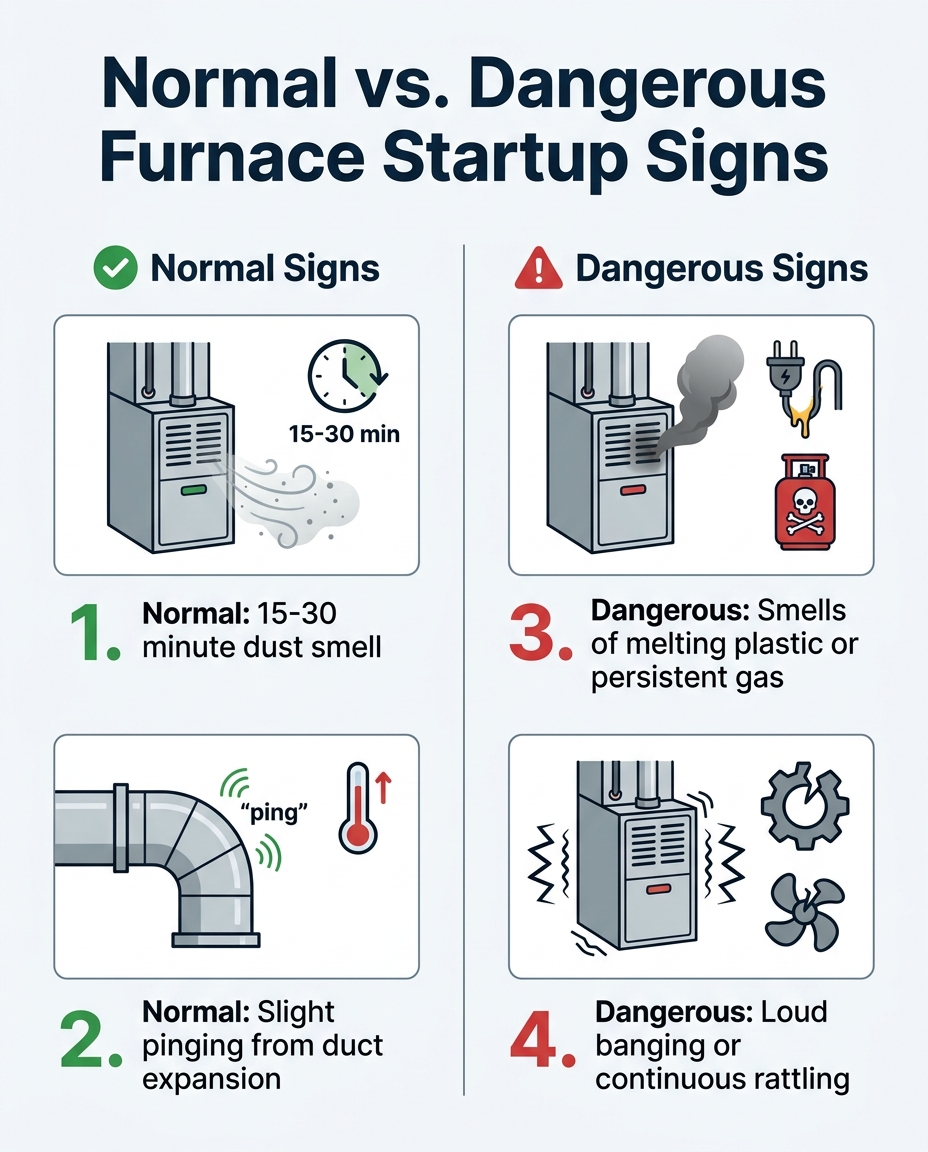
• Track the time: The burning dust smell should peak within the first five to ten minutes of the heating cycle and completely dissipate within 15 to 30 minutes.
• Ventilate safely: If the weather allows, crack a few windows to help the initial odor clear out of your home faster.
• Change your filter: Always install a fresh air filter before that first startup. A dirty filter restricts airflow, making the furnace run hotter and the burn-off smell much stronger.
If the smell lingers past the 30-minute mark, or if it grows stronger and more acrid as the system runs, it stops being a normal nuisance and becomes a warning sign that requires professional attention.
Decoding Furnace Noises: Normal Rattles vs. Warning Signs
Just like the smells, the sounds your heating system makes during the October first-freeze heating startup can be alarming. A furnace that has been quiet all summer will suddenly introduce a variety of acoustic changes to your home. Some of these are basic physics at work, while others are cries for help from failing mechanical parts.
When hot air rushes into cold metal ductwork, the metal naturally expands. This thermal expansion causes the ducts to flex against their hangers and joints, resulting in minor popping, pinging, or ticking sounds. This is entirely normal. However, loud, aggressive noises usually point to a component that has vibrated loose or cracked under stress.
• Pinging or Ticking — What It Sounds Like: Light metallic tapping as the blower starts — Likely Cause: Normal thermal expansion of ductwork — Action Required: None. Normal operation.
• Loud Banging (Boom) — What It Sounds Like: A heavy thud right when the furnace ignites — Likely Cause: Delayed gas ignition (gas buildup exploding) — Action Required: Turn off immediately. Call a professional.
• Continuous Rattling — What It Sounds Like: Like a washing machine off-balance — Likely Cause: Loose blower motor wheel or failing bearings — Action Required: Schedule a repair before the motor fails entirely.
• High-Pitched Squealing — What It Sounds Like: Metal grinding on metal or a slipping belt — Likely Cause: Failing inducer motor or worn blower belt — Action Required: Requires professional replacement of the worn part.
Sometimes, what seems like a minor quirk is actually a warning sign. For example, one local customer noticed something off after a new heating system was installed. During a routine winter follow-up check, technicians identified a minor gas leak that could have easily gone unnoticed. Catching it early prevented a major safety hazard, which is why paying attention to unusual smells and sounds is so important. Ignoring a severe rattling or banging noise on a cold night often leads to complete system failure right when you need heat the most.
When to Worry: Spotting Genuine Heating Safety Hazards
While a brief dust smell is harmless, there are specific odors and behaviors that mean you should shut your thermostat off immediately. Knowing where to draw the line between a seasonal quirk and a safety hazard protects your home and your family.
If you smell electrical burning—often described as melting plastic, hot wires, or a fishy odor—that is not dust. That is the smell of wire insulation melting away due to excessive electrical current or a failing motor. Similarly, a persistent smell of raw gas (like rotten eggs) or an acrid, chemical exhaust odor that gives you a headache indicates a serious venting problem or a cracked heat exchanger. According to National Fire Protection Association (NFPA) heating safety statistics, heating equipment is a leading cause of home fires. This is why you should never ignore these specific warning signs.
We believe in being a safety-first, honest diagnostic partner. We will never use scare tactics for normal dust burn-off, but we strictly warn against DIY internal inspections when real hazards are present. Opening up your furnace to inspect the heat exchanger or test electrical components without proper training exposes you to high-voltage risks and carbon monoxide exposure.
The Danger of Electrical Smells and Tripped Breakers
Electrical issues often cross over between seasons. The power surges and heavy usage your system endured over the summer can leave hidden damage in your HVAC electrical panel. If your furnace starts up and immediately trips the circuit breaker, do not just keep flipping it back on. A tripping breaker is a critical safety mechanism doing its job to prevent an electrical fire.
If you recently dealt with power issues, you might find our guide on Resetting Your AC's Disconnect Box After a Springfield Summer Storm helpful for understanding how weather impacts your system's electrical health. When a furnace breaker trips repeatedly alongside a melting plastic smell, you need a professional electrical diagnostic immediately.
Normal vs. Dangerous Furnace Startup Signs
How High Humidity Impacts Your Home's Air Quality in Fall
The transition from summer to fall doesn't just change the temperature; it drastically changes your indoor air quality. That same sticky, humid dust that causes the furnace smell is also circulating continuously through your ductwork. Central Illinois / Springfield area homes often feel stuffy during this seasonal shift because the ductwork acts as the respiratory system of the house.
When the furnace finally kicks on, it takes the lingering humid summer air and rapidly dries it out. This sudden shift to dry, heated winter air can irritate your respiratory tract, making you more susceptible to fall allergy triggers. The dust and debris burning off the heat exchanger only add to the particulate matter floating in your living space.
To combat this, the fall startup is the perfect time to evaluate your home's breathing environment. Upgrading from a basic fiberglass filter to a high-efficiency pleated filter can capture much of the dust before it ever reaches the heat exchanger. For homes that struggle with persistent seasonal allergies or lingering odors, exploring dedicated Indoor Air Quality Solutions—like whole-home air purification or UV light systems—can neutralize airborne pollutants and drastically reduce the severity of that October burn-off smell.
The Value of Pre-Season Checks for Older HVAC Systems
The absolute best way to eliminate the anxiety of the October first-freeze heating startup is to have the system inspected before you actually need it. A professional pre-season check goes far beyond just swapping out an air filter. It is a comprehensive safety audit of your home's most critical winter appliance.
One Springfield homeowner who recently moved to a new house called for a fall pre-season check on their heating and air conditioning systems. Relying on a team with over 20 years of service history in the area gave them the assurance that their newly acquired, older equipment was thoroughly checked and safe to operate before freezing temperatures arrived.
What a professional pre-season check entails:
• Checking for gas leaks: Technicians verify that the gas valve is operating correctly and that there are no slow leaks around the fittings.
• Inspecting the heat exchanger: Using specialized cameras, professionals look for hairline cracks that could leak carbon monoxide into your home.
• Testing safety switches: The high-limit switch and flame sensor are tested to ensure the furnace will automatically shut down if it overheats or fails to ignite properly.
• Measuring electrical draw: Blower motors and inducer motors are tested to ensure they aren't pulling too much power, which indicates imminent failure.
Identifying a failing component in early fall gives you a massive advantage. Instead of waking up freezing in January and rushing into an emergency repair, you have the time to explore your options, including looking into new HVAC Products if a replacement makes more sense than a repair. Routine maintenance is always an investment in safety, longevity, and your own peace of mind.
Comprehensive FAQ: Common Homeowner Questions Answered About Furnace Startup
When the temperature drops, we field hundreds of calls from concerned homeowners. Here are the most common homeowner questions answered regarding that crucial first heating cycle of the year.
Is it normal for a furnace to smell like burning when first turned on?
Yes, it is typically normal for a furnace to produce a burning smell during its first cycle of the season. This is caused by dust, pet dander, and debris burning off the heat exchanger. Because the system has sat unused for months, this accumulation is unavoidable, and the high heat of the burners simply bakes it away.
How long does the burning smell last on a heater?
The burning smell usually lasts 15 to 30 minutes during the first heating cycle. Once the initial layer of dust is burned away, the odor should fade completely. If the smell lasts longer than an hour, or if it smells like melting plastic rather than dusty smoke, shut the system down and call a professional immediately.
Why is my furnace making a loud rattling noise?
Minor pinging or ticking is normal duct expansion, but a loud rattling noise indicates a mechanical problem. Loud rattling usually points to loose internal components, a failing blower motor bearing, or a cracked heat exchanger. These sounds should never be ignored, as they can lead to complete system failure or safety hazards.
Can a dirty furnace catch on fire?
Yes, excessive buildup inside a dirty furnace can become a fire hazard. While a light layer of dust burning off is normal, heavy accumulations of debris, lint, or nearby combustible materials can ignite. Regular professional maintenance and consistent filter changes are the best ways to mitigate this risk and keep your home safe.
Why does my furnace smell worse after a humid Central Illinois summer?
High humidity causes dust to become sticky and cling tightly to internal furnace components. Over a humid summer, this creates a denser, caked-on layer of debris on the heat exchanger. When the furnace finally turns on, this thicker crust produces a much stronger, more noticeable odor as it burns off compared to homes in drier climates.
What should I do if the burning smell lasts longer than 30 minutes?
If the burning smell persists beyond 30 minutes, turn off your thermostat immediately. Open windows to ventilate the house and call a licensed HVAC technician. A persistent smell often indicates an electrical issue, a failing motor, or a blocked vent that requires professional diagnosis to prevent fire or carbon monoxide risks.
Get Peace of Mind for Your Springfield Home This Winter
Navigating the transition into winter doesn't have to be a stressful experience. While a brief burning dust smell and a few popping ducts are perfectly normal quirks of an October startup, you should never have to guess whether your system is actually safe to run. Persistent electrical odors, loud banging noises, and continuous rattling are clear signs that your equipment needs a professional eye.
We know how much Central Illinois / Springfield area homes rely on consistent, safe heating when the deep freeze sets in. We prioritize honest diagnostics over guesswork, ensuring you know exactly what is happening inside your system. If you have any doubts about your furnace's readiness, or if that startup smell just won't go away, schedule a comprehensive safety check today. Getting ahead of the cold weather ensures your family stays warm, comfortable, and completely safe all winter long.
Common Homeowner Questions Answered: Is That First-Run Furnace Smell Dangerous?
October 5, 2026
Wondering if that first-run furnace smell is dangerous? Get clear answers and have your common homeowner questions answered before the cold weather hits.
Wondering if that first-run furnace smell is dangerous? Get clear answers and have your common homeowner questions answered before the cold weather hits.
Comparing Prepaid HVAC Maintenance Agreements vs A La Carte Fall Tune-Ups
October 3, 2026
Treat heating maintenance as more than a simple transaction. Weigh the long-term benefits of an ongoing service plan against a one-off furnace check before the first winter freeze hits.
Treat heating maintenance as more than a simple transaction. Weigh the long-term benefits of an ongoing service plan against a one-off furnace check before the first winter freeze hits.