Why Tankless Water Heater Maintenance Tips Matter for Your Home
Tankless water heater maintenance tips are something every homeowner with an on-demand system needs to know — because without regular upkeep, even the best unit will lose efficiency, develop problems, and wear out far sooner than it should.
Here's a quick summary of the most important maintenance tasks to keep your tankless water heater running strong:
1. Flush and descale the heat exchanger once a year (every 6 months in hard water areas)
2. Clean the inlet water filter every 6 to 12 months
3. Clean or replace the air intake filter annually
4. Test the pressure relief (T&P) valve once a year
5. Inspect venting and connections annually, especially on gas units
6. Do a monthly visual check for error codes, leaks, or anything unusual
7. Winterize outdoor units before freezing temperatures arrive
8. Call a professional for gas, electrical, or warranty-related work
Tankless water heaters are one of the smartest investments a homeowner can make. They're 24% to 34% more energy-efficient than traditional storage tank models, and with proper care, they can last 20 years or more — roughly double the lifespan of a conventional tank heater. But that impressive track record comes with a catch: these systems are more sensitive to mineral buildup and debris than most homeowners realize. Skip the maintenance, and that 20-year unit can start failing in as little as 8 to 12 years.
The good news? Most of the essential upkeep is straightforward, and a consistent routine can protect your investment for decades.
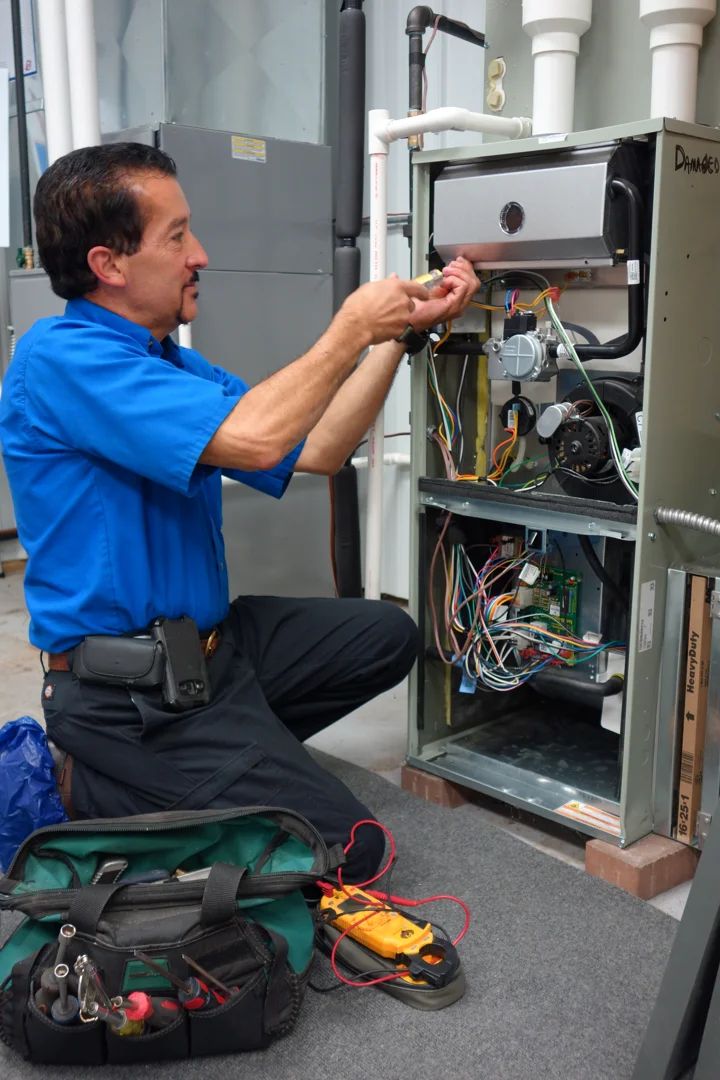
Why is regular maintenance important for my tankless water heater?
The primary reason maintenance is so critical for tankless units is a process called "scaling." Unlike traditional tanks that hold 40 or 50 gallons of water, a tankless unit heats water instantly as it flows through a compact heat exchanger. Because these internal passages are often only about 1/8 inch in diameter, even a small amount of mineral buildup can cause big problems.
When hard water (common in many parts of Illinois) is heated, minerals like calcium and magnesium solidify and stick to the walls of the heat exchanger. This scale acts as an insulator, forcing the unit to work harder and run hotter to reach the desired temperature. Over time, this leads to:
• Efficiency Loss: Even 1/8 inch of scale can reduce efficiency by 20%.
• Overheating: The unit may shut down to protect itself from heat damage.
• Shortened Lifespan: Neglected units often fail in 8–13 years, whereas maintained units can easily exceed 20 years.
• Higher Energy Bills: If the unit has to run longer to heat the water, you'll see it on your monthly statement.
Addressing Sediment Buildup in Tankless Water Heater systems is the best way to ensure you actually get the energy savings these units promise.
• Average Lifespan — Tankless Water Heater: 20+ Years — Traditional Tank Heater: 8–12 Years
• Energy Efficiency — Tankless Water Heater: 24%–34% More Efficient — Traditional Tank Heater: Standard Efficiency
• Space Required — Tankless Water Heater: Small, Wall-Mounted — Traditional Tank Heater: Large, Floor-Standing
• Maintenance Need — Tankless Water Heater: Annual Descaling — Traditional Tank Heater: Annual Sediment Flush
Essential tankless water heater maintenance tips for Springfield homeowners
Living in the Springfield, IL area means dealing with varying water quality. Whether you are in Chatham, Rochester, or Sherman, your unit is likely working hard every single day. We recommend an annual professional service, but there are several tankless water heater maintenance tips you can handle yourself to keep things running smoothly between visits.
A simple monthly visual inspection is a great place to start. Look for any signs of moisture around the base of the unit, check the control panel for blinking error codes, and listen for any "banging" or "rumbling" sounds that might indicate scale buildup. Following these Tankless Heater Repair Springfield IL Tips can help you catch small issues before they turn into midnight emergencies.
Cleaning the inlet water and air intake filters
Most modern tankless units have two types of filters that need your attention. The first is the inlet water filter. This screen catches pebbles, rust, and sediment before they enter the heat exchanger. If this gets clogged, your water pressure will drop significantly.
The second is the air intake filter (found on gas-powered models). Your heater needs oxygen for combustion. If the air filter is covered in dust or pet hair, the unit can’t "breathe," leading to inefficient burning or a complete system shutdown. Keeping these clean is one of the Tankless Water Heater Repair Affordable Tips Springfield IL that saves you from calling out a technician for a simple fix.
To learn more about choosing the right unit for your home, check out our guide on the Best Tankless Water Heater options.
Recognizing signs you need tankless water heater maintenance tips
Your water heater will usually try to tell you when it’s struggling. Don't ignore these red flags:
• Lukewarm Water: If you've noticed your Tankless Water Heater Producing Lukewarm Water, it’s often a sign that the heat exchanger is coated in scale and can’t transfer heat effectively.
• Error Codes: Codes like "LC" or "05" often indicate scale buildup or service requirements.
• Unusual Noises: A humming or knocking sound usually means there is a blockage or the fan is struggling.
• System Shutdowns: If the unit stops mid-shower, you may be dealing with a safety shut-off. Fixing a Tankless Water Heater Shutdown often starts with a thorough cleaning and descaling.
How do I descale my tankless water heater step-by-step?
Descaling (or flushing) is the process of circulating a cleaning solution through the unit to dissolve mineral deposits. While many homeowners choose to have us handle this during an annual service visit, it is a task you can perform yourself if you have the right tools.
Tools Needed for Descaling:
• A 5-gallon bucket
• Two 1/2-inch or 3/4-inch garden hoses
• A small submersible sump pump
• 3 to 4 gallons of food-grade distilled white vinegar (or a commercial descaling solution)
Step-by-Step Guide:
1. Shut off Power and Gas: Turn off the electricity and the gas supply to the unit.
2. Close Water Valves: Close the three water valves attached to your unit (cold water inlet, hot water outlet, and the main supply).
3. Connect Hoses: Attach your hoses to the service ports (usually red and blue). Connect the cold-water hose to the sump pump in your bucket.
4. Circulate Vinegar: Pour the vinegar into the bucket. Open the service port valves and turn on the pump. Let the vinegar circulate through the heater for 45 to 90 minutes.
5. Rinse: Turn off the pump, discard the vinegar, and flush the unit with fresh water for 10 minutes to remove any remaining acidity.
6. Restart: Disconnect the hoses, clean the inlet filter, and turn your water, gas, and power back on.
For a more detailed look at this process, see our Tankless Repair Springfield IL Guide.
Managing water hardness and scaling issues
If you live in a high-hardness area like Riverton or Pleasant Plains, you might find yourself needing to flush your unit every six months instead of every year. One way to reduce this burden is by installing a whole-home water softener. By removing the minerals before they ever reach the heater, you significantly reduce the rate of scale formation. There are many Advantages Switching to Tankless Water Heaters, but they perform best when paired with good water quality.
How to winterize and protect your outdoor tankless unit
While many units in Illinois are installed indoors, some are mounted on exterior walls. If you have an outdoor unit, winterization is non-negotiable. During a power outage, the internal freeze-protection heaters won't work, and the water inside the heat exchanger can freeze and crack the pipe in minutes.
To protect your unit:
• Insulate Pipes: Use foam pipe insulation on all exposed water lines.
• Drain the Unit: If a major freeze is coming and you expect power outages, use the isolation valves to drain the water out of the unit entirely.
• Install a Recirculation Pump: This keeps water moving, which makes it much harder to freeze.
Proper Benefits Temperature Control with Tankless Systems depends on the unit remaining undamaged by the elements.
When should I call a professional for tankless service in Springfield?
While DIY maintenance is great for filters and basic flushing, some things require a professional touch. At Allied Plumbing, Heating & Cooling, we’ve been serving the Springfield area since 1977, and we’ve seen what happens when complex repairs go wrong.
You should call us if:
• You smell gas: This is an emergency. Shut off the gas and call us immediately.
• Venting Issues: If you see soot or debris around the vent termination, it could indicate a dangerous combustion problem.
• Persistent Error Codes: If a code won't go away after a flush, a sensor or internal component may have failed.
• Warranty Concerns: Some manufacturers require professional service records to keep your warranty valid.
Our Tankless Water Heater Repair Springfield Guide covers more about when to DIY and when to call for backup. We also provide a Tankless Water Heater Repair Commercial Guide Springfield IL for business owners in the area.
Professional support and tankless water heater maintenance tips
When we perform a professional maintenance visit, we do more than just a flush. We check the gas pressure, test the flame rod, inspect the ignition system, and ensure the venting is clear of bird nests or debris. This comprehensive approach is why we are considered the Tankless Water Heater Repair Springfield IL Best choice for local families.
Frequently Asked Questions about Tankless Maintenance
How often should a tankless water heater be flushed?
For most homes, once a year is the gold standard. However, if your water is exceptionally hard (above 10 grains), we recommend flushing every 6 months to prevent the heat exchanger from clogging.
Can I use regular white vinegar to descale my unit?
Yes! Standard food-grade distilled white vinegar is an excellent, safe, and inexpensive descaler. It is acidic enough to dissolve calcium without damaging the copper or stainless steel components of your heater.
Will performing my own maintenance void the manufacturer warranty?
In most cases, no — as long as you follow the instructions in your owner's manual. However, some brands require "documented professional maintenance" for certain high-level warranty claims. Always keep a log of when you cleaned the filters or flushed the system.
Conclusion
Taking care of your tankless water heater doesn't have to be a chore. By following these tankless water heater maintenance tips, you can enjoy lower utility bills, consistent hot water, and the peace of mind that comes with a reliable system. Whether you are in Auburn, Athens, or right here in Springfield, Allied Plumbing, Heating & Cooling is here to help.
As a 3-generation family business, we take pride in our work and offer the Daikin Comfort Promise to ensure your satisfaction. Don't wait until you're shivering in a cold shower — Schedule your professional tankless water heater service in Springfield IL today and keep the heat on for years to come!