Why Learning How to Extend the Life of Your AC in the Midwest Could Save You Thousands
Knowing how to extend the life of your AC in the Midwest is one of the most practical things you can do as a homeowner in Springfield, Rochester, or Chatham. The Midwest climate is uniquely tough on cooling systems — swinging from bitter cold winters to hot, sticky summers — and that stress adds up fast.
Here are the five proven ways to get more years out of your AC:
1. Change air filters regularly — every 30 to 60 days during peak season
2. Keep the outdoor unit clear — maintain at least two feet of clearance on all sides
3. Optimize your home's efficiency — seal ducts, improve insulation, and use a smart thermostat
4. Schedule a professional spring tune-up — before the first hot day of the year
5. Avoid common mistakes — like closing vents, ignoring odd noises, or using airtight winter covers
A well-maintained AC in Illinois can last 15 to 20 years. A neglected one may give out in 12 years or less. That gap represents thousands of dollars in premature replacement costs — plus the misery of a breakdown on a 95-degree July afternoon.
For more on how lifespan varies by system, see How Long Does an AC Unit Last in Illinois and the Average Lifespan of an HVAC System.
Up to 90% of HVAC breakdowns are preventable with consistent care. The sections below walk you through exactly what to do — and what to stop doing — so your system runs strong for years to come.

Understanding the Midwest Climate Strain on Your Cooling System
To understand why your air conditioner requires intentional care, you have to look at the unique environmental challenges of living in Sangamon County. Our weather doesn't do things in moderation. We experience dramatic seasonal transitions and intense temperature swings that can leap 40 degrees in a single day.
When summer arrives in Springfield, Rochester, and Chatham, it brings heavy, suffocating humidity. This humidity doesn't just make the outdoor air feel sticky; it changes how your air conditioner has to operate. An AC is not just a temperature-dropping machine—it is also a massive dehumidifier. To cool your home, the system must condense and drain gallons of water out of the air every single day. When humidity levels consistently rise above 60%, your system has to work twice as hard to achieve the same level of indoor comfort. For tips on managing this specific seasonal issue, read our guide on Preparing Your Cooling System for Summer Humidity.
Additionally, the physical environment of the Midwest presents unique hazards:
• Cottonwood Seeds: Every spring, cottonwood trees release a fluffy white barrage of seeds. These seeds act like a blanket, wrapping around your outdoor unit's condenser coils and choking off vital airflow.
• Agricultural Dust & Pollen: Surrounded by beautiful Illinois farmland, our homes are subject to high levels of airborne dust, crop debris, and pollen, which quickly clog up indoor air filters.
• Freeze-Thaw Cycles: The harsh transition from sub-zero winter temperatures to blistering summer heat causes metal components in your AC to expand and contract. Over time, this mechanical fatigue can lead to loose electrical connections and refrigerant leaks.
How to Extend the Life of Your AC in the Midwest: 5 Proven Methods
Extending the lifespan of your cooling system boils down to one simple concept: reducing its workload. An air conditioner that runs efficiently and doesn't have to struggle to pull in air or release heat will naturally experience less wear and tear.
Think of your AC like a car. If you drive a vehicle with low oil, flat tires, and a trunk full of heavy bricks, the engine will burn out long before its time. Similarly, an AC operating with clogged filters, dirty coils, and leaky ductwork is accumulating "mileage" at an accelerated rate. By practicing proactive, preventative maintenance, you can keep your system running at peak efficiency, which can lower your monthly utility bills by 10% to 25% while adding up to five extra years to the system's life.
To help you protect your investment, we have compiled a comprehensive AC Maintenance for Year-Round Comfort strategy and a handy Summer AC Maintenance Checklist for Homeowners to guide your seasonal routine.
1. Master Filter Care: How to Extend the Life of Your AC in the Midwest
The single most important DIY maintenance task is also the easiest to forget: changing your indoor air filter.
Your air conditioner relies on a steady, unobstructed stream of return air to keep its evaporator coils cold. When a filter becomes loaded with dust, pet dander, and pollen, it acts like a breathing mask. This restriction forces the blower motor to work twice as hard to pull air through the system, which dramatically increases your energy consumption and places intense mechanical strain on the motor.
Furthermore, restricted airflow causes the temperature around the evaporator coil to drop below freezing. When this happens, the moisture your system is pulling from the air turns to ice, completely freezing over the coils and potentially causing liquid refrigerant to flood back into the compressor—a catastrophic failure that often requires a full system replacement.
To protect your system, keep these filter guidelines in mind:
• Check Monthly: During peak cooling months (June, July, and August), check your filter every 30 days. If you have pets, live near active farmland, or suffer from seasonal allergies, you will likely need to replace it monthly.
• Choose the Right MERV Rating: For residential systems, look for filters with a Minimum Efficiency Reporting Value (MERV) between 8 and 11. These filters provide an excellent balance of allergen filtration without placing excessive resistance on your system's blower motor. Avoid heavy-duty MERV 13+ filters unless your system was specifically designed to handle them.
• Recognize the Danger: To understand the severe mechanical consequences of neglect, read more about How Dirty Air Filters Destroy Your AC Performance.
2. Maintain Outdoor Unit Clearance and Airflow
While the indoor portion of your AC handles the cooling, the outdoor condenser unit is responsible for releasing the heat squeezed out of your home. If the outdoor unit cannot breathe, heat builds up inside the system, forcing the compressor to run at higher temperatures and pressures, which rapidly degrades the machinery.
To ensure your outdoor unit has the airflow it needs to dump heat effectively, follow these steps:
• Maintain Two Feet of Clearance: Keep a clear, two-foot perimeter around all sides of your outdoor condenser. Trim back bushes, wild weeds, and decorative flowers. Ensure there is at least five feet of open space above the unit so hot air escaping from the top doesn't recirculate back down.
• Gently Clean the Coils: Grass clippings from lawnmowers, dirt, and cottonwood seeds can form a thick crust on the metal fins of your condenser. Once or twice a summer, turn off the power to the unit and gently rinse the exterior coils with a garden hose.
• Never Use a Power Washer: The high-pressure stream of a power washer will instantly bend the delicate aluminum fins on your condenser, permanently blocking airflow and requiring tedious manual straightening.
3. Optimize Indoor Environment with Smart Thermostats and Insulation
You can drastically extend your AC's lifespan by reducing the overall cooling demand of your home. The less heat that enters your house, the less your air conditioner has to run.
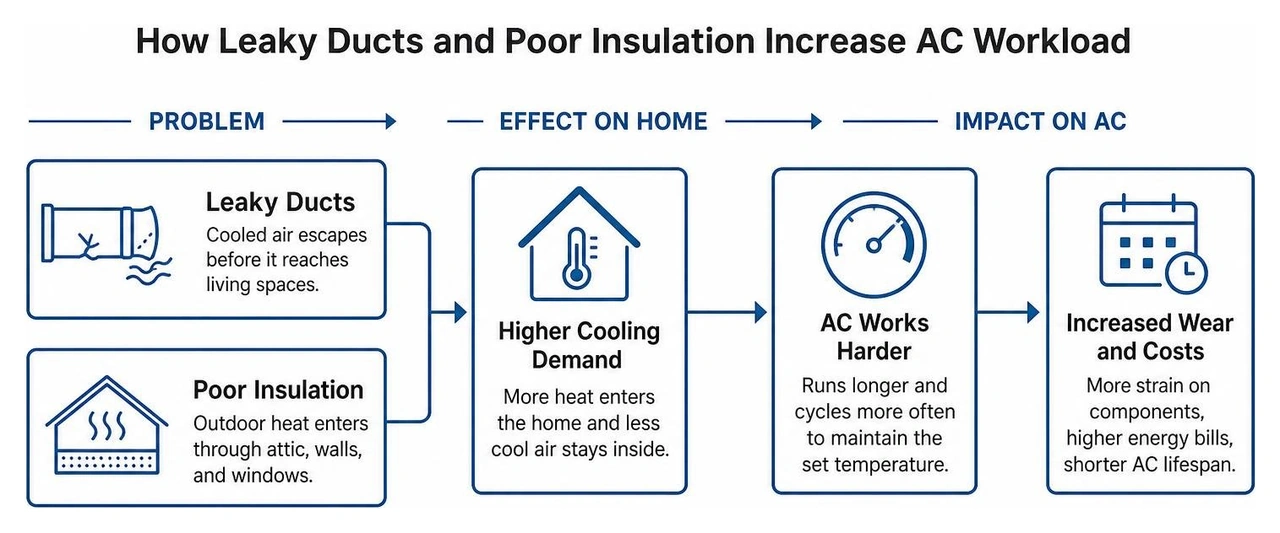
By addressing your home's thermal envelope, you can keep the cool air inside where it belongs:
• Upgrade to a Smart Thermostat: A smart thermostat prevents unnecessary cooling when you are away. Setting your thermostat 7 to 10 degrees higher when you are at work or traveling can reduce your system's daily run time significantly.
• Seal Your Ductwork: The average Illinois home loses roughly 25% of its cooled air through leaky, unsealed ducts in crawlspaces, basements, and attics. This means your AC has to run 25% longer just to meet your thermostat settings. Sealing these gaps keeps the conditioned air in your living spaces and reduces wear on your system.
• Boost Attic Insulation: In the hot summer months, attic temperatures can easily climb past 130 degrees. If your attic lacks proper insulation, that intense heat will radiate directly down through your ceilings. Upgrading your attic insulation to recommended R-49 to R-60 levels acts as a barrier, lowering the overall cooling load on your air conditioner.
• Manage Solar Heat Gain: Keep blinds and curtains closed on south- and west-facing windows during the hottest parts of the day to block natural greenhouse warming.
4. Schedule Professional Spring Tune-Ups
While DIY tasks like changing filters and clearing brush are vital, they only cover about 20% of your system's overall maintenance needs. The remaining 80% requires the specialized tools and technical training of a professional technician.
Scheduling professional maintenance in the early spring (ideally March or April) is the absolute best way to prevent mid-summer breakdowns. During a professional tune-up, a technician performs precise calibrations that keep the system running efficiently:
• Refrigerant Level Verification: An AC system does not "consume" refrigerant. If levels are low, there is a leak. Even a minor 10% loss in refrigerant can increase your monthly energy bills by 20% and cause the compressor to overheat. A technician can find and patch micro-leaks before they destroy your compressor.
• Electrical Component Testing: Technicians measure voltage and current on motors, and inspect contactors and capacitors. Capacitors are like batteries that give your AC the boost it needs to start up; if they fail, the motor can burn out. Catching a weak capacitor during a spring inspection is a simple fix that prevents a major summer headache.
• Coil Cleaning and Calibration: Professional cleaning of the indoor evaporator coil and outdoor condenser coil ensures optimal heat transfer, keeping your system's efficiency high.
To learn more about timing and preventative benefits, explore the Best Time of Year to Schedule Your AC Tune-Up and understand How an AC Tune-Up Prevents Costly Summer Breakdowns.
5. Avoid Common Mistakes: How to Extend the Life of Your AC in the Midwest
Sometimes, the best thing you can do for your air conditioner is to stop doing things that inadvertently harm it. Here are three incredibly common mistakes that homeowners in Springfield, Rochester, and Chatham make that cut their AC's life short:
Closing Vents in Unused Rooms
Many homeowners believe that closing registers in empty spare bedrooms will save energy by redirecting cool air to the rest of the house. In reality, modern central air systems are engineered to move a very specific volume of air based on the home's size. Closing vents increases the static pressure inside your ductwork, forcing the blower motor to work against high resistance. This can lead to motor failure, frozen coils, and leaky duct connections. Keep all interior doors open and at least 80% of your registers completely unobstructed.
Ignoring Minor Noises
An air conditioner should never make loud clanging, squealing, or clicking sounds. A screeching sound often points to a failing blower motor belt or bearing, while clicking can indicate an electrical contactor issue. Ignoring these minor warnings allows small problems to cascade into major mechanical failures.
Wrapping the Entire Unit in Plastic for Winter
Shrink-wrapping or tightly covering your entire outdoor unit with a plastic tarp is a major mistake. These airtight covers trap heavy winter condensation inside the cabinet, creating a highly corrosive environment that rusts out metal components, ruins electrical wiring, and promotes mold growth. Furthermore, a fully enclosed unit creates a warm, dry haven that invites mice and other pests to nest inside and chew through vital wiring.
Instead of wrapping the unit, simply place a weighted piece of plywood across the top of the condenser. This protects the fan motor from falling icicles and heavy snow while allowing the sides of the unit to breathe naturally. For more localized advice, check out our AC Tune-Up Guide for Illinois Homeowners.
Recognizing the Warning Signs of an Aging AC System
Even with impeccable maintenance, every mechanical system will eventually reach the end of its natural life. Knowing how to spot the early warning signs of decline allows you to plan for a replacement on your own terms, rather than dealing with an emergency replacement during a heatwave.
Keep an eye out for these common indicators of a struggling system:
• Short Cycling: If your AC turns on and off rapidly every few minutes without completing a full cooling cycle, it is under intense electrical and mechanical strain.
• Warm Air or Weak Airflow: If the air coming out of your vents is lukewarm or barely blowing, your compressor or blower motor may be failing.
• Sticky Indoor Air: If your home feels humid and sticky even when the thermostat says it is 72 degrees, your system has lost its capacity to properly dehumidify.
• Unusual Noises: Screeching, grinding, or loud rattling sounds are clear signs of physical wear on internal components.
• Rising Energy Bills: If your utility bills are climbing year-over-year but your thermostat habits have not changed, your system's efficiency is in steep decline.
To help you decide whether to keep patching up your current unit or start planning an upgrade, review Signs It's Time for an AC Replacement and Signs Your Old AC Unit Needs Replacement.
• System is under 10 years old — Major Replacement Indicators: System is 12 to 15+ years old
• Minor electrical issue (e.g., failed capacitor) — Major Replacement Indicators: Failed compressor or cracked coil
• Standard, modern R-410A refrigerant — Major Replacement Indicators: Obsolete R-22 Freon refrigerant
• Energy bills are stable and predictable — Major Replacement Indicators: Energy bills are rising steadily
• Repair costs are minor and infrequent — Major Replacement Indicators: Repair costs fail the "50% rule" or "$5,000 rule"
Frequently Asked Questions About Midwest AC Longevity
Navigating air conditioner maintenance in Illinois can bring up plenty of questions. Here are some of the most common concerns we hear from local homeowners:
Should I cover my outdoor AC unit during a Midwest winter?
Generally, no. Modern outdoor condenser units are engineered to withstand extreme winter weather, including heavy snow and freezing temperatures. Wrapping the entire unit in plastic traps moisture, which leads to rust, corrosion, and electrical issues. It also attracts rodents looking for a winter shelter. The best practice is to place a piece of plywood on top of the unit to protect the fan from falling icicles while keeping the sides open for airflow.
How often should I change my air filters during a humid Illinois summer?
During high-use seasons in Springfield, Rochester, and Chatham, you should inspect your air filter every 30 days. Replace it at least every 60 days, or every 30 days if you have indoor pets, suffer from allergies, or live near dusty agricultural areas. In milder spring and autumn months, you can typically wait up to 90 days between replacements.
When does repairing an older AC stop making financial sense?
Two helpful guidelines can help you make this decision:
• The 50% Rule: If the cost of a single repair is more than 50% of the total value of a new, high-efficiency replacement system, it is time to upgrade.
• The $5,000 Rule: Multiply the age of your system by the cost of the recommended repair. If the total is greater than $5,000, replacing the unit is usually the smarter financial decision. For example, a $600 repair on a 10-year-old system equals $6,000—making replacement the better long-term choice.
Additionally, if your system was built before 2010, it likely uses R-22 refrigerant. Because R-22 has been completely phased out by the EPA, sourcing it for repairs is incredibly expensive and unsustainable. For a deeper look at this financial decision, read When the Cost of AC Repair Exceeds the Value of Your System.
Conclusion
Taking care of your air conditioner is all about protecting your home, your family's comfort, and your hard-earned money. By practicing simple DIY steps like regular filter changes and keeping your outdoor unit clear, and combining them with professional seasonal maintenance, you can keep your system running beautifully for up to 20 years.
At Allied Plumbing, Heating & Cooling, we have been serving families across Springfield, Rochester, and Chatham since 1977. As a three-generation family business, we take pride in delivering honest, reliable service that you can trust. We are proud to offer the Daikin Comfort Promise, complete with outstanding 12-year warranties that give you ultimate peace of mind.
Don't wait for the hottest day of the summer to find out if your air conditioner is up to the challenge. Schedule professional air conditioning services today with our friendly team, and keep your home cool and comfortable all summer long!