Why Understanding How a Jammed Disposal Can Damage Your Plumbing Could Save You a Costly Repair
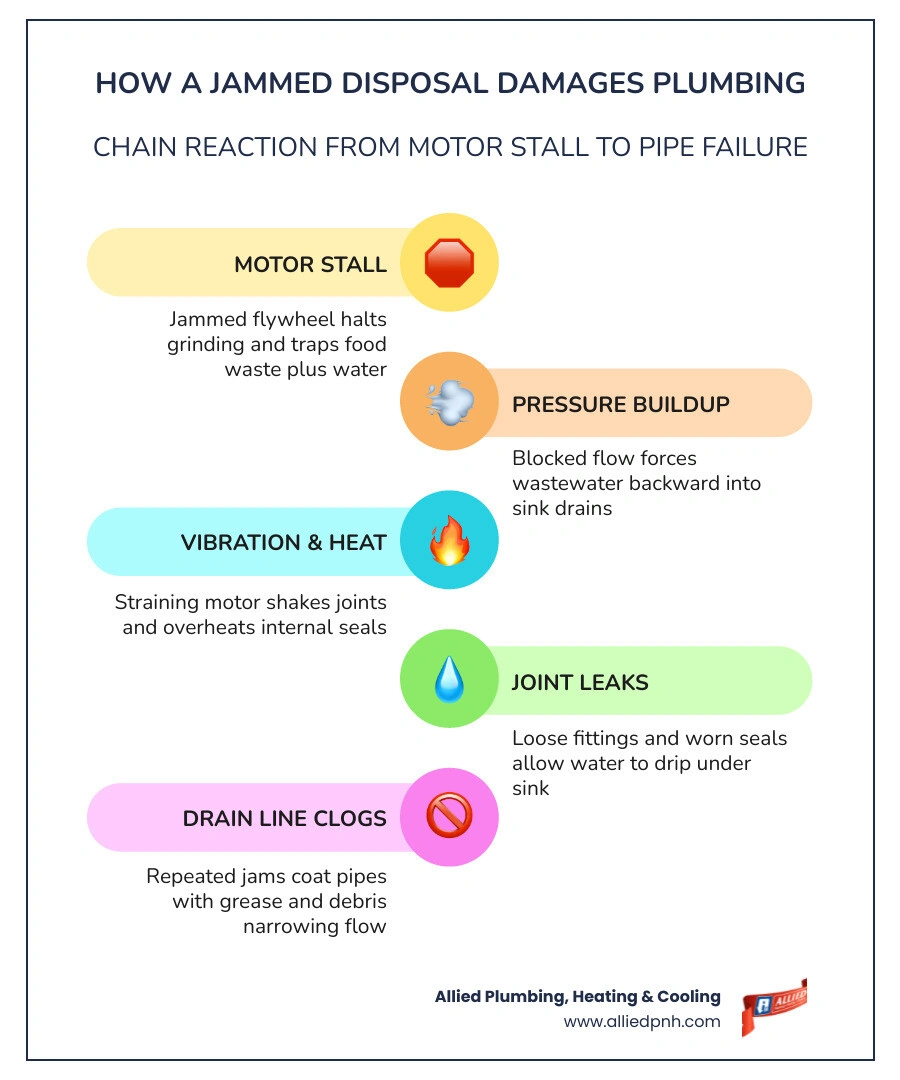
Understanding how a jammed disposal can damage your plumbing starts with knowing what happens the moment that motor stalls. When a disposal jams, it does not just stop grinding — it can trigger a chain reaction that puts stress on your drain lines, pipe joints, and even your sewer connection.
Quick answer: Ways a jammed disposal can damage your plumbing
• Pipe backups — A blocked disposal traps food waste and water, forcing wastewater back up through drain lines into your sink or a connected double-bowl sink
• Joint stress and leaks — Pressure buildup and vibration from a stalled or struggling motor can loosen fittings and pipe connections under the sink
• Seal failure — A motor that runs while jammed generates heat and stress that wears out internal seals, which can lead to leaks at the bottom of the unit
• Drain line clogs — Grease, starch, and food debris that accumulates during repeated jams gradually coats pipe walls and narrows your drain lines
• Structural pipe strain — Over time, repeated jams and the vibration they produce can shift pipe alignment and cause slow, hidden water damage
Garbage disposals are one of the most used fixtures in any kitchen. According to Consumer Reports, the average unit lasts between 8 and 15 years — but only with reasonable care. Push it past its limits, and the damage rarely stays contained to the disposal itself. Plumbers consistently report that the day after Thanksgiving is their single busiest day of the year, with service calls jumping 50% compared to a normal Friday, according to Roto-Rooter. The reason? Kitchens get overloaded, disposals get jammed, and pipes pay the price.
Whether you are in Springfield, Rochester, or Chatham, a jammed disposal left unaddressed is not just an inconvenience — it is a plumbing problem in progress.
Essential how a jammed disposal can damage your plumbing terms:
• garbage disposal maintenance tips to prevent breakdowns
• garbage disposal repair and replacement guide for homeowners
What Causes a Garbage Disposal to Jam?
To understand how a jammed unit threatens your pipes, we must first look at what causes these mechanical standstills. A garbage disposal is not an all-powerful industrial shredder. It is a finely balanced appliance that relies on spinning metal impellers to fling food waste against a stationary grind ring. When something interrupts this process, the flywheel seizes, the motor hums in protest, and a jam is born.
Several common culprits are responsible for the vast majority of disposal jams:
• Fibrous Foods: Vegetables like celery, corn husks, onion skins, and asparagus might seem harmless, but their long, stringy fibers act like rope. They wrap around the spinning impellers, binding them tightly to the flywheel and stalling the motor.
• Starchy Foods: Pasta, rice, oatmeal, and potato peels are notorious for causing blockages. When exposed to water, these starches expand and turn into a thick, sticky paste. This paste easily jams the impellers and coats the drain lines, drying into a cement-like plug.
• Fats, Oils, and Grease (FOG): Pouring warm grease down the drain is a major plumbing mistake. While it might look liquid when hot, it quickly cools and solidifies inside the disposal chamber and the surrounding pipes. This sticky coating traps other food particles, leading to massive clogs and physical jams.
• Hard Objects: Animal bones, fruit pits (like peach or cherry pits), and seafood shells are simply too hard for standard residential disposals to grind. When these objects get wedged between the impeller and the grind ring, they stop the motor instantly.
• Foreign Non-Food Items: Silverware, twist ties, pull tabs, bottle caps, and produce stickers frequently slip past the rubber splash guard. A single stray spoon can bend an impeller, crack the flywheel, or cause an immediate jam.
To keep your kitchen running smoothly, it is vital to treat your disposal like a tool for rinsing plates, not a secondary trash can. Food waste constitutes the most significant percentage of materials sent to landfills, making up 24.1% of municipal solid waste according to the EPA. While composting is a fantastic alternative for heavy food waste, keeping these items out of your plumbing entirely is the best way to prevent unexpected backups. Implementing proactive garbage disposal maintenance tips to prevent breakdowns will save you from the headache of a seized motor and messy kitchen drains.
How a Jammed Disposal Can Damage Your Plumbing
When your garbage disposal jams, the immediate consequence is a sink that will not drain. However, the secondary effects can be far more destructive to your home’s plumbing system. A stalled disposal creates a physical barrier in your kitchen drain. When you continue to run water or try to force the unit to work, you alter the pressure dynamics under your sink.
Without a clear path forward, wastewater is trapped in the disposal's grinding chamber. This creates standing water that begins to leak through the unit's internal seals or seep out of the pipe connections. The pressure from the standing column of water, combined with the physical force of a struggling motor, pushes against the slip-joint washers and plastic nuts that hold your under-sink drain pipes together. Over time, this pressure causes slow, silent joint leaks that drip directly into your sink cabinet, rotting the wood and inviting mold.
To dive deeper into this mechanical chain reaction, read our detailed guide on how garbage disposal jams turn into plumbing problems.
Structural Strain: How a Jammed Disposal Can Damage Your Plumbing Over Time
The structural damage caused by a jammed disposal often happens so gradually that homeowners do not notice it until a major leak occurs. When a disposal is jammed and the power is turned on, the motor hums loudly. This humming is the sound of electricity surging through a stalled motor, creating intense physical vibration.
This high-frequency vibration travels directly through the disposal housing and shakes the entire under-sink pipe assembly. Most modern kitchen plumbing utilizes plastic PVC pipes joined by slip-joint washers and hand-tightened nuts. Continuous vibration from a jammed or struggling disposal can:
1. Loosen Slip-Joint Fittings: The threaded plastic rings holding your P-trap and waste lines together can slowly back out, breaking the watertight seal.
2. Degrade Plumber's Putty: The sink flange—the metal collar that connects the disposal to the sink drain—is sealed with plumber's putty or a rubber gasket. Constant vibration degrades this seal, allowing water to leak from the top of the disposal down its outer shell.
3. Cause Pipe Misalignment: The physical weight of a heavy, water-logged disposal vibrating violently can pull the drain pipes out of their proper downward slope, causing permanent drainage issues.
These issues are among the most common plumbing repairs and what causes them in residential kitchens, often requiring professional repiping under the sink to correct the structural alignment.
Wastewater Backups: How a Jammed Disposal Can Damage Your Plumbing and Drain Lines
A jammed disposal is a primary catalyst for severe kitchen sink backups. If you have a double-bowl kitchen sink, you have likely noticed that both sides share a common drain line. When a jam blocks the disposal side, any water poured down either side of the sink has nowhere to go.
If you attempt to run the disposal while it is jammed, the impellers cannot spin to push water down the drain. Instead, the pressure forces dirty, bacteria-laden wastewater backward. This water will bubble up through the opposite sink drain, carrying foul odors and decaying food debris with it.
In Rochester drainage systems, where older homes may feature cast iron or galvanized steel drain lines, these backups are particularly problematic. Older pipes often have rough internal walls coated with years of mineral scale. When a jammed disposal fails to grind food properly and allows larger chunks of waste to slip past, these solids catch on the rough pipe walls. This creates a deep-seated clog far down the line, requiring professional drain snaking or hydro-jetting to clear.
Signs Your Jammed Disposal Is Actively Damaging Your Pipes
How do you know if a jammed disposal has transitioned from a simple mechanical issue to an active threat to your plumbing? Monitoring your sink for early warning signs can help you catch leaks before they cause structural damage to your kitchen cabinets.
Keep an eye out for these key indicators:
• Slow Draining on Both Sides: If water takes several minutes to clear from both bowls of a double sink, a partial clog or disposal-induced blockage is restricting the main waste line.
• Metallic Scraping or Loud Screeching: If you clear a jam but hear a harsh scraping sound when turning the unit on, the flywheel may be warped or a hard object is still trapped inside, causing ongoing structural vibration.
• Water Pooling Under the Sink: Frequently check the bottom of your sink cabinet with a flashlight. Dampness, water droplets on the bottom of the disposal, or puddles around the P-trap indicate that joints have vibrated loose or internal seals have failed.
• Musty Odors and Mold Growth: A slow, hidden leak behind the cabinet walls or under the floorboards will quickly trigger mold growth. If your kitchen cabinet smells damp or earthy, water is escaping from your drain lines.
• Drainage Speed — Normal Disposal Operation: Water clears instantly during and after operation — Warning Signs of Active Damage: Standing water in sink; slow drainage on either side
• Unit Sound — Normal Disposal Operation: Smooth, consistent whirring sound — Warning Signs of Active Damage: Loud hum with no spinning; metallic grinding; screeching
• Under-Sink Cabinet — Normal Disposal Operation: Completely dry wood, pipes, and disposal housing — Warning Signs of Active Damage: Water droplets on the unit; damp cabinet base; musty odors
• Sink Connections — Normal Disposal Operation: Flange and waste lines are tight and secure — Warning Signs of Active Damage: Visible dripping from slip-joints; loose or misaligned pipes
Common DIY Mistakes to Avoid When Unjamming a Disposal
When faced with a kitchen sink that will not drain, many homeowners understandably want to resolve the issue quickly. However, well-intentioned DIY attempts often cause far more damage to the disposal and the surrounding plumbing than the original jam itself.
Avoid these common pitfalls to protect your system and your safety:
1. Using Chemical Drain Cleaners: This is perhaps the most damaging mistake you can make. Chemical drain openers are highly corrosive, generating intense heat to melt blockages. This chemical reaction can warp plastic PVC pipes, degrade the rubber gaskets and seals inside your disposal, and corrode the metal grinding components. Furthermore, if the chemical fails to clear the clog, you are left with a sink full of toxic, caustic water that makes professional repair highly hazardous.
2. Inserting Hands Into the Disposal: Never, under any circumstances, place your fingers inside the disposal hopper, even if you believe the power is turned off. The Consumer Product Safety Commission (CPSC) reports thousands of severe hand and finger injuries from garbage disposals annually. If the unit suddenly regains power or the tension on a jammed flywheel is suddenly released, the impellers can spin unexpectedly.
3. Forcing the Flywheel with Improper Tools: While many disposals feature a hex socket on the bottom to manually rotate the flywheel, forcing this socket with excessive leverage can strip the gears, break the motor shaft, or crack the outer housing. Similarly, shoving metal pry bars or screwdrivers down into the top of the disposal can permanently warp the grinding ring.
4. Repeatedly Flipping the Switch: If the disposal hums but does not spin, flipping the wall switch on and off repeatedly will not clear the jam. Instead, it rapidly overheats the electrical motor, melting internal wiring and leading to total motor burnout.
5. Ignoring the Reset Button: Every modern disposal features a built-in thermal overload protector (the red reset button on the bottom). Over 400 DIY appliance repair injuries are reported yearly, many of which stem from working on live electrical components. Always check the reset button and cut the circuit breaker before attempting any mechanical troubleshooting.
When to Stop DIY and Call a Professional Plumber
While minor jams can sometimes be cleared using the hex wrench method, there comes a point where DIY efforts must stop to prevent catastrophic damage. Forcing a repair can turn a simple fix into an expensive replacement of both the appliance and your under-sink piping.
It is time to step away from the tools and call a licensed plumber if you experience any of the following:
• The Motor is Completely Silent: If you press the red reset button, verify the circuit breaker is on, and flip the switch only to hear absolute silence, the motor has likely burned out or suffered a critical electrical failure.
• Water is Leaking from the Bottom of the Unit: If water is dripping directly out of the metal shell on the underside of the disposal, the internal motor seals have failed. This cannot be repaired; the entire unit must be replaced.
• The Flywheel Will Not Budge: If you insert an Allen wrench into the bottom hex socket and it will not rotate in either direction, even with moderate pressure, the jam is severe or the internal bearings have seized.
• You Experience Frequent, Unexplained Jams: If your disposal continues to jam during normal, proper use, the grinding components are likely worn down, or there is an underlying alignment issue within your drain lines.
• A Burning Smell or Smoke Appears: A burning electrical odor is a clear sign of an overheated motor or damaged wiring. Turn off the power at the breaker panel immediately and do not use the sink until a professional inspects it.
For residents in Chatham, Rochester, and Springfield, dealing with a seized unit or a major kitchen backup can quickly escalate. Knowing when to call for backup is key to keeping your home safe. Explore our garbage disposal repair and replacement guide for homeowners to understand your options, and learn how to identify emergency plumbing situations that require help before water damage spreads through your kitchen.
Frequently Asked Questions About Jammed Disposals
Why is my garbage disposal humming but not spinning?
A humming sound indicates that the disposal motor is receiving electrical power but is physically prevented from rotating. This is almost always caused by a physical object—such as a bone, fruit pit, or fibrous food buildup—wedged tightly between the spinning impellers and the stationary grinding ring. Because the motor cannot spin, it draws high electrical current, which creates the humming noise and generates heat. If left on, the unit's built-in thermal overload protector will eventually trip to prevent a fire, shutting down power to the unit completely.
Can a jammed disposal cause a leak under the sink?
Yes, a jammed disposal is a major cause of under-sink leaks. The standing water trapped inside a jammed unit exerts constant hydraulic pressure on the plumbing joints. Additionally, if you run the motor while it is jammed, the resulting high-frequency vibrations can loosen the slip-joint nuts on your plastic drain pipes and degrade the plumber's putty sealing the sink flange. Over time, this allows water to seep out, causing hidden water damage, warped cabinetry, and mold growth beneath your sink.
How do I safely unjam my garbage disposal?
To safely unjam a disposal, always start by disconnecting the power. Turn off the wall switch and unplug the unit from the outlet under the sink (or turn off the corresponding circuit breaker). Next, look at the very bottom of the disposal housing for a small, recessed hexagonal hole in the center. Insert a 1/4-inch Allen wrench (often called a disposal wrench) into this socket and gently rock it back and forth.
Once the wrench spins freely in a full circle, the physical jam is cleared. Use tongs or pliers—never your hands—to reach into the sink drain and retrieve the loose object that caused the jam. Finally, plug the unit back in, press the red reset button on the bottom of the housing, run cold water, and flip the switch to test the unit.
Conclusion
A jammed garbage disposal is more than just a minor kitchen inconvenience; it is a direct threat to the integrity of your home's plumbing system. From loosened pipe joints and structural vibrations to severe wastewater backups, a stalled motor can quickly lead to expensive water damage if ignored. By practicing smart food disposal habits, running plenty of cold water, and avoiding harsh chemical cleaners, you can protect both your appliance and your pipes.
At Allied Plumbing, Heating & Cooling, we have been serving our neighbors in Springfield, Rochester, and Chatham since 1977. As a three-generation family business, we bring decades of hands-on experience to every job, ensuring your home's plumbing remains reliable and efficient. Whether you need to clear a stubborn drain clog, repair a leaking pipe, or replace an old, seized garbage disposal, our team is available 24/7 to provide prompt, professional service.
Do not let a stubborn kitchen jam turn into a major plumbing emergency. Schedule professional plumbing services today with Allied Plumbing, Heating & Cooling and keep your kitchen running smoothly!