Why Hard Water in Sangamon County Eats Through Cheaper Big-Box Store Faucets
Why Hard Water in Sangamon County Eats Through Cheaper Big-Box Store Faucets
The Hidden Cost of Springfield's Hard Water on Your Plumbing
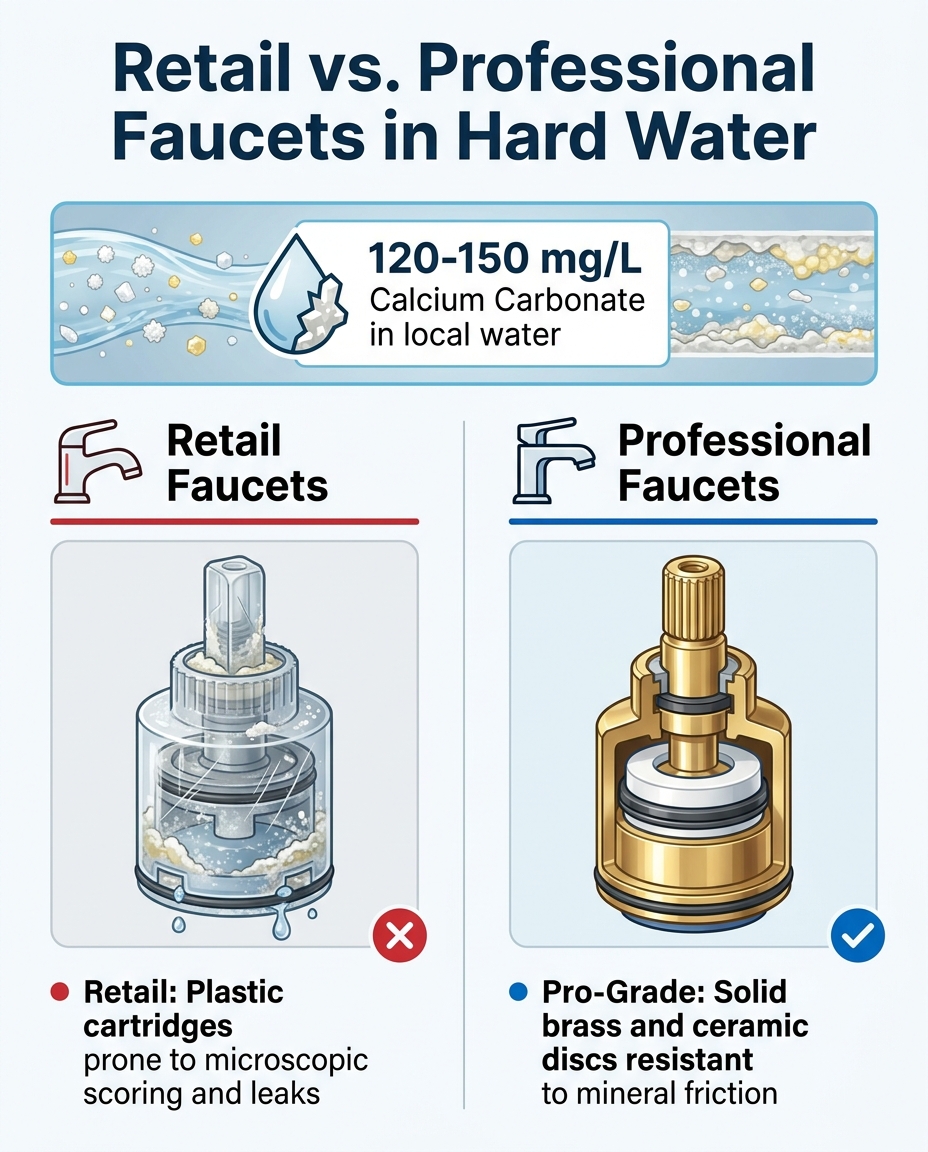
With local municipal water tests consistently showing hardness levels exceeding 120 to 150 mg/L of calcium carbonate, understanding exactly why hard water in Sangamon County eats through cheaper big-box store faucets is critical for any homeowner facing a plumbing repair. That staggering statistic explains why so many newly installed retail fixtures begin dripping, leaking, or losing water pressure within just a few seasons of use. The core issue lies in a fundamental mismatch between the aggressive mineral profile of the local water supply and the lightweight materials used inside discount fixtures. Homeowners are frequently faced with a critical decision point: choosing between a cheaper big-box replacement that looks good on the shelf, or investing in a professional-grade fixture built to withstand regional water conditions.
To solve this cycle of premature failure, homeowners need reliable plumbing services that prioritize material integrity over aesthetic shortcuts. Upgrading to a professional plumbing installation ensures that the fixtures placed in your home are mechanically equipped to handle the heavy mineral loads characteristic of the area.
What looks identical on the outside often behaves very differently on the inside when exposed to local groundwater. Retail-grade fixtures frequently utilize plastic internal cartridges and rubber waterways to keep manufacturing costs low. While these materials might survive for years in regions with naturally soft water, they are highly vulnerable to the abrasive nature of calcium and magnesium. When you install a retail-grade fixture in a hard water environment, you are essentially placing a fragile plastic component directly in the path of a relentless, mineral-heavy current. The resulting degradation is not a matter of if, but when.
Understanding Sangamon County's Unique Water Profile
To comprehend why plumbing fixtures fail prematurely in this region, you have to look closely at the source of the water flowing through them. The water supply in Sangamon County and Springfield IL relies heavily on Lake Springfield and regional groundwater aquifers. The Midwest is known for this specific groundwater profile, which naturally absorbs high concentrations of dissolved minerals—primarily calcium and magnesium—as it filters through the earth. This high mineral content is the mechanical definition of "hard water," and it makes scale buildup a year-round reality for local homeowners.
The Physics of Mineral Suspension
As long as the water is flowing freely through large municipal mains, these dissolved minerals remain suspended in the liquid. However, the physical dynamics change rapidly once that water enters the residential plumbing system and is forced through tight spaces, such as the narrow valves and aerators of a kitchen or bathroom faucet. When the water experiences a pressure drop or a temperature change inside these confined areas, the calcium and magnesium fall out of suspension. They begin to crystalize and bond to the surrounding surfaces, forming a tough, chalky substance known as scale.
The Impact of Peak Summer Usage
This calcification process accelerates significantly during the warmer months. Increased summer water usage for hosting guests, running sprinklers, and managing outdoor activities means a vastly higher volume of mineral-heavy water is passing through your household fixtures on a daily basis. More water volume equates to more dissolved minerals traveling through the tight internal pathways of your faucets. As the summer heat drives up water consumption, the rate of scale accumulation inside your plumbing components peaks, setting the stage for mechanical failure if the internal materials are not robust enough to resist the buildup.
The Illusion of the Big-Box Bargain Faucet
One of the most frustrating content gaps for homeowners is the realization that major plumbing manufacturers often produce two entirely different versions of what appears to be the exact same faucet. Many big-box retail stores sell fixtures that look identical to the professional models on the outside, complete with the same branding, the same brushed nickel or chrome finish, and the same exterior shape. However, the internal architecture tells a completely different story.
To hit the low price points demanded by retail environments, manufacturers frequently substitute the solid brass internals found in professional models with cheaper plastic waterways and rubber components. These cost-cutting measures create a fixture that is fundamentally weaker.
• Hard Water Resistance — Retail-Grade Faucets: Low (highly susceptible to scoring) — Professional-Grade Faucets: High (resists mineral abrasion)
• Weight and Feel — Retail-Grade Faucets: Lightweight, often feels hollow — Professional-Grade Faucets: Heavy, substantial construction
These retail fixtures aren't inherently "bad" products—they are simply engineered for different operating environments. In a region with naturally soft water, a plastic internal cartridge might perform adequately for several years. However, they are completely mismatched for the aggressive water chemistry found in Sangamon County / Springfield IL. When you compare retail-grade plastic cartridges vs. pro-grade solid brass internals, the plastic components are highly vulnerable to the abrasive nature of local hard water, turning a perceived bargain into a recurring maintenance headache.
Retail vs. Professional Faucets in Hard Water
The Mechanics of Mineral Damage on Plastic Cartridges
To understand why these fixtures fail, it is helpful to look at the deep-dive mechanical explanation of how calcium carbonate destroys plastic and rubber seals. The breakdown is not an overnight event; it is a progressive, physical dismantling of the faucet's internal integrity.
The Stages of Cartridge Failure:
1. Mineral Adhesion: As hard water flows through the plastic cartridge, microscopic calcium carbonate crystals begin to adhere to the plastic walls and the rubber O-rings that control the water flow.
2. The Sandpaper Effect: Once the scale forms, it creates a rough, abrasive surface. Every single time you turn the faucet handle to wash your hands or do the dishes, the internal plastic parts grind against this calcified layer. The calcium acts exactly like microscopic sandpaper.
3. Scoring and Tearing: Because plastic and rubber are softer than crystallized calcium, the friction inevitably wins. The constant grinding scores deep grooves into the plastic cartridge housing and micro-tears the rubber O-rings that are supposed to maintain a watertight seal.
4. System Failure: Once the seals are compromised and the plastic is deeply scored, water begins to bypass the intended pathways. This mechanical breakdown connects directly to the premature leaks, constant dripping from the spout, and sudden loss of water pressure that plague retail-grade fixtures.
The damage caused by this abrasive friction is irreversible. You cannot simply clean a scored plastic cartridge; once the material is physically worn away by the calcium, the only solution is replacement. This cycle of continuous degradation highlights exactly why retail-grade plastic cartridges vs. pro-grade solid brass internals is such a critical distinction for local homeowners.
The definitive, mechanically sound solution to the local hard water problem is the installation of professional-grade fixtures. The professional standard in the plumbing industry relies heavily on solid brass waterways and advanced ceramic disc cartridges. These materials fundamentally change how the fixture interacts with mineral-heavy water.
The physics behind this durability are straightforward. Ceramic and solid brass are dense, highly durable materials that naturally resist mineral scoring. When calcium carbonate attempts to form on a ceramic disc, the smooth, ultra-hard surface prevents the scale from adhering strongly. More importantly, when you turn the handle of a professional faucet, the two ceramic discs slide against each other with precision. Because ceramic is harder than the calcium deposits, the discs do not degrade, scratch, or score when exposed to mineral friction. They simply shear the scale away without sustaining damage.
Upgrading to these pro-grade materials is a proactive defense mechanism against local water conditions, not just a luxury aesthetic choice. Allied Plumbing Heating & Cooling operates as the local authority by exclusively installing these solid brass, pro-grade fixtures specifically to combat the local hard water profile. By refusing to compromise on internal materials, the focus shifts to long-term reliability and leak prevention, ensuring that the fixture you install today will continue to perform flawlessly for years, despite the aggressive nature of the municipal water supply.
When to Replace Your Failing Fixtures
Recognizing when a faucet has moved past the point of a simple repair and requires a full replacement can save you from unexpected water damage and ongoing frustration. Because the internal damage caused by hard water is often hidden, you have to rely on mechanical symptoms to diagnose a failing fixture.
Warning Signs of a Failing Plastic Cartridge:
• Stiff or Grinding Handles: If turning the faucet feels rigid, requires extra force, or produces a subtle grinding sensation, the plastic cartridge is already heavily calcified and scored.
• Persistent Base Leaks: Water pooling around the base of the faucet indicates that the internal rubber O-rings have been torn by mineral friction, allowing water to escape the main valve body.
• Reduced or Sputtering Flow: Heavy scale buildup can choke off the narrow plastic waterways, leading to a noticeable drop in water pressure that cannot be fixed by simply cleaning the external aerator.
• Inconsistent Temperature Control: When the internal mixing valves are scored, hot and cold water can bleed together unpredictably, making it difficult to maintain a steady temperature.
Simply replacing a scored plastic cartridge is often a temporary fix. If the internal body of the retail fixture is also compromised or heavily scaled, a new plastic cartridge will quickly suffer the same fate. Water emergencies rarely happen at a convenient time. For instance, one local homeowner experienced a weekend emergency last fall when an AC drain overflowed, requiring immediate intervention to clear the line and stop the damage. A failing plumbing fixture can trigger a similar sudden crisis if a weakened plastic cartridge finally gives out under municipal water pressure, flooding a bathroom vanity or kitchen cabinet.
To avoid these sudden failures, many homeowners find immense value in replacing vulnerable fixtures during broader kitchen or bathroom renovations. By upgrading your plumbing fixtures to professional-grade materials during these larger projects, you ensure consistent, reliable performance across the entire home, effectively future-proofing your plumbing against Sangamon County / Springfield IL water conditions.
Protecting Your Home's Complete Water Infrastructure
While faucets are the most visible endpoints of your plumbing system, they are just one part of a much larger network. The exact same hard water that destroys plastic faucet cartridges is also flowing through your angle stops, supply lines, water heater, and hidden pipe joints. Protecting your home's complete water infrastructure requires a holistic approach to material selection.
Choosing the right materials at every connection point protects the home from unseen leaks, sudden pressure drops, and catastrophic water damage behind walls or under cabinets. When a cheap plastic supply valve fails due to calcification, the resulting water damage can cost exponentially more than the price of a premium brass valve.
This is why it is essential to have a local expert who deeply understands regional water chemistry assess your plumbing upgrades. A professional assessment ensures that no weak links are left in the system. Homeowners across the Sangamon County service areas can rely on professional guidance to navigate these material decisions, ensuring that every component—from the main shutoff valve to the bathroom sink aerator—is equipped to handle the unique mineral profile of the region.
Secure Your Plumbing with Professional-Grade Fixtures
Fighting hard water requires the right internal materials, not just a recognizable brand name stamped on a shiny exterior. Relying on retail-grade plastic cartridges vs. pro-grade solid brass internals is a gamble that homeowners in heavy mineral regions rarely win.
You do not have to settle for fixtures that need constant repairs or premature replacement. A local plumbing expert can provide the durable, mechanically sound brass fixtures required for lasting performance and true peace of mind. If your current faucets are showing signs of stiffness, leaking, or pressure loss, schedule a professional consultation and installation today to secure your home with fixtures built to last.
Frequently Asked Questions
What is the difference between a plumber's faucet and a store-bought one?
The primary difference lies in the unseen internal components and overall build quality. While a store-bought retail faucet often uses lightweight plastic waterways and rubber valves to reduce costs, a plumber's professional-grade faucet utilizes solid cast brass bodies and highly durable ceramic disc cartridges. This difference in materials makes professional fixtures significantly heavier, more reliable, and vastly more resistant to the abrasive effects of mineral-heavy water.
Does hard water ruin faucets?
Yes, hard water can severely damage and eventually ruin faucets that are not built to withstand it. The high levels of calcium and magnesium in hard water crystallize into scale inside the fixture, creating a rough, sandpaper-like surface. Every time the faucet is used, this abrasive scale grinds against the internal parts, quickly wearing out plastic cartridges and tearing rubber seals until the fixture leaks or fails completely.
How do you protect faucets from hard water?
The most effective way to protect faucets from hard water damage is to install professional-grade fixtures equipped with solid brass internals and ceramic disc cartridges, which naturally resist mineral scoring. Additionally, homeowners can invest in whole-home water softening or conditioning systems that remove or neutralize the calcium and magnesium before the water ever reaches the vulnerable endpoints of the plumbing system.
Are big box store faucets lower quality?
Big box store faucets are generally engineered to meet a lower retail price point, which requires manufacturers to use less expensive internal materials. While the exterior finish may look identical to a high-end model, the internal substitution of plastic and thin rubber for solid brass and ceramic means these retail-grade fixtures have a shorter lifespan and a much lower tolerance for harsh local water conditions.
Why do my faucet handles feel stiff or hard to turn?
Stiff or grinding faucet handles are a primary indicator that hard water scale has accumulated inside the valve cartridge. The calcium deposits create immense friction against the moving plastic and rubber parts, making the handle physically difficult to operate. If left unaddressed, this friction will eventually score the cartridge deeply enough to cause a permanent leak.
Can a calcified plastic faucet cartridge be permanently repaired?
No, a calcified and scored plastic cartridge cannot be permanently repaired; it must be replaced. Once the abrasive calcium scale has physically scratched deep grooves into the plastic housing or torn the rubber O-rings, the structural integrity of the seal is gone. While cleaning the cartridge might temporarily improve flow, it cannot restore the missing plastic, meaning leaks will inevitably return.
Upgrading to a High-Recovery Water Heater for Families with Overlapping Morning Showers
September 15, 2026
A bigger tank isn't always the answer to morning hot water shortages. We break down why recovery speed matters more than gallon capacity when back-to-back showers drain your system.
A bigger tank isn't always the answer to morning hot water shortages. We break down why recovery speed matters more than gallon capacity when back-to-back showers drain your system.
Diagnosing a Furnace Flame Sensor That Shuts the System Down After Three Seconds
September 15, 2026
Turning on your heat only to watch the burners die instantly is a frustrating fall surprise. We explain why this three-second safety lockout happens to protect your home.
Turning on your heat only to watch the burners die instantly is a frustrating fall surprise. We explain why this three-second safety lockout happens to protect your home.
Locating Drafty Areas in Your Basement That Threaten Exposed Water Lines
September 15, 2026
Early fall is the ideal time to find hidden air leaks around rim joists and basement windows. Map out structural vulnerabilities now to prevent frozen pipes in January.
Early fall is the ideal time to find hidden air leaks around rim joists and basement windows. Map out structural vulnerabilities now to prevent frozen pipes in January.