Why Garbage Disposal Maintenance Tips to Prevent Breakdowns Matter for Springfield Homeowners
Following the right garbage disposal maintenance tips to prevent breakdowns can be the difference between an appliance that lasts 8 to 15 years and one that fails in half that time. Here are the most important steps to keep your disposal running reliably:
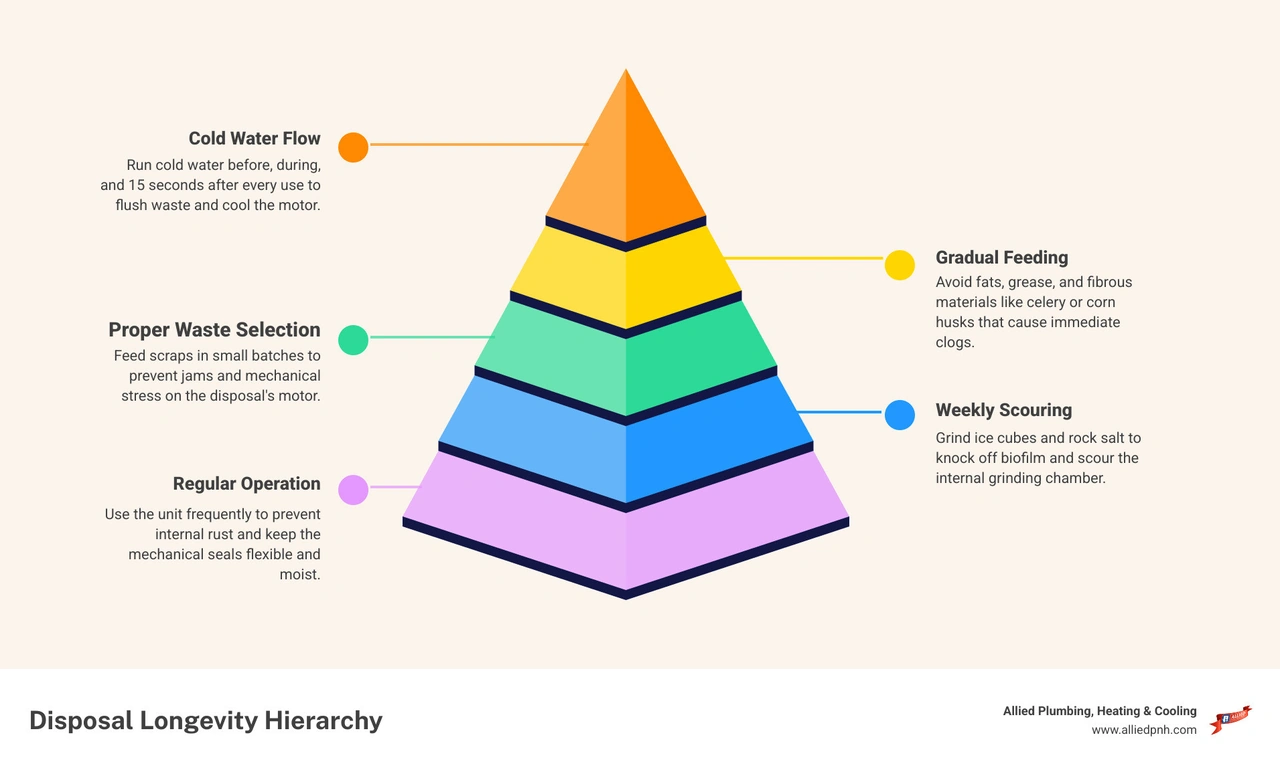
1. Run cold water before, during, and for 15 seconds after every use
2. Feed scraps gradually in small batches — never dump everything at once
3. Avoid fibrous, starchy, and greasy foods like celery, pasta, and cooking oil
4. Clean weekly by scrubbing the splash guard and grinding ice with rock salt
5. Deep clean monthly using baking soda and vinegar
6. Use the unit regularly — even without food — to prevent internal rust
7. Know your reset button and how to use a hex wrench to clear jams
8. Watch for warning signs like persistent odors, humming, or frequent resets
Most homeowners in Springfield, Rochester, and Chatham don't think about their garbage disposal until it stops working. By then, what could have been a five-minute fix has become an urgent repair call. The average disposal lasts between 8 and 15 years — but units that are neglected or misused often fail in as little as 5 to 7 years. On the flip side, a well-maintained disposal can push well past the 12-year mark and even reach two decades of reliable service.
The good news? Most breakdowns are preventable. Odor complaints and minor jams account for more than 60 percent of professional disposal service calls — meaning the vast majority of issues come down to simple habits that are easy to fix once you know what to do.
This guide walks you through everything: daily routines, what never to put down the drain, natural cleaning methods, and how to troubleshoot common problems safely.
Essential Garbage Disposal Maintenance Tips to Prevent Breakdowns
At Allied Plumbing, Heating & Cooling, we’ve seen thousands of kitchen sinks across Springfield and Rochester. One common thread among the longest-lasting units is the temperature of the water used during operation. It might seem counterintuitive to use cold water when cleaning up "dirty" food waste, but cold water is actually your disposal’s best friend.
Cold Water: The Grease Fighter
When you run the disposal, you should always use cold water. Why? Because cold water keeps fats, oils, and grease (FOG) in a solid state. If you use hot water, those fats melt and coat the internal components and your pipes. Once that water cools down further down the line, the grease solidifies, creating stubborn clogs that are a nightmare to clear. Cold water allows the disposal to chop those solid fats into tiny bits that can be easily flushed away.
Regular Usage and Preventing Rust
Another vital part of garbage disposal maintenance tips to prevent breakdowns is simply using the machine. Many homeowners think they are "saving" the motor by using it sparingly. In reality, inactivity leads to corrosion and rust. Moving parts can seize up if they sit in a damp environment without being rotated. We recommend running your disposal at least once a day—even if you're just flushing it with water and a drop of dish soap—to keep the internal components lubricated and rust-free. For more advice on keeping your plumbing healthy, check out our guide on How to Prevent Clogged Drains.
Daily Habits: Garbage Disposal Maintenance Tips to Prevent Breakdowns
To ensure your unit reaches that 15-to-20-year potential, adopt these daily habits:
• Small Batches: Never "stuff" the disposal. Feed food scraps in gradually to avoid overwhelming the motor.
• The 15-Second Flush: After you turn the disposal off, keep the water running for at least 15 to 30 seconds. This ensures that the micro-particles are pushed all the way through the P-trap and into the main drain line.
• Centrifugal Force: Understand that your disposal works via centrifugal force, pushing food against a stationary grind ring. It needs plenty of water to create the "slurry" necessary for this process to work efficiently.
Weekly and Monthly Deep Cleaning Routines
Daily rinsing isn't enough to stop the buildup of biofilm—that slimy layer of bacteria that causes "stinky sink" syndrome.
• Weekly: Use an old toothbrush and some dish soap to scrub the underside of the rubber splash guard (the black flaps in the drain). This is where most odors actually live.
• Monthly: Perform a mechanical agitation clean. Fill the disposal with two cups of ice cubes and a cup of rock salt. Run the unit with cold water. The ice and salt act like a "scrub brush" for the internal grinding chamber, knocking off stubborn debris that water alone can't reach. If the odors persist, you might need Professional Drain Cleaning Services to clear the deeper lines.
The "Disposal Diet": Avoiding Clogs and Motor Failure
Think of your garbage disposal as a helper for small crumbs, not a second trash can. Putting the wrong things down the drain is the fastest way to kill a motor or cause a backup in your Chatham kitchen.
Prohibited Items and Their Impact on Your Plumbing
Certain foods are notorious for causing "death by a thousand cuts" to your plumbing system:
• Fibrous Materials: Celery, corn husks, onion skins, and artichokes have long, tough strands. These act like hair in a vacuum cleaner, wrapping around the impeller plates and seizing the motor.
• Starchy Foods: Pasta, rice, and potato peels are "expandable" foods. Even after they are ground up, they continue to absorb water in your pipes, turning into a thick paste that leads to Clogged Sink Solutions in Springfield.
• Coffee Grounds: They might smell good, but they are heavy and dense. They settle in the bottom of your pipes like sediment in a river, eventually forming a dam.
• Fats, Oils, and Grease (FOG): These are the number one cause of Common Plumbing Repairs and Causes. Always scrape grease into a can, never down the disposal.
Avoiding Clogs with Proper Garbage Disposal Maintenance Tips to Prevent Breakdowns
To keep the "diet" on track, we suggest cutting large food scraps into pieces no larger than a golf ball before feeding them in. Also, avoid harsh chemical drain cleaners. These chemicals are highly corrosive and can damage the rubber seals and metal components inside your disposal. Over time, they can even lead to leaks that drip directly onto your electrical connections.
Natural Cleaning and Odor Elimination Strategies
You don't need expensive, store-bought "disposal cleaners" to keep your kitchen smelling fresh. In May 2026, natural methods remain the safest and most effective choice for Springfield families.
The Baking Soda and Vinegar "Fizz"
This classic duo is perfect for a monthly deep clean. Pour half a cup of baking soda into the disposal, followed by a cup of white vinegar. Let it sit and "fizz" for about ten minutes. This chemical reaction helps break down organic matter and kills odor-causing bacteria. Flush it down with plenty of cold water afterward.
Citrus for Natural Deodorizing
For a quick scent boost, grind up a few citrus peels (lemon, lime, or orange). The natural oils and citric acid provide an antibacterial boost and leave your sink smelling great. Just be sure to cut the peels into small pieces first so they don't jam the impellers.
Sharpening the "Blades" Myth vs. Reality
One of the biggest myths in plumbing is that you need to put eggshells or peach pits in the disposal to "sharpen the blades." Fact check: Garbage disposals don't actually have blades! They have blunt metal "teeth" on a rotating flywheel that act more like a cheese grater than a blender.
• The Reality: Putting eggshells in a disposal actually creates a sandy residue that sticks to grease and causes clogs.
• The Solution: Grinding ice cubes is the best way to "hone" the edges of the impeller plates and keep the unit grinding at peak efficiency. It's the mechanical agitation of the ice, not the "sharpness" of a blade, that does the work.
Troubleshooting and Safety in Springfield and Rochester
If your disposal stops working, don't panic. Many issues can be resolved without calling in the pros—as long as you follow strict safety protocols.
Troubleshooting Garbage Disposal Maintenance Tips to Prevent Breakdowns
If you hear a humming sound but the unit isn't spinning, it’s likely jammed.
1. Turn off the power: Flip the wall switch and, for extra safety, unplug the unit under the sink or turn off the circuit breaker.
2. The Hex Wrench Trick: Most disposals have a small, hexagonal hole in the center of the bottom housing. Insert a 1/4-inch hex wrench (often called a wrenchette) and turn it back and forth. This manually rotates the flywheel to dislodge whatever is stuck.
3. Use Tongs: If you need to reach into the unit to pull out a stray fork or a bone, never use your hands. Use long-handled pliers or tongs.
For more complex electrical issues, it's always safer to rely on Expert Plumbing Services.
Resetting the Motor and Identifying Leaks
If the unit won't even hum, the thermal overload protector may have tripped. This is a built-in circuit breaker that prevents the motor from burning out.
• The Red Button: Look at the bottom of the disposal for a small red button. If it’s popped out, wait 15 minutes for the motor to cool, then push it back in.
• Checking for Leaks: If you see water dripping from the bottom of the unit's metal body, the internal seals have likely failed. Unfortunately, residential disposal seals are usually not replaceable. If the body of the unit is leaking, it’s usually time for a Garbage Disposal Installation.
Frequently Asked Questions about Disposal Care
How long should I run the water after the grinding stops?
We recommend running cold water for at least 15 to 20 seconds after the grinding noise ceases. This ensures all food particles are flushed completely through the drain pipes and don't settle in the trap.
Why is cold water better than hot water for my disposal?
Cold water keeps fats and grease in a solid state. This allows the disposal to break them into small pieces that flow through the pipes. Hot water melts grease, allowing it to coat the pipes and create massive clogs once it cools down later.
What are the warning signs that I need a new disposal in 2026?
If your unit is over 12 years old, you should watch for four major red flags:
1. Frequent Resets: If you have to hit the red button every other time you use it.
2. Persistent Odors: When cleaning no longer removes the smell, the biofilm may be embedded in cracked plastic components.
3. Metal-on-Metal Noises: This often indicates worn-out bearings.
4. Leaks from the Housing: Water dripping from the bottom of the motor is a sign of a failed internal seal.
Conclusion
A little bit of care goes a long way. By following these garbage disposal maintenance tips to prevent breakdowns, you can save yourself the headache of a "kitchen disaster" and ensure your appliance serves your family for a decade or more.
At Allied Plumbing, Heating & Cooling, we’ve been a 3-generation family business since 1977. We take pride in helping our neighbors in Springfield, Rochester, and Chatham keep their homes running smoothly. Whether you need a quick repair or a brand-new, high-horsepower installation, we're here to provide the reliability and peace of mind you deserve.
Don't wait for a clog to ruin your dinner plans. If you're noticing slow drains or strange noises, reach out to us today for More info about plumbing services. We’re ready to keep things spinning for you!