Where We Mount Mini-Split Compressors to Survive Springfield's Harsh Sun and Deep Snow
Where We Mount Mini-Split Compressors to Survive Springfield's Harsh Sun and Deep Snow
The Hidden Threat to Your Ductless System in Central Illinois
At Allied Plumbing Heating & Cooling, our technicians frequently see ductless systems struggling to keep homes comfortable. If the outdoor equipment is baking in the July heat, you are probably still sweating inside. Determining exactly Where We Mount Mini-Split Compressors to Survive Springfield's Harsh Sun and Deep Snow is the most critical decision our team makes before the installation tools ever come out. Many homeowners assume the outdoor unit can simply sit anywhere convenient, usually tucked behind a bush or placed right next to the electric meter. In our experience, the short answer is that standard out-of-the-box ground placement fails spectacularly in our extreme weather.
If you are looking to upgrade or repair your current setup, our comprehensive air conditioning services ensure your equipment is positioned to handle whatever the Midwest throws at it.
The concrete problem boils down to determining the exact placement and elevation of these outdoor compressors. A poorly placed unit faces an immense struggle against the elements. With July average highs regularly hitting the upper 80s to 90s in Central Illinois, an improperly located compressor works overtime just to shed heat, driving up your utility bills and wearing out internal components prematurely. While we always plan for year-round conditions, our primary strategy is to protect your system's cooling performance and energy efficiency under the heaviest summer loads.
The Immediate Impact of July Heat
Air-source heat pumps work by transferring heat. In the summer, they absorb heat from inside your house and release it outside. To do this efficiently, the outdoor compressor needs access to relatively cool, freely moving ambient air. When we see a unit installed in a location that traps heat or sits in direct sunlight during the hottest part of the day, the air surrounding the compressor becomes superheated. The system is essentially trying to dump heat into an environment that is already boiling, which drastically reduces its cooling capacity and forces the motor to run continuously without ever reaching your set indoor temperature.
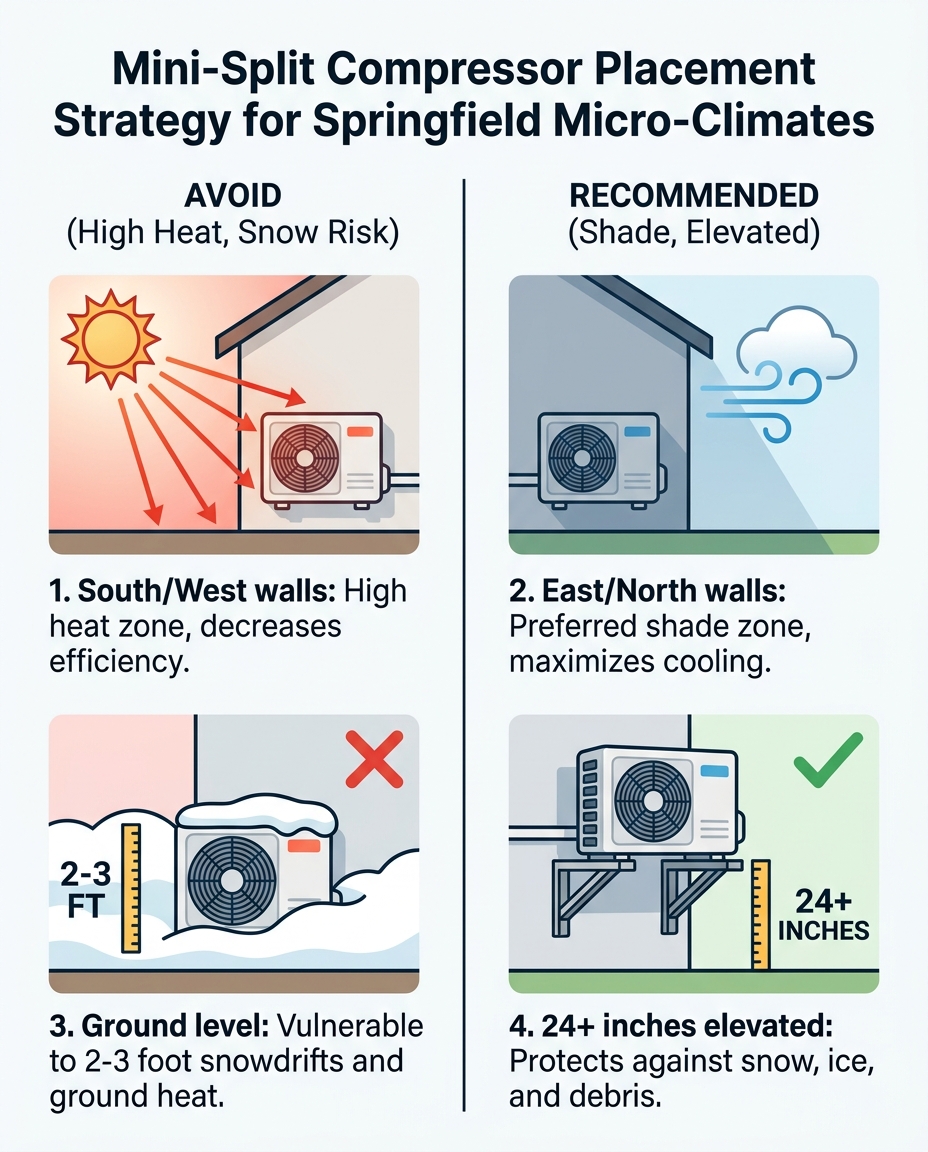
Avoiding high-heat zones is the absolute first rule of local installation for the Allied Plumbing Heating & Cooling team. When it comes to the layout of your property, south-facing and west-facing walls are the absolute worst locations for a mini-split compressor. These sides of your house take the brunt of the afternoon sun during the peak cooling hours of the day. By 4 p.m. in the middle of July, the ambient air temperature around a south-facing wall can easily be ten to fifteen degrees hotter than the rest of the yard.
The Brick and Siding Baking Effect
The problem goes beyond just direct sunlight hitting the metal casing of the equipment. We have to account for the "baking effect" created by your home's exterior. Brick, stone, and even dark vinyl siding absorb intense solar radiation throughout the afternoon. As the day goes on, these materials act like thermal batteries, radiating that stored heat outward. If your compressor is mounted inches away from a baking brick wall, it is pulling that superheated, radiated air directly into its intake coils.
Generic manufacturer advice often just says to "keep the unit clear of debris." However, our local expertise recognizes the specific solar heat gain issues on Central Illinois homes, steering us away from these generic placements. We know that in Springfield IL, mounting a unit on a south-facing wall almost guarantees thermal overload. Thermal overload forces the compressor to work twice as hard to achieve the same amount of cooling. This not only spikes your energy consumption but also leads to premature wear and tear on the system's most expensive components.
Utilizing East and North Orientations for Peak Heat Protection
The most effective solution our installers use for summer heat defense is strategic shade placement. Mounting compressors on the east or north sides of a property provides a massive natural advantage for your ductless system. The east side of your home receives morning sun, which is significantly cooler and less intense than afternoon sun. By the time the peak heat of the day arrives, an east-facing unit is safely in the shade of the house itself. North-facing walls are even better for summer cooling, as they remain in ambient shade for nearly the entire day.
Balancing Shade with Architectural Features
Natural shade lowers the ambient air temperature drawn into the compressor, maximizing cooling output. When the air entering the outdoor coil is cooler, the refrigerant cycle operates at peak efficiency, extracting indoor heat with minimal electrical effort. This translates directly to lower utility bills and faster indoor cooling times for your family.
However, our team knows that finding the perfect spot requires balancing shade requirements with aesthetic preferences and existing landscaping. You do not want to place the unit directly beneath a heavy sap-producing tree or behind dense bushes that choke off airflow. Older properties often have unique architectural features—like deep eaves, narrow side yards, or brick bump-outs—that require creative placement strategies to maintain shade while ensuring proper ventilation. If you are navigating these challenges, reviewing the mini split pros and cons for older homes can help you understand how to work with your property's unique layout. We always evaluate the specific micro-climate of your yard, prioritizing peak summer cooling while keeping the look of your home intact.
Wall Brackets vs. Concrete Pads: Elevating Above the Elements
Once we help you choose the correct side of the house, the next major decision point is determining the exact elevation height. Standard installations by others often utilize a pre-fabricated concrete or composite pad placed directly on the dirt or gravel. While pads are common and inexpensive, we find they leave your expensive equipment highly vulnerable to ground-level threats.
Why Ground-Level Placement Fails in Extreme Weather
In the summer, a unit sitting on a ground pad is subjected to radiating ground heat, especially if placed over concrete or dark landscaping rock. It is also directly in the line of fire for lawnmower debris, grass clippings, dirt splash-back from heavy rain, and nesting pests. Our technicians strongly prefer heavy-duty wall-mounted brackets. By mounting the compressor directly to the foundation or exterior wall studs, we elevate the equipment away from ground-level hazards and drastically improve airflow underneath the unit, which aids immensely in cooling efficiency.
Here is a breakdown of how the two mounting methods compare for homeowners in Springfield IL:
• Standard Ground Pad — Airflow Efficiency: Poor (blocked underneath) — Vulnerability to Debris: High (grass, dirt, pests) — Weather Protection: Fails in deep snow accumulation
Elevating the unit is a crucial summer strategy to avoid hot pavement and maximize airflow, while also providing necessary year-round preparation.
Mini-Split Compressor Placement Strategy for Springfield Micro-Climates
Clearing Historical Snow Drift Lines as a Year-Round Strategy
While summer cooling and indoor air quality are the immediate priorities right now, local wind patterns do create massive snowdrifts later in the year. Springfield averages around 20 to 22 inches of seasonal snowfall. That number might not sound catastrophic on its own, but the wide-open Midwest winds frequently push that snow against the sides of homes, creating localized drifts that are two to three feet deep. If your outdoor compressor is sitting on a ground pad, it will be completely buried.
The Mechanics of the Defrost Cycle
At Allied Plumbing Heating & Cooling, we utilize battle-tested Springfield micro-climate strategies that account for peak summer heat while preparing for these winter extremes. This brings us to our strict 24-inch elevation rule. We mount local units at least 24 inches off the ground to clear historical drift lines, which conveniently provides exceptional under-unit airflow for shedding heat during July.
During the winter, a heat pump occasionally enters a "defrost cycle" to melt frost off its outdoor coils. If the unit is buried in a snowdrift, or sitting on a ground pad where the melted water immediately refreezes into a block of ice at the base, the cycle fails and crushes the delicate aluminum fins. Proper height placement ensures the system operates efficiently 365 days a year. More importantly for the current season, this elevated stance protects your system from suffocating on stagnant, hot ground air, maximizing your cooling performance when you need it most.
Navigating Airflow Clearances in Local Micro-Climates
Beyond choosing the right wall and the correct height, the outdoor unit must have specific physical clearances from surrounding objects to breathe properly. An air-source heat pump moves massive volumes of air. If that airflow is restricted, the system suffocates. Having our professionals assess the specific micro-climate of your yard ensures these technical clearances are met while adhering to local property regulations.
Preventing the Short-Cycling Trap
One of the biggest risks we see with poor clearance is "short-cycling" the air. This happens when a compressor is mounted too close to a solid fence or an opposing wall. The unit blows out hot exhaust air, but because the air hits a barrier and bounces back, the intake coil sucks that same hot air right back in. The system ends up recycling its own exhausted heat, which is a critical failure during high-load summer days.
To prevent this and ensure compliance across all Springfield service areas, our installers follow strict measurement protocols:
1. Wall intake clearance: The back of the unit must sit a minimum of 8 to 12 inches away from the home's exterior siding to allow sufficient air to enter the rear coils.
2. Front exhaust clearance: The fan side requires a minimum of 72 inches (6 feet) of completely unobstructed space to blow exhaust air away from the home.
3. Overhead clearance: Any decks, deep overhangs, or awnings must be at least 24 to 36 inches above the top of the unit to prevent heat from pooling.
4. Vegetation management: Shrubs and bushes must be pruned back at least 3 feet from all sides of the equipment to prevent leaves and branches from being sucked into the fan grate.
5. Noise and property lines: While modern ductless compressors are incredibly quiet, local neighborhood regulations often dictate how close mechanical equipment can be placed to a shared property line.
Frequently Asked Questions About Outdoor Unit Placement
How high off the ground should a mini split condenser be?
Our team recommends mounting the unit at least 24 inches off the ground in our region. This specific height is necessary to clear typical Midwest snowdrifts, but more importantly for summer, elevating the unit prevents the intake of lawn clippings, dirt, and ground-dwelling pests while improving cooling airflow.
Should a mini split condenser be in the sun or shade?
Shade is highly preferred for any air-source heat pump. Direct sunlight forces the unit to work much harder to cool the home because the ambient air around the coils is superheated by solar radiation. Placing the compressor on a shaded north or east-facing wall significantly increases cooling efficiency and reduces wear on the motor.
Does a mini split outdoor unit need to be covered in winter?
No, we advise our customers to never cover an operating heat pump in the winter, as covering it restricts airflow and will cause severe damage to the compressor. These units are designed to withstand rain, snow, and freezing temperatures. Proper elevation and strategic placement eliminate the need for any aftermarket covers.
Can I move my existing outdoor compressor to a better location?
Yes, but it requires professional refrigerant recovery and new line sets to complete the relocation safely. Moving a poorly placed unit from a baking south-facing wall to a shaded area can significantly improve the system's lifespan and overall cooling performance. A licensed Allied Plumbing Heating & Cooling technician must handle the electrical and refrigerant line adjustments.
How does direct sunlight affect my ductless system's energy usage?
Direct sunlight increases energy consumption by raising the ambient temperature around the intake coils, forcing the compressor to run longer cycles to extract heat. Strategic shade placement keeps the surrounding air cooler, which allows the system to reach your desired indoor temperature faster and keeps utility bills lower during peak summer months.
Protect Your Investment with Strategic Local Installation
Surviving local weather extremes requires much more than just buying high-quality ductless equipment; it requires highly strategic placement. The location of your outdoor compressor dictates how well your system will perform when you need it most. By prioritizing east or north-facing walls to avoid thermal overload, and utilizing heavy-duty wall brackets, you ensure your equipment delivers unparalleled cooling performance during peak heat.
Homeowners should always rely on local experts who understand the specific environmental challenges of the area, rather than settling for generic ground-pad installations that fail when the weather turns harsh. Clear, logical reasoning regarding exactly where and how high the outdoor unit should be mounted is the only way to truly protect your investment. If you are ready to evaluate your current setup or plan a new, weather-resilient installation, reach out to Allied Plumbing Heating & Cooling to discuss our heating services and cooling solutions today.
Upgrading to a High-Recovery Water Heater for Families with Overlapping Morning Showers
September 15, 2026
A bigger tank isn't always the answer to morning hot water shortages. We break down why recovery speed matters more than gallon capacity when back-to-back showers drain your system.
A bigger tank isn't always the answer to morning hot water shortages. We break down why recovery speed matters more than gallon capacity when back-to-back showers drain your system.
Diagnosing a Furnace Flame Sensor That Shuts the System Down After Three Seconds
September 15, 2026
Turning on your heat only to watch the burners die instantly is a frustrating fall surprise. We explain why this three-second safety lockout happens to protect your home.
Turning on your heat only to watch the burners die instantly is a frustrating fall surprise. We explain why this three-second safety lockout happens to protect your home.
Locating Drafty Areas in Your Basement That Threaten Exposed Water Lines
September 15, 2026
Early fall is the ideal time to find hidden air leaks around rim joists and basement windows. Map out structural vulnerabilities now to prevent frozen pipes in January.
Early fall is the ideal time to find hidden air leaks around rim joists and basement windows. Map out structural vulnerabilities now to prevent frozen pipes in January.