Checking Your Boiler's Expansion Tank for Water-Logging Before Heating Season
Checking Your Boiler's Expansion Tank for Water-Logging Before Heating Season
The Hidden Threat to Your Heating System During the Late Summer Months
The back-to-school season is in full swing, and while you might still be focused on the lingering August heat, checking your boiler's expansion tank for water-logging before heating season is one of the most important steps you can take for your home. While your hydronic heating system sits completely idle over the summer, the expansion tank can silently lose its critical air charge. This slow, unnoticed depletion is a hidden threat that catches many homeowners off guard.
If you wait until the first freezing night to turn on your system, a water-logged tank can lead to dangerous pressure spikes and sudden breakdowns. Recognizing this issue early during the August late-summer transition prevents these emergencies. By taking a few minutes to safely observe your system now, you can determine if professional intervention is needed long before the cold weather arrives. If you notice any warning signs, reaching out for professional heating services or scheduling a comprehensive boiler repair early will save you from a mid-winter crisis.
Understanding Thermal Expansion in Hydronic Systems
To understand why a water-logged tank is so dangerous, you first need to understand how your heating system handles thermal expansion. When water is heated from room temperature to its standard operating temperature of around 180 degrees Fahrenheit, it expands by approximately 4%. In an open system, this extra volume would simply spill over. However, your home heating relies on a closed-loop system.
In Springfield IL homes with hydronic heating, that expanding water has absolutely nowhere to go. Because water cannot be compressed, the pressure inside your pipes and boiler will skyrocket as the temperature rises. This is where the expansion tank comes in. The tank acts as a shock absorber, providing a cushion of compressible air that takes on the extra volume of the heated water. Without this critical buffer, the system pressure would rapidly exceed safe limits, forcing the excess out through emergency safety valves.
The Mechanics of Bladder vs. Steel Tanks
Not all expansion tanks are built the same way, but they all serve the exact same purpose. Understanding which type you have can help you make sense of the maintenance it requires.
• Bladder-Style Tanks — How It Works: Uses a flexible rubber diaphragm to keep the air and water completely separated inside the shell. — Maintenance Needs: Requires periodic checks of the air charge; the bladder can eventually rupture over time.
• Older Steel Tanks — How It Works: Allows the system water and the air cushion to mix directly within the large steel cylinder. — Maintenance Needs: Requires occasional draining to restore the air cushion, as the water slowly absorbs the air.
The common vulnerability: Regardless of whether your system uses a modern bladder tank or a traditional steel tank, both types are highly susceptible to water-logging if the air is lost, absorbed, or depleted over time.
How the Long Idle Period Contributes to Lost Air Charge
You might wonder how a tank that worked perfectly in March can suddenly fail in October. The answer lies in the downtime. Expansion tanks naturally lose a small percentage of their air charge annually, even if the rubber bladder is perfectly intact. It is a slow process of permeation, much like a bicycle tire slowly going flat while hanging in the garage.
The long, hot Midwestern summer months create a false sense of security. Because the weather is warm, your heating system sits completely idle. During these months of inactivity, the air side of the tank continues to slowly deplete. Since the boiler is not firing up to heat your home, there are no pressure spikes to warn you that the air cushion is gone.
Homeowners rarely notice this depletion until the system is forced to run continuously during the first real cold snap. By leaning into the August late-summer transition to evaluate your equipment, you can catch this silent air loss before the boiler is subjected to the intense demands of daily operation.
Safe Visual Checks: Watching for a Weeping Pressure Relief Valve
You do not need to be a mechanic to spot the signs of a water-logged tank. The most obvious indicator is usually external. Your boiler is equipped with a pressure relief valve, typically a brass component with a metal lever and a downward-pointing discharge pipe. This valve is designed to open automatically if the internal pressure reaches a dangerous level—usually around 30 PSI for residential systems.
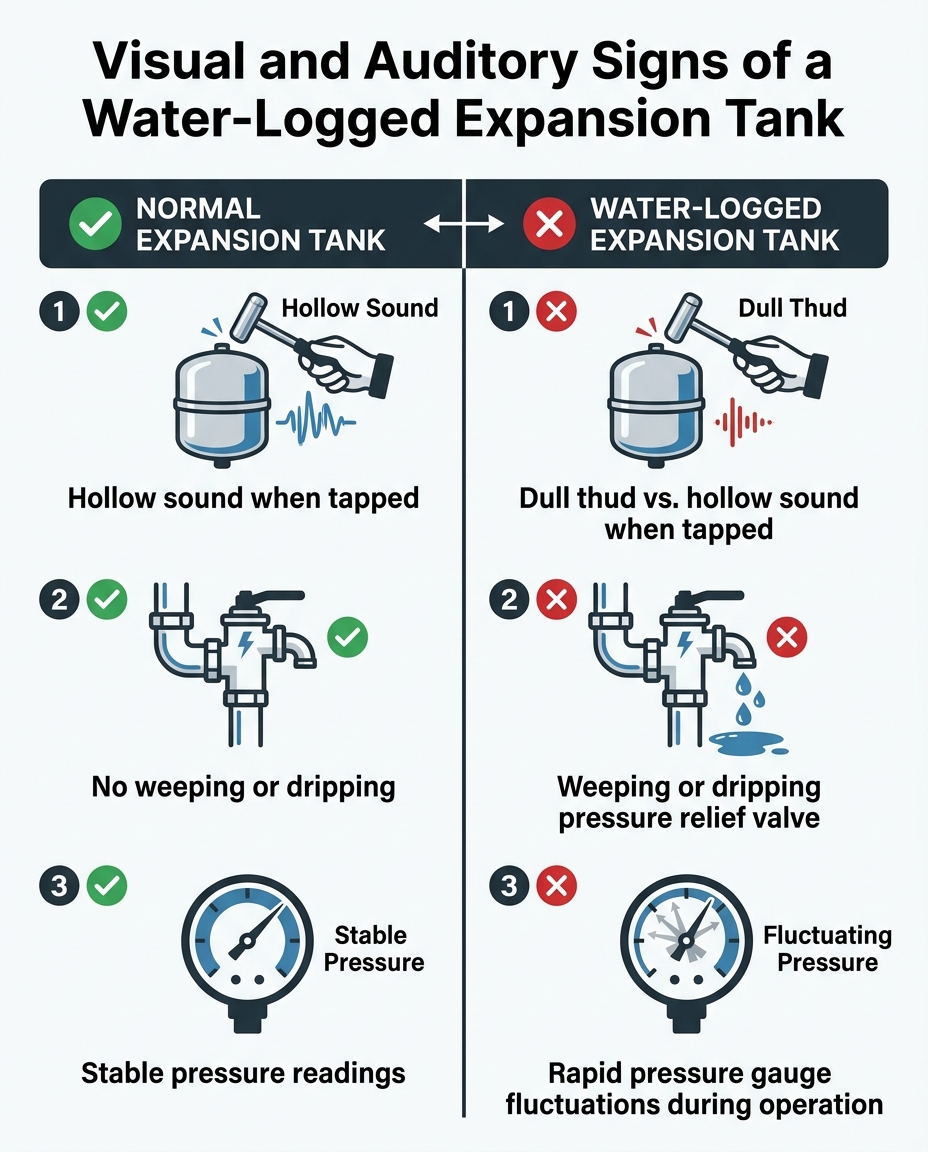
A weeping or dripping relief valve is a primary indicator that the expansion tank can no longer absorb the excess pressure. When the water expands and the tank fails to cushion it, the valve is forced to open to prevent the boiler from cracking.
Here is how you can safely inspect this area in Springfield IL homes with hydronic heating:
1. Locate the relief valve: Find the brass valve on or near the top of your boiler. Do not pull the lever or touch the piping, as it may be hot.
2. Check the discharge pipe: Look closely at the end of the pipe connected to the valve. Is there a steady drip or a fresh puddle beneath it?
3. Look for water marks: Even if it is not actively dripping, look for white mineral deposits or rust trails running down the side of the boiler or the pipe.
4. Inspect the floor: Check around the base of the boiler for unexplained moisture or pooling water.
The critical takeaway: Remember that a leaking pressure relief valve is a safety mechanism doing its exact job. It is not the root cause of the problem, but rather a symptom of a failed expansion tank.
Distinguishing Between Plumbing Leaks and Boiler Relief
It is important to determine where the water is actually coming from. Sometimes, water pooling near your heating equipment is coming from a domestic plumbing line, a nearby water heater, or an overhead pipe, rather than the boiler's closed loop. If the water is clear and cold, and the boiler's discharge pipe is completely dry, you might be dealing with a standard plumbing issue. In that case, you would need standard plumbing services to resolve the leak. However, any unexplained water near your heating system warrants an immediate investigation.
Auditory and Operational Signs of a Water-Logged Tank
Beyond visual leaks, your boiler will often give you auditory and operational clues that the expansion tank has failed. Because the tank is designed to hold air, it should sound and act like it. When that air is replaced by heavy water, the behavior of the entire system changes.
One of the most common operational signs is rapid boiler cycling, often called short-cycling. When the thermostat calls for heat, the boiler fires up. Because there is no air cushion to absorb the expanding water, the pressure spikes almost instantly. The boiler's internal safety sensors detect this extreme pressure and shut the burners down prematurely. A few minutes later, the pressure drops, and the boiler fires right back up. This constant on-and-off cycling puts immense wear and tear on your equipment.
Another operational sign is an erratic pressure gauge. If you safely observe the boiler's pressure gauge during a heating cycle, a healthy system will show a slow, steady rise in pressure. A water-logged system will show rapid, jumping fluctuations as the water heats up. If the tank is completely full of water, it can explain why your boiler is losing pressure constantly after the relief valve continuously blows off the excess.
Understanding the Tap Test
The "tap test" is a simple, non-invasive way to check the status of your expansion tank. Here is what you need to know:
• Safety first: Before touching the tank, hover your hand near it to ensure it is not excessively hot.
• The healthy sound: Lightly tap the outside of the tank with your knuckle. A properly charged tank will produce a hollow, ringing sound on the air side (usually the bottom half of a bladder tank).
• The warning sound: If the tank produces a solid, dull thud across its entire surface, it indicates the tank is completely full of water and the air cushion is gone.
Visual and Auditory Signs of a Water-Logged Expansion Tank
The Risks of Starting a Water-Logged Boiler in Autumn
Ignoring the visual and auditory signs of a failing expansion tank is a massive gamble. When you transition out of the August late-summer transition and the first real freeze hits, your heating system will be forced to work overtime. Starting a water-logged boiler under these conditions introduces severe risks to your home.
Local temperatures can drop suddenly from mild autumn days into the 20s and teens, making reliable boiler operation a life-safety priority. If the system fires up with a completely water-logged tank, the catastrophic pressure spikes have nowhere to go. The most immediate risk is a full pressure relief valve blow-off. This isn't just a slow drip; it is a rapid release of scalding hot water and steam into your mechanical room, which can cause severe property damage and create a dangerous environment.
Beyond the immediate safety hazards, running a water-logged system places immense mechanical stress on every other component in the boiler. The constant pressure fluctuations wear out the circulator pump seals, stress the heat exchanger, and degrade the zone valves. What could have been a simple pre-season tank replacement quickly cascades into a premature failure of the entire heating system. Addressing this issue in late summer directly prevents emergency no-heat scenarios when you need your boiler the most.
Why Expansion Tank Pressure Testing Requires a Professional
When researching home maintenance, you will likely encounter rampant, dangerous internet advice instructing homeowners to use standard tire pressure gauges on the expansion tank's Schrader valve. Do not follow this advice. Testing and adjusting the internal pressure of a boiler expansion tank requires specialized mechanical knowledge and must be left to licensed professionals.
To accurately read the air charge in a bladder tank, the tank must be completely isolated from the rest of the heating system, and the water pressure must be drained down to zero. If you simply press a tire gauge onto the valve while the system is pressurized, you will get a false reading based on the water pressure pushing against the bladder. Furthermore, attempting to add air with a bicycle pump while the system is active can rupture the diaphragm entirely.
A professional technician will safely isolate the equipment, test the integrity of the rubber bladder, and recharge the air to match the exact static fill pressure of your specific home. If the diaphragm has already ruptured, they will safely replace the tank. We bring multi-generational expertise to identifying these subtle boiler issues, ensuring that the system is properly calibrated before mid-winter emergencies occur. A typical pattern we see—such as when one Springfield homeowner recently scheduled routine pre-seasonal checks during the fall—is that a prompt, qualified professional can catch these pressure issues during a routine visit, ensuring both safety and peace of mind before the cold weather hits.
Frequently Asked Questions About Boiler Expansion Tanks
What are the signs of a waterlogged boiler expansion tank?
The most common signs include a weeping pressure relief valve, a dull thud when the tank is tapped, and rapid pressure gauge fluctuations. You may also notice your boiler short-cycling, turning on and off rapidly because the pressure spikes too quickly. These visual and auditory clues tell you that the tank has lost its air cushion and requires professional attention.
Why is my boiler pressure relief valve dripping?
A dripping pressure relief valve is usually a symptom of a failed or water-logged expansion tank. When the water in your boiler heats up and expands, the tank is supposed to absorb that extra volume. If the tank is full of water instead of air, the pressure spikes, forcing the safety valve to open and release the excess water to prevent the boiler from cracking.
Can a homeowner check boiler expansion tank pressure?
Homeowners should only perform non-invasive visual and auditory checks, such as looking for leaks or lightly tapping the tank. You should never attempt to check the actual air pressure using a tire gauge on the Schrader valve. Accurate pressure testing requires isolating the tank and draining the system pressure to zero, a process that requires a licensed professional.
What happens when a boiler expansion tank fails?
When an expansion tank fails, the hydronic system loses its ability to manage thermal expansion safely. This leads to severe pressure spikes every time the boiler heats the water. Consequently, the pressure relief valve will frequently discharge scalding water, and the constant stress can cause premature failure of the heat exchanger, pumps, and pipe fittings.
How often should a boiler expansion tank be replaced?
Most standard bladder-style expansion tanks last between five and ten years, depending on water quality and system operating temperatures. However, they should be inspected annually during your pre-season tune-up. If the internal rubber diaphragm ruptures or loses its ability to hold an air charge, the tank must be replaced immediately.
Why does my boiler expansion tank sound like a dull thud when tapped?
A dull thud indicates that the tank is completely filled with heavy water instead of a compressible air cushion. A healthy tank should produce a hollow, ringing sound on the air side. If you hear a solid thud, it means the air charge has been depleted or the internal bladder has ruptured, rendering the tank useless.
Ensure Your Boiler is Ready for the Cold Months Ahead
Knowing the visual and auditory signs of a water-logged tank empowers you to act early, long before the winter weather sets in. By taking the time to observe your system in late August, you can spot weeping valves, erratic pressure gauges, and dull-sounding tanks before they cause a breakdown. However, recognizing the issue is only the first step; professional correction is absolutely required to ensure your home remains safe.
As one local homeowner experienced last fall when they needed a heating tune-up, having technicians show up as scheduled to perform a thorough inspection makes all the difference for Springfield IL homes with hydronic heating. We encourage you to schedule your pre-season tune-up now. Let a professional verify your expansion tank's pressure and integrity so you can turn on your thermostat with total confidence when the first freeze arrives.
Comparing Prepaid HVAC Maintenance Agreements vs A La Carte Fall Tune-Ups
October 3, 2026
Treat heating maintenance as more than a simple transaction. Weigh the long-term benefits of an ongoing service plan against a one-off furnace check before the first winter freeze hits.
Treat heating maintenance as more than a simple transaction. Weigh the long-term benefits of an ongoing service plan against a one-off furnace check before the first winter freeze hits.