How Long Does an HVAC System Last? Quick Answer for Springfield, IL Homeowners
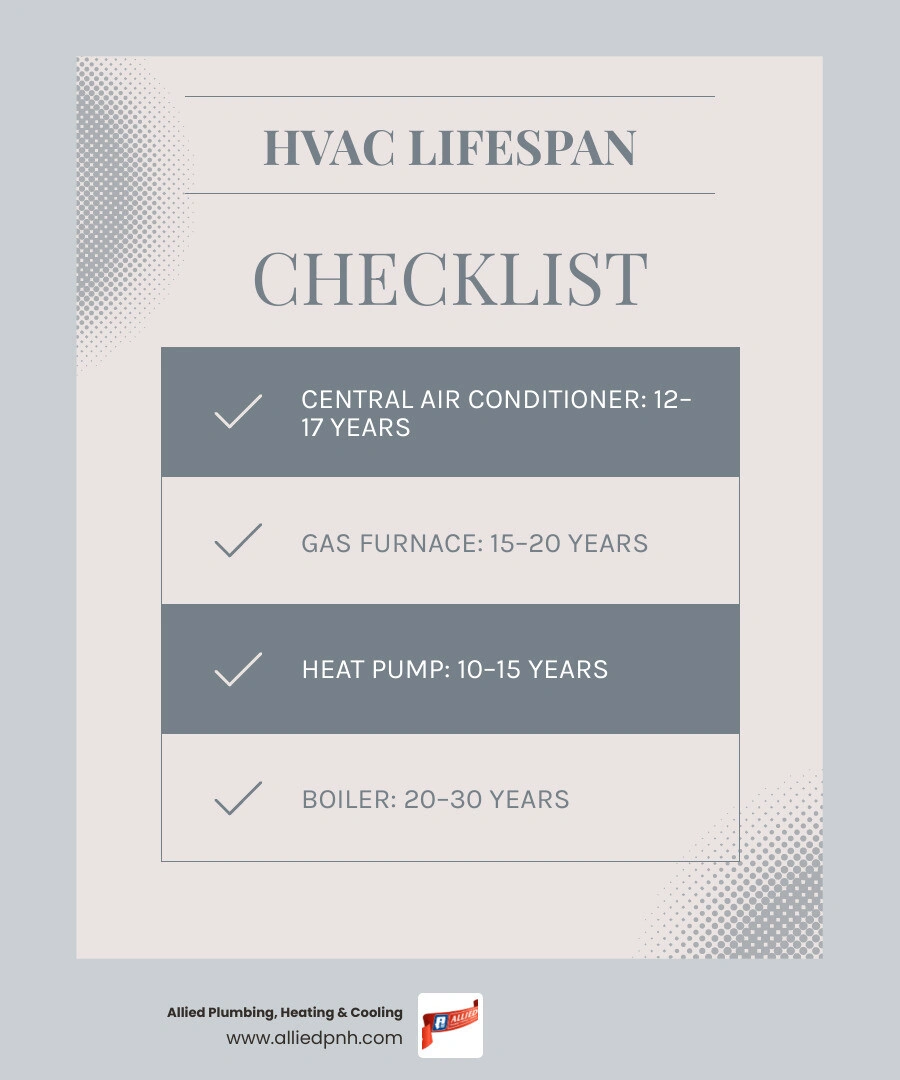
The average lifespan of an HVAC system depends on the type of equipment you have. Here's a quick breakdown:
• Central Air Conditioner — Average Lifespan: 12–17 years
• Gas Furnace — Average Lifespan: 15–20 years
• Heat Pump — Average Lifespan: 10–15 years
• Boiler — Average Lifespan: 20–30 years
• Ductless Mini-Split — Average Lifespan: 15–20 years
• Ductwork (Sheet Metal) — Average Lifespan: 20–25 years
• Geothermal Heat Pump — Average Lifespan: 25–30 years
Most modern HVAC systems last somewhere between 15 and 25 years — but that number shifts significantly based on how well the system is maintained, how it was installed, and where you live.
For homeowners in Springfield, Rochester, and Chatham, IL, knowing where your system stands can be the difference between a planned upgrade and a stressful emergency breakdown on the coldest night of January. The reality is that most people don't think about their HVAC system until it stops working — and by then, options are limited and costs are higher.
This guide walks you through everything you need to know: realistic lifespan expectations by component, the factors that shorten or extend system life, warning signs to watch for, and how to decide whether a repair or full replacement makes more sense for your situation.
What is the Average Lifespan of an HVAC System?
When we talk about the average lifespan of an HVAC system, we are looking at the operational period over which your heating and cooling equipment can function within manufacturer-rated performance tolerances. Eventually, there comes a point where total replacement becomes more cost-effective than continuing to patch up old, declining parts.
According to national benchmarks established by organizations like ASHRAE (the American Society of Heating, Refrigerating and Air-Conditioning Engineers), equipment degradation follows three distinct, overlapping physical mechanisms:
• Mechanical Wear: Moving parts like compressor pistons, blower motors, and fan blades experience friction and physical wear over thousands of hours of operation.
• Thermal Fatigue: Heating components, particularly furnace heat exchangers, expand and contract rapidly as they heat up and cool down. Over time, this constant physical stress weakens the metal.
• Refrigerant System Decline: Acid buildup, moisture intrusion, and microscopic leaks slowly degrade the chemical efficiency of your air conditioner or heat pump, forcing the compressor to work harder to achieve the same cooling effect.
In Springfield, Rochester, and Chatham, our systems endure a true four-season climate. This means your HVAC components don't get much of a holiday. Your furnace works overtime during freezing winters, and your air conditioner runs constantly through the humid summer months. This continuous cycle of heavy seasonal usage accelerates these natural degradation mechanisms.
How Component Types Affect the Average Lifespan of an HVAC System
Not all HVAC components are created equal, and they do not wear out at the same rate. Understanding how each specific component ages helps you plan ahead and avoid unexpected system failures.
Central Air Conditioners (12–17 Years)
An outdoor condensing unit is exposed to the elements year-round. It must endure scorching summer sun, heavy spring rains, and freezing winter snow. Because the compressor and condenser coils operate under high pressure and temperature extremes, they typically reach their functional limit between 12 and 17 years. If your cooling system is approaching this age and starting to struggle, it may be time to explore your options for AC Replacement Springfield IL.
Gas Furnaces (15–20 Years)
Furnaces generally enjoy a longer lifespan than air conditioners because they are housed safely indoors, protected from wind, rain, and debris. A well-maintained gas furnace can easily last 15 to 20 years. However, the critical point of failure for any furnace is the heat exchanger. If thermal fatigue causes this component to crack, it poses a severe safety hazard, making a professional Furnace Replacement Springfield IL absolutely necessary.
Heat Pumps (10–15 Years)
Air-source heat pumps have a slightly shorter average lifespan than dedicated heating or cooling units. Why? Because they operate year-round. While an AC sits idle in winter and a furnace rests in summer, a heat pump switches back and forth between heating and cooling modes. This year-round operation accumulates compressor run-hours at roughly twice the rate of single-season systems, typically bringing their useful service life to 10 to 15 years.
Boilers (20–30 Years)
Hydronic boilers are the marathon runners of the residential heating world. Because they experience lower mechanical stress and do not rely on complex refrigerant cycling or high-velocity air blowers, a residential boiler can reliably keep your home warm for 20 to 30 years—and sometimes even longer with meticulous maintenance.
Ductwork (20–25 Years)
While sheet metal ductwork can technically survive multiple generations of heating and cooling equipment, it does degrade over time. Seals dry out, tape peels away, and fiberglass insulation can deteriorate. On average, duct systems maintain their integrity for 20 to 25 years before air leaks begin to cause significant energy loss.
Geothermal Heat Pumps (25–30 Years)
Geothermal systems are incredibly durable. The indoor heat pump unit itself typically lasts 25 to 30 years because it is sheltered indoors and operates under highly stable underground temperatures. Even better, the underground ground loops—usually made of high-density polyethylene—can easily last 50 years or more, outliving multiple generations of indoor equipment.
Ductless Mini-Splits (15–20 Years)
Ductless mini-splits offer highly efficient zone control and generally last 15 to 20 years. Because they utilize advanced variable-speed inverter technology, they experience fewer harsh start-and-stop cycles compared to traditional systems, which helps preserve the compressor's lifespan.
How Climate and Location Impact the Average Lifespan of an HVAC System
While national averages provide a helpful baseline, your local environment plays a massive role in how long your equipment actually lasts.
In coastal regions, salt air corrosion can eat away at condenser coils, reducing an air conditioner's lifespan to a mere 7 to 15 years. In the desert Southwest, extreme heat above 110°F forces compressors to run continuously under extreme thermal load, limiting their life to 8 to 12 years.
Fortunately, here in Springfield, Rochester, and Chatham, we don't have to worry about salty sea breezes. However, we do face our own unique environmental challenges:
• Brutal Midwestern Winters: Sub-zero temperatures put incredible stress on gas furnaces and heat pumps during peak winter months.
• High Summer Humidity: High humidity levels force air conditioners to work much harder to dehumidify indoor air, increasing overall run times and mechanical wear.
• Cottonwood and Agricultural Dust: In late spring and summer, airborne cottonwood seeds, pollen, and agricultural dust can quickly clog outdoor condenser coils. If these coils aren't cleaned regularly, the restricted airflow traps heat inside the system, causing the compressor to overheat and wear out prematurely.
Key Factors That Determine System Longevity
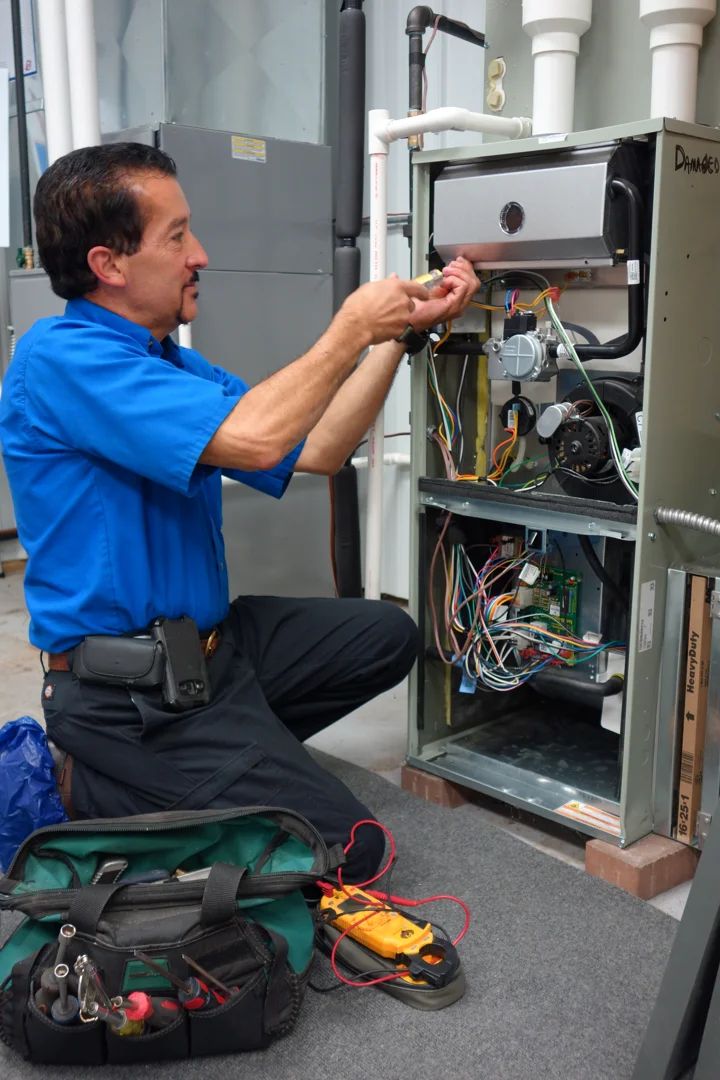
While you can't control the weather in Springfield, Rochester, or Chatham, there are several critical factors within your control that directly determine whether your system will fail prematurely or outlast the averages.
Installation Quality and Sizing
The single most critical day in the life of your HVAC system is the day it is installed. Even the most expensive, top-tier system will struggle and fail early if it is installed incorrectly.
A proper installation begins with accurate system sizing. Some contractors rely on outdated rules of thumb, resulting in systems that are either too large or too small for the home.
• Oversized Systems: If a system is too large, it will cool or heat the house incredibly fast and then shut off. This is known as short-cycling. Because the starting cycle is the most mechanically stressful part of an HVAC system's operation, constant short-cycling ruins compressors and blower motors years ahead of their time.
• Undersized Systems: A system that is too small will run continuously, struggling to meet the temperature set on your thermostat. This constant operation leads to rapid wear and tear and skyrocketing utility bills.
To ensure your system is set up for success from day one, it is vital to work with certified professionals who perform detailed load calculations. For expert guidance on getting the right fit for your home, check out our Furnace Installation Springfield IL Guide and explore our professional AC Installation Springfield IL services.
Maintenance Frequency and Usage Patterns
Think of your HVAC system like your car. If you never changed the oil, rotated the tires, or replaced the filters, you wouldn't expect your car to make it to 100,000 miles. Your home's comfort system is no different. Regular maintenance is the most effective way to protect your investment.
• Routine Air Filter Changes: A clogged air filter acts like a wall in your ductwork. It restricts airflow, forcing the blower motor to work twice as hard to circulate air. This restricted airflow can cause your AC's evaporator coil to freeze over or your furnace to overheat and shut down. Changing your filters every 1 to 3 months is the simplest, most effective DIY task you can perform to extend your system's life.
• Seasonal Tune-Ups: Having a professional technician service your cooling system in the spring and your heating system in the fall can extend your HVAC system's life by 3 to 5 years. During these visits, technicians clean vital components, tighten loose electrical connections, lubricate moving parts, and catch minor issues before they turn into major, system-ending breakdowns.
• Smart Thermostats and Usage Patterns: Modern smart thermostats can reduce unnecessary strain on your system by automatically adjusting temperatures when you are away from home. Utilizing "Auto" settings rather than keeping the fan running constantly also gives your system's blower motor well-deserved breaks, preserving its operational life.
Warning Signs and the Repair vs. Replace Decision
As your HVAC system ages, it will begin to drop hints that it is nearing the end of its useful life. Recognizing these warning signs early allows you to plan for a replacement on your own terms, rather than waiting for an emergency breakdown to make the decision for you.
Key Warning Signs of System Failure
Keep an eye out for these common indicators that your system is on its last legs:
• Rising Utility Bills: If your energy bills are steadily climbing even though your local utility rates have remained stable, your system is losing its operational efficiency.
• Inconsistent Temperatures: If some rooms feel like an icebox while others are warm and stuffy, your system is struggling to distribute air effectively.
• Strange Noises and Odors: Squealing, banging, or grinding noises indicate loose or failing mechanical parts. Musty or burning smells can point to electrical issues or mold growth within the system.
• Frequent Repairs: If you find yourself calling for service multiple times a year, those repair costs will quickly add up to more than the system is worth.
• An Expired Warranty: Most manufacturers offer 5- to 10-year warranties. Once your system passes this threshold, you are fully responsible for the cost of any component failures.
For a deeper dive into these warning signs, you can read our detailed guides on Signs It's Time for Home Furnace Replacement, Signs Your Old AC Unit Needs Replacement, and Signs It's Time for an AC Replacement.
The Repair vs. Replace Framework
When your older system experiences a major breakdown, you face a classic homeowner dilemma: do you pay to fix it, or do you invest in a new system? To take the emotion out of this decision, professionals use two handy financial rules of thumb.
The 50% Rule
This rule is simple: if the cost of the repair exceeds 50% of the cost of a brand-new system, you should replace it. Spending a large amount of money to repair a system that is already past its prime is rarely a wise investment, as other aging components are likely to fail soon after.
The $5,000 Rule
To use this rule, multiply the age of your system by the cost of the repair quote. If the total is more than $5,000, replacement is generally the better financial move.
• Example A: An 8-year-old system needs a minor repair. $$text{8 years} times $400 = $3,200$$Since the result is under $5,000, making the repair is a smart choice.
• Example B: A 12-year-old system needs a compressor replacement. $$text{12 years} times $600 = $7,200$$Because the result is well over $5,000, investing that money into a new, highly efficient system is the wiser long-term decision.
The R-22 Freon Factor
If your air conditioner was installed before 2010, there is a high probability that it uses R-22 refrigerant (commonly known as Freon). Under EPA regulations, the production and import of R-22 was completely phased out. Because the supply of R-22 is extremely limited, recharging an older system with this refrigerant is incredibly expensive. If an old R-22 system develops a refrigerant leak or compressor failure, replacing the system is almost always the only logical choice.
To help you navigate these complex decisions, we have put together helpful resources on When the Cost of AC Repair Exceeds the Value of Your System and AC Repair Red Flags That Mean You Need a New System.
Frequently Asked Questions About HVAC Longevity
Can an HVAC system last 30 years?
While it is extremely uncommon, yes, a heating system like a high-quality gas furnace or boiler can occasionally last 30 years. However, this level of longevity requires a perfect storm of positive factors: exceptional, uninterrupted annual maintenance, premium-grade equipment, a highly professional installation, and a moderate climate. That even if a system survives for 30 years, its energy efficiency will be dramatically lower than modern systems, meaning it will cost you significantly more to operate month over month.
Should I replace my AC and furnace at the same time?
In most cases, yes. Replacing both units simultaneously offers several key advantages:
• Matched Efficiency: Modern indoor and outdoor units are designed to work together. Pairing a brand-new outdoor AC condenser with an old, inefficient indoor furnace blower can prevent the new system from reaching its rated efficiency.
• Installation Savings: Purchasing and installing both units at once is generally much more cost-effective than scheduling two separate installations years apart.
• A Reset Warranty: Replacing both units ensures your entire heating and cooling system is covered under a fresh, comprehensive manufacturer's warranty.
For more information on matching your heating and cooling upgrades, read our Heating Replacement Best Guide Springfield IL.
How long does residential ductwork typically last?
Traditional sheet metal ductwork typically lasts 20 to 25 years. Over time, physical shifts in your home, temperature fluctuations, and humidity can cause duct joints to separate, leading to significant air leaks. According to the Department of Energy, the average home loses 20% to 30% of its conditioned air through duct leaks and poor connections. When replacing your HVAC equipment, it is always a good idea to have your ductwork inspected to ensure your new system can perform at its best.
Conclusion
Understanding the average lifespan of an HVAC system is the key to maintaining a comfortable, energy-efficient home without facing unexpected financial stress. By keeping an eye out for early warning signs, changing your filters regularly, and partnering with trusted professionals for seasonal maintenance, you can maximize your system's useful life and make a smooth, planned transition when the time comes for an upgrade.
At Allied Plumbing, Heating & Cooling, we have been keeping homes comfortable across Springfield, Rochester, and Chatham since 1977. As a third-generation, family-owned business, we are proud to serve our neighbors in Springfield, Rochester, and Chatham, IL with reliable, 24/7 emergency service.
We stand behind our work with the Daikin Comfort Promise, offering industry-leading 12-year warranties that provide ultimate reliability and peace of mind. Whether you need a simple tune-up, a complex repair, or a complete system replacement, our experienced team is here to help you every step of the way.
Ready to ensure your home's comfort for years to come? Schedule professional cooling and heating services with Allied Plumbing, Heating & Cooling today!