The Debate on Covering Your Outdoor AC Condenser During a Midwest Winter
The Debate on Covering Your Outdoor AC Condenser During a Midwest Winter
The Myth of the Winter Blanket: Why Wrapping Your AC Might Do More Harm Than Good
Wrapping a heavy canvas tarp around your cooling system seems like a logical choice, but the debate on covering your outdoor AC condenser during a Midwest winter often reveals that well-meaning protection actually causes severe damage. It is a common misconception that outdoor air conditioning units need a thick, heavy blanket to survive freezing temperatures and driving snow. Homeowners naturally want to protect their major investments, and as the leaves begin to drop, throwing a cover over the equipment feels like the responsible thing to do.
If you are looking for professional guidance on managing your air conditioning through the changing seasons, our team at Allied Plumbing Heating & Cooling is here to help. In our years of serving Springfield homes, we've seen first-hand the damage that improper winterization can cause, and we want to help you make the right call.
The core decision point usually arrives during your September pre-heating-season prep. As you shut down the cooling system and prepare the house for the cold months ahead, you face a choice: use a full cover, use a top-only cover, or leave the unit completely exposed. While a full wrap might keep the snow out, it introduces entirely new threats to the internal components. Trapped moisture, lack of airflow, and the creation of a warm, sheltered environment for pests often result in expensive repairs come spring. Understanding why a full cover is risky is the first step in properly winterizing your home's exterior equipment.
How Manufacturers Design Modern Condensers for Extreme Weather
To understand why a heavy winter cover is usually unnecessary, you have to look at how modern outdoor HVAC equipment is built. Major manufacturers design these units specifically to sit outside year-round, fully exposed to the elements. Rain, snow, and sleet are factored into the engineering of the cabinet and the internal components. In fact, most major brands explicitly advise against wrapping their units in non-breathable materials.
When you schedule AC maintenance and repair services, technicians often inspect these factory-designed defenses to ensure they remain intact. The equipment relies on several built-in protections:
1. Powder-coated finishes: The exterior metal cabinet is treated with industrial-grade powder coating and galvanized steel, which resists rust and corrosion far better than standard paint.
2. Sealed electrical compartments: The sensitive contactors, capacitors, and wiring are housed inside weather-tight panels that prevent rain and melting snow from causing electrical shorts.
3. Durable aluminum and copper coils: The condenser coils are built to withstand direct moisture. Normal snow accumulation simply rests on the fins and melts away harmlessly when temperatures rise.
4. Open-air ventilation: Air conditioning units are inherently designed to "breathe." They require steady airflow to dry out after a rainstorm or a heavy snowfall.
The Reality of Snow Exposure
Throughout Springfield IL and surrounding Midwest areas, it is completely normal to see a condenser unit buried under a fresh snowdrift. This snow does not harm the machinery. The moisture from melting snow drains out through the bottom of the unit exactly as rainwater does during a heavy summer thunderstorm. By leaving the sides of the unit open to the air, you allow the wind and natural evaporation to keep the internal components dry, which is exactly how the system was engineered to function.
The Moisture Trap: Rust, Oxidation, and Mold Inside Your Unit
The most significant danger of using a full tarp or a tight-fitting vinyl cover is moisture entrapment. When you wrap an air conditioner tightly, you cut off the natural airflow that keeps the internal components dry. Ground moisture constantly evaporates upward, even in the dead of winter. If a tarp blocks that moisture from escaping, it condenses on the cold metal surfaces inside the unit.
The Mechanics of Accelerated Oxidation
The problem: A fully wrapped unit acts like a miniature greenhouse. On unseasonably warm winter days, the temperature inside the cover rises, drawing moisture from the soil below. As the temperature drops overnight, that trapped humidity turns into heavy condensation on the fan blades, the motor housing, and the delicate condenser coils.
The cause: Because the heavy cover prevents any wind from reaching the coils, this condensation never dries. The constant presence of water accelerates the oxidation process. Over a single winter, this trapped moisture can cause severe rust on components that would have otherwise remained perfectly fine in the open air.
The solution: At Allied Plumbing Heating & Cooling, a pattern we see often during our spring maintenance visits is severe rust on coils caused by well-meaning homeowners who tightly wrapped their units the previous fall. The simple fix is to avoid non-breathable wraps entirely. Allowing the unit to breathe naturally prevents mold, mildew, and rust from taking hold inside the cabinet.
The Hidden Winter Threat: Mice and Chewed Electrical Wires
While rust takes months to develop, another winter threat can destroy your system in a matter of days. As overnight temperatures drop during early fall, field mice and other rodents begin aggressively seeking warm, sheltered spaces to build their winter nests. A fully tarped air conditioner provides the perfect sanctuary: it blocks the freezing wind, hides them from predators, and offers a quiet environment.
The danger of tiny openings: Mice can squeeze through openings as small as a dime. No matter how tightly you bungee-cord a tarp around the base of your condenser, rodents will find a way underneath. Once inside, they use the dry, protected space to build nests, often utilizing the surrounding yard debris or chewing up the unit's internal insulation.
Electrical Damage and System Failure
The most expensive damage occurs when these nesting mice begin chewing on the unit's low-voltage electrical wires. Rodents naturally gnaw on objects to keep their teeth filed down, and the soft plastic insulation around HVAC wiring is a frequent target. When you turn the system back on in the spring, these chewed wires cause immediate electrical shorts, blown fuses, or complete compressor failure.
Our team typically sees the worst rodent damage in units that were fully wrapped. Catching these vulnerabilities early is crucial. One long-time customer, who has relied on our team for consistent AC and furnace checks over the past 15 years, knows the value of professional oversight. By maintaining a strict schedule for September pre-heating-season prep, technicians can spot early signs of pest activity—like droppings or chewed insulation—before the mice have a chance to cause catastrophic damage to the system over the winter.
Falling Ice: The Real Midwest Winter Danger to Your AC
If snow and rain do not harm the unit, and full covers cause rust and rodent infestations, you might assume the best approach is to do nothing at all. However, there is one specific regional threat that requires action. The primary danger to your outdoor condenser is not the accumulation of soft snow, but the impact of heavy, falling ice.
The Threat from Gutters and Eaves
Springfield, IL experiences frequent winter freeze-thaw cycles. During the day, the sun melts the snow on your roof, sending water down into the gutters. As temperatures plummet overnight, that water freezes solid, eventually creating massive ice dams. When these heavy chunks of ice finally break loose, they plummet downward.
If your air conditioner sits directly beneath the roofline or a set of gutters, it is highly vulnerable to this falling ice. The top of the condenser features a large metal grille that protects the fan blades. A direct hit from a heavy icicle can easily crush this grille, bend the fan blades, and damage the motor housing below. Based on what we encounter after severe Midwest winter storms, this physical impact damage is the single biggest reason a compromise solution is necessary for homeowners in Springfield IL and surrounding areas. You must protect the top of the unit from impact without suffocating the sides.
The Middle Ground: Pros and Cons of Top-Only AC Protection
The definitive verdict on winter AC protection is a compromise: you need to shield the top of the unit from falling debris and ice while leaving the sides completely open to breathe. We recommend a top-only cover over leaving the unit entirely exposed because it eliminates the risks of trapped moisture and rodent infestations while solving the problem of physical impact damage.
A top-only cover is the ideal solution. You can purchase a specialized heavy-duty top cover that straps securely to the upper grille, or you can use a simple DIY method: placing a piece of sturdy plywood over the top of the unit and weighting it down with a brick or two. Both methods achieve the same goal.
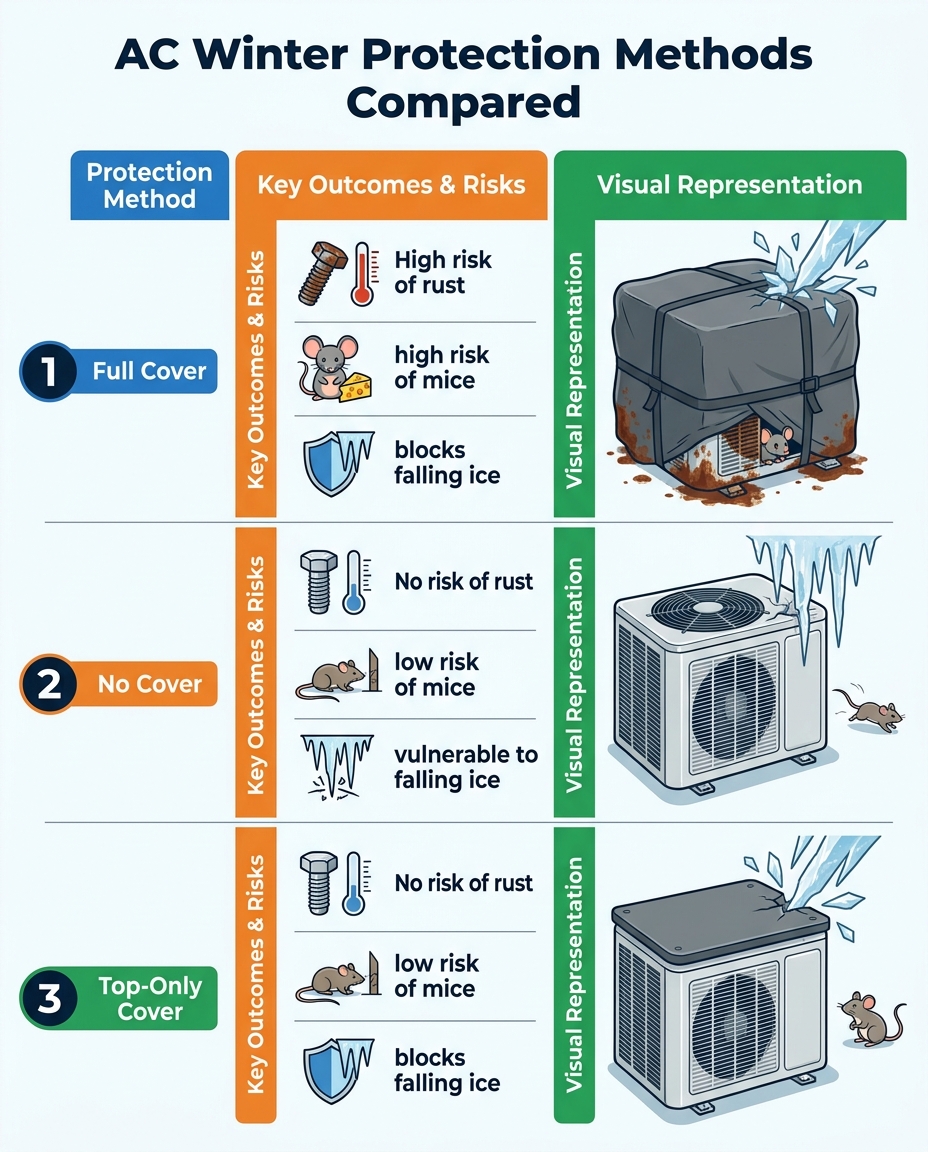
• Full Tarp / Wrap — Risk of Rust & Mold: High (traps ground moisture) — Risk of Rodent Damage: High (creates a warm, sheltered tent) — Protection from Falling Ice: Yes (blocks ice from entering top)
• No Cover at All — Risk of Rust & Mold: None (allows natural airflow) — Risk of Rodent Damage: Low (too exposed for winter nesting) — Protection from Falling Ice: None (highly vulnerable to impact)
• Top-Only Cover (Plywood) — Risk of Rust & Mold: None (sides remain completely open) — Risk of Rodent Damage: Low (no shelter provided on sides) — Protection from Falling Ice: Yes (absorbs impact from roof ice)
Transitioning Safely into Winter
By utilizing a top-only cover, you effectively shield the delicate fan grille from heavy icicles without turning the cabinet into a rusty mouse trap. Once you have secured the top of the condenser, you can confidently shift your focus indoors. Ensuring your outdoor equipment is safely put to bed allows you to concentrate on preparing your home's interior, such as scheduling professional heating services to ensure your furnace is ready for the first major cold snap.
AC Winter Protection Methods Compared
Essential September Yard Cleanup and HVAC Preparation
Protecting the top of your air conditioner is just one part of a successful seasonal transition. To fully protect the equipment and set yourself up for success next spring, you need to incorporate a few basic maintenance steps into your September pre-heating-season prep. A clean perimeter is just as important as the right cover.
For example, after a recent move, one local homeowner relied on our technician Kurt to perform comprehensive heating and air conditioning checks, establishing a clean baseline for the property's system before winter hit. You can apply that same proactive mindset to your own yard cleanup.
• Clear the perimeter: Rake away all leaves, twigs, and dead grass from the base of the condenser. Aim for at least two feet of clear space around the entire unit to prevent organic matter from rotting against the metal cabinet.
• Trim nearby shrubs: Cut back any bushes or branches that have encroached on the unit over the summer. This ensures adequate airflow and removes potential hiding spots for pests.
• Wash the exterior: Use a gentle stream from a garden hose to wash away summer dust, grass clippings, and bug debris from the outer fins before the freezing weather arrives.
• Review seasonal checklists: Take a moment to read through Pre-Summer HVAC Inspection Tips for a Stress-Free Season. Understanding what the system needs in the spring helps you realize why keeping it clean and breathable during the winter is so critical.
Expert Guidance for Your Winter HVAC Transition
The short answer to the great winter debate is simple: skip the full tarp. Wrapping your air conditioner tightly traps destructive moisture and invites mice to chew through your electrical wiring. Instead, utilize a top-only cover or a piece of plywood to shield the fan grille from falling ice while allowing the sides of the unit to breathe naturally in the winter air.
Navigating the transition between cooling and heating seasons does not have to be a guessing game. If you live in Springfield IL and surrounding Midwest areas, relying on local experts ensures your equipment is properly shut down for the winter and your furnace is optimized for the cold ahead. Schedule a pre-season inspection with our team today to secure your system, clear out any hidden vulnerabilities, and enjoy a warm, stress-free winter indoors.
Frequently Asked Questions
Should I cover my AC unit in the winter?
You should not fully cover or wrap your AC unit in the winter. Full covers trap ground moisture, which leads to rust, and they create a warm shelter that attracts mice. Instead, place a top-only cover or a piece of plywood over the fan grille to protect it from falling ice while leaving the sides open to breathe.
What happens if I don't cover my AC?
If you leave your AC completely uncovered, the internal components will easily withstand the snow and rain, as they are designed for outdoor exposure. However, leaving the top exposed makes the fan grille highly vulnerable to physical damage from heavy ice falling from your roof or gutters. This is why a top-only cover is the recommended compromise.
Will snow damage my AC compressor?
Normal snow accumulation will not damage your AC compressor. The exterior cabinet and internal coils are built with powder-coated finishes and sealed electrical compartments to handle freezing moisture. When the snow melts, the water simply drains out of the bottom of the unit, just like a summer rainstorm.
How do I keep mice out of my AC unit?
The most effective way to keep mice out of your AC unit is to avoid using a full winter cover or tarp. Full covers block the cold wind and create a cozy, sheltered environment that rodents actively seek out in the fall. Additionally, keeping the perimeter clear of leaves and tall grass removes the hiding spots mice use to approach the unit.
How do I protect my AC unit from falling ice?
You can protect your AC unit from falling ice by securing a heavy-duty top cover or a piece of thick plywood over the top grille. Weight the plywood down with a brick or strap it securely to the unit. This barrier absorbs the impact of falling icicles from the roof, preventing the fan blades and motor from being crushed.
Can trapped moisture inside an AC cover cause mold?
Yes, trapped moisture inside a fully wrapped AC cover frequently causes mold and mildew growth. During unseasonably warm winter days, condensation forms inside the tarp, and the lack of airflow prevents it from drying. This creates a dark, damp environment where mold can easily thrive on the internal surfaces of the cabinet.
The Debate on Covering Your Outdoor AC Condenser During a Midwest Winter
September 10, 2026
Wrapping your AC unit before freezing temperatures hit seems like a responsible choice. See why heavy covers actually trap rust-causing moisture and attract mice, and what to use instead.
Wrapping your AC unit before freezing temperatures hit seems like a responsible choice. See why heavy covers actually trap rust-causing moisture and attract mice, and what to use instead.
Programming Your Smart Thermostat for Illinois' Unpredictable 40-Degree Temperature Swings
September 9, 2026
When 80-degree afternoons drop to 40-degree nights, your AC and furnace often end up fighting each other. Adjusting your temperature deadbands prevents this expensive overlap during the fall transition.
When 80-degree afternoons drop to 40-degree nights, your AC and furnace often end up fighting each other. Adjusting your temperature deadbands prevents this expensive overlap during the fall transition.
Rerouting Sump Pump Discharge Lines Before the Ground Freezes in Illinois
September 8, 2026
Trapped water in poorly sloped drainage pipes will freeze solid this winter, risking a flooded basement. Find out why September is the absolute deadline to reroute your sump pump discharge line.
Trapped water in poorly sloped drainage pipes will freeze solid this winter, risking a flooded basement. Find out why September is the absolute deadline to reroute your sump pump discharge line.