The Truth About Chemical Drain Cleaners and What They Actually Do to PVC Pipes
The Truth About Chemical Drain Cleaners and What They Actually Do to PVC Pipes
The Hidden Danger in the Bottle: Why Quick Fixes Fail
The bathroom sink is draining slower by the day, and now dirty water is starting to pool around the stopper every time you wash your hands. When you are dealing with a stubborn clog, you need to know the truth about chemical drain cleaners and what they actually do to PVC pipes before you reach for a quick fix. It is incredibly tempting to grab a brightly colored bottle of store-bought chemical gel, pour it down the drain, and hope for an immediate resolution. However, that heavy plastic bottle hides a harsh reality that can permanently compromise your home's infrastructure.
At Allied Plumbing Heating & Cooling, our team typically sees a surge in sudden plumbing blockages when household activity spikes. During the late summer back-to-school transition, morning routines become rigid and rushed. Multiple family members are showering, brushing teeth, and using the plumbing system in a concentrated window of time. This heavy, sudden usage pushes hair, soap scum, and debris deep into the plumbing lines, creating dense clogs that bring your daily routine to a halt. When frustration sets in, a liquid drain cleaner seems like the most convenient answer.
The central problem is that the marketing promise of a "safe" and "easy" quick fix masks a highly destructive chemical reaction. These commercial gels do not gently dissolve blockages; they violently burn through them. This aggressive chemical action severely compromises the structural integrity of your plumbing system, weakening the materials from the inside out. Understanding exactly what happens inside the pipes before reaching for the bottle is critical to protecting your home. If you need a reliable solution, reaching out for professional plumbing services is the safest way to restore your home's flow without risking severe internal damage.
The Chemistry of Clog Removal: Understanding Exothermic Reactions
The Problem: A Blocked Pipe and Trapped Water
To understand why commercial drain gels are so harsh, you have to look at the fundamental science behind how they operate. When a clog forms, it creates a physical barrier inside the pipe, trapping standing water above it. This stagnant environment is where the chemical cleaner is introduced. Most commercial drain gels rely on highly caustic active ingredients, primarily sodium hydroxide, which is commonly known as lye. These ingredients are designed to eat through organic matter like hair and grease, but they do not distinguish between the clog and the pipe itself.
The Cause: Sodium Hydroxide and Exothermic Heat
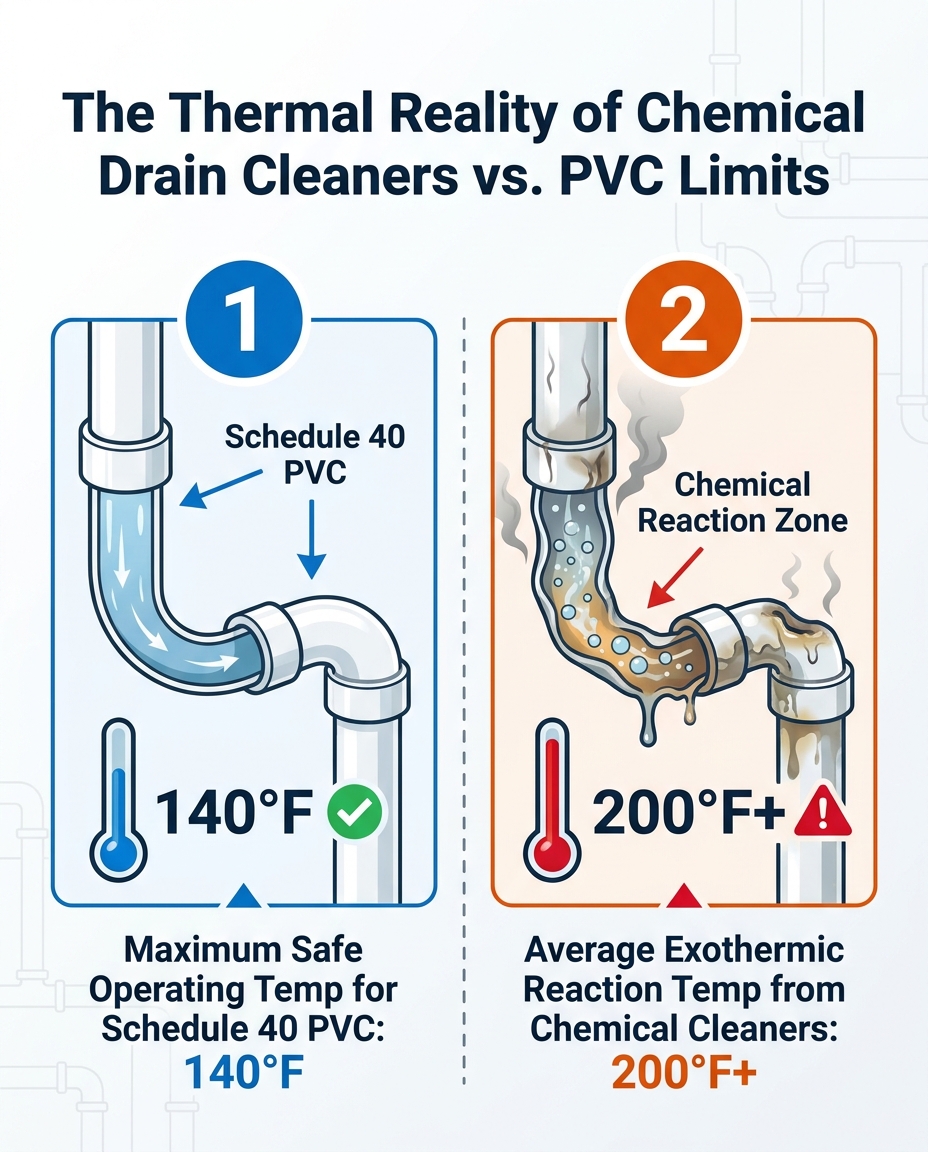
When you pour a caustic drain cleaner into a blocked sink, the chemicals sink through the standing water and make contact with the clog. This interaction triggers an exothermic reaction. In chemistry, an exothermic reaction is a process that releases energy in the form of intense heat. The chemicals interact with the organic material in the clog and the surrounding water, rapidly generating localized temperatures that can easily soar well over 200 degrees Fahrenheit. The liquid inside your pipe literally begins to boil as it attempts to burn a hole through the blockage.
The Solution: Understanding the Heat Limitations
This unyielding chemical heat stands in direct contrast to the physical limitations of standard residential plumbing materials. Whether your home utilizes modern PVC vs. older cast iron pipe joints, neither material was engineered to withstand boiling chemical pools resting in one concentrated spot. When dealing with these intense chemical reactions, turning to professional plumbing repair prevents the hidden destruction that occurs when extremely hot caustic liquids sit stagnant against vulnerable pipe walls.
Thermal Shock: How Extreme Heat Destroys Modern PVC
Modern residential plumbing relies heavily on standard Schedule 40 PVC pipe for drainage and venting. This material is lightweight, durable, and highly effective for moving wastewater out of your home. However, it has very specific temperature limitations. The maximum recommended operating temperature for standard Schedule 40 PVC pipe is just 140 degrees Fahrenheit.
When a 200°F+ chemical reaction is trapped in a specific section of PVC pipe by a stubborn clog, the plastic is pushed far beyond its physical limits. The immediate consequence is thermal shock. In our years of providing plumbing services across Springfield, IL, we've seen firsthand how local basements and crawlspaces remain cooler throughout the late summer and into the fall. When you suddenly introduce boiling chemical heat into a cold PVC pipe, it causes severe thermal shock and rapid expansion and contraction stress on the material.
The physical consequences of this extreme heat are permanent. The trapped heat causes the plastic to warp, sag, and permanently deform. In severe cases, the localized heat can actually begin to melt the interior wall of the pipe, thinning the plastic until it fails. This structural compromise inevitably leads to persistent leaks, water damage inside your walls, and the costly need for complete section replacements.
• Standard Schedule 40 PVC — Temperature Limit: 140°F (Maximum Safe Temp) — Reaction to Extreme Heat: Warping, sagging, and permanent deformation
• Cold Basement Pipes — Temperature Limit: Ambient Temp (50°F - 65°F) — Reaction to Extreme Heat: Severe thermal shock and expansion stress
Understanding the stark difference between the durability of modern PVC vs. older cast iron pipe joints is crucial, as each material fails differently under the stress of harsh chemical heat.
The Thermal Reality of Chemical Drain Cleaners vs. PVC Limits
Acidic Corrosion: The Toll on Older Cast Iron Pipe Joints
The Problem: Vulnerability in Historic Plumbing
While newer homes rely on plastic piping, our technicians frequently work on historic Springfield homes that feature different plumbing materials, which react uniquely to harsh chemicals. If your home was built several decades ago, you likely have cast iron drainage pipes. While cast iron is incredibly strong and durable against physical impacts, it has specific vulnerabilities when exposed to modern chemical agents. The comparison between modern PVC vs. older cast iron pipe joints reveals that while plastic melts under heat, metal degrades under acid.
The Cause: Acid Erasing the Oxidation Layer
Many heavy-duty drain cleaners use sulfuric acid or hydrochloric acid instead of lye. These acid-based cleaners are meant to dissolve heavy organic matter, but they aggressively eat away at the protective oxidation layer inside older cast iron pipes. Inside a cast iron pipe, a natural layer of rust and mineral deposits forms over time, acting as a slight barrier. Acidic cleaners strip this layer away completely, exposing the raw metal underneath to accelerated corrosion. Every time a chemical cleaner is poured down the drain, a microscopic layer of the pipe is eaten away.
The Solution: Protecting the Structural Integrity
The most severe damage occurs at the connection points. The joints and seals in these older systems degrade rapidly under chemical stress. Historically, cast iron pipes were joined using oakum and lead, or older rubber gaskets. Acidic drain cleaners dry out, crack, and dissolve these sealing materials. This chemical degradation accelerates structural failure, leading to hidden leaks behind walls, under floors, or buried in the foundation. Once a cast iron joint is chemically compromised, it cannot be easily patched; the entire section must be cut out and replaced.
Recognizing the Hidden Signs of Chemical Pipe Damage
If you or a previous homeowner have relied on store-bought drain gels in the past, your plumbing system may already be compromised. When our crew is called out to investigate mysterious water damage, a pattern we see often is the delayed aftermath of chemical pipe damage. Because the damage happens on the inside of the pipe, the exterior symptoms can be subtle until they reach a breaking point. When comparing modern PVC vs. older cast iron pipe joints, the warning signs look slightly different, but both require immediate attention.
• Distorted or sagging pipes: Take a look under your kitchen or bathroom sink. If the white PVC pipes look warped, bent, or discolored, they have likely suffered from thermal shock. The quick fix: Do not attempt to bend them back, as the plastic is permanently weakened.
• Recurring mysterious leaks: If you constantly find small puddles of water under the sink or notice water stains on the ceiling below an upstairs bathroom, chemically degraded seals are a likely culprit. Acidic cleaners easily eat through the rubber gaskets that hold slip-joint connections together.
• Unusual plumbing odors: When the structural integrity of a pipe or a joint is compromised, sewer gases can escape into your home. A persistent foul odor near a drain often means a seal has been eaten away by caustic chemicals, allowing gas to bypass the P-trap.
• Slow draining despite clearing: If a pipe has melted and warped internally, it creates a permanent bottleneck. Even if the original clog is gone, the deformed pipe will catch debris and cause the drain to run slowly.
If you notice any of these signs, it is critical to schedule a professional structural assessment. A licensed plumber can use a specialized camera to inspect the interior walls of your pipes and determine the extent of the chemical damage.
Why Mechanical Drain Clearing is the Only Structurally Safe Solution
The safest alternative to pouring boiling chemicals down your drain is to physically remove the blockage. In our daily service calls, we rely on mechanical drain clearing as the only structurally safe solution for your plumbing system. Professional mechanical methods, such as utilizing a professional plumbing snake (auger) or performing high-pressure hydro-jetting, physically break apart and extract the blockage without generating any destructive heat or corrosive acid.
These mechanical methods address the root cause of the clog rather than just burning a small, temporary hole through it. When a chemical gel sits on a clog, it often just melts a tiny channel through the center of the mass, allowing water to drain temporarily while leaving the bulk of the blockage attached to the pipe walls. Mechanical snaking scrapes the walls clean, pulling out the hair and debris completely. This is especially important during the late summer back-to-school transition, when our team recommends routine mechanical clearing to keep plumbing systems running smoothly during high-usage periods.
By focusing on physical removal, you are taking a proactive step in preventing clogged drains before they start causing major backups. As your local experts, Allied Plumbing Heating & Cooling is deeply committed to prioritizing the long-term integrity of your home's plumbing over temporary, damaging DIY fixes. Offering safe mechanical solutions ensures that the immediate problem is resolved without shortening the lifespan of your pipes. Professional intervention preserves the long-term lifespan of the entire plumbing system, saving you from the stress of premature pipe replacements.
Protect Your Plumbing from Permanent Damage
Ultimately, protecting your pipe integrity is vastly more cost-effective than replacing melted plastic or corroded cast iron sections. The truth about chemical drain cleaners and what they actually do to PVC pipes is that the convenience is never worth the structural cost. Whether you are dealing with modern PVC vs. older cast iron pipe joints, the extreme heat and harsh acids will always leave a permanent mark on your plumbing infrastructure.
The next time your sink begins to back up, skip the chemical aisle entirely. Opting for safe, mechanical clearing protects your home and provides a permanent resolution to the blockage. We invite you to consult with our local experts for all your maintenance needs across Springfield and surrounding service areas, ensuring your plumbing remains safe, functional, and structurally sound for years to come.
Frequently Asked Questions
Will chemical drain cleaners melt PVC pipes? Yes, under the right conditions, chemical drain cleaners can melt or severely warp PVC pipes. The chemicals create an exothermic reaction that can exceed 200 degrees Fahrenheit, which is well above the 140-degree maximum temperature rating for standard Schedule 40 PVC. When this heat is trapped against the plastic, it causes permanent deformation and melting.
Why do plumbers tell you not to use Drano or similar gels? Our plumbers advise against these products because they cause hidden structural damage to your plumbing system. The caustic and acidic ingredients eat away at pipe walls, destroy rubber gaskets, and degrade older cast iron joints. Furthermore, if the chemical fails to clear the clog, it leaves a pool of highly toxic, boiling liquid in the pipe, creating a severe safety hazard for the technician who eventually has to open the line.
What happens when drain cleaner gets hot inside the pipe? When the drain cleaner gets hot, it creates severe thermal shock and expansion stress on the pipe material. This localized heat causes plastic pipes to soften and warp, while metal pipes experience accelerated corrosion due to the boiling acidic or caustic compounds. The trapped heat compromises the physical integrity of the pipe, leading to inevitable leaks.
What is the safest drain cleaner for plastic pipes? The safest approach is to avoid chemical cleaners entirely and use mechanical methods like a plunger or a drain snake. If you prefer a liquid solution for minor maintenance, enzymatic drain cleaners are a safer choice. Enzymatic cleaners use natural bacteria to slowly digest organic matter like hair and grease without generating any heat or corrosive chemical reactions.
How long does it take for a chemical drain cleaner to cause permanent pipe damage? Permanent damage can occur almost immediately during the exothermic reaction. Once the chemicals make contact with standing water and the clog, temperatures can spike within minutes, instantly warping PVC or burning through rubber slip-joint seals. Repeated use over months or years will progressively thin the pipe walls until they fail completely.
Can a warped PVC pipe be repaired, or does it need replacement? A warped or melted PVC pipe cannot be repaired and must be completely replaced. Once the plastic has been deformed by extreme heat, its structural integrity is permanently compromised, and it will no longer hold a watertight seal. A licensed professional must cut out the damaged section and install new piping to restore the system safely.
Standard vs Modulating Gas Valves for Consistent Heating in Two-Story Homes
October 9, 2026
Extreme temperature differences between floors often come down to your furnace's gas valve. See how a modulating system balances airflow to eliminate hot and cold zones.
Extreme temperature differences between floors often come down to your furnace's gas valve. See how a modulating system balances airflow to eliminate hot and cold zones.
Why Your Furnace Blower Keeps Running After the Burners Shut Off
October 8, 2026
That cool breeze from your vents after a heating cycle isn't always a malfunction. Understand how the fan limit switch actively protects your heat exchanger from cracking.
That cool breeze from your vents after a heating cycle isn't always a malfunction. Understand how the fan limit switch actively protects your heat exchanger from cracking.
Why Combining Water Heater Replacement and Furnace Maintenance Saves Money
October 7, 2026
Your furnace needs a pre-winter tune-up, but that aging water heater is also failing. Bundling these services eliminates redundant labor and preps your home for freezing temps.
Your furnace needs a pre-winter tune-up, but that aging water heater is also failing. Bundling these services eliminates redundant labor and preps your home for freezing temps.