Why Ice Forming on Your AC Unit Is More Serious Than It Looks
Ice forming on your ac unit causes and what to do is one of the most searched HVAC questions during summer — and for good reason. Spotting frost or ice on your air conditioner on a hot Springfield day feels confusing, even alarming. Your system is supposed to fight heat, not create a mini glacier. But that ice is actually a warning sign, not a sign your AC is working overtime. It means something is wrong inside the system, and ignoring it can turn a simple fix into a very costly repair.
Here is a quick breakdown of the most common causes and what to do right away:
Common Causes of Ice on Your AC Unit:
• Dirty or clogged air filter — restricts airflow over the evaporator coil, causing temperatures to drop below freezing
• Low refrigerant levels — a pressure drop in the system causes coil temperatures to plummet, freezing any moisture on contact
• Blocked or closed supply vents — cuts off the warm air the coil needs to stay above freezing
• Dirty evaporator coil — a layer of dust insulates the coil and traps cold air around it
• Faulty blower fan — without proper airflow, the coil gets too cold
• Running AC in cool weather — operating your system when outdoor temps drop below 60°F can trigger freezing
What to Do Immediately:
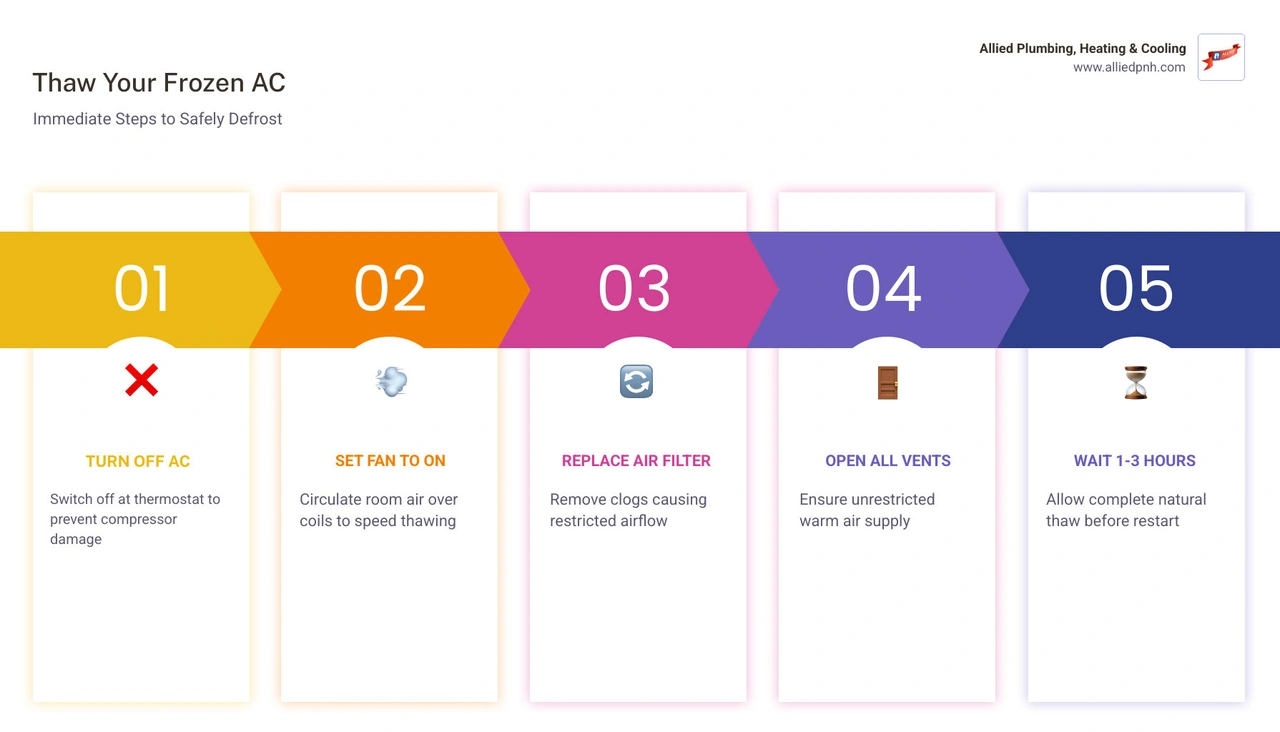
1. Turn your AC off at the thermostat right away
2. Switch the fan setting to "On" (not "Auto") to help thaw the coils with warm air
3. Check and replace your air filter if it looks dirty or clogged
4. Make sure all vents and return registers in your home are open and clear
5. Let the system thaw completely — this can take 1 to 3 hours — before restarting
6. If ice returns after restarting, call a professional HVAC technician
Ice on your AC unit is never normal during warm weather. It signals a disruption in the refrigeration cycle — usually from restricted airflow or a refrigerant leak — and left unchecked, it can damage your compressor, the most expensive part of your entire system. The good news is that catching it early and acting quickly can save you from a much bigger headache down the road.
Ice Forming on Your AC Unit: Causes and What to Do
When we talk about ice forming on your ac unit causes and what to do, we have to start with the basics of how your system works. Your air conditioner doesn't actually "create" cold; it removes heat from your indoor air. This happens at the evaporator coil. In a healthy system, warm air from your home blows over this cold coil, the refrigerant inside absorbs the heat, and the now-cooled air is circulated back into your rooms.
However, if that heat exchange is interrupted, the coil gets too cold. Since there is always moisture in the air (especially during a humid May 2026 in Springfield), that moisture condenses on the coil and quickly turns to ice.
The Role of Restricted Airflow
Airflow is the lifeblood of your HVAC system. If the air can't move, the heat can't be absorbed. This is why dirty air filters are the number one cause of frozen AC units. When a filter is caked in dust, pet dander, and debris, it acts like a wall. Without enough warm air passing over the coil, the temperature drops below 32°F, and you’ve got an ice problem.
For more details on keeping your air moving, check out our Air Filter Replacement Complete Guide.
The Joule-Thomson Effect and Refrigerant Issues
Another major culprit is low refrigerant. Many homeowners mistakenly believe that an AC "uses up" refrigerant like a car uses gas. In reality, your AC is a closed system; if the refrigerant is low, it means there is a leak.
When refrigerant levels drop, the pressure inside the evaporator coil also drops. According to the Joule-Thomson effect, this drop in pressure leads to a significant drop in temperature. Even if your airflow is perfect, a coil with low pressure will plummet to sub-freezing temperatures, causing any humidity to freeze instantly. If you've ever wondered Why is your AC freezing up during hot weather, this pressure imbalance is often the "hidden" reason.
• Airflow Restriction — Effect on System: Lack of heat to absorb — Result: Coil temperature drops
• Low Refrigerant — Effect on System: Pressure drop in coils — Result: Coil temperature drops
• Dirty Coils — Effect on System: Insulation layer — Result: Traps cold air/moisture
Identifying the Signs of Ice Forming on Your AC Unit: Causes and What to Do
How do you know if your unit is turning into an igloo before you actually see the ice? Keep an eye (and ear) out for these symptoms:
• Visible Frost: You might see ice on the copper refrigerant lines leading to the outdoor unit or on the indoor evaporator coil itself.
• Weak Airflow: If the vents are barely puffing out air, ice might be physically blocking the air from passing through the coils.
• Warm Air: If the air coming out of your vents feels like a lukewarm breeze instead of a crisp chill, the ice is likely insulating the coils.
• Hissing or Bubbling Sounds: This often indicates a refrigerant leak, which is a leading cause of freezing.
• Water Pooling: As the ice melts during an off-cycle, it can overwhelm the condensate drain pan, leading to puddles around your indoor unit.
If you notice any of these signs, it’s time to look into professional Air Conditioning Service to prevent permanent damage.
Immediate DIY Steps for Homeowners in Rochester
If you live in Rochester and find your AC is frozen, don't panic, but do act fast.
1. Shut it Down: Turn the AC off at the thermostat immediately. Running a frozen unit puts immense strain on the compressor.
2. Fan to "On": Switch your thermostat fan setting from "Auto" to "On." This keeps the blower motor running, pulling warm indoor air over the ice to help it melt faster.
3. Check the Filter: Slide out your air filter. If you can't see light through it, it’s time for a change. We recommend checking our Spring Air Filter Replacement Tips to make sure you're using the right MERV rating for your system.
4. Clear the Vents: Walk around your home and ensure that at least 80% of your supply vents are open. Also, make sure no furniture or curtains are blocking the return air registers.
Why a Frozen AC is a Serious Problem
It might be tempting to just let the ice melt and turn the AC back on, hoping it was a fluke. We strongly advise against this. A frozen AC is a cry for help from your equipment.
The Threat of Compressor Failure
The compressor is the "heart" of your air conditioner, and it is designed to compress refrigerant vapor, not liquid. When the coils are frozen, the refrigerant doesn't evaporate properly. This can lead to "liquid slugging," where liquid refrigerant makes its way back to the compressor. This can cause the compressor to fail entirely, which is one of the most expensive repairs in the HVAC world.
Efficiency and Utility Bills
A frozen unit is an inefficient unit. The ice acts as an insulator, meaning your AC has to work twice as hard to cool your home by half as much. This leads to skyrocketing utility bills and unnecessary wear and tear on every component in the system. Regular AC Maintenance for Year-Round Comfort is the best way to keep these costs in check.
Water Damage and Mold
When a massive block of ice melts, that water has to go somewhere. If your drain line is even slightly clogged, that water will spill over the pan and into your furnace or onto your floor. This creates the perfect environment for mold growth and can lead to structural damage in your home.
How to Safely Defrost Your Air Conditioner
Defrosting your unit requires patience. While it’s tempting to grab a hairdryer or a scraper, you could end up doing more harm than good.
• Natural Melting is Best: The safest way to defrost is to let the air do the work. By running the fan, you are using the ambient heat of your home to melt the ice safely.
• Avoid Sharp Objects: Never use a screwdriver, ice pick, or knife to chip away at the ice. The evaporator coils are made of thin copper or aluminum and are incredibly easy to puncture. A single nick can cause a massive refrigerant leak.
• Towel Placement: As the ice thaws, place towels around the base of your indoor unit to catch any overflow that the drain pan might miss.
• Check the Drain Line: Once the ice is gone, ensure the water is actually draining out of the house. If you see standing water in the pan, you likely have a secondary issue: a clogged condensate line.
If the system refreezes shortly after you turn it back on, you need professional AC Service Springfield IL to diagnose the root cause, whether it's a mechanical failure or a leak.
Long-Term Prevention and Maintenance Strategies
At Allied Plumbing, Heating & Cooling, we believe the best repair is the one you never have to make. Prevention is the key to avoiding the dreaded "summer freeze."
Annual Inspections
Scheduling a professional tune-up every spring is the most effective way to prevent ice. A technician will check your refrigerant levels, clean your coils, and ensure your blower motor is operating at the correct speed. For our neighbors in the area, we offer comprehensive AC Maintenance Springfield IL to catch these small issues before they become ice blocks.
Monthly Filter Checks
In dusty environments or homes with pets, filters can clog much faster than the 3-month manufacturer recommendation. We suggest checking your filter every 30 days during the peak cooling season.
Clearing Outdoor Debris
Keep your outdoor condenser unit clear. Ensure there is at least a two-foot clearance around the unit, free of tall grass, shrubs, or fallen leaves. If the outdoor unit can't "breathe," it can't release the heat it gathered from inside, which can lead to system-wide pressure issues. Our Summer AC Maintenance Checklist for Homeowners provides a great guide for these simple outdoor tasks.
How to Prevent Ice Forming on Your AC Unit: Causes and What to Do
Beyond the basics, there are a few technical steps that go a long way:
• Professional Coil Cleaning: Dust that bypasses your filter can settle on the coils. A professional cleaning removes this insulating layer.
• Refrigerant Leak Testing: If your unit has frozen before, a technician should perform a leak test rather than just "topping off" the refrigerant.
• Smart Thermostat Settings: Avoid setting your thermostat below 70°F during extreme heatwaves. Pushing the system too hard for too long increases the risk of a freeze.
• Ductwork Inspection: Leaky or collapsed ducts in your attic can starve the blower fan of air, leading to a frozen system.
Consistent AC Maintenance for Year-Round Comfort ensures that these technical details are handled by experts.
When to Call a Professional Technician in Chatham
While a dirty filter is a DIY fix, many causes of a frozen AC require a pro. If you are in Chatham and notice the following, give us a call:
• Persistent Icing: If you've changed the filter and thawed the unit, but ice returns within hours.
• Hissing or Bubbling: These are clear signs of a refrigerant leak that requires EPA-certified handling.
• Faulty Blower: If you can hear your outdoor unit running but don't feel any air coming from the vents.
• Electrical Issues: If your circuit breaker keeps tripping when the AC tries to start.
For expert help, our Air Conditioning Service team is always ready to assist.
Frequently Asked Questions About Frozen AC Units
How long does it take for a frozen AC to thaw completely?
Typically, it takes between 1 and 3 hours for a frozen AC to thaw, depending on the thickness of the ice and the temperature of your home. If you turn the fan to "On," it speeds up the process significantly. In some extreme cases where the entire outdoor unit is encased in ice, it could take up to 24 hours to defrost naturally.
Can I run my AC while there is ice on the coils?
Absolutely not. Running a frozen AC is one of the fastest ways to kill your compressor. The ice prevents the system from absorbing heat, meaning the unit will run constantly without actually cooling your home. This leads to massive energy waste and potential mechanical failure. Shut it down the moment you see frost.
Why does low refrigerant cause the unit to freeze?
It seems counterintuitive — shouldn't less "cooling fluid" mean the unit gets warmer? However, air conditioners rely on specific pressure levels. When refrigerant is low, the pressure in the evaporator coil drops. This drop in pressure causes the temperature of the remaining refrigerant to plummet well below freezing. When the humid air in your home hits that super-cooled coil, it turns to ice instantly.
Conclusion
Dealing with ice forming on your ac unit causes and what to do doesn't have to be a summer nightmare. By understanding that ice is a symptom of airflow or pressure issues, you can take the right steps to protect your home and your wallet. Remember: turn it off, let it thaw, and check that filter!
At Allied Plumbing, Heating & Cooling, we’ve been serving the Springfield, Rochester, and Chatham communities since 1977. As a 3-generation family business, we take your comfort personally. Whether you need a quick refrigerant recharge or a full system replacement, we stand by the Daikin Comfort Promise, offering 12-year warranties and 24/7 emergency support to ensure your peace of mind.
Don't let a frozen AC ruin your summer. If you've thawed your unit and the ice keeps coming back, contact our expert team for reliable Air Conditioning Service today. We'll get your system running smoothly so you can get back to enjoying the cool comfort of your home.