Why Spring Is the Worst Season for Your Indoor Air (And What to Do About It)
A spring air filter replacement guide is exactly what every homeowner needs when pollen counts spike, dust stirs up after months indoors, and your HVAC kicks into high gear for the first time since fall. If you've noticed more sneezing, stuffier rooms, or your home feeling dustier than usual, your air filter is likely the culprit.
Here's a quick answer to get you started:
How to replace your air filter this spring:
- Turn off your HVAC system at the thermostat or power switch
- Locate your air filter (usually in a return air vent, utility closet, or attached to the blower unit)
- Note the size printed on the old filter's frame (or measure it)
- Remove the old filter and dispose of it
- Insert the new filter with the airflow arrow pointing toward the furnace or air handler
- Restore power and check airflow
Quick reference:
| Filter Type | Replacement Frequency | Best For |
|---|
| Non-pleated (fiberglass) | Every 1 month | Basic filtration, tight budgets |
| Pleated (MERV 8-11) | Every 1-3 months | Most homes, general air quality |
| Carbon | Every 1-3 months | Odor control, pet owners |
| HEPA-style (MERV 13-14) | Every 3 months | Allergy sufferers, high pollen areas |
Spring is especially important for filter replacement because pollen, dust mites, and outdoor allergens flood your home every time a door opens or your HVAC pulls in outside air. Most manufacturers recommend replacing filters every one to three months - but during peak pollen season, households with pets or allergy sensitivities may need to change them even more frequently.
The good news? It's one of the simplest, most affordable things you can do to protect your home's air quality and keep your HVAC system running efficiently.
Why is my Springfield home so dusty in the spring?
As the snow melts in central Illinois and the trees begin to bud in Springfield and Chatham, a hidden battle begins inside your home. You might notice a fine layer of gray or yellow dust settling on your coffee table just hours after cleaning. This isn't just "dirt"—it's a cocktail of seasonal invaders.
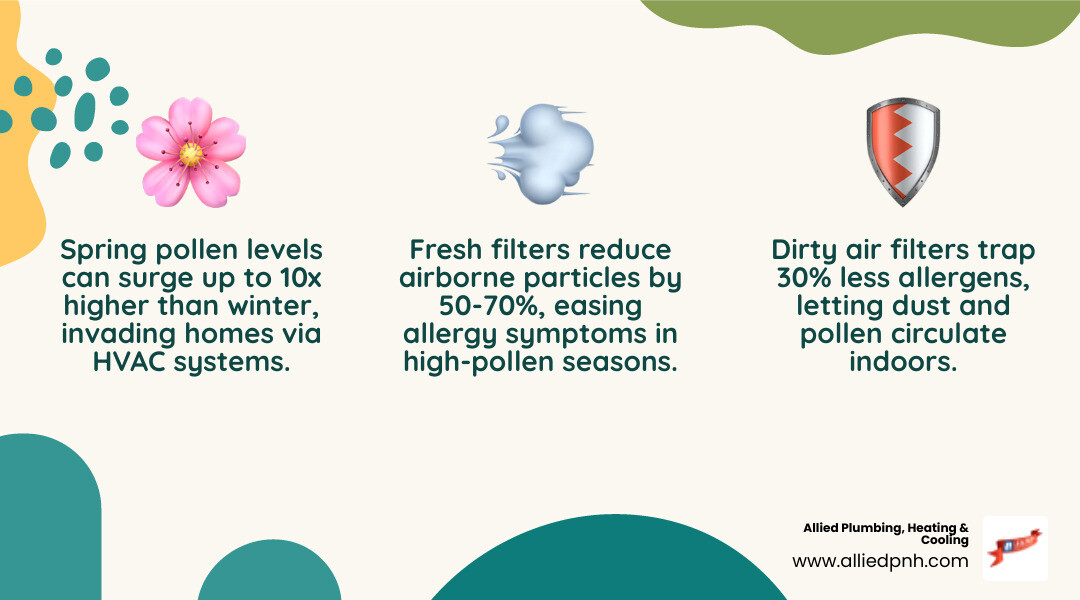
Spring brings a massive surge in pollen, which hitches a ride on your clothes, your pets, and even through the smallest gaps in your windows. Once inside, these microscopic particles get pulled into your HVAC system. If your filter is already full from a long winter of trapping dust mites and pet dander, it can’t do its job. Instead of trapping the new spring allergens, a clogged system might actually circulate them back into your living spaces.
Poor indoor air quality doesn't just make your house look messy; it triggers allergy symptoms like itchy eyes and scratchy throats. While a fresh filter is your first line of defense, sometimes the dust has already made a home deep inside your system. In these cases, professional air duct cleaning can remove years of buildup that a simple filter change can't reach. For those of us living in the capital city, scheduling air duct cleaning springfield is a great way to reset your home’s environment for the warmer months ahead.
Your Step-by-Step Spring Air Filter Replacement Guide
At Allied Plumbing, Heating & Cooling, we’ve seen how a simple five-minute task can save a homeowner from a massive repair bill. Replacing your filter is the single most important DIY maintenance task you can perform. If you are looking for a air filter replacement complete guide, follow these steps to ensure your system breathes easy this season.
Safety First: Before you start poking around your HVAC unit, always turn the system off at the thermostat. For extra safety, use the power cutoff switch usually located on the side of the furnace or air handler.
Locating the Intake: Depending on your home’s layout in Rochester or Sherman, your filter could be in a few different places:
- The Return Air Vent: Look for a large metal grate on a wall or ceiling. These often have thumb latches that allow the grate to swing open.
- The Furnace/Air Handler: In many basements or utility closets, the filter slot is located right where the large return duct meets the main unit.
- The Blower Compartment: In some older systems, you may need to remove a front panel to find the filter resting near the blower motor.
Finding the correct size for your spring air filter replacement guide
One of the most common mistakes we see is homeowners trying to force the wrong size filter into their system. This creates gaps where "blow-by" occurs, allowing unfiltered air (and all that pollen!) to bypass the filter entirely.
To find your size, look at the cardboard frame of your old filter. You will see a nominal size (like 20x25x1). This is the rounded-off number used for shopping. The actual dimensions are usually about 1/4 to 1/2 inch smaller so it fits easily into the slot. If the old filter is missing or unreadable, check your owner's manual or use a measuring tape to measure the height, width, and depth of the filter rack. You can find more tips on sizing in our air filter replacement complete guide.
Easy installation steps for your spring air filter replacement guide
Once you have the right size, the physical replacement is a breeze.
- Remove the old filter: Slide it out slowly to avoid knocking dust and dead bugs into the unit. A pro tip: use the packaging from your new filter as a trash bag for the old one to keep the dust contained.
- Clean the housing: Use a damp cloth or a vacuum attachment to wipe away any visible dust from the edges of the filter slot.
- Check the Airflow Arrow: This is the most critical step. Look for an arrow printed on the side of the new filter. This arrow must point toward the furnace or air handler (the direction the air is moving). Installing it backward can restrict airflow and strain your motor.
- Slide it in: Ensure it fits snugly without buckling or bending.
- Restore Power: Close any access panels, turn the power switch back on, and set your thermostat.
Regularly performing these steps is a cornerstone of ac maintenance for year-round comfort, ensuring your system doesn't overheat during those first humid days in May.
I'm looking for the best air filter for my home. Which one should I choose?
Not all filters are created equal. The "best" one depends on your specific needs—whether you're trying to save money or trying to stop a persistent sneezing fit. Filters are measured by their MERV (Minimum Efficiency Reporting Value) rating, ranging from 1 to 16 for residential use.
| Filter Material | MERV Rating | Pros | Cons |
|---|
| Fiberglass | 1–4 | Very affordable; allows maximum airflow. | Only catches large lint; does nothing for pollen or smoke. |
| Standard Pleated | 5–8 | Good balance; traps most dust and mold spores. | Needs replacement every 2–3 months. |
| High-Efficiency Pleated | 9–12 | Great for allergies; traps lead dust and pet dander. | Can slightly restrict airflow in older systems. |
| HEPA/Carbon | 13–16 | Hospital-grade; removes bacteria, smoke, and odors. | Most expensive; requires a strong blower motor. |
For most families in the Springfield area, a MERV 8 to MERV 11 filter is the "sweet spot." It provides excellent filtration for spring pollen without making your HVAC system work too hard. If you have heavy smokers or many pets, consider a filter with activated carbon to neutralize odors. For a deeper dive into these options, consult our air filter replacement complete guide.
How do I change the cabin air filter in my Kia or Jeep?
While you're cleaning the air in your home, don't forget the air you breathe while driving to Lake Springfield or commuting through New Berlin. Your car has a cabin air filter that works just like your home HVAC filter, trapping exhaust fumes, dust, and allergens.
In common vehicles like the Kia Sportage, GMC Sierra, or Jeep Wrangler, the filter is usually hidden behind the glove box. For the Kia Sportage, you simply open the glove box, remove the side stops, and let the compartment drop down to reveal the filter housing.
Why bother? Statistics show that replacing a clogged air filter can boost acceleration by up to 11% and improve gas mileage by 10%. Most manufacturers recommend a change every 12,000 to 15,000 miles, or at least once a year. If you frequently drive on dusty gravel roads in rural Sangamon County, you may need to check it even sooner. Upgrading to an activated carbon filter for your car can also help eliminate that "musty" smell that often develops after a damp winter.
What other maintenance does my Springfield HVAC system need this season?
A new filter is a great start, but it's only one piece of the puzzle. Spring is the ideal time for a full system "physical" before the summer heat hits. Here’s what we recommend adding to your checklist:
- Condenser Coil Cleaning: Your outdoor unit has likely collected leaves, twigs, and "cottonwood fuzz" over the winter. Gently hosing off the coils (with the power off!) helps the unit shed heat more efficiently.
- Thermostat Testing: Switch your system to "Cool" and make sure it actually kicks on and reaches the set temperature. This is also a great time to upgrade to a smart thermostat.
- Clear Debris: Maintain at least two feet of clearance around your outdoor unit. Trim back any bushes or spring flowers that are crowding the system.
- Check the Drain Line: Ensure the condensate drain line isn't clogged with algae or sludge, which can lead to water damage in your basement.
Combining these DIY tasks with professional ac maintenance for year-round comfort ensures that small issues don't turn into midnight emergencies in July. If you notice your home feels unusually humid or dusty even after a filter change, it might be time for air duct cleaning springfield to clear out the "lungs" of your home.
Frequently Asked Questions about Spring Air Filtration
How often should I replace my home air filter?
For standard 1-inch pleated filters, we recommend every 30 to 90 days. However, if you have pets (especially those that shed their winter coats in spring) or family members with severe allergies, you should check the filter every 30 days. If it looks gray or "fuzzy," swap it out!
What are the signs that my air filter needs replacement?
Keep an eye out for:
- Visible Dust: If the filter is dark gray or covered in a thick layer of debris.
- Longer Run Times: If your AC seems to be running constantly to reach the temperature.
- Odd Smells: A "musty" or "dusty" odor when the air kicks on.
- Allergy Flare-ups: Increased sneezing or congestion while indoors.
Does a clean air filter really improve gas mileage?
Yes! While it's more significant for your car's engine air filter, a clean cabin air filter ensures your car's HVAC system doesn't have to work as hard. This reduces the load on your alternator and engine, which can lead to better fuel efficiency and a more comfortable ride.
Conclusion
Spring in central Illinois is a time for renewal, but it shouldn't be a time for respiratory distress. By following this spring air filter replacement guide, you’re taking a proactive step toward a healthier home and a more efficient HVAC system. Whether you're in Springfield, Chatham, or any of our surrounding communities, your air filter is your home's primary shield against the elements.
At Allied Plumbing, Heating & Cooling, we’ve been a 3-generation family business since 1977. We know exactly what our local climate puts your system through. As a Daikin Comfort Pro, we back our work with the Daikin Comfort Promise and 12-year warranties, giving you the reliability and peace of mind you deserve.
Don't wait for the first heatwave to find out your system is struggling. If you’re ready to ensure your home stays cool and clean all year long, check out our hvac maintenance plan springfield il to keep your comfort on autopilot. Give us a call today—we’re here 24/7 to keep your family comfortable!