Central AC vs Ductless Mini Split Comparison: Which System Is Right for Your Springfield, IL Home?
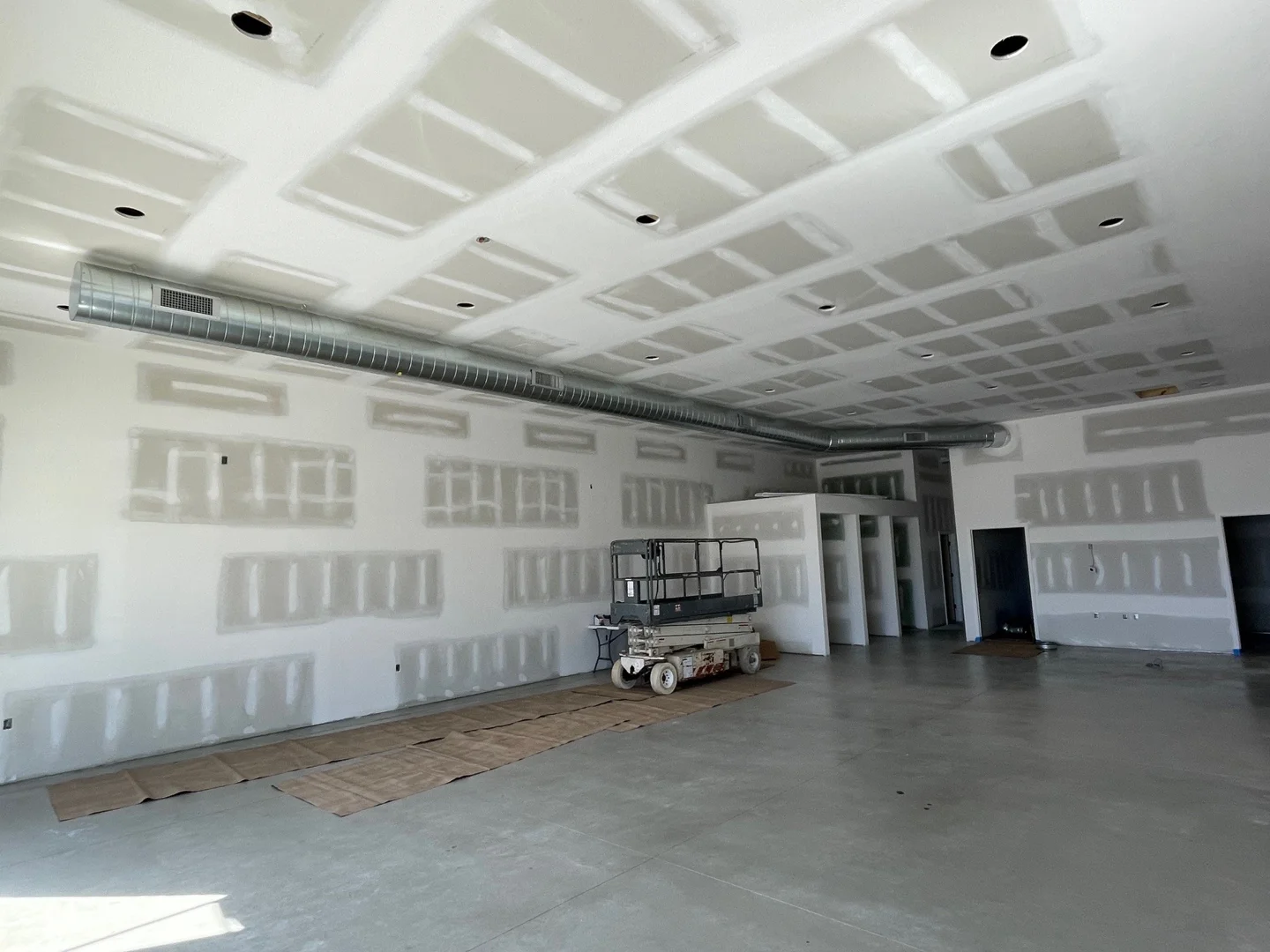
A central ac vs ductless mini split comparison comes down to one core difference: how each system moves cooled air through your home. Central air uses a network of ducts to deliver conditioned air to every room from a single unit. Ductless mini splits deliver cooling directly into individual rooms through wall-mounted units — no ductwork needed. Both systems work well, but the right choice depends on your home's layout, existing infrastructure, and how you use your space.
Here's a quick breakdown:
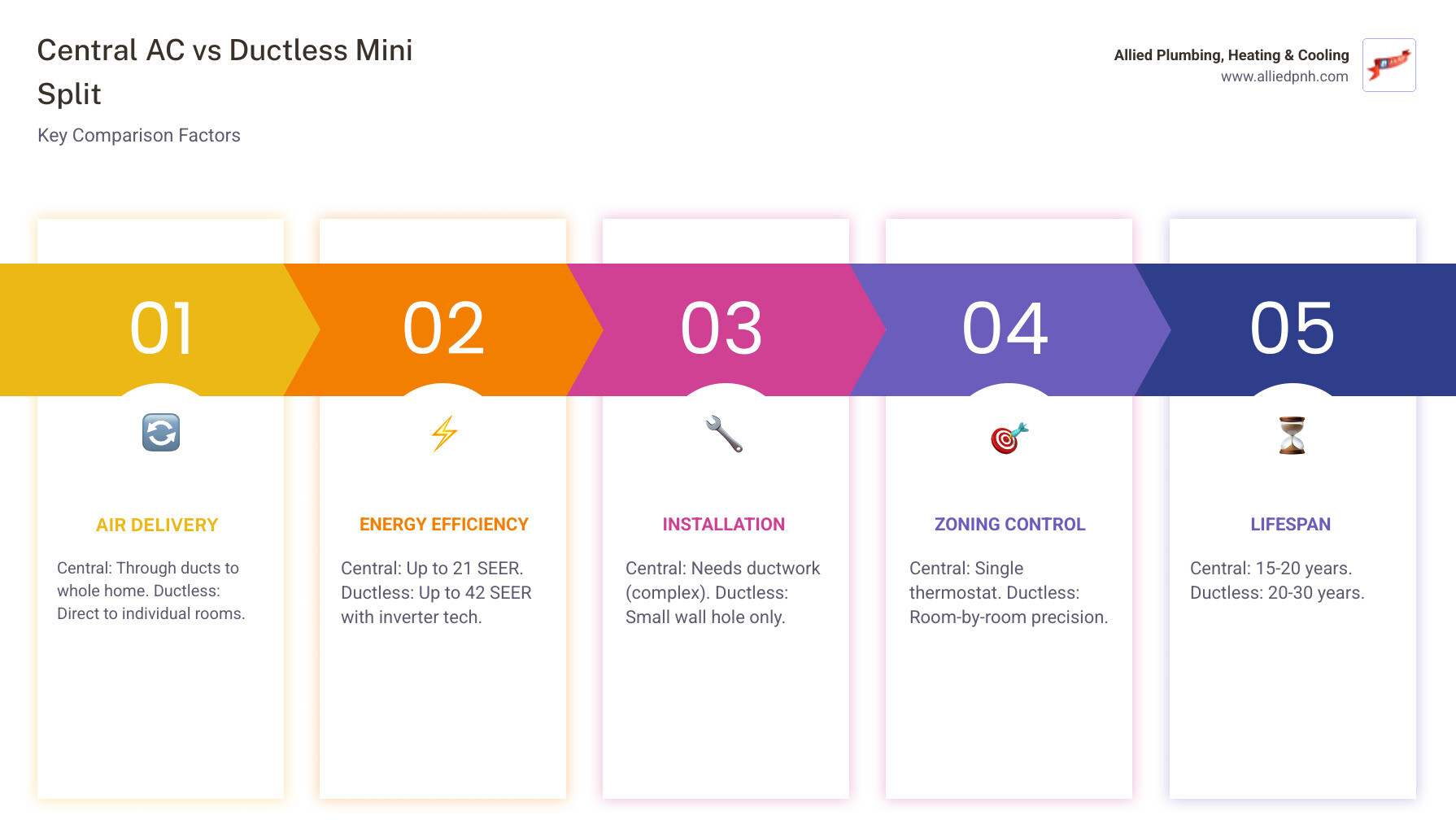
• Air Delivery — Central AC: Through ducts — Ductless Mini Split: Directly into each room
• Best For — Central AC: Whole-home cooling — Ductless Mini Split: Zoned or room-specific cooling
• Energy Efficiency — Central AC: Up to 21 SEER — Ductless Mini Split: Up to 42 SEER
• Ductwork Required — Central AC: Yes — Ductless Mini Split: No
• Installation Complexity — Central AC: Higher (especially without ducts) — Ductless Mini Split: Lower — requires only a small wall opening
• Zoning Control — Central AC: Limited (add-ons available) — Ductless Mini Split: Built-in, room by room
• Lifespan — Central AC: 15–20 years — Ductless Mini Split: 20–30 years
• Ideal Situations — Central AC: Homes with existing ductwork — Ductless Mini Split: Additions, older homes, problem rooms
For most Springfield homeowners, the deciding factor is whether you already have ductwork. If you do, central air is often the most straightforward upgrade. If you don't — or if you have rooms that never seem to cool down right — a ductless mini split may be the smarter long-term investment.
Read on for a full breakdown of how each system works, where each one wins, and how to choose the right fit for your home.
Springfield, IL summers don't leave much room for a struggling air conditioner. Whether you're dealing with uneven temperatures, an aging system, or planning a room addition, choosing between central AC and a ductless mini split is one of the most important home comfort decisions you'll make. Both systems cool your home using the same refrigerant-based process, but they differ significantly in how they distribute that cool air — and those differences have real consequences for your energy bills, comfort, and installation cost.
Understanding the Systems: How They Work
At their heart, both central air and ductless mini splits are "split systems." This means they have two main parts: an outdoor condenser unit and an indoor air handler. These two halves are connected by refrigerant lines that carry heat out of your home and bring cool air back in.
Inside the indoor unit, evaporator coils filled with chilled refrigerant absorb the heat from your indoor air. This heat is then pumped to the outdoor condenser, where it's released into the outside air. It’s a bit like a high-tech sponge soaking up heat in your living room and squeezing it out in your backyard.
While the physics is the same, the delivery method is where the central ac vs ductless mini split comparison gets interesting. Central systems rely on a single, powerful indoor unit (usually in a basement or attic) to push air through a maze of ducts. In contrast, a ductless system uses small, individual air handlers placed directly in the rooms you want to cool. If you are choosing a ductless AC system for your space, you're essentially choosing a system that cuts out the middleman—the ductwork.
What is a Ductless Mini Split?
A ductless mini split is exactly what it sounds like: a cooling system that doesn't need ducts. Instead of one giant unit, you have small indoor units (often called "heads") mounted on the wall or ceiling. Each head is connected to the outdoor unit by a thin conduit containing the power cable, refrigerant tubing, and a condensate drain.
One of the coolest things (pun intended) about mini splits is "inverter technology." Traditional AC units are either 100% on or 100% off. Mini splits are smarter; they can vary their speed to match the cooling needs of the room exactly. This means they don't have to work as hard, which saves you money. Plus, because each room has its own unit, you get built-in zoned cooling. You can keep the kitchen icy cold while leaving the guest room a bit warmer. We’ve helped many neighbors with Ductless AC in Springfield, IL who were tired of cooling empty rooms just to keep their bedrooms comfortable.
What is Central Air Conditioning?
Central air is the traditional heavyweight champion of American homes. It uses one large indoor unit that connects to a network of ducts and vents throughout the entire house. A single thermostat controls the temperature for every room at once.
When we perform a central air installation, we’re setting up a system designed for uniform, whole-home comfort. It’s invisible, tucked away in the walls and floors, with only the floor or ceiling vents showing. It’s a great choice for families who want the entire house to be the exact same temperature at all times.
Central AC vs Ductless Mini Split Comparison: Key Differences
When we sit down with homeowners in Rochester or Chatham to discuss a central ac vs ductless mini split comparison, we usually look at three big categories: efficiency, control, and installation.
Mini splits generally win on the efficiency front. Because they don't lose air through leaky ducts, they can achieve SEER (Seasonal Energy Efficiency Ratio) ratings as high as 42. Central AC systems are no slouches, but even the best ones usually top out around 26 SEER.
Control is another major difference. Central AC is "all or nothing"—you cool the whole house or none of it. Mini splits offer "zoning," allowing you to turn off the AC in the basement when you're not using it. This flexibility is why many residents look into Ductless AC in Rochester, IL when they have multi-story homes that are hard to balance.
Energy Efficiency and the Central AC vs Ductless Mini Split Comparison
Let’s talk about the "30% rule." Research shows that ductwork can account for more than 30% of energy consumption for space conditioning. Why? Because ducts leak. Even in a well-maintained home, air escapes through small holes and poor connections in the attic or crawlspace.
By eliminating ducts, mini splits eliminate that 30% waste immediately. Furthermore, the variable-speed compressors in mini splits (that inverter tech we mentioned) allow the system to run at a lower, more efficient speed most of the time. This is one of the primary advantages of mini split systems installed by us; they can reduce energy bills by up to 40% compared to traditional systems.
Installation and Home Layout Considerations
The layout of your home is often the ultimate tie-breaker. If you live in an older home in Springfield that was built before central air was common, you likely don't have ductwork. Adding ducts to an existing home can be a massive project, sometimes requiring you to tear out walls and ceilings.
In these cases, a mini split installation in Rochester or Springfield is much faster and less invasive. We only need to drill a small, three-inch hole in the wall to connect the indoor and outdoor units. It’s also the perfect solution for room additions, finished basements, or garages where extending existing ductwork would be too difficult or expensive.
Choosing the Right System for Your Springfield Home
Deciding on a central ac vs ductless mini split comparison isn't just about the technology; it's about your lifestyle. Are you an "empty nester" who only uses two or three rooms? A mini split is a no-brainer. Do you have a big family with kids running in and out of every room? Central air might be more practical.
Indoor air quality (IAQ) is another factor. Central AC systems allow for high-grade whole-home filtration and humidity control. Mini splits have filters, too, but they are smaller and need to be cleaned more frequently to keep the air fresh. Aesthetics also play a role—some people prefer the "invisible" look of central air vents, while others don't mind the sleek, modern look of a wall-mounted mini split.
When to Choose a Central AC vs Ductless Mini Split Comparison for Large Homes
For larger, newer homes with existing ductwork, central air is often the most logical choice. It provides a uniform temperature that prevents "hot spots" in large open-concept living areas. Plus, because the equipment is hidden in the attic or basement, it doesn't interfere with your interior design.
Central air can also be a plus for home resale value. Many buyers in areas like Chatham, IL still view central air as the "gold standard" for whole-house cooling. If your ducts are in good shape, upgrading to a high-efficiency central unit is a smart way to boost your home’s value while staying comfortable.
When a Ductless Mini Split is the Better Choice
Ductless systems shine in "problem" areas. We’ve all had that one room—maybe a sunroom, a finished attic, or a bedroom over the garage—that stays ten degrees warmer than the rest of the house. You can solve uneven cooling with ductless AC without overtaxing your main system.
Ductless is also the king of renovations. If you’re turning your garage into a workshop or finishing your basement, a mini split allows you to cool that space independently. It’s also a lifesaver for older homes in historic parts of Springfield where installing ductwork would ruin the home’s character.
Maintenance, Lifespan, and Frequently Asked Questions
No matter which system you choose, maintenance is the key to a long life. Central AC systems typically last 15 to 20 years. Ductless mini splits can actually last longer—often 20 to 30 years—because they don't have to work as hard to push air through ducts.
Annual tune-ups are essential for both. For central air, we check the ducts for leaks and clean the large evaporator coils. For mini splits, we focus on the condensate drains and the sensitive electronics in the indoor heads.
Maintenance Needs for Central AC vs Ductless Mini Split Comparison
One thing to keep in mind is that mini splits require a bit more "DIY" maintenance. You should clean the small air filters in each indoor unit every two to four weeks. If you neglect them, the system has to work harder, and you might start seeing error codes on your mini split AC.
Central AC filters only need to be changed every one to three months, and you only have one or two of them to worry about. However, central systems also require periodic duct cleaning to remove dust, pet dander, and allergens that can build up over time—a task you never have to worry about with a ductless setup.
Can I replace my entire HVAC system with mini splits?
Yes, you absolutely can! This is becoming a popular choice for homeowners who want ultimate control over their energy bills. By installing a multi-zone system, you can have up to five or eight indoor heads connected to a single outdoor unit.
This allows you to create a "smart" home where you only cool the rooms you are currently using. Many people find that switching to a Mini Split in Springfield, IL allows them to save hundreds of dollars a year on utility costs. It’s a great way to modernize an older home while improving day-to-day comfort.
Is it possible to use both systems together in a hybrid setup?
This is actually one of our favorite solutions! You don't always have to choose one or the other. We often see homeowners keep their central AC for the main living areas but add a mini split to a "bonus room" or a master suite that doesn't stay cool enough.
A hybrid setup gives you the best of both worlds: the invisible, whole-home power of central air and the surgical, energy-saving precision of a mini split. Knowing where to place your mini split units in Springfield is key to making a hybrid system work effectively. We can help you identify the "hot zones" in your home and supplement them with a quiet, efficient ductless unit.
Frequently Asked Questions About Mini Splits vs. Central Air
Are mini splits quieter than central air?Generally, yes. Because the noisy compressor is outside and the indoor units are designed for whisper-quiet operation (some as low as 19 decibels), you’ll barely hear them running. Central air can sometimes be noisy when the air kicks on and whistles through the vents.
Do mini splits provide heating too?Most modern mini splits are actually heat pumps. This means they can reverse the cooling process to provide highly efficient heating during the winter. Some models can even provide heat when it's -7°F outside!
Which system is better for allergies?Central air is often better for severe allergy sufferers because it allows for the installation of large, high-MERV filters and UV air purifiers that clean the air for the entire house. Mini splits have filters, but they aren't quite as heavy-duty.
How long does installation take?A central AC replacement usually takes one day if the ducts are already there. A multi-zone mini split installation might take one to two days depending on how many indoor units we are setting up.
Conclusion
Choosing between central air and a ductless mini split is a big decision, but you don't have to make it alone. At Allied Plumbing, Heating & Cooling, we’ve been serving our neighbors in Springfield, Chatham, Rochester, and the surrounding areas since 1977. As a three-generation family business, we take pride in finding the perfect comfort solution for every home.
Whether you're leaning toward the whole-home power of central air or the high-efficiency zoning of a ductless system, we are here to help. We offer 24/7 service and stand behind our work with the Daikin Comfort Promise, including 12-year warranties that give you total peace of mind.
Ready to find the perfect cooling solution for your home? From Athens to Virden and everywhere in between, our team is ready to help you stay cool. Contact us today for all your air conditioning services and let's get your home comfort back on track!