



When Water Damage Strikes: Understanding Burst Pipe Emergencies
Burst pipe repair requires immediate action to prevent thousands of dollars in water damage to your home. A single burst pipe can spew gallons of water per minute into places it doesn’t belong – your walls, floors, and foundation.
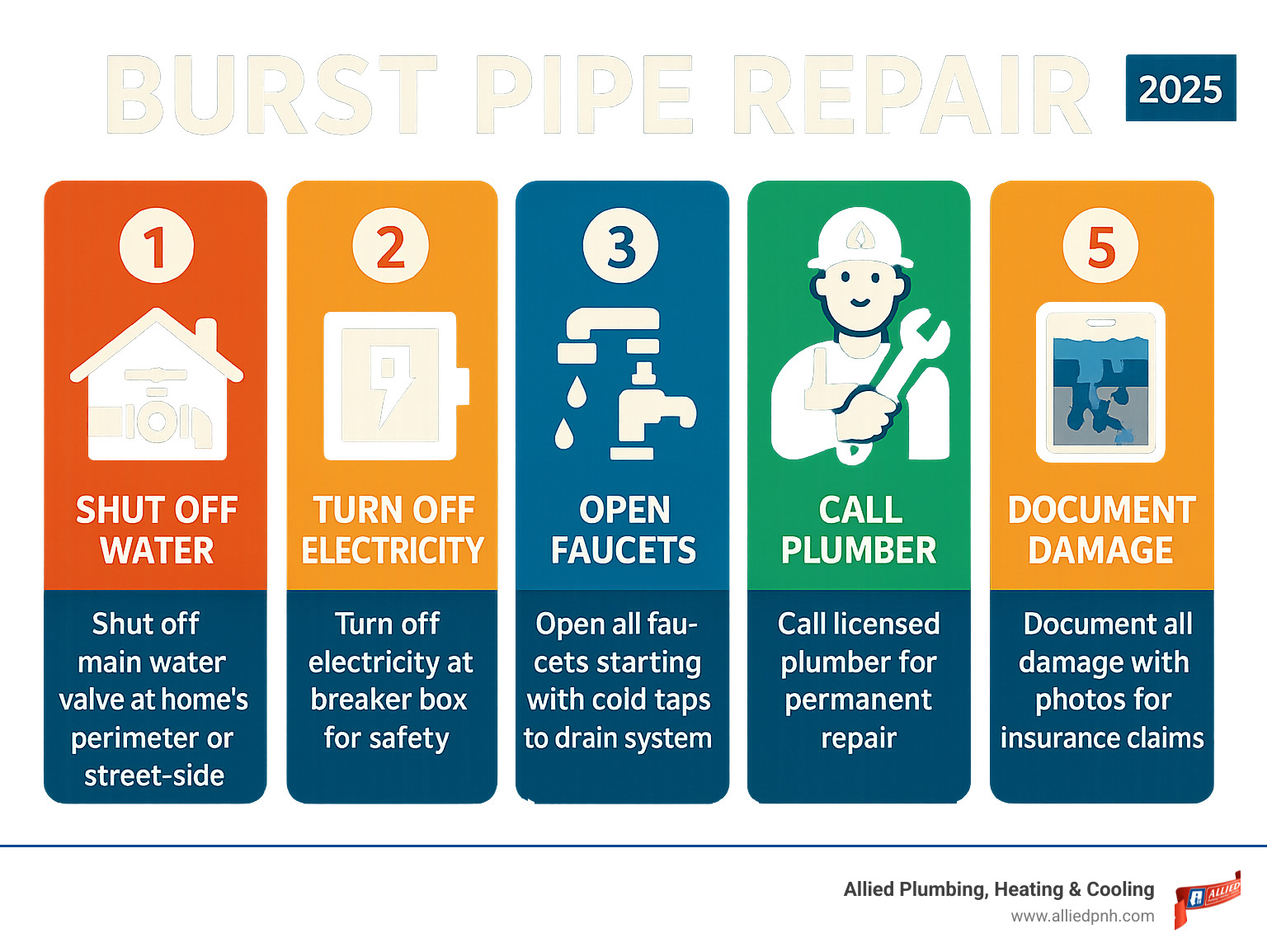
Quick Action Steps for Burst Pipes:
- Shut off main water supply immediately
- Turn off electricity to affected areas
- Open faucets to drain remaining water
- Call a professional plumber for permanent repair
- Document damage for insurance claims
The average time it takes for pipes to freeze and burst in temperatures of 20°F or below is just four to five hours without proper heating. Once a pipe bursts, water can seep into walls, ceilings, and floors, potentially weakening your home’s structural integrity.
Water damage from burst pipes can cause:
- Structural damage to walls and foundations
- Mold growth within 3 days
- Electrical hazards from water contact
- Costly restoration ranging from $500 to $3,000+
The key to minimizing damage is acting fast. While some homeowners attempt temporary fixes with pipe clamps or rubber patches, permanent repairs typically require professional tools and expertise – especially for pipes inside walls or those requiring soldering.
Understanding what causes pipes to burst (freezing temperatures, old galvanized pipes, high water pressure, or tree root intrusion) helps you recognize warning signs like fluctuating water pressure, strange noises, or unexplained high water bills.
What to Do Immediately When a Pipe Bursts
When you hear that telltale sound of rushing water where it shouldn’t be, your heart might skip a beat. A burst pipe can feel overwhelming, but don’t panic! Taking the right steps immediately can save you thousands of dollars in damage and spare you weeks of headaches. Think of these next few minutes as the most important home maintenance you’ll ever do – because when it comes to burst pipe repair, time really is money.
The good news? You don’t need to be a plumbing expert to handle these crucial first steps. Let’s walk through what you need to do right now, and remember – for serious Emergency Plumbing Situations That Require Help, we’re just a phone call away.
Step 1: Shut Off the Main Water Supply
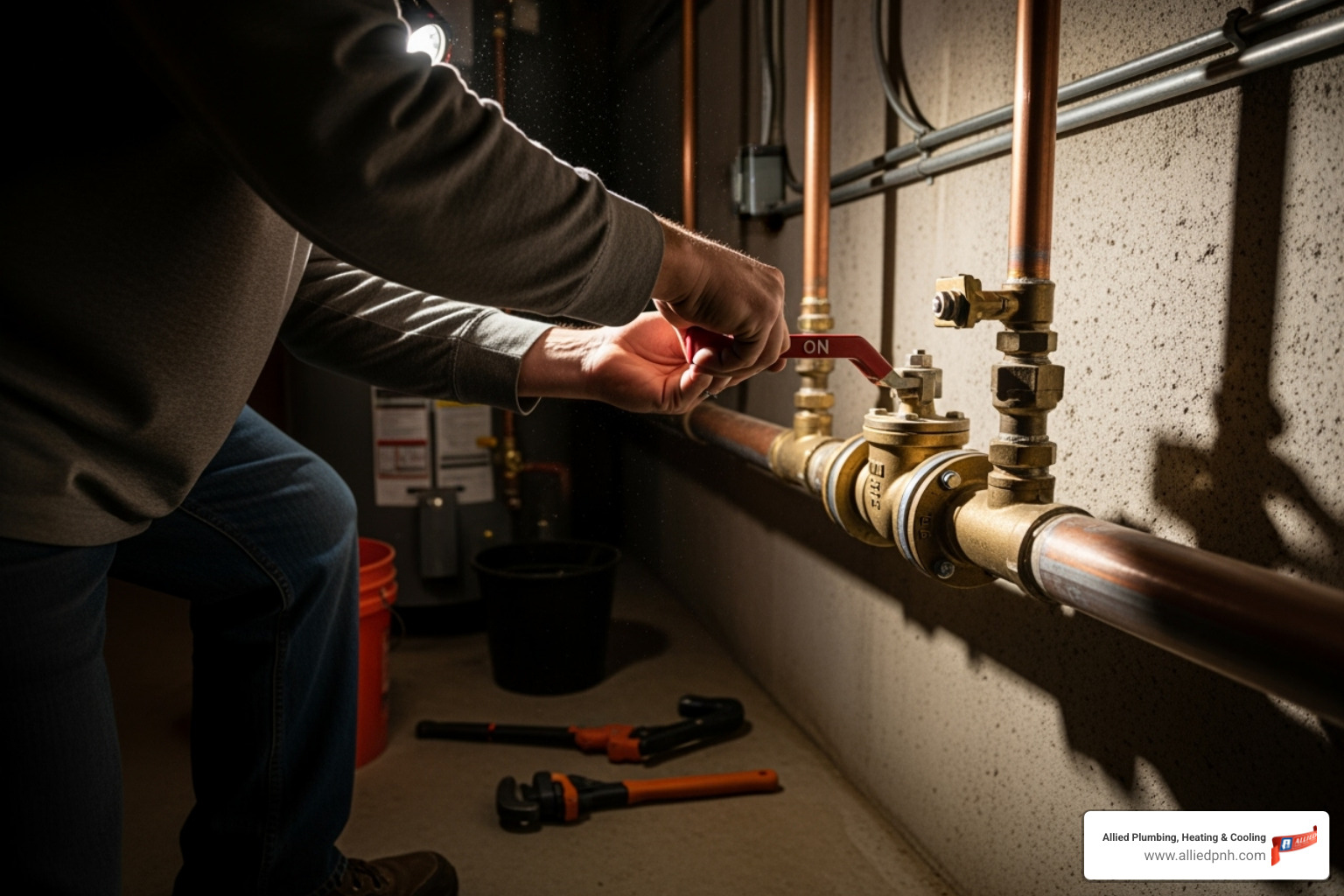
This is your number one priority – no exceptions. Every second that water keeps flowing is more damage to your home. It’s like trying to mop up a spill while someone’s still pouring the bucket!
Finding your main water valve should happen long before you need it. Take a few minutes this weekend to locate it, because hunting for it during an emergency is the last thing you want to do. Most homes have the valve somewhere along the inside perimeter, typically near the wall closest to the street. Check your garage, basement, or utility room first. Some homes keep it near the hot water heater.
Can’t find it inside? Don’t worry – there’s always a street-side valve near your property line, usually tucked under a small utility cover by the curb. Just remember, this one technically belongs to your water company, so you might want to call them if you need to use it.
Now for the actual turning part. If you’ve got a ball valve, you’ll see a handle that looks like a lever. Turn it a quarter turn until it’s sideways to the pipe – that’s it! These are the easy ones. Gate valves have round handles that turn like a faucet. Turn it clockwise (righty-tighty) until it stops. These older valves can be stubborn, so don’t force it if it feels stuck.
Once that water stops flowing, take a deep breath. You’ve just prevented the worst of the damage.
Step 2: Turn Off the Electricity
Here’s where things get serious about safety. Water and electricity are never friends, and mixing them can turn a plumbing problem into a dangerous situation fast. If there’s any chance water has reached electrical outlets, appliances, or wiring, you need to cut the power immediately.
Head straight to your breaker box and flip the main breaker to “off.” Yes, this means your whole house will lose power, but that’s exactly what we want right now. If you’re absolutely certain the water is contained to one specific area and you know which breaker controls that room, you can just flip that one. But when in doubt, shut it all down.
This isn’t about being overly cautious – it’s about keeping you and your family safe from electrical hazards that can cause shock, fire, or worse. Your safety is worth more than keeping the lights on for a few hours.
Step 3: Drain the System
Even though you’ve stopped the main water supply, your pipes are still full of water that wants to come out through that burst pipe. Think of it like a garden hose – turn off the spigot, but there’s still water in the hose that will keep dripping.
Start by opening your faucets, beginning with the cold taps first. Go to the lowest point in your house (like a basement sink) and turn it on full blast. Then work your way up through the house, opening all the cold water taps. This lets gravity do the work of pulling water out of your pipes and relieving pressure in the system.
After the cold water stops running, do the same thing with your hot water taps. This drains the hot water lines and helps empty your hot water heater too. You’ll be amazed at how much water comes out – and that’s water that’s not going into your walls or floors.
This simple step can minimize water damage significantly while you’re waiting for professional help. It’s like stopping the bleeding while you wait for the doctor – a small action that makes a big difference in the final outcome.
Common Causes and Warning Signs of a Burst Pipe
Nobody wants to wake up to the sound of rushing water where it shouldn’t be! Understanding why pipes burst and recognizing the early warning signs can save you from a watery nightmare. While we’re always ready to help with burst pipe repair, catching problems early can save you thousands in damage. Sometimes the signs are subtle, which is why we’ve put together a guide on Signs of Hidden Water Leaks to help you stay ahead of trouble.
Why Pipes Burst
Think of your pipes as the hardworking arteries of your home. Just like our bodies, they face daily stress and eventually show signs of wear. Several factors can push them past their breaking point.
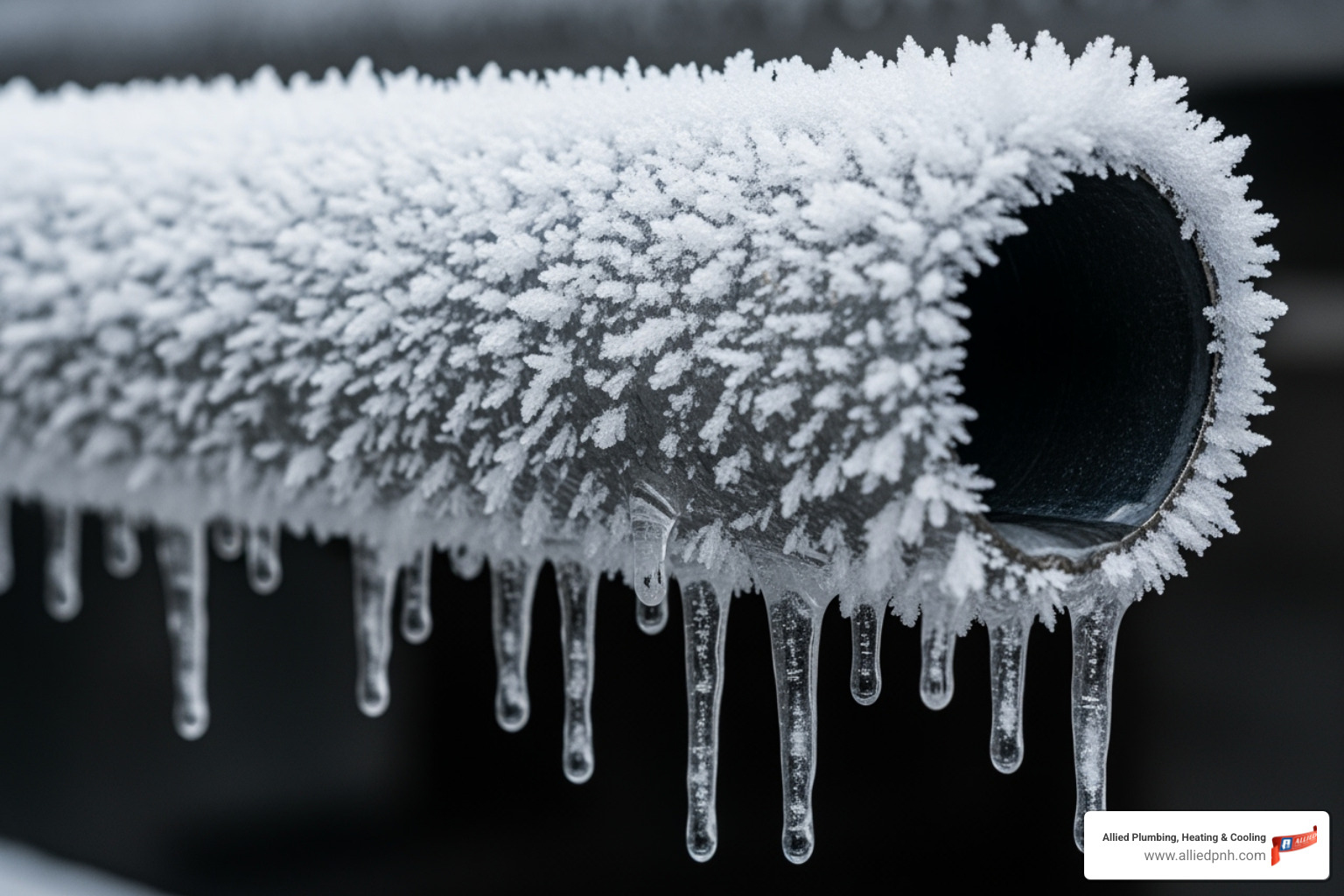
Freezing temperatures are the biggest troublemaker in our area. When water freezes, it doesn’t just sit there quietly – it expands with tremendous force. We’re talking about up to 40,000 pounds per square inch of pressure! That’s enough to crack even the strongest pipes. In temperatures of 20°F or below, pipes can freeze and burst in just four to five hours without proper heating.
Old pipes are like that trusty old car that’s served you well but is showing its age. Galvanized pipes, especially those installed decades ago, become victims of rust and corrosion over time. The metal weakens from the inside out, making them prime candidates for sudden failure. If your home was built before the 1980s, your pipes might be reaching retirement age.
High water pressure might feel great in the shower, but your pipes don’t appreciate the constant stress. Pressure above 70 psi puts unnecessary strain on every joint and connection in your system. Over time, this relentless pressure weakens the pipes until they can’t take it anymore.
Tree root intrusion is nature’s way of finding water, but it’s not so great for your underground pipes. Roots are surprisingly persistent and can work their way into tiny cracks, growing larger until they split the pipe completely. It’s like a slow-motion explosion happening beneath your yard.
Water hammer creates those annoying banging sounds when you turn off a faucet quickly. While the noise might seem harmless, those shock waves travel through your entire plumbing system, gradually loosening joints and weakening connections.
Sometimes pipes burst due to incorrect installation – poor soldering, inadequate support, or simply using the wrong materials for the job. This is why professional installation matters so much.
Telltale Signs of a Problem
Your plumbing system is pretty good at sending distress signals before a complete breakdown occurs. The trick is knowing what to listen and look for.
Fluctuating water pressure is often the first hint something’s wrong. If your shower suddenly feels weak or the pressure keeps changing, water might be escaping somewhere it shouldn’t. This is especially noticeable when you’re used to consistent pressure throughout your home. For persistent pressure issues, our guide on Solving Low Water Pressure Issues from Plumbing can help you understand what’s happening.
Discolored water coming from your taps is your pipes crying for help. Brown, yellow, or rusty water usually means corrosion is eating away at your pipes from the inside. This is especially common with older galvanized pipes that are nearing the end of their useful life.
Your ears can be excellent detectors too. Strange noises like hissing, whistling, or that distinctive banging sound (water hammer) all indicate problems brewing in your system. If you hear water running when all your faucets are off, that’s a clear sign something’s leaking somewhere.
Visual clues around your home tell important stories. Damp drywall, peeling paint, or sagging ceilings and walls mean water is getting where it doesn’t belong. New water stains appearing on surfaces should prompt immediate investigation. Don’t ignore these signs – they rarely fix themselves!
Musty smells, especially in basements or near walls, often indicate hidden moisture problems. That earthy, moldy odor usually means water has been lurking somewhere long enough for mold to start growing.
Finally, keep an eye on your water bills. An unexpected spike in your monthly bill, especially when your usage habits haven’t changed, is often the first sign of a hidden leak. Your wallet might be the first thing to notice trouble brewing in your pipes!
Recognizing these warning signs early gives you the power to address problems before they turn into expensive emergencies requiring emergency burst pipe repair.
DIY vs. Professional Burst Pipe Repair: What You Need to Know
When you find a burst pipe spraying water everywhere, your first instinct might be to grab some duct tape and fix it yourself. We get it – you want to stop the chaos as quickly as possible! While there’s definitely a place for temporary DIY fixes, understanding when to call in the pros can save you from turning a manageable situation into a much bigger headache. Our experienced team handles Basic Plumbing Issues Our Technicians Can Fix every day, and we’re here to help you make the right choice for your home.
Temporary DIY Fixes
Think of temporary fixes as the plumbing equivalent of a band-aid – they’ll stop the bleeding, but they won’t heal the wound. These quick solutions can buy you precious time until professional help arrives, especially when water is actively damaging your home.
Pipe clamps are your best friend for accessible leaks. These handy devices come with a rubber sleeve that wraps around the damaged area, then you tighten the metal clamp to create pressure and stop the flow. They’re surprisingly effective for straight pipe sections.
For smaller pinhole leaks, epoxy putty can work wonders. You mix the two parts together, knead it like Play-Doh, and press it firmly around the leak. Once it hardens, it creates a waterproof seal that can last several days.
Rubber patches from old inner tubes or even thick rubber gloves can be wrapped around the pipe and secured with electrical tape or hose clamps. It’s not pretty, but it works! Pipe repair tape is another option – just make sure to wrap it tightly and overlap each layer.
These temporary solutions work best when you can easily reach the damaged pipe and the leak isn’t too severe. They’re meant to give you breathing room, not solve the problem permanently. The moment you’ve stopped the immediate crisis, it’s time to call in the professionals.
When to Call a Professional Plumber
Here’s where things get real about burst pipe repair. While your temporary patch might make you feel like a plumbing hero, permanent repairs require skills, tools, and knowledge that take years to develop.
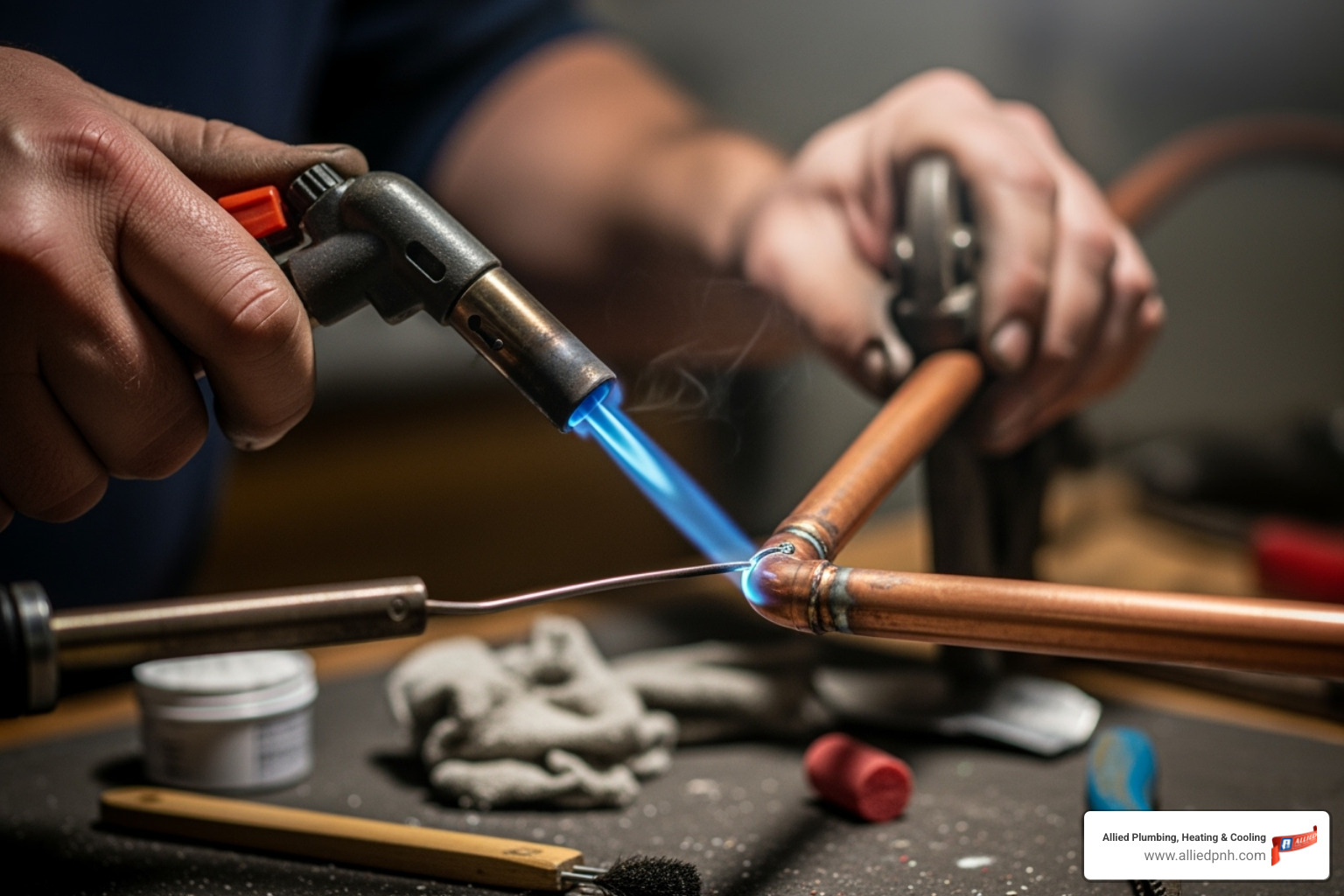
Complex repairs involving soldering copper pipes aren’t something you want to learn on the job. Professional soldering requires precise temperature control and technique – one wrong move and you could create an even bigger leak. You can find a reliable torch kit for soldering online, but knowing how to use it safely and effectively is another story entirely.
In-wall pipes present their own special challenges. What looks like a simple leak on your bathroom wall might actually be a pipe that’s failed in multiple places behind the drywall. Our technicians have specialized equipment to locate the exact problem areas without unnecessarily tearing up your walls.
The lack of proper tools is often what turns a manageable DIY project into a disaster. Professional plumbers arrive with pipe cutters, specialized wrenches, pressure testing equipment, and various fittings to handle whatever they encounter. While easy-to-use push-to-connect fittings have made some repairs more accessible to homeowners, knowing which fitting to use and how to properly prepare the pipe takes experience.
Code compliance might not seem exciting, but it’s crucial for your safety and your home’s value. Local building codes exist for good reasons, and repairs that don’t meet these standards can cause problems when you try to sell your home or file an insurance claim.
Most importantly, professional burst pipe repair comes with the confidence that the job is done right the first time. We’ve been serving the Springfield area since 1977, and we stand behind our work. When we fix your burst pipe, you can sleep soundly knowing it’s not going to fail again next month.
The bottom line? Temporary fixes are great for stopping immediate damage, but for lasting peace of mind, trust the professionals who do this every day.
The Aftermath: Dealing with Damage, Costs, and Insurance
Fixing the burst pipe is only half the battle. The water that escapes can cause significant damage to your home, leading to a complex and often costly recovery process. This aftermath involves not only repairing the pipe but also extensive water damage restoration, including drying, cleaning, and potentially mold remediation.
Potential Damage Caused by Burst Pipes
A pipe burst in a house spews gallons of water in places it does not belong, leading to a cascade of problems:
- Ceilings and Walls: Water from the leak can seep into walls, ceilings, and floors, causing drywall to swell, plaster to crack, and paint to peel. Sagging ceilings are a common and dangerous sign of severe water saturation.
- Flooring: Depending on the material, water can warp hardwood floors, delaminate laminate flooring, and saturate carpets and subflooring, leading to costly replacement.
- Foundation Damage: If water reaches your home’s foundation, especially in a basement or crawl space, it can weaken the structure’s integrity over time. This can lead to serious structural issues that are incredibly expensive and difficult to repair.
- Personal Belongings: Furniture, electronics, documents, and sentimental items can be ruined by water exposure.
- Mold and Mildew Health Risks: Residual moisture from a burst pipe can lead to mold and mildew growth, often within just 3 days in favorable conditions. Mold not only causes unpleasant musty odors and further property damage but can also lead to health problems such as allergies, respiratory issues, and other sensitivities. Mold remediation is a critical step in the restoration process.
- Electrical Hazards: As mentioned earlier, water contacting electrical outlets, wiring, or appliances can cause short circuits, system failures, and pose a severe risk of electrical shock or fire.
Understanding the Costs of Burst Pipe Repair and Restoration
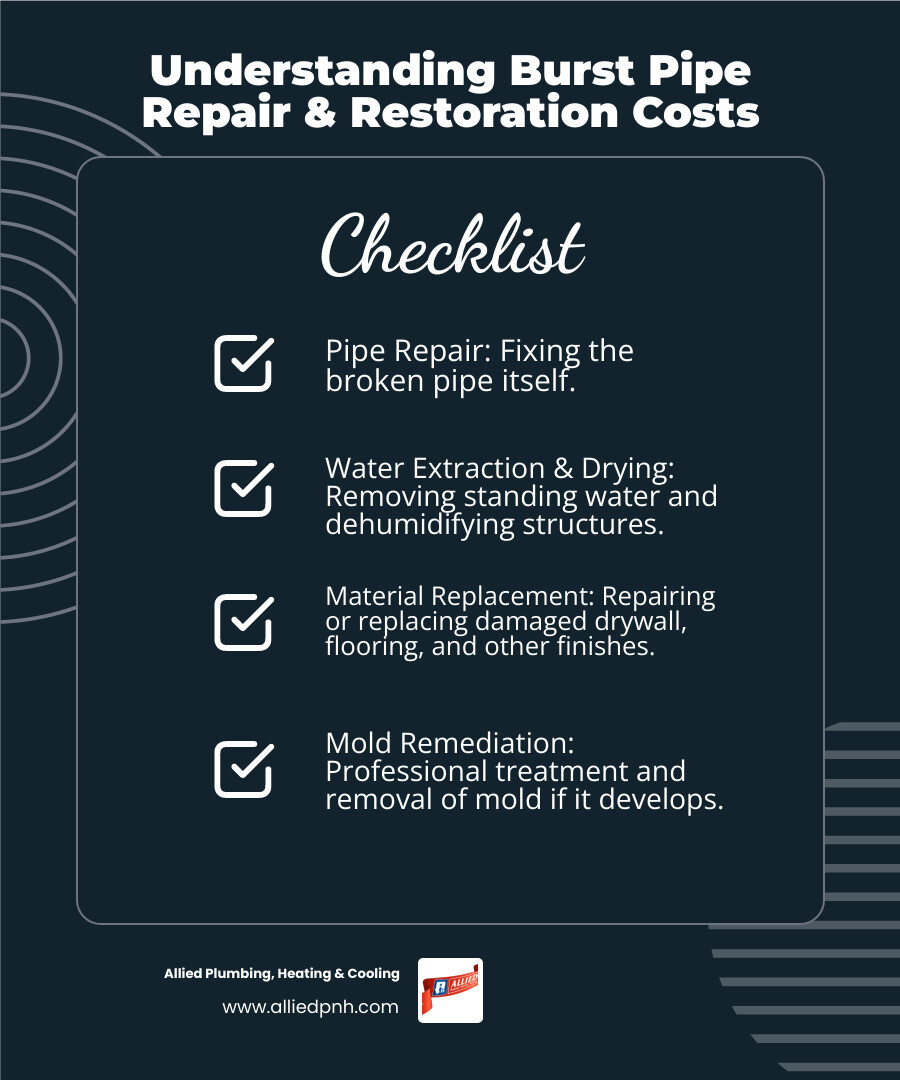
The cost of repairing the pipe and restoring the home after flooding damage can be substantial. It’s not just the plumbing fix; it’s the comprehensive cleanup and rebuilding that adds up. The timeline for repair can range from several hours for a simple fix to several days or even weeks for more extensive damage, depending on factors like the size, location, material, and age of the pipe, as well as the extent of water damage.
Here’s a general breakdown of potential costs:
| Cost Category | Description “`