



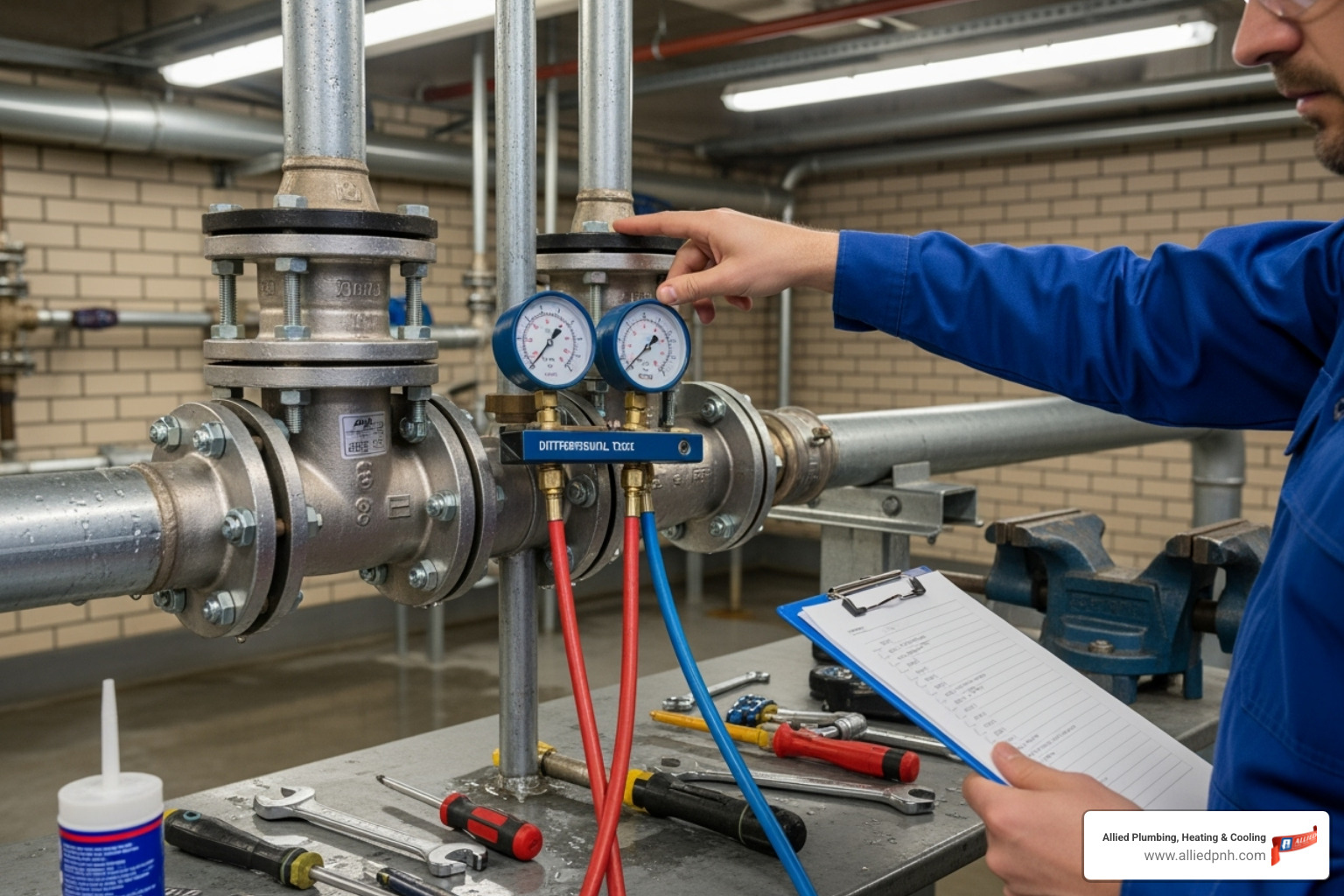
What is Backflow and Why Does it Matter in Chatham, Illinois?
Backflow testing Chatham property owners need depends on your building type and water system setup. Here’s what you need to know:
Local Requirements:
- Industrial, commercial, and institutional properties must comply with the Illinois Plumbing Code and IEPA regulations.
- Properties with irrigation systems or fire sprinklers often require backflow prevention devices.
- Annual testing is mandatory for all testable devices to ensure they are functioning correctly.
- A Cross-Connection Control Survey may be required to identify potential hazards.
- Licensed plumbers with CCCDI certification must perform testing and installation.
Key Responsibilities:
- Property owners arrange and pay for testing.
- Submit test reports to the local water authority.
- Install devices based on the property’s hazard level.
- Maintain compliance or risk fines and water service disconnection.
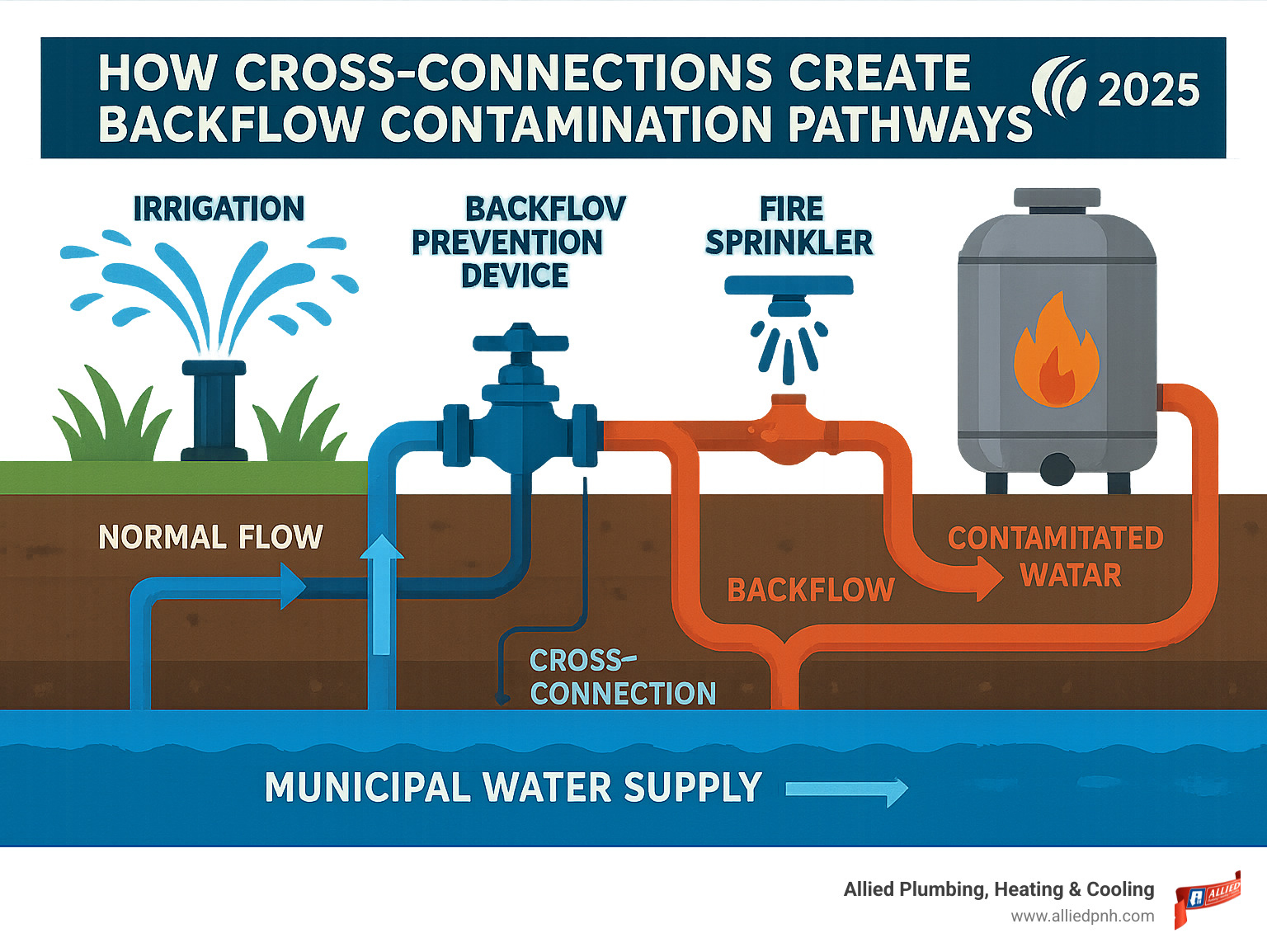
Backflow is the reversed flow of water in your plumbing system. When this happens, contaminated water from sources like irrigation systems, fire sprinklers, or drainage can mix with your clean drinking water supply.
This contamination occurs through two main ways:
Back-siphonage happens when water pressure drops suddenly (like during a water main break), creating a vacuum that sucks dirty water backward into clean pipes.
Backpressure occurs when contaminated water systems have higher pressure than your main water supply, forcing polluted water back into the public water system.
The Village of Chatham and the State of Illinois require backflow prevention testing to protect the community’s drinking water from contamination. Without proper testing, your water could become contaminated with sewage, chemicals, fertilizers, or other dangerous substances that cause serious illnesses like E. Coli, salmonella, and hepatitis.
The Dangers Lurking in Your Pipes: Understanding Backflow Risks
Picture this: you’re reaching for a glass of water after a long day, expecting that refreshing taste of clean municipal water. Instead, you’re potentially sipping on something that’s been contaminated with bacteria, chemicals, or worse. That’s the scary reality of what can happen when backflow occurs in your water system.
When contaminated water flows backward into your clean drinking water supply, it brings some seriously unwelcome guests along for the ride. We’re talking about dangerous bacteria like E. coli, salmonella, and hepatitis – the kind of nasties that can land you in the hospital with severe illness or worse.
But the health risks don’t stop there. Less severe bacteria can still cause painful eye, nose, throat, and ear infections. You might develop ulcers or find yourself dealing with ongoing health issues that seem to come out of nowhere.
Chemical contamination is another major concern that many property owners don’t think about. When backflow occurs, your water can become tainted with pesticides and fertilizers from irrigation systems. These chemicals weren’t meant for human consumption, and they can cause both immediate health problems and long-term complications.
The damage isn’t just limited to your health, either. Property damage from backflow can be extensive and expensive. Contaminated water can corrode your pipes, damage fixtures, and create costly repairs that could have been easily prevented with proper backflow testing.
That’s exactly why Backflow testing Chatham properties is so crucial – it’s your first line of defense against these serious risks. And if you’re dealing with a water emergency right now, learn about emergency plumbing situations that require help.
The High Cost of Contamination
The impact of backflow contamination ripples far beyond individual homes and businesses. When waterborne diseases spread through a community’s water system, everyone pays the price.
Consider these sobering numbers: over 10,000 backflow contamination incidents are reported annually across North America. Even more alarming, about 7.2 million Americans get sick from waterborne diseases every year. These aren’t just statistics – they represent real families dealing with serious illness, mounting medical bills, and lost time from work and school.
For our community health here in Chatham, a major backflow incident could trigger widespread illness, emergency water advisories, and significant economic disruption. Local businesses might have to shut down, schools could close, and residents would face the stress and expense of finding alternative water sources.
Local health departments like the Sangamon County Department of Public Health work hard to prevent these scenarios by supporting proper backflow prevention programs. When property owners stay compliant with testing requirements, they’re not just protecting their own water – they’re helping maintain the water quality standards that keep our entire community safe and healthy.
Regular backflow testing is really an investment in all of our well-being. It’s much more affordable to prevent contamination than to deal with the aftermath of a community-wide water emergency.
Common Sources of Backflow Contamination
Backflow doesn’t just happen randomly – it occurs when there’s a “cross-connection” between your clean water supply and a potential source of contamination. Understanding these common culprits can help you see why proper protection is so important.
Irrigation systems are probably the most common source we encounter. Your beautiful lawn and garden can actually pose a hidden risk to your drinking water. When fertilizers and pesticides mix with irrigation water, a sudden pressure drop in the main water line can suck these chemicals back into your home’s plumbing system.
Fire sprinkler systems present another significant risk, even though they’re essential for safety. These systems often contain stagnant water that’s been sitting in pipes for months or even years. Some systems also use chemical additives to prevent corrosion. Without proper backflow prevention, this non-potable water can be drawn back into your clean water supply.
Commercial boilers are particularly concerning in business and industrial settings. These systems frequently contain antifreeze, corrosion inhibitors, and other chemicals that are definitely not meant for drinking. When boiler pressure exceeds the incoming water pressure, these contaminants can be forced backward into the municipal water system.
Perhaps most alarming are connections to drainage systems. A cross-connection between your potable water and any drainage or sewage system can result in raw sewage contaminating your drinking water. This scenario is exactly why Backflow testing Chatham regulations exist – to prevent these nightmare situations before they happen.
Even your home’s water heater can potentially create backflow issues under certain circumstances, though they’re less common sources of large-scale contamination than the systems mentioned above.
Chatham’s Shield: Local Bylaws and Your Responsibilities

Think of Chatham’s water protection system like a neighborhood watch program – except instead of keeping an eye on suspicious activity, we’re keeping dangerous contaminants out of our drinking water. The Village of Chatham isn’t trying to make your life complicated; they’re genuinely working to keep our community safe and healthy.
The Illinois Plumbing Code and regulations from the Illinois Environmental Protection Agency (IEPA) are the backbone of this protection. If you’ve ever wondered why some properties need backflow testing Chatham requires while others don’t, it all comes down to risk. The regulations focus on properties where contamination could cause the most harm.
You’ll need to comply with these regulations if you own or manage industrial properties, commercial properties, institutional properties like schools or hospitals, or multi-residential buildings. These aren’t random categories – they’re the places where cross-connections are most likely to occur and cause widespread problems.
Here’s the thing about property ownership: just like you’re responsible for keeping your sidewalk clear of snow or maintaining your building’s fire exits, you’re responsible for preventing backflow contamination. It’s not something you can pass off to someone else or ignore until it becomes a problem.
Understanding the Backflow Prevention Program
The Village of Chatham Public Works Department follows state guidelines to create a straightforward system to protect our water supply. Think of it as a step-by-step recipe for water safety – follow the instructions, and everyone stays healthy.
If the water authority contacts you, your first step is getting a Cross Connection Survey. This isn’t as scary as it sounds. A qualified professional will walk through your property and identify any spots where contaminated water could potentially mix with clean water. It’s like getting a home inspection, but focused specifically on water safety.
Here’s where things get important: only approved contractors can do this work. Illinois requires licensed plumbers with a Cross-Connection Control Device Inspector (CCCDI) certification to perform these tests. This isn’t about limiting your choices – it’s about making sure the job gets done right the first time.
Once your survey is complete, you’ll get compliance dates based on what they found. High-risk situations get priority, while lower-risk properties might have more time to install their prevention devices. These deadlines aren’t suggestions – they’re requirements that help keep our entire community’s water supply safe.
The annual testing requirement is perhaps the most crucial part of the whole system. Installing a backflow prevention device isn’t a one-and-done solution. These devices work hard, and like any mechanical system, they need regular check-ups to make sure they’re still doing their job properly.
There may be local fees involved in this process, covering things like report processing. These fees help the local utility maintain the program and ensure everything runs smoothly. When your testing is complete, those test reports need to be submitted to the Village of Chatham – it’s how they track compliance and keep our water protection system working effectively.
Need help navigating the process? You can always Contact Village of Chatham officials for guidance and support.
Who is Responsible for Arranging Backflow Testing?
The answer is simple: property owners. Whether you’re a business owner, landlord, or facility manager, if your name is on the deed, this responsibility falls to you. It’s similar to arranging for annual fire extinguisher inspections or elevator maintenance – it’s part of being a responsible property owner.
Your responsibilities include scheduling the test with a certified technician, ensuring compliance by meeting all deadlines and requirements, and addressing any failures if your device doesn’t pass inspection. You’re also responsible for the financial aspects – the testing costs, any necessary repairs, and associated fees all come out of your pocket.
This might seem like a lot, but remember: you’re not just protecting your own property and tenants. You’re helping safeguard the entire community’s water supply. Every properly tested and maintained backflow prevention device is another layer of protection for all of us.
For comprehensive plumbing services in our area, including backflow prevention support, check out our Plumbing Chatham services. We’re here to help make compliance as straightforward as possible.
The Process and Requirements for Backflow Testing in Chatham
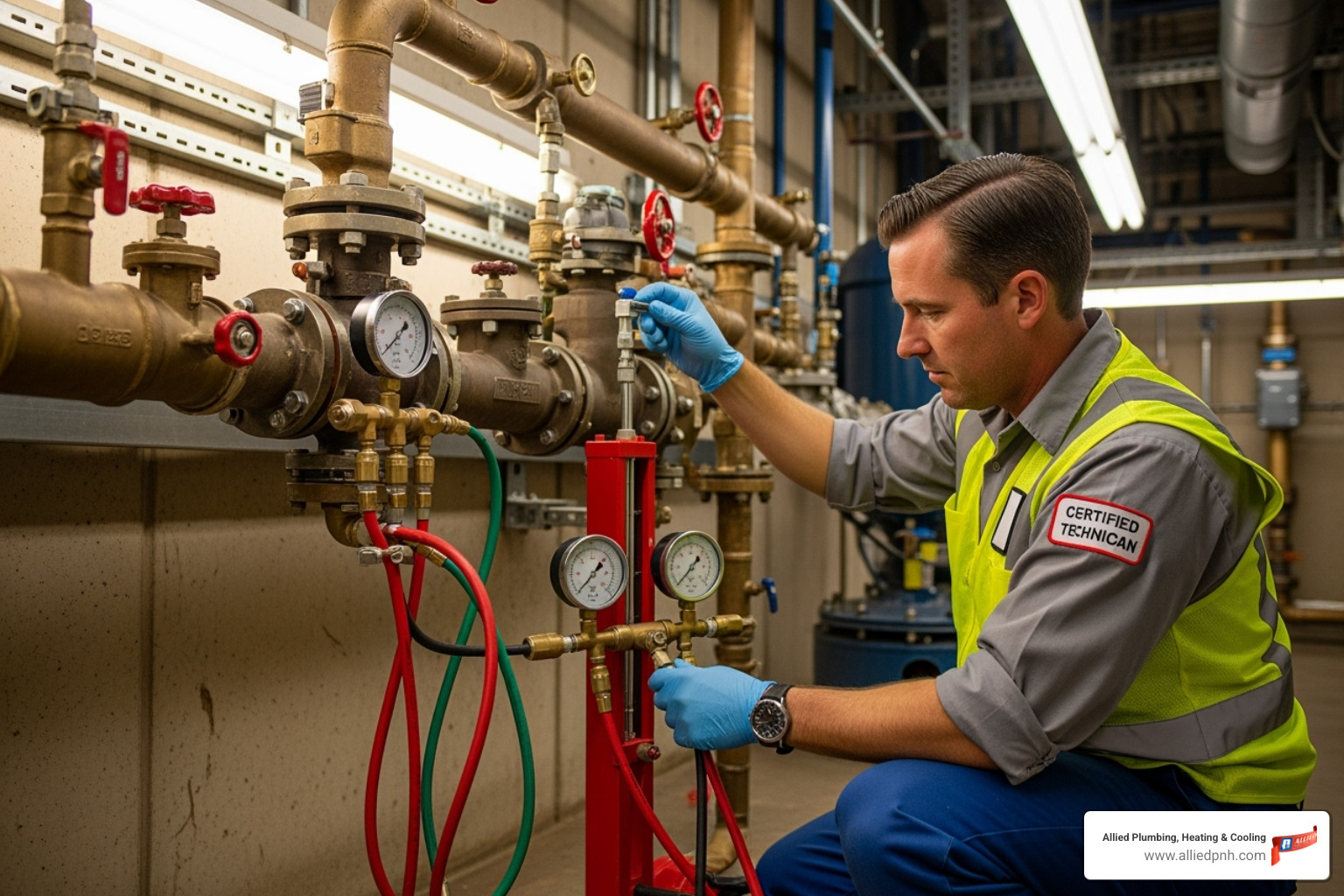
When it comes to backflow testing Chatham properties require, the process is more straightforward than you might think. The main goal is simple: make sure your backflow prevention device is doing its job of keeping contaminated water out of our drinking supply.
This definitely isn’t a weekend DIY project. You need certified technicians who have the proper training, specialized equipment, and know-how to test these critical safety devices. These professionals undergo rigorous training and certification to ensure they can accurately assess whether your device is protecting your water supply.
All testable backflow devices need an annual inspection, and those test reports must be submitted to the Village of Chatham. Think of it like getting your car inspected – it’s that regular check-up that keeps everything running safely. The actual hands-on testing typically takes about 20 to 30 minutes, though our technicians will need a bit of extra time for setup and any adjustments.
What is the Process for Backflow Testing in Chatham?
When our certified technicians arrive for your backflow testing Chatham appointment, they follow a systematic process that ensures accuracy and thoroughness. Don’t worry – we’ll walk you through what’s happening every step of the way.
First, we temporarily shut off the water supply to the backflow prevention device. We’ll give you plenty of notice so you can plan around any brief water interruption. Next, we identify the specific devices and confirm the flow direction – it’s important to know exactly which way the water should be moving.
Our technicians number the test cocks (those small valves on the device) to keep everything organized during testing. Then we assemble specialized adapters and attach our test kit hoses to the device. The downstream water supply gets shut off to create the right conditions for accurate testing.
Here’s where the real work happens: we test each component of your backflow prevention device. This means checking relief valves, check valves, and making sure they’re all holding pressure correctly. We’re looking for any signs of reverse flow or components that aren’t sealing properly. If water starts leaving through the relief valve during testing, that’s a red flag that a check valve might need some attention.
All our readings and observations get carefully recorded, and finally, we submit the completed test report to the Village of Chatham. That last step is crucial – it’s what keeps you compliant with local bylaws and protects our community’s water supply.
Common Backflow Prevention Devices
Not all backflow prevention devices are created equal. The type installed on your property depends on how risky your plumbing system is for potential contamination.
The Reduced Pressure Principle (RP) Assembly is the gold standard of backflow protection. It’s got two check valves that work independently, plus an automatic relief valve sitting between them, and two shut-off valves. This device is typically used where contamination could cause serious illness or even death – think hospitals, chemical plants, or facilities with hazardous materials.
The Double Check Valve Assembly (DCVA) offers solid protection for moderate-risk situations. It features two independently operating check valves and two shut-off valves. You’ll commonly see these in commercial buildings and multi-residential properties where contamination could make people sick, but isn’t necessarily life-threatening.
For many irrigation systems, the Pressure Vacuum Breaker (PVB) is the go-to choice. It’s designed specifically to prevent backsiphonage and has a spring-loaded check valve with an atmospheric vent. One important requirement: it must be installed at least 12 inches above the highest point of the downstream piping.
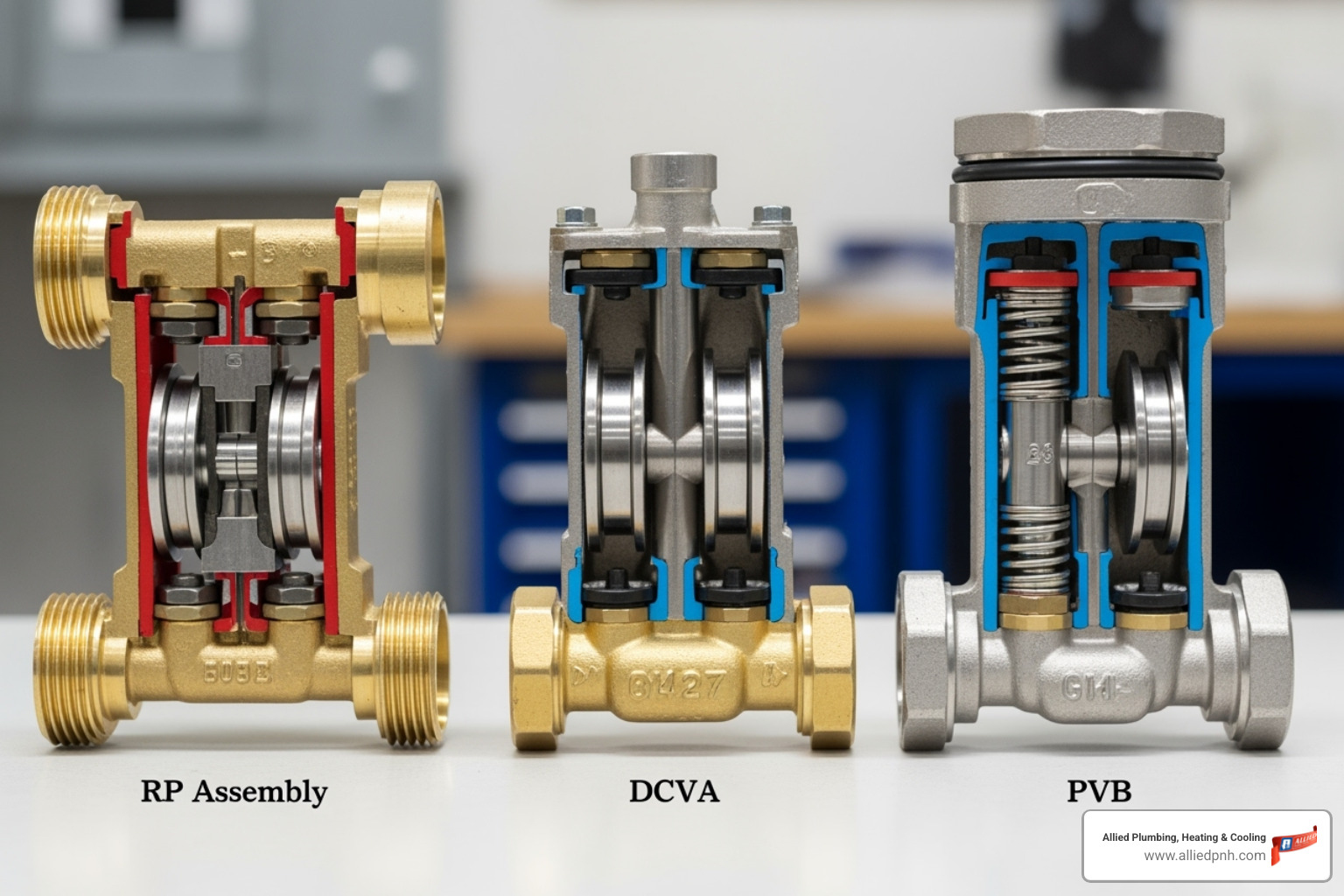
Our certified technicians can help you understand which type of device is right for your specific situation and ensure it’s installed and tested according to all local and state regulations.
What Happens if a Device Fails Backflow Testing in Chatham?
Don’t panic if your device fails its test – it happens more often than you’d think. These devices work hard every day to protect your water, and like any hardworking equipment, they can wear out or get clogged over time.
When a device fails, we’ll explain exactly what went wrong. Maybe a check valve is stuck, a relief valve needs replacing, or internal components got damaged by freezing temperatures. We’ll walk you through the problem in plain English, no technical jargon.
Many devices can be repaired rather than replaced. This might involve cleaning a stubborn check valve, replacing a worn relief valve, or servicing other internal parts. However, if your device is getting up there in years or the damage is extensive, replacement might make more sense than pouring money into repairs.
Once we complete any necessary repairs or replacement, we must retest the device. This isn’t optional – it’s required to ensure everything is now working properly and meeting regulatory standards. Only after a successful retest can we consider the job complete.
We’ll handle all the paperwork and documentation for you, making sure the Village of Chatham receives everything they need to keep you in compliance with local bylaws. Our goal is always to get your system back to perfect working order as quickly as possible, with minimal disruption to your daily routine.
Protect Your Property and Community with Regular Testing
Think of regular backflow testing as an insurance policy for your water supply – one that actually works when you need it most. When you invest in annual backflow testing Chatham requires, you’re not just checking off another item on your maintenance list. You’re making a smart decision that protects both your family and your community.
Peace of mind is priceless, especially when it comes to something as essential as your drinking water. Knowing that contaminated water can’t sneak back into your pipes means you can turn on that tap without a second thought. Whether you’re making morning coffee, giving the kids a bath, or washing vegetables for dinner, you’ll have complete confidence in your water’s safety.
Your property represents a significant investment, and regular backflow testing helps protect that investment in ways you might not expect. Modern, code-compliant plumbing systems – including properly maintained backflow prevention devices – add real value to your property. Potential buyers and tenants appreciate knowing that all safety systems are up to date and functioning correctly.
The most important benefit, of course, is ensuring safe drinking water for everyone who enters your building. Regular testing is the only reliable way to confirm that your backflow prevention device is doing its job day in and day out. These devices work silently in the background, but without annual testing, you’d never know if they’ve stopped working properly.
Regulatory compliance might sound boring, but it’s actually your friend. Staying current with Chatham’s local ordinances and Illinois state regulations keeps you on the right side of the law and helps you avoid any unwanted surprises from officials. Nobody wants to deal with compliance issues when a simple annual test could have prevented them.
Here’s something that might surprise you: failure to maintain proper backflow prevention can lead to water service disconnection. Imagine explaining to your tenants, employees, or family members why the water has been shut off. Regular testing ensures you’ll never face this nightmare scenario.
Finally, every time you complete your annual backflow testing Chatham properties require, you’re contributing to community water safety. When everyone does their part, the entire public water system stays cleaner and safer. It’s one of those rare situations where doing the right thing for yourself also helps your neighbors.
The bottom line? Regular backflow testing isn’t just about following rules – it’s about taking care of the people and places that matter most to you.
Your Partner in Water Safety and Compliance
When your property needs Backflow testing Chatham requires, you don’t want to trust just anyone with something as important as your water safety. You need a partner who understands the stakes and has the expertise to get it right the first time.
That’s exactly what you’ll find at Allied Plumbing, Heating & Cooling. We’ve been serving the Springfield Area, including Chatham, since 1977 – that’s nearly five decades of keeping families and businesses safe. Our long history isn’t just about longevity; it’s about building trust one customer at a time through reliable, prompt, and professional service.
What sets us apart isn’t just our experience, though that certainly helps. It’s our commitment to your complete satisfaction, backed by our Daikin Comfort Promise. We know that when it comes to water safety, there’s no room for shortcuts or second-guessing.
Our certified technicians bring both the technical expertise and the personal touch you deserve. They’re not just skilled at testing backflow prevention devices; they understand Chatham’s local requirements and Illinois state regulations inside and out. When they arrive at your property, you can trust they’ll handle everything from the initial assessment to the final paperwork submission.
We believe in making the entire process as seamless as possible for you. From scheduling your annual testing to ensuring your reports reach the Village of Chatham on time, we take care of the details so you don’t have to worry. If your device needs repairs or replacement, we’ll walk you through your options clearly and honestly.
Protecting your water system means protecting your family, your employees, and your community. It’s a responsibility we take seriously, and we’re honored when you trust us to help you meet it. Whether you’re dealing with a routine annual test or finding you need backflow prevention for the first time, we’re here to guide you through every step.
Ready to schedule your backflow testing or have questions about your property’s requirements? We’re just a phone call away. For businesses throughout our service area, we also offer comprehensive commercial plumbing services in the Springfield area that include complete backflow prevention and testing solutions.
Don’t wait until there’s a problem. Let’s work together to keep your water safe and your property compliant.