



When Your AC Won’t Start: Understanding the Problem
When your AC not turning on becomes your reality during a sweltering summer day, it can quickly turn your comfortable home into an unbearable furnace. It’s a stressful situation, but the good news is that many AC startup problems have simple solutions.
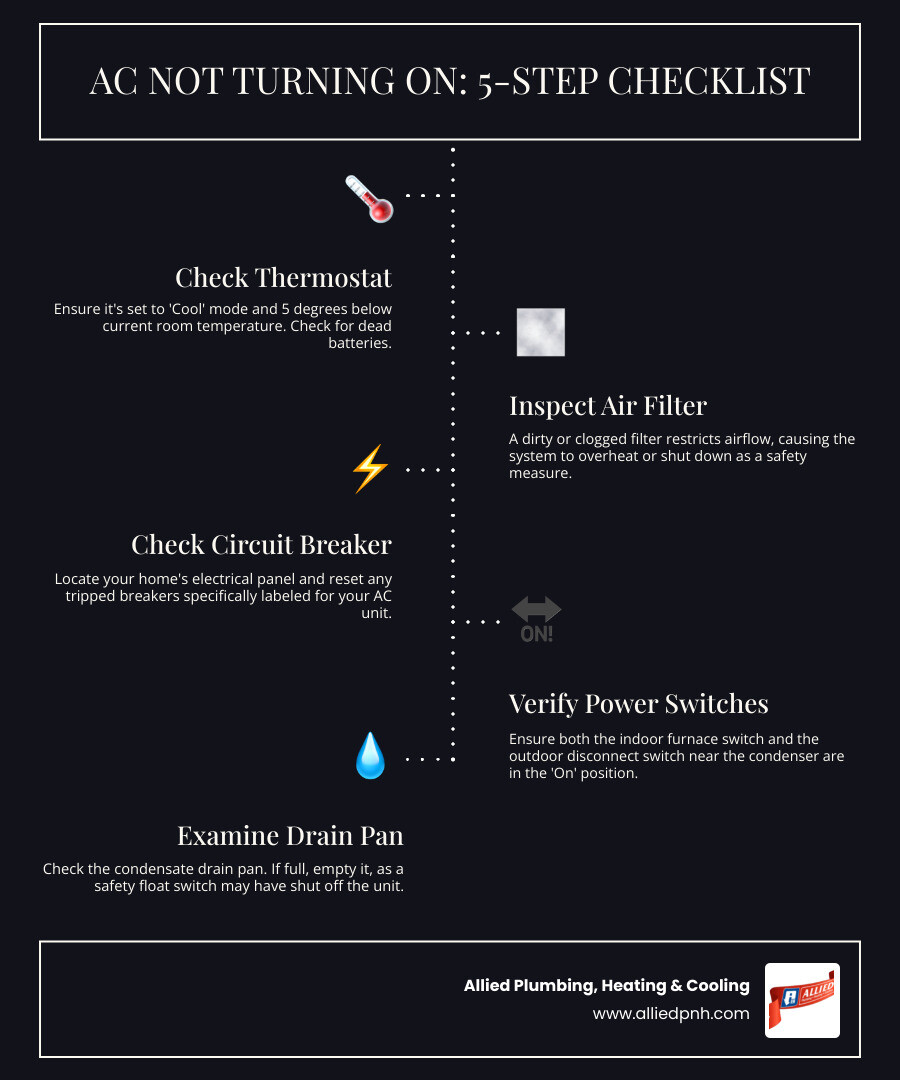
Quick Troubleshooting Steps for AC Not Turning On:
- Check thermostat – Ensure it’s set to “Cool” and the temperature is 5 degrees below room temp.
- Inspect air filter – Replace if dirty or clogged.
- Check circuit breaker – Look for a tripped breaker in the electrical panel.
- Verify power switches – Check that indoor and outdoor shutoff switches are “On.”
- Examine drain pan – Empty if full, as this can trigger a safety shutoff.
- Look for ice buildup – Allow any frozen coils to thaw completely.
- Try AC reset button – Press the reset button on the outdoor unit or reset via the breaker.
Issues like incorrect thermostat settings, tripped breakers, or clogged filters account for a significant portion of “no cooling” calls. However, some problems require professional attention, particularly those involving electrical components, refrigerant leaks, or damaged motors. Knowing when to troubleshoot and when to call for help can save you time, money, and keep you safe.
First Steps: Simple DIY Troubleshooting
When your home’s cool sanctuary suddenly turns into a sauna, it’s easy to panic. But before calling for emergency service, let’s walk through some simple checks. Many common reasons your AC not turning on can be resolved with a few quick DIY steps. Always prioritize safety, especially when checking electrical components.
Check Your Thermostat
Your thermostat is the brain of your AC system. First, make sure it’s set to “COOL” mode and the temperature is at least 5 degrees Fahrenheit lower than the current room temperature. Your AC won’t kick on if it thinks the room is already cool enough.
Next, check the display. If it’s blank, it may just need new batteries. For smart thermostats, a simple reboot can sometimes clear communication glitches. If your AC still isn’t responding after these checks, you might have a more complex thermostat or wiring problem. You can learn more by visiting our guide on Why AC Not Responding to Temperature Changes.
Inspect the Air Filter
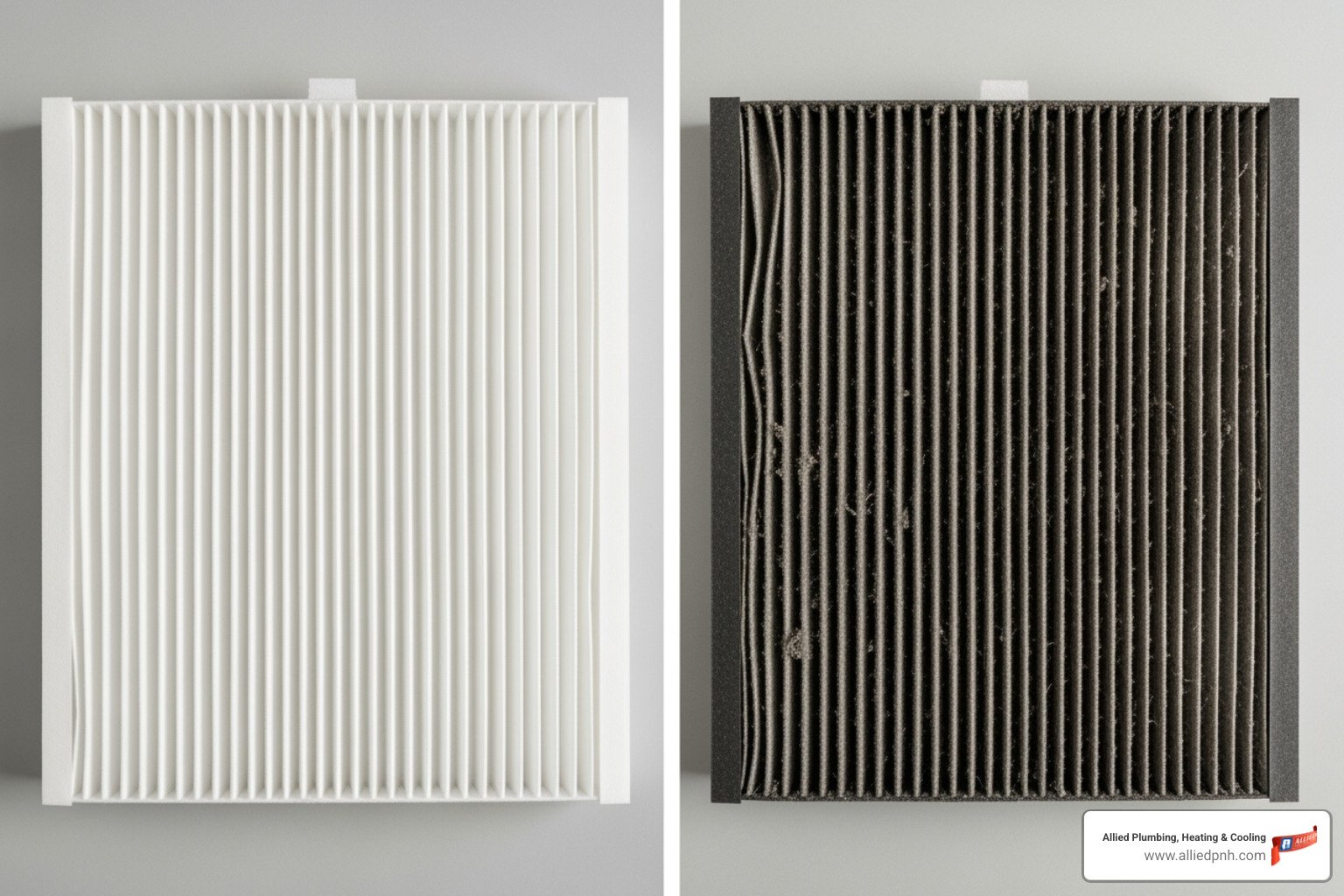
Imagine trying to breathe through a dusty blanket – that’s what your AC feels like with a clogged air filter. A dirty filter severely restricts airflow, forcing your AC to work harder, which can lead to overheating and cause your AC not turning on.
This restricted airflow can cause the system’s evaporator coils to get too cold and freeze into a block of ice. To prevent serious damage to expensive parts like the compressor, a safety feature will shut the system down. This is why a dirty filter is a prime suspect if your AC won’t start and you see ice on the indoor unit.
Check your air filter every 30-60 days (more often if you have pets) and replace it if it’s dirty. A clean filter ensures the proper airflow vital for your AC’s health and efficiency. For more on this, check out More about our indoor air quality services.
Safely Check Your Power Supply
No power means no cool air. Electrical issues are a very common reason your AC not turning on. First, check your home’s circuit breaker panel. Find the breaker for your AC unit (often labeled “AC” or “HVAC”). A tripped breaker will be in a middle position. To reset it, push it firmly to “OFF,” then back to “ON.”
Also, check the outdoor disconnect switch (a box near the condenser unit) and the indoor shutoff switch (often looks like a light switch near the furnace) to ensure they are both in the “ON” position. Circuit breakers are safety features that prevent overloads. You can learn more about How circuit breakers work as a safety feature.
If the breaker trips again immediately, do not keep resetting it. This indicates a serious electrical problem that requires a professional. If your AC keeps tripping the breaker, it’s time to call us to Fix AC that keeps tripping your circuit breaker. Some older units may also have a blown fuse that needs replacing, but if new fuses blow quickly, that also signals a deeper issue.
Common System Issues Causing Your AC Not to Turn On
If the initial checks haven’t brought your cool air back, the problem might be a more complex, but still common, AC malfunction that prevents your AC not turning on due to safety protocols.
Icy Buildup on Coils or Lines
Ice on your AC unit is a clear sign of a problem. You might see visible ice on the copper lines or frost on the indoor evaporator coils. This buildup will prevent your AC from running properly.
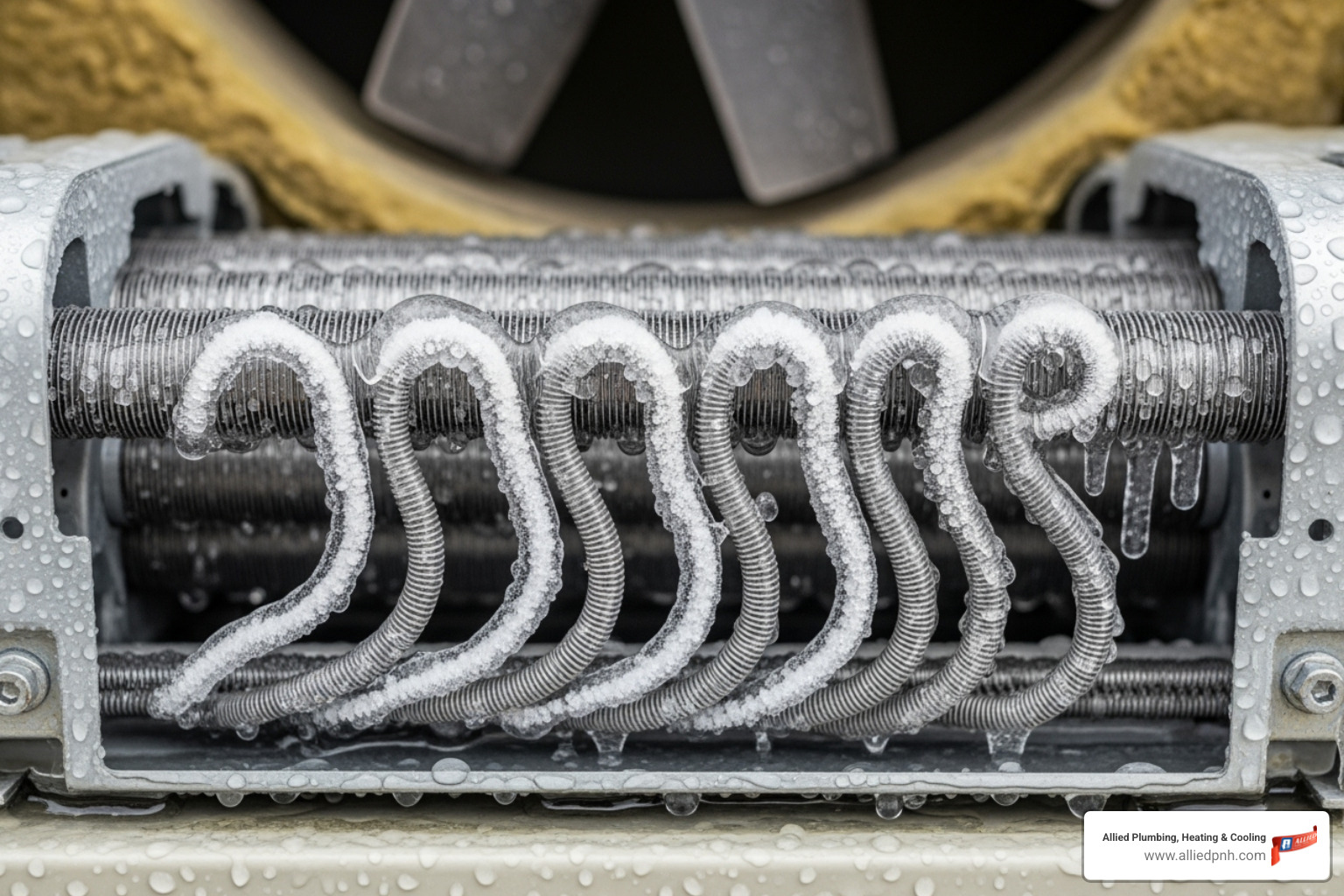
If you find ice, turn off your AC at the thermostat and circuit breaker to let it thaw completely, which can take several hours. You can run the system’s fan on the “fan only” setting to speed this up. Icy buildup is a symptom of an underlying issue, most commonly a dirty air filter restricting airflow or low refrigerant from a leak. While you can thaw the unit, fixing the root cause, especially a refrigerant leak, requires a professional. Learn more about Why is your AC freezing up during hot weather?.
Clogged Condensate Drain Line
Your AC dehumidifies the air, and the collected water drains through a condensate line. If this line clogs with algae or debris, the water backs up into a drain pan. A safety float switch in the pan detects the high water level and shuts off the AC to prevent water damage. This is a very common reason for an AC not turning on.
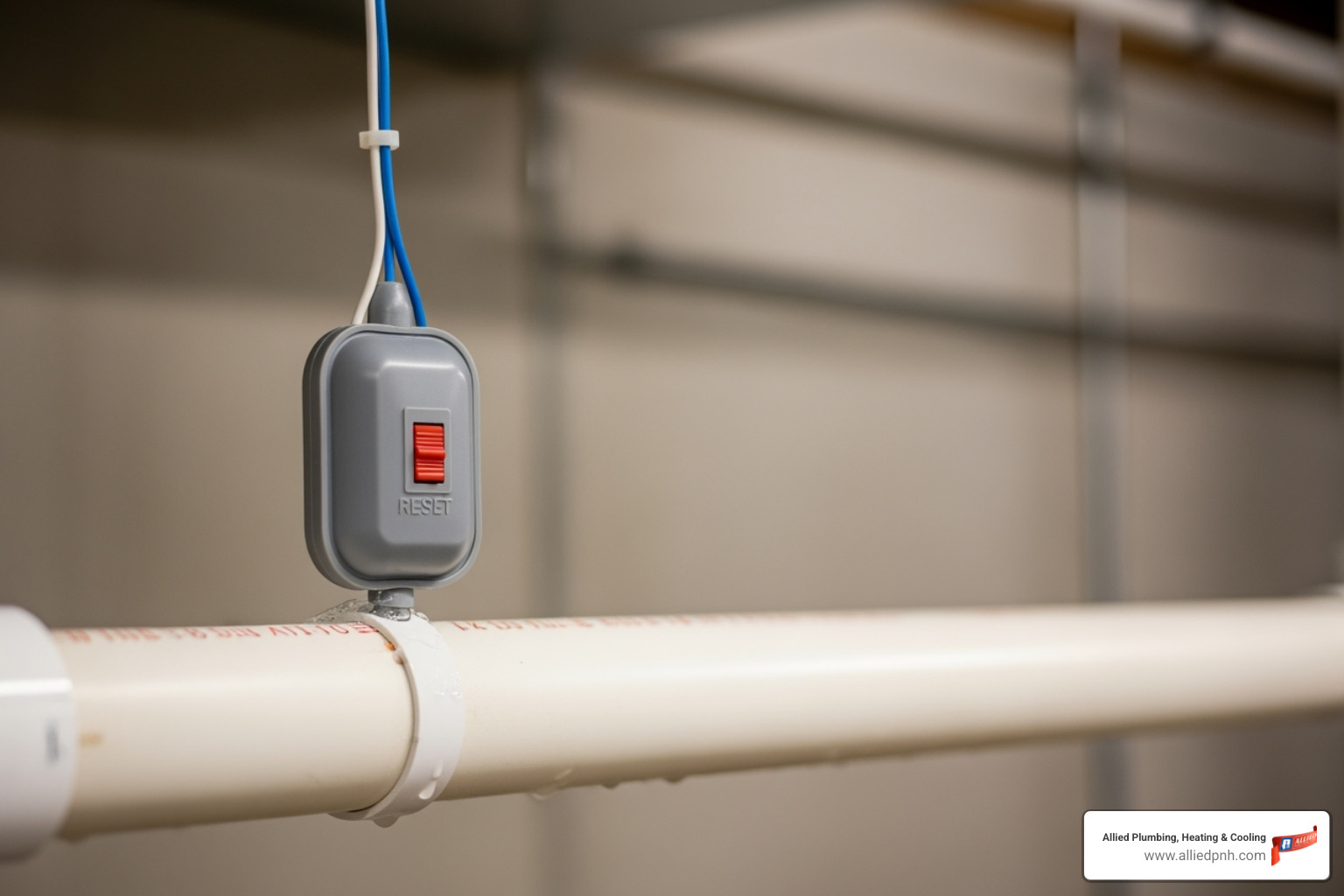
To fix this, turn off the AC power. You may be able to clear the clog by using a wet/dry vacuum on the end of the drain line outside. Pouring a diluted bleach or vinegar solution into the line’s access port periodically can help prevent future clogs. If the clog is stubborn, it’s best to call a professional. We can help with Solving Condensate Drain Clogs in AC.
Using the AC Reset Button
Sometimes your AC just needs a reboot. Many outdoor units have a small, red reset button. If not, you can perform a manual reset via the circuit breaker.
Manual Reset Procedure:
- Set your thermostat to “OFF.”
- Turn off the AC’s circuit breaker at the main electrical panel.
- Wait 5-10 minutes for the system to fully power down.
- If your outdoor unit has a reset button, press it for a few seconds.
- Turn the circuit breaker back “ON.”
- Set your thermostat back to “COOL.”
This process can clear minor electrical glitches that cause your AC not turning on.
Advanced Problems: When to Call for Professional Repair
When simple fixes don’t work, you’re likely dealing with complex issues that need professional attention. These problems often involve high-voltage electricity or hazardous materials and are best left to trained experts.
Diagnosing Electrical Failures When Your AC is Not Turning On
Several critical electrical components can cause your system to fail. Capacitor failure is one of the most common reasons for an AC not turning on. Capacitors act like starter batteries for your AC’s motors.
The system has a start capacitor to give the motor the initial jolt to get spinning and a run capacitor to keep it going smoothly. When one fails, you might hear a humming noise from the outdoor unit, but the fan won’t spin. The motor is trying to start but lacks the necessary electrical boost.
Heat, power surges, and age can cause capacitors to fail. Never attempt to replace a capacitor yourself. They can hold a dangerous electrical charge even when the power is off. Other issues include damaged motors, which may cause grinding or screeching sounds. For more on how power issues affect your system, see our guide on AC Electrical Problems After a Power Outage.
External Factors: Power Surges and Utility Programs
Sometimes the reason your AC not turning on is external. Power surges from storms or grid issues can damage your AC’s sensitive electronics. An HVAC-specific surge protector can guard your equipment against these spikes. Learn more about protecting your unit with a surge protector.
Also, check if you’re enrolled in an energy-saving program with your utility company. These programs can allow the utility to remotely cycle your AC off during peak demand periods to save energy. Your system should turn back on automatically after the peak period ends.
Signs Your AC Unit Needs Replacement
Sometimes, an AC that won’t turn on is a sign that it’s at the end of its life. Most AC units last 10-15 years. If your system is in this age range and experiencing problems, replacement might be more cost-effective than another repair.
Key signs it might be time for a new system include:
- Frequent Repairs: If you’re calling for service multiple times a season, the costs can add up quickly.
- Rising Energy Bills: An aging, inefficient system works harder and uses more electricity.
- Loud Noises: Grinding, screeching, or banging can indicate major internal components are failing.
- Inconsistent Cooling: If some rooms are cold while others are hot, your system may no longer be able to cool your home effectively.
A new, high-efficiency unit can provide reliable comfort and lower energy costs. For a detailed look at these warning signs, check out our guide: Signs It’s Time for an AC Replacement.
Preventative Maintenance for Year-Round Comfort
The best defense against your AC not turning on is proactive care. A little maintenance goes a long way toward keeping your home comfortable and avoiding surprise breakdowns.
Create a Maintenance Checklist
Simple homeowner tasks can make a big difference in your AC’s reliability.
- Change filters regularly: This is your top priority. Swap them every 1-3 months.
- Clean around the outdoor unit: Keep grass, leaves, and shrubs at least two feet away from all sides to ensure proper airflow.
- Check your drain line: A quick monthly check for clogs can prevent water damage.
- Listen for unusual sounds: Grinding, banging, or screeching can signal trouble.
- Keep indoor vents clear: Ensure furniture or curtains aren’t blocking airflow.
The Importance of Professional Tune-Ups
While DIY tasks are helpful, professional maintenance is essential for catching issues you can’t see. We recommend an annual inspection each spring.
During a tune-up, a technician will clean internal components like the evaporator and condenser coils, check refrigerant levels (which requires special tools and certification), and perform an electrical connection check for loose or corroded wires. This professional attention is key to preventing breakdowns before they happen, protecting your family’s comfort and saving you from emergency repair calls. Consider our HVAC Maintenance Plan Springfield to ensure your system gets consistent, professional care year after year.
Frequently Asked Questions about an AC Not Turning On
Here are answers to some of the most common questions we hear when an AC not turning on has homeowners concerned.
Why would my air conditioner suddenly stop working?
A sudden stop often means a safety mechanism has been triggered. Common causes include a tripped circuit breaker from an electrical overload, an overflowing condensatedrain pan shutting the unit off to prevent water damage, or the failure of a key electrical component like a capacitor.
How do I reset my home air conditioner?
Resetting your AC is simple. First, set the thermostat to “Off.” Then, go to your main electrical panel and flip the AC’s circuit breaker to “Off.” Wait 5 minutes to let the system’s power drain completely. Flip the breaker back to “On,” and finally, set your thermostat back to “Cool.” This can often resolve minor glitches causing your AC not turning on.
Can a dirty filter really stop an AC from turning on?
Yes, absolutely. A severely clogged filter restricts airflow, which can cause the system to overheat or the evaporator coil to freeze. Built-in safety switches detect these dangerous conditions and shut the unit down to prevent costly damage to components like the compressor. A dirty filter is a very common reason for an AC not turning on.
Get Your Cool Back with Expert Help
When your home feels more like a sauna, don’t suffer in the heat. We’ve walked through common reasons for an AC not turning on, from simple thermostat checks to clogged filters. These steps can often get your system running again.
However, some problems run deeper. When you’re dealing with electrical failures, refrigerant leaks, or a frozen system, it’s time to call the professionals. These complex issues require specialized knowledge and tools to be fixed safely and correctly.
If you’ve tried our troubleshooting checklist and your home is still hot, don’t wait. The experienced team at Allied Plumbing, Heating & Cooling has been keeping Springfield area families comfortable since 1977. We understand that an AC not turning on is an emergency, and our technicians will diagnose the problem quickly and get your system running reliably again.
Ready to reclaim your cool, comfortable home? Schedule your AC repair in Sherman today and let our trusted professionals restore the comfort your family deserves.