



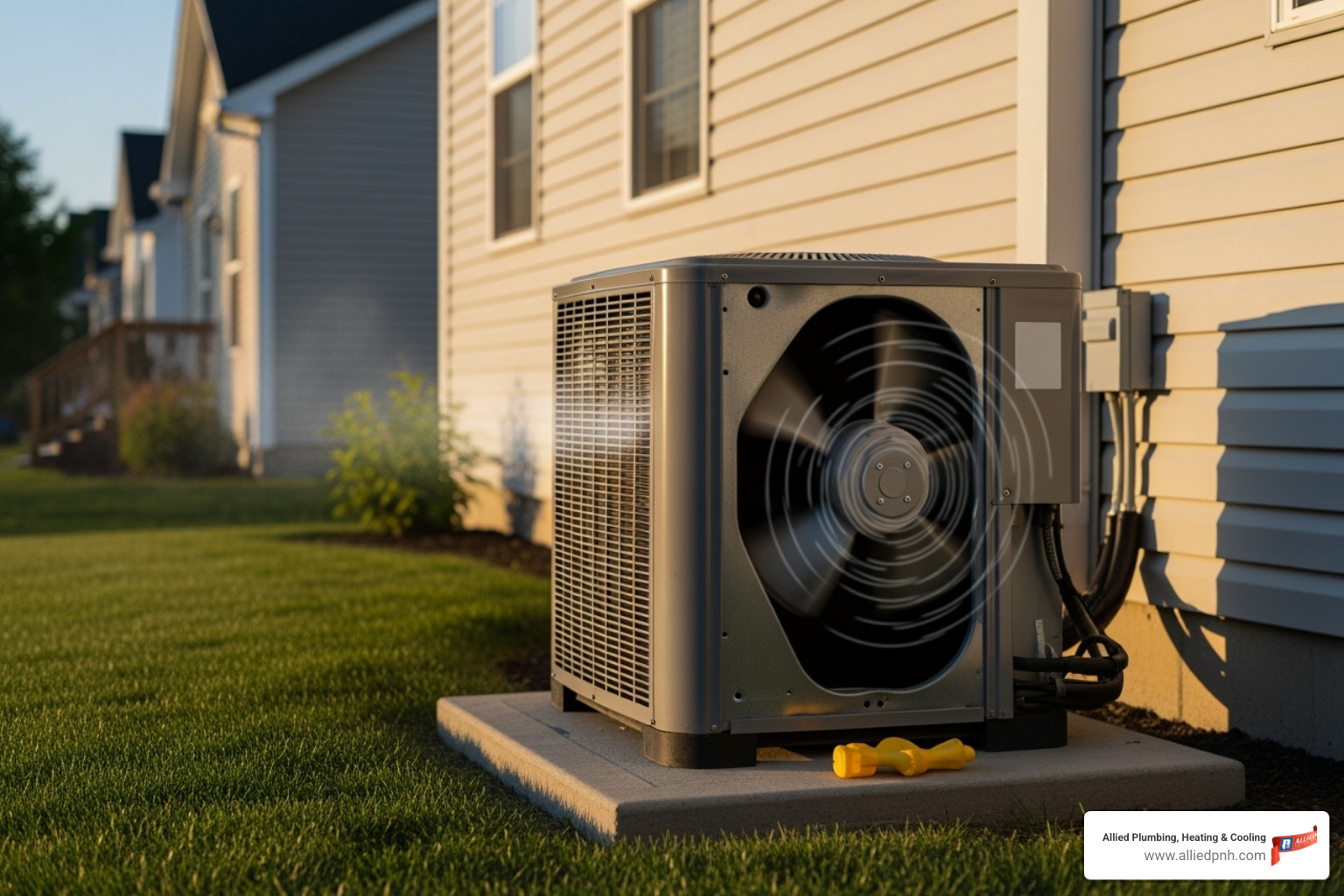
Why Your AC Making Strange Noises Deserves Immediate Attention
When your AC making strange noises becomes noticeable, it’s your system’s way of asking for help. While some sounds are normal, others are clear warning signs.
Normal AC Sounds:
- Gentle whooshing of air
- Soft humming from the motor
- Brief clicking when starting or stopping
Abnormal Noises Requiring Action:
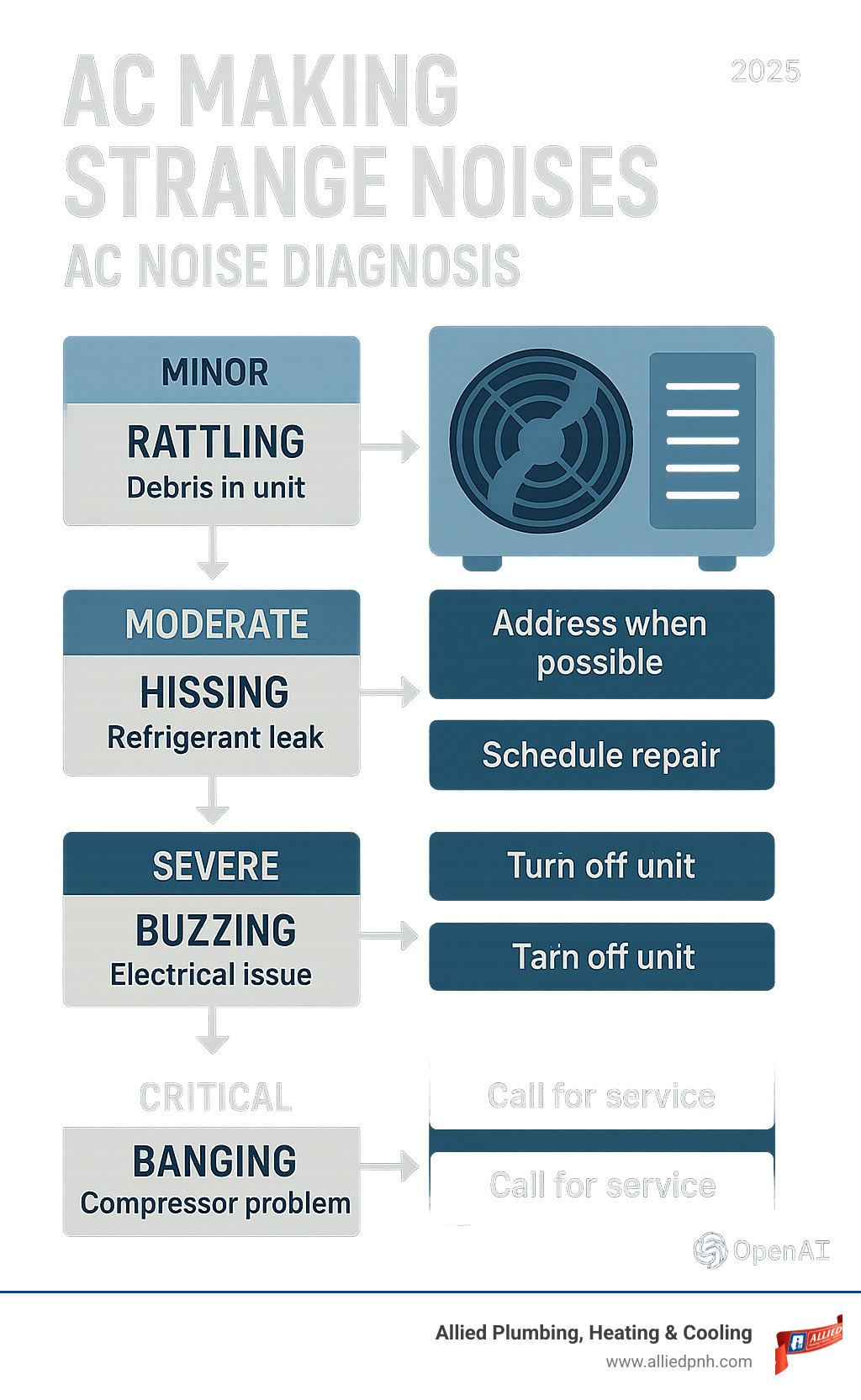
- Banging/Clanking: Loose parts or a broken compressor. Turn the unit off immediately.
- Buzzing: Electrical issues, frozen coils, or a faulty capacitor.
- Hissing/Whistling:Refrigerant leak or ductwork problems.
- Screeching/Squealing: Worn motor bearings or dangerously high pressure.
- Rattling: Debris in the unit or loose hardware.
- Persistent Clicking: Faulty thermostat or electrical controls.
- Gurgling/Bubbling: Clogged drain line or a refrigerant leak.
Ignoring these warning signs can transform minor issues into expensive repairs or complete system failure. While a gentle rattle from leaves might be harmless, sounds like banging or screeching signal immediate danger to your system. Understanding these audio clues helps you protect your investment and maintain home comfort.
A Homeowner’s Guide to Diagnosing an AC Making Strange Noises
When your air conditioner starts making unexpected sounds, it can be unsettling. This guide will help you translate those strange noises into actionable insights by breaking down the most common sounds and their likely causes.
Banging, Clanking, or Knocking
Banging, clanking, or knocking noises are alarming and signal serious internal damage. These sounds often point to loose or broken parts, such as a piston pin or connector rod in the compressor, or unbalanced fan blades hitting other components. In the outdoor unit, this often suggests a problem with the compressor or condenser fan. Indoors, it usually points to the blower fan assembly.
Action: Turn your AC off immediately. These sounds indicate a critical failure that can cause catastrophic damage if the system continues to run. Ignoring them can lead to expensive repairs. For help with these serious outdoor unit noises, check out our guide on How to Fix Loud Outdoor AC Unit Noises.
Buzzing
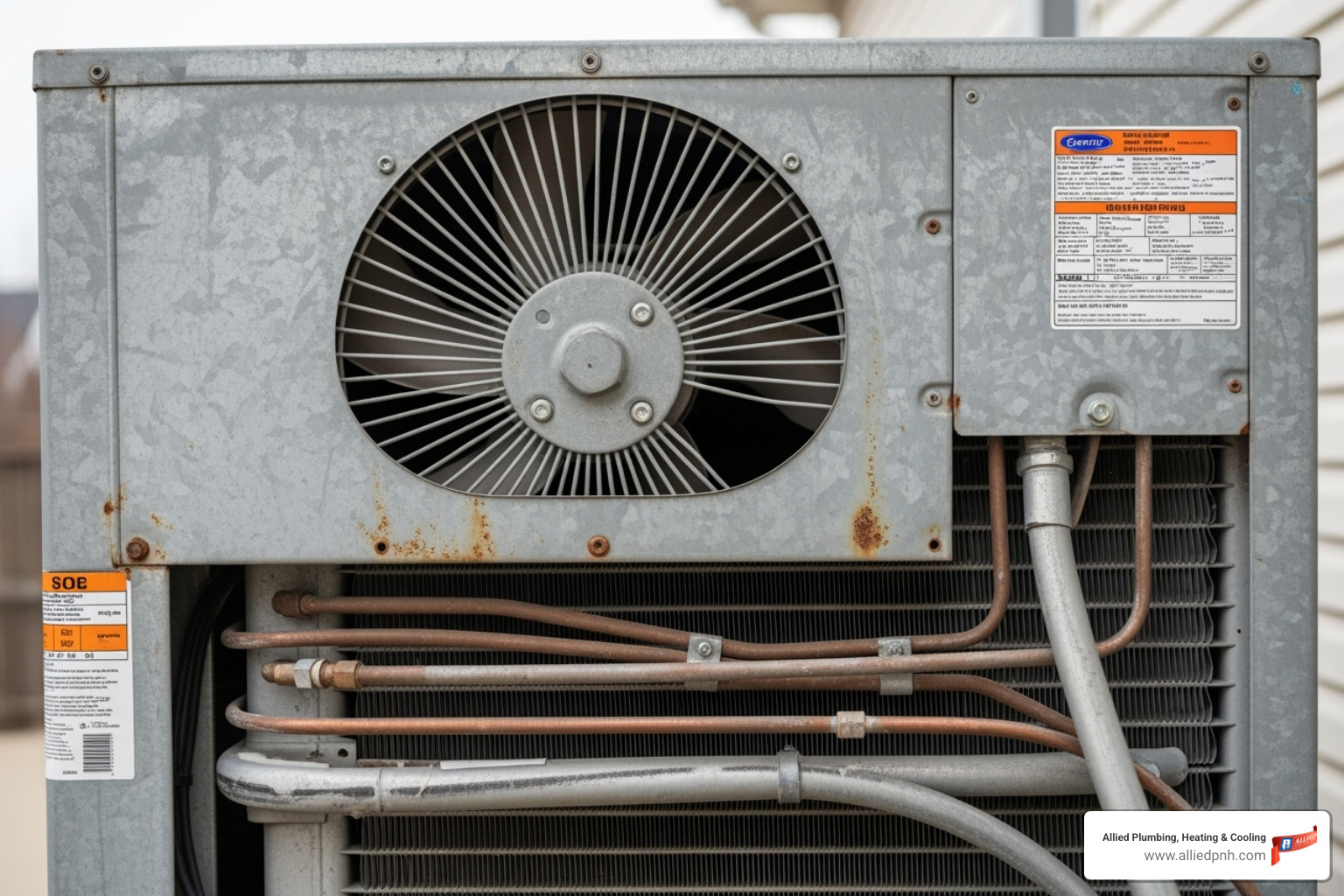
A buzzing sound is a warning sign of several potential issues, from loose parts to serious electrical malfunctions. Common causes include a failing condenser fan motor, dirty condenser coils, a faulty capacitor, or loose wiring. A buzzing noise from the outdoor unit is often electrical, while a buzz from the indoor unit can mean the evaporator coils are frozen, possibly due to a dirty air filter.
Action: Moderate to high concern. While a minor buzz might be debris, any electrical buzzing or a buzz with a burning smell is a serious hazard. Electrical issues require immediate professional inspection. Learn more in our article: Why is your AC making a buzzing sound?. For critical safety information, review The danger of home electrical fires.
Hissing or Whistling
A hissing or whistling sound often indicates a refrigerant leak or an airflow problem. Hissing is a classic sign of pressurized refrigerant escaping from a leak in the copper lines or a faulty expansion valve. Whistling, on the other hand, is typically caused by restricted airflow from a clogged air filter or blocked vents. Hissing from the outdoor unit almost always means a refrigerant leak, while indoors it could be a leak or damaged ductwork.
Action: High concern. A refrigerant leak is a serious issue that harms the environment, reduces efficiency, and can damage the compressor. It requires immediate professional attention. For more on this, see How to Know When AC Has Refrigerant Issues. Refrigerants are complex chemicals, as explained in What are refrigerants?.
Screeching or Squealing
A high-pitched screeching or squealing sound signals a serious problem that demands immediate action. This noise usually points to friction from worn motor bearings in either the outdoor condenser fan or the indoor blower motor. In older systems, it could be an impaired fan belt. Most dangerously, a high-pitched squeal from the compressor indicates dangerously high internal pressure.
Action: Turn off your air conditioner immediately. This is not a sound to ignore, as it can indicate critical component failure or hazardous operating conditions. For concerns about vibrations that can lead to these sounds, read our guide on Reasons Your AC Unit Is Vibrating Excessively.
Rattling
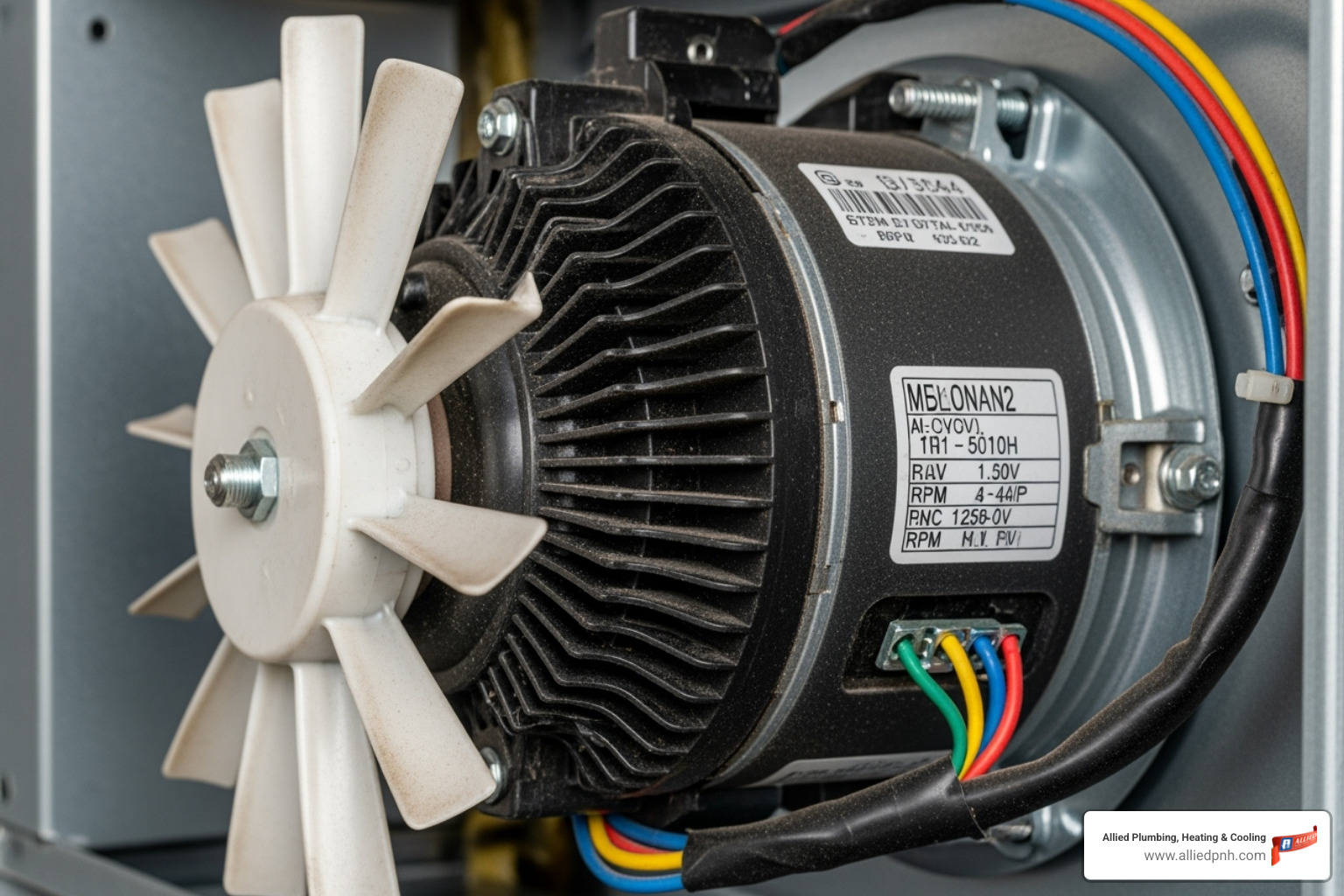
A rattling noise is generally a sign that something is loose or there’s debris inside your unit. Most often, it’s caused by leaves, twigs, or dirt in the outdoor condenser unit. It can also be caused by loose screws, deteriorating parts, or a damaged electrical contactor. While usually originating from the outdoor unit, rattling can also come from a loose blower motor indoors.
Action: Moderate concern. While removing debris is a simple fix, persistent rattling from a loose part can lead to more significant damage if ignored. For more on how to address these, consult How to Fix Loud Outdoor AC Unit Noises.
Clicking
A single click when your AC turns on or off is normal; it’s the sound of a relay switch. However, continuous or repetitive clicking is a cause for concern. This often indicates an electrical control issue, such as a malfunctioning thermostat or a failing capacitor that is preventing the unit from starting properly. Less commonly, it could be debris hitting the fan blades.
Action: High concern if continuous. If the clicking repeats, the unit is likely trying to start but failing, which can damage components. Turn the system off and call a professional. For insights into similar issues, check out Why is your mini-split making clicking sounds?.
Gurgling or Bubbling
A gurgling or bubbling sound typically points to a moisture drainage problem or a refrigerant leak. The most common cause is a clogged condensate drain line in your indoor unit, which causes water to back up. More seriously, it can also be caused by a refrigerant leak that introduces gas bubbles into the lines.
Action: Moderate to high concern. A clogged drain line can cause water damage, while a refrigerant leak is a serious system problem. Both require professional service to be fixed correctly and safely. For solutions to drain clogs, see Solving Condensate Drain Clogs in AC.
DIY Fixes vs. Calling a Professional
When your AC making strange noises disrupts your home, the question is whether you can fix it yourself or need a professional. Some noises are simple fixes, while others demand expert attention to prevent costly damage and safety hazards.
What to Do When Your AC is Making Strange Noises: DIY Steps
Some AC noises can be fixed with simple troubleshooting, but safety must be your top priority.
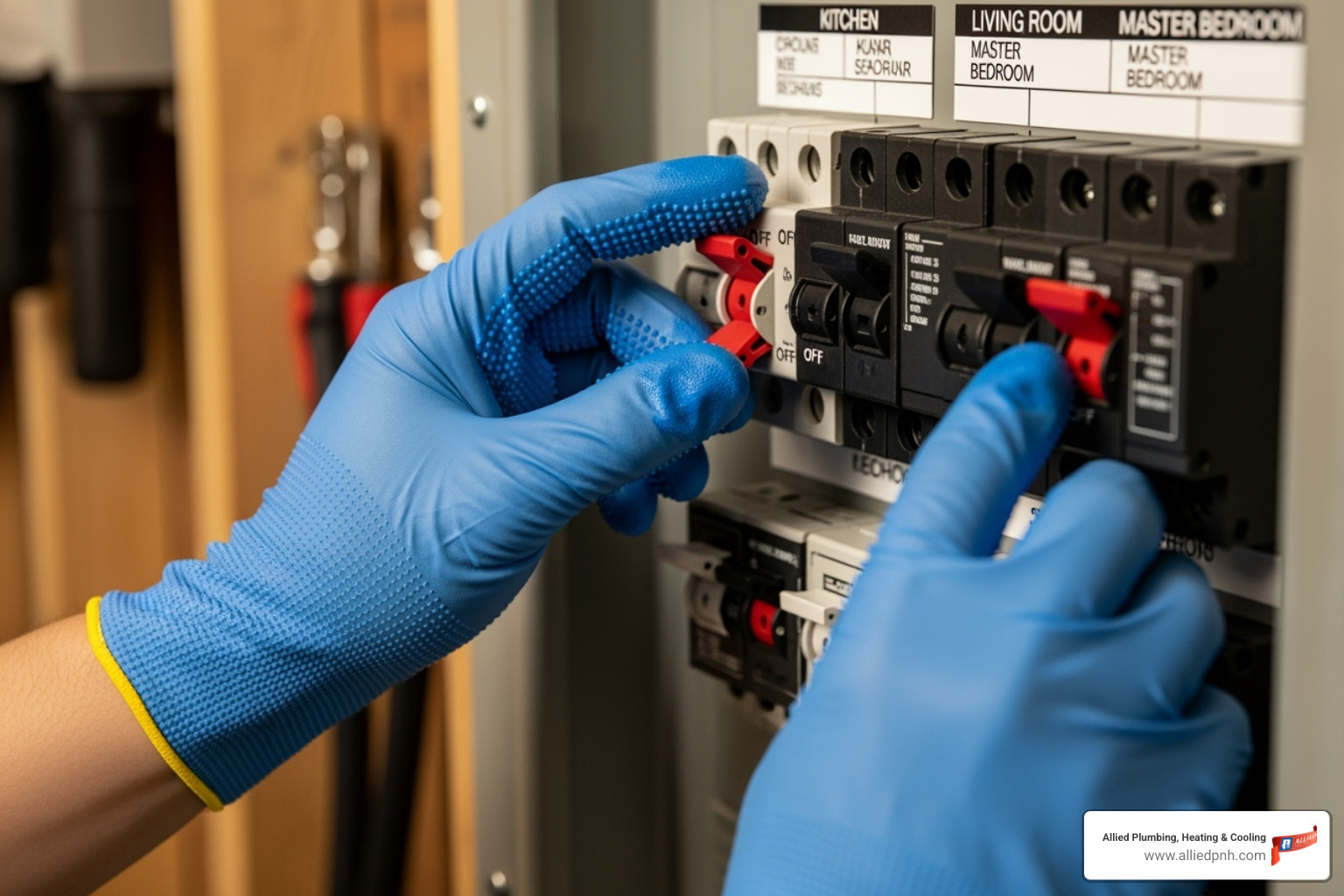
Before you begin, turn off the power to your AC unit at both the thermostat and the circuit breaker. Capacitors can hold a dangerous electrical charge even when the system is off.
- Check the air filter: A clogged filter can cause whistling or buzzing. Replace it if it’s dirty (typically every 1-3 months).
- Clear debris from the outdoor unit: Leaves and twigs can cause rattling. With the power off, gently remove any visible obstructions from around the condenser.
- Tighten loose panel screws: Vibrations can loosen screws on the unit’s casing, causing rattling or buzzing. Gently tighten them if needed.
- Ensure vents are unblocked: Whistling can be caused by blocked airflow. Make sure furniture or curtains aren’t covering your vents.
If the noise persists after these checks, it’s time to call a professional.
When to Immediately Call an HVAC Technician
Certain AC noises are red flags for serious problems that risk expensive damage or safety hazards. Turn off your system immediately and call a professional if you hear:
- Banging or Grinding: These sounds signal severe mechanical failure, often in the compressor or motor. Running the system can turn a repair into a full replacement.
- Screeching or Squealing: This indicates extreme pressure or failing bearings. It’s a potentially hazardous condition that requires immediate attention.
- Hissing: This usually means a refrigerant leak, which is harmful to your system and the environment. Refrigerant must be handled by a certified technician.
- Persistent Buzzing or Electrical Odors: These point to dangerous electrical issues. If you smell something burning, turn off the power at the breaker immediately.
Ignoring these warnings can be costly and dangerous. When in doubt, call for a professional diagnosis. For more guidance, check out our guide on How to Identify When Your AC Needs Repair.
Prevent Strange AC Noises with Routine Maintenance
Much like a car, your air conditioner needs regular check-ups to run smoothly and quietly. Proactive care is the best way to prevent your AC making strange noises before they start.
Preventing an AC from Making Strange Noises with Regular Maintenance
The secret to a quiet air conditioner is regular maintenance, which addresses the root causes of most noises. Key tasks include:
- Cleaning Coils: Dirty coils cause strain, leading to humming and buzzing.
- Lubricating Motors: Prevents screeching and squealing from dry bearings.
- Checking Refrigerant Levels: Avoids hissing from leaks and bubbling from air in the lines.
- Tightening Electrical Connections: Stops buzzing and clicking from loose wiring, which is also a safety hazard.
- Inspecting Belts and Pulleys: Catches wear before it turns into loud squealing.
- Clearing Drain Lines: Prevents gurgling sounds from backed-up water.
- Replacing Air Filters: A simple task that prevents whistling, system strain, and coil freezing.
Consistent maintenance catches small issues before they become noisy, expensive repairs. For more tips, see our guide on AC Maintenance for Year-Round Comfort.
The Benefits of a Professional Tune-Up
While DIY tasks help, a professional tune-up offers deeper benefits. Our experienced technicians, serving Springfield since 1977, provide:
- Improved Efficiency: A well-tuned system runs quieter and lowers energy bills.
- Longer System Lifespan: We address wear and tear before it causes major, noisy failures.
- Early Problem Detection: Our experts can spot subtle issues that might lead to future noises.
- Peace of Mind: Know your system has been thoroughly inspected for safe, quiet, and efficient operation.
Professional maintenance is about prevention. Consider our HVAC Maintenance Plan Springfield to keep your system running smoothly and quietly all year.
Frequently Asked Questions about AC Noises
Why is my AC suddenly so loud?
A sudden increase in your AC making strange noises usually points to a mechanical problem. Common culprits include loose parts rattling inside the unit, a failing motor with worn-out bearings, or debris hitting the fan blades. Since modern AC systems are designed to be quiet, a sudden loud noise is a clear sign that your system needs an immediate inspection to prevent a minor issue from becoming a major failure.
Is it safe to run an AC that is making noise?
It depends on the noise. A soft rattle from leaves is less urgent, but loud, harsh, or electrical sounds are a different story. For any banging, screeching, grinding, or persistent buzzing, you should turn the unit off at the breaker and call a professional immediately. Running an AC making these noises risks further damage, electrical fires, or refrigerant leaks. When in doubt, turn it off for safety.
How much does it cost to fix a noisy air conditioner?
The cost to fix an AC making strange noises varies widely. A simple fix like removing debris or changing a filter might be free or cost very little. A moderate repair, like replacing a fan motor or capacitor, will cost more. A major issue, such as a compressor failure, can be very expensive. For older units, a full AC Replacement Springfield might be more cost-effective than a costly repair. A professional diagnosis is key to understanding the true cost.
Get Your System Back to a Peaceful Hum
When your AC making strange noises becomes a daily distraction, it’s time to take action. While you can handle simple fixes like changing a filter, serious sounds like banging, screeching, or persistent buzzing require immediate professional attention.
Ignoring these warning signs can turn a minor inconvenience into a major expense. A small rattle can become a major component failure, and a subtle hiss can lead to a complete system breakdown.
Don’t let strange AC noises disrupt your comfort. For expert diagnosis and repair, trust the professionals at Allied Plumbing, Heating & Cooling. Our experienced technicians have provided reliable service since 1977, and we know how to get your system back to its peaceful hum.
Your home’s comfort shouldn’t be interrupted by concerning sounds. Schedule your AC repair in Sherman today for peace of mind and a quiet, comfortable home.